description: chemicals that can interfere with endocrine or hormonal systems at certain doses
42 results
Epigenetics: How Environment Shapes Our Genes
by
Richard C. Francis
Published 14 May 2012
Here I will focus on one group of toxins called endocrine disruptors. As the name implies, endocrine disruptors disrupt physiological processes that involve hormones, typically because they mimic the hormones and bind to their receptors. Some of the most pernicious endocrine disruptors mimic the female hormone estrogen. These include polychlorinated biphenyls (PCBs) and bisphenol A, which is used in the production of plastics (such as the ubiquitous water bottles). Other estrogen-like endocrine disruptors include agricultural weed killers such as atrazine, and fungicides such as vinclozolin. The effects of endocrine disruptors were first noticed in fish and amphibians, and are a major cause of the declines in some local populations.23 Fish and amphibians are especially susceptible for two reasons: because they live in aquatic habitats where these chemicals become concentrated, and because their sexual development is influenced more by their environment than is the sexual development of humans and other mammals.24 For example, endocrine disruptors can cause fish to change sex, resulting in all-female populations.25 They can also have a dramatically feminizing effect on amphibians resulting in male sterility.26 While less dramatic than in fish and amphibians, endocrine disruptors have been linked to a variety of ailments in humans and other mammals.
…
The effects of endocrine disruptors were first noticed in fish and amphibians, and are a major cause of the declines in some local populations.23 Fish and amphibians are especially susceptible for two reasons: because they live in aquatic habitats where these chemicals become concentrated, and because their sexual development is influenced more by their environment than is the sexual development of humans and other mammals.24 For example, endocrine disruptors can cause fish to change sex, resulting in all-female populations.25 They can also have a dramatically feminizing effect on amphibians resulting in male sterility.26 While less dramatic than in fish and amphibians, endocrine disruptors have been linked to a variety of ailments in humans and other mammals. The effects of endocrine disruptors on imprinted genes in mammals are especially well studied.27 Male mammals, including human males, seem particularly sensitive to developmental errors caused by the effect of endocrine disruptors on imprinted genes, as evidenced by increased rates of prostate cancer, kidney disease, and abnormal testes.28 In many cases, these problems don’t become manifest until adulthood, as in the adult-onset diseases such as the metabolic syndrome.
…
“A review of known imprinting syndromes and their association with assisted reproduction technologies.” Hum Reprod 23(12): 2826–2834. Anway, M. D., A. S. Cupp, et al. (2005). “Epigenetic transgenerational actions of endocrine disruptors and male fertility.” Science 308(5727): 1466–1469. Anway, M. D., and M. K. Skinner (2008). “Epigenetic programming of the germ line: Effects of endocrine disruptors on the development of transgenerational disease.” Reprod Biomed Online 16(1): 23–25. Araki, R., Y. Jincho, et al. (2010). “Conversion of ancestral fibroblasts to induced pluripotent stem cells.” Stem Cells 28(2): 213–220.
The End of Doom: Environmental Renewal in the Twenty-First Century
by
Ronald Bailey
Published 20 Jul 2015
Decades of research and hundreds of millions of dollars in funding have resulted in the publication of more than 4,000 different articles. “Taking into account the large resources spent on this topic, one should expect that, in the meantime, some endocrine disruptors that cause actual human injury or disease should have been identified,” the researchers argue. “However, this is not the case. To date, with the exception of natural or synthetic hormones, not a single, man-made chemical endocrine disruptor has been identified that poses an identifiable, measurable risk to human health.” They damningly add, “Certainly, there has been much media hype about imaginary health risks from bisphenol A, parabens, or phthalates.
…
She mentions in passing medical reports that suggest there is reduced sperm production among crop dusters. Nearly thirty years later, a group of Carson disciples meeting in 1991 at the Wingspread Center in Wisconsin under the auspices of the World Wildlife Fund developed their guru’s suspicions about the effects of synthetic chemicals on sex hormones into the endocrine disruptor conjecture. The idea is that some synthetic chemicals harmfully produce the effects of estrogen, testosterone, and other hormones on human bodies and in wildlife. I suspect the endocrine disrupting chemical (EDC) controversy will play out much the same way as the cancer controversy has. Basically it will turn out that some synthetic compounds in high doses will have deleterious effects on those exposed, but background exposures will have no detectable effects on the larger population.
…
The researchers report that eight studies involving a total of 18,109 men suggest a decline in semen quality; twenty-one studies encompassing 112,386 men show either no change or an increase in semen quality; and six studies involving 26,007 men show ambiguous or conflicting results. According to the researchers, the upshot is that “allegations for a worldwide decline in semen parameter values have not withstood scientific scrutiny.” What about the epidemic of deformed penises that endocrine disruptors are supposedly engendering? One of the more common birth defects in males is hypospadias, in which the urethral opening occurs elsewhere along the penis rather than at the tip. A 2012 comprehensive review of data on trends for this birth defect reported that “generalized statements that hypospadias is increasing are unsupported” and that “firm conclusions cannot be made regarding the association of endocrine-disrupting exposures with hypospadias.”
The Ripple Effect: The Fate of Fresh Water in the Twenty-First Century
by
Alex Prud'Homme
Published 6 Jun 2011
By 1900, that had dropped to fourteen. By 2000, it was twelve. Studies have linked early puberty to exposure to PCBs, industrial chemicals, and pesticides. Although the evidence is not conclusive, doctors are particularly concerned about the role of endocrine disruptors, which may fool the body into undergoing hormonal changes early. Endocrine disruptors are found in many everyday items, including cleaning products, pesticides, flooring, air fresheners, and plastics (especially plastic containers numbered 3, 6, and 7, which are associated with potentially harmful toxins). Beyond early puberty, the incidence of intersex humans may, in fact, be on the rise.
…
See also Martin Mittelstaedt, “Estrogen Threatens Minnow Manhood Released into an Ontario Lake,” Northern California River Watch: http://www.ncriverwatch.org/wordpress/2009/05/18/estrogen-threatens-minnow-manhood/. 77 Dr. Philip Landrigan: Nicholas D. Kristof, “Do Toxins Cause Autism?” New York Times, February 24, 2010. 77 Endocrine disruptors are found: National Institutes of Health: http://www.niehs.nih.gov/health/topics/agents/endocrine/index.cfm. US Environmental Protection Agency: “What are endocrine disruptors?”: http://www.epa.gov/endo/pubs/edspoverview/whatare.htm. 77 Anne Fausto-Sterling: Ariel Levy, “Either/Or,” New Yorker, November 30, 2009. 78 Bob Hirsch: Author’s interviews with Dr. Robert M. Hirsch, May 7, 2008; July 9–11, 2008; and follow-up conversations. 79 failed Virginia’s fecal coliform: US Environmental Protection Agency report: http://www.epa.gov/reg3wapd/nps/pdf/success/va/shenandoah.pdf. 80 “slightly impaired”: Ibid., and Hirsch interviews. 80 The Shenandoah Valley has nine hundred poultry farms: What’s Growing on in Virginia?
…
Every time we use water—even for the most mundane tasks, such as washing our hands, hosing our lawns, or using electricity—it sets off a ripple effect with wide and deep consequences. When you wash your hands with antibacterial soap, for example, you flush chemicals in the soap, such as triclocarban (which survive processing at treatment plants), into waterways, where they can disrupt the endocrine system of fish, leaving them vulnerable to disease and death. Such “endocrine disruptors” are also found in children’s toys, cosmetics, furniture, and the weed killers many people spray on their lawns. Atrazine, for instance, the nation’s second-most-popular herbicide, has been shown in a lab to feminize male frogs, to the point that they can produce eggs and even babies in their testes.
Rust: The Longest War
by
Jonathan Waldman
Published 10 Mar 2015
Endocrine organs—including the thyroid, pituitary, and adrenal glands—produce particular molecules that fit into particular receptors on cells, unleashing a chain of biochemical events. Hormonal changes in infinitesimal quantities cause dramatic changes, including diabetes and hermaphrodites. Endocrine disruptors, including molecules that mimic the hormone estrogen—called estrogenic chemicals, or xenoestrogens—get jammed in the cells so that the real molecules can’t get in there and do what they should. Others fit perfectly, triggering events the body didn’t intend to initiate. Clues of synthetic chemicals having such effects, detailed in Rachel Carson’s 1962 book Silent Spring, had been piling up since the 1950s.
…
They found masculinized female fish, feminized male fish, intersex fish, and birds that refused to raise their young. In a landmark 1993 study, biologists Theo Colborn and Frederick vom Saal described the range of this “endocrine disruption,” a term coined only two years earlier. BPA’s role as an endocrine disruptor wasn’t recognized until 1998. That’s when Pat Hunt, a geneticist at Case Western Reserve University, in Cleveland, noticed something strange about an experiment she was running on some mice. Forty percent of her control mice—the ostensibly normal, healthy ones—were producing abnormal eggs. “We checked everything,” she told the writer Florence Williams.
…
So did the chemical industry. He said that toxicologists are off by anywhere from one to eight orders of magnitude. For regulatory agencies, he reserves greater criticism, calling them “locked into procedures decades out of date,” unable to acknowledge, let alone perform, modern science. He’s published studies on endocrine disruptors in two dozen journals, including Nature, the Journal of the American Medical Association (JAMA), and Proceedings of the National Academy of Sciences (PNAS). He called the system fossilized, a lie, and a fraud. “This is the highest volume endocrine-disrupting chemical in commerce,” he told Kolbert.
Let them eat junk: how capitalism creates hunger and obesity
by
Robert Albritton
Published 31 Mar 2009
And yet babies fed on this formula are receiving an amount of vegetable oestrogen that is the equivalent of an adult taking five birth control pills per day.183 When we consider the combination of oestrogen in soy, pharmaceuticals that get into the water supply, and all the endocrine disruptors in pesticides and plastics, we need much more research into their long-term impact on human health and the environment. 110 L E T T H E M E AT J U N K For example, it has been discovered that one-third of male fish in England are growing female reproductive tissues and organs. Should fish become desexed or unisexed they will become extinct. Among UK men, sperm counts fell by one-third between 1989 and 2002, and one in six couples now have difficulty conceiving.184 While endocrine disruptors in pesticides and plastics or oestrogens in pharmaceuticals probably have far more impact on reproduction than soy oestrogen, there is still inadequate research on the possible long-term impacts of the amount of soy and soy by-products currently in our diet.185 PESTICIDES The immense increase in pesticide use after World War II was part of the petrochemical revolution which at first seemed to promise a utopia of better living.
…
The EPA estimated its use in 1998 at 38–48 million lbs and growing by 20 percent annually.242 In 1997 Roundup was the highest cause of pesticide-induced illness in California.243 Farmers have suffered miscarriages, premature births and lymphoma due to contact with Roundup,244 and this is not surprising since an independent scientific study found that Roundup is an endocrine disruptor.245 It is highly toxic to fish, kills beneficial insects and there is now evidence that weeds can develop resistance to it.246 Despite all of the above, most likely because of Monsanto’s influence in Washington, both Roundup-ready GMOs and Bt GMOs were approved without any independent government testing, and Roundup is not included in government monitoring of pesticide residues in foods.247 Because Monsanto convinced government officials that genetically modified seeds are “substantially equivalent” to non-GMO seeds, no approval from the Food and Drug Administration was required: In the US, the wording of the Food and Drug Administration’s approval statement for new GM crops says that they believe that the corporations have performed all necessary tests to be in compliance with existing safety law.248 SUPERMARKETS It is easy to be impressed by the tens of thousands of items in an average American supermarket, but much of the food is a rearrangement through processing of a small number of basic ingredients.249 Think, for example, of the enormous array of chips (crisps), breakfast cereals, snack foods and candies which in actuality differ very little.
…
The American Council on Science and Health (ACSH), founded in 1978, defines its purpose to be a “consumer education consortium concerned with issues related to food, nutrition, chemicals, pharmaceuticals, lifestyle, the environment and health”.46 The ACSH “claims to be an ‘independent, nonprofit, tax-exempt organization’, but they receive 76 percent of their funding from corporations and corporate donors”.47 In their reports that have claimed among other things “that cholesterol is not related to coronary heart disease … endocrine disruptors are not a human health problem … and implementation of fossil-fuel restrictions to control global warming should not be implemented”.48 There are too many examples where “coming to the ‘wrong’ conclusions from the point of view or corporations, even though first-rate science, can damage your career.
Simple Matters: Living With Less and Ending Up With More
by
Erin Boyle
Published 12 Jan 2016
BPA—bisphenol A—got quite a bit of attention several years ago, when it was determined to be in everyone’s favorite plastic water bottle. A known endocrine disruptor that mimics the hormone estrogen, BPA also lines aluminum cans and has been found in hard plastics ranging from baby bottles to bottle caps. The BPA leaches out of the plastic and into our food and, ultimately, into our bodies. Plastics with a number 3 or 7 imprinted on the bottom are most likely to include BPA and, as a rule, should be avoided. But because nothing is truly simple, the attention paid to creating BPA-free plastics has led to the production of alternative plastics that are indeed BPA-free but that include other endocrine disruptors that are just as bad.
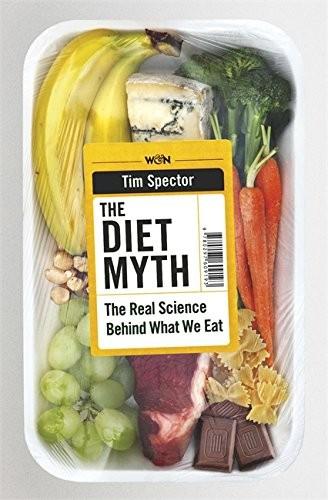
The Diet Myth: The Real Science Behind What We Eat
by
Tim Spector
Published 13 May 2015
Some of the many longstanding health claims have now been disproved: for instance, it is no longer believed to be of any obvious use against menopausal symptoms or osteoporosis.4 As we have noted before in this book, the same foods can have very different effects in different people. Even when considering a single soy product, we have found that its effect in Europeans appears different from its effect in Asians. Soybeans contain unique antioxidant chemicals called isoflavones which are converted in the gut into active compounds known as endocrine disruptors (such as genistein); these mess up your hormone pathways and can modify your genes. This group of chemicals is thought to act like a type of mild oestrogen that could potentially increase cancer risk. Early in my career I enthusiastically explored this hypothesis, and I also published another observational study that linked global soybean consumption to national rates of pancreatic cancer.5 This proved to be yet another demonstration of a false epidemiological association due to bias, and there is currently no good evidence of an adverse effect on the pancreas.
…
Soy milk sales have been increasing rapidly in many countries and are now the commonest soy product consumed. It is a good source of protein for children allergic to cow’s milk, although the cure is rapidly becoming the problem: allergies to soy are also increasing, and soy alternatives are now available. The other components of soy such as endocrine disruptors like genistein, mentioned earlier, are regularly contained in infant feeds in amounts large enough to be a potential worry. Concern here is because the first three years of life are crucial for the normal development of a child, when the genes are constantly changing and fine-tuning their functions so as to produce new proteins.
…
Concern here is because the first three years of life are crucial for the normal development of a child, when the genes are constantly changing and fine-tuning their functions so as to produce new proteins. Given that the isoflavones in soy have such significant and usually beneficial epigenetic effects in cancer, we should be more cautious when considering whether to give soy to susceptible babies. When you combine the epigenetic effects of soy with other known endocrine disruptor chemicals like bisphenol (BPA), which is in many babies’ plastic bottles, you could be preparing a dangerous cocktail.8 Seaweed suppers An unusual source of protein is seaweed, although to get health-giving amounts you would need to spend your day in sushi bars, since protein makes up only about 2 per cent of the content of marine algae; the rest is hard-to-digest carbohydrate starch.
Garbage Land: On the Secret Trail of Trash
by
Elizabeth Royte
Published 1 Jan 2005
William McDonough, author with Michael Braungart of Cradle to Cradle: Remaking the Way We Make Things, bases his entire design philosophy on the notion that waste equals food—that the end of one product’s usefulness should nurture the birth of another. McDonough and Braungart break waste into three categories. “Consumables” are things we eat or use that would eventually biodegrade, including shampoo bottles made of beets and fabrics free of toxins, mutagens, and endocrine disruptors. “Durables,” like TVs and cars, would be returned to their manufacturers as technical nutrients and used as food in their manufacturing systems. “Unmarketables,” like nuclear waste, dioxin, and chromium-tanned leather, would no longer be produced or sold. Mulling over the waste streams that left my house, I saw that sometimes they intersected—as food and sewage did at the wastewater treatment plant—and sometimes they came apart—at a recycling facility, for example.
…
A year’s data included three half-liter water bottles, but on that matter my conscience was clear: they were outliers, introduced by guests unaware of my single-use phobia. I was devoted to my widemouthed Nalgene bottle—refillable, hardy at all temperatures, a cinch to clean. Then I read about a study conducted at Case Western Reserve University and learned it was made of a polycarbonate called Lexan that’s been linked in mice to an endocrine disruptor called bisphenol-A, which has in turn been linked to chromosome abnormalities and the runaway development of fat cells. The only healthy alternatives for toting around liquids, it seemed, were the leather bota bag, popularized by Chianti-drinking campers in the seventies, and the bladders of large ungulates, like buffalo or elk, popularized by hard-core survivalists.
…
But scientists have become increasingly alarmed about the effect of excreted pharmaceuticals, including birth control pills, steroids, antibiotics, pain pills, and Prozac, on wildlife in and near our nation’s waterways. Within the last decade or so, endocrinologists have correlated deformities and behavioral changes in fish, amphibians, and birds to high levels of endocrine disruptors that flow, with urine, into and then out of wastewater treatment plants. Leaving the rectangular tanks, Heckler and I ducked into a windowless building filled with four open cone-shaped thickening tanks, sixty feet across. Huge feed lines and ducts led in every direction. Skylights dimly illuminated the passageways.
The Science of Fear: How the Culture of Fear Manipulates Your Brain
by
Daniel Gardner
Published 23 Jun 2009
There has been an enormous amount of scientific study of chemicals over the last half century, but it’s still true that a great many synthetic chemicals have not been rigorously analyzed, either separately or in their combined effects with other chemicals. There really is lots we don’t know. That’s particularly true in case of the raging controversy over the endocrine disruptor hypothesis—the idea that trace amounts of synthetic chemicals such as bisphenol A can throw the body’s hormones off balance, lowering sperm counts, causing cancer, and maybe much more. The hypothesis first got widespread attention in the mid-1990s, and scores of scientists have been studying the issue for more than a decade, but still the science remains contradictory and unsettled.
…
In an interview for a PBS documentary, Linda Birnbaum, a leading research scientist with the U.S. Environmental Protection Agency, struck exactly the right balance between taking potential threats seriously and keeping those threats in perspective. “I think as parents, we all worry about our children,” said Birnbaum, who, at the time, led a team investigating the hypothesis that endocrine disruptor chemicals in the environment were taking a hidden toll on human health. “But I think that we have to look at the world our children are living in and realize that they have tremendous access to food, to education, to all the necessities of life plus much more. That their life span is likely to be greater than ours is, which is certainly greater than our parents’ was and much greater than our grandparents or great-grandparents.”
…
See also terrorism; specific crimes and events Crutchfield, Richard Cuomo, Chris Cvetkovich, George Dalley, Marlene Darwin, Charles Davis, Gray DDT Dehaene, Stanislas Descartes, René Devlin, Michael diphtheria Dobson, William Donaldson, Sam Douglas, Mary Douglas, William O. Dowd, Maureen Doyle, Aaron Dukakis, Michael Dunbar, Robin Dutton, Denis earthquakes Ebola Ehrlich, Paul Eisenhower, Dwight Eisner, Manuel endocrine disruptor hypothesis Epley, Nicholas Epstein, Sam Example Rule and crime and culture described and emotion in risk perception and entertainment media and excessive information and group polarization and habituation and imagery and marketing of fear and nuclear power and scientific information and terrorism and tobacco marketing Fantino, Julian Federal Bureau of Investigation (FBI) Fellegi, Ivan Finucane, Melissa Fischhoff, Baruch Fogel, Robert Ford, Gerald Frank, Mark Franklin, Benjamin Frederick, Shane Friedman, Thomas Frosch, Dominick Frum, David Fumento, Michael Gaeth, Gary Gagne family Garland, David Gazzaniga, Michael genetically modified organisms- Gibson, Rhonda Gigerenzer, Gerd Gilbert, Daniel Gilmore Committee Gilovich, Thomas Giuliani, Rudy Given, James Buchanan Gladwell, Malcolm global warming Gold, Lois Swirsky Goldwater, Barry Gonzales, Alberto Goodall, Jane Good-Bad Rule and chemical exposure and crime and culture described and disease awareness and emotional imagery and emotion in risk perception and entertainment media and habituation and health risks and imagery and justice and language use and marketing fear and media coverage and probability blindness and risk assessment and scientific information and statistics Gorbachev, Mikhail Gore, Al Gould, Stephen Jay Graham, John Greenpeace Gregg, Judd group polarization Gusiakov, Slava Hansen, Chris Harper, Stephen Harris, Russell Hawking, Stephen Heath, Chip Heath, Iona Heine, Heinrich Henry, David heuristics Higginson, John Hinrichs, Joel Henry HIV/AIDS Hoch, Stephen Hoover, J.
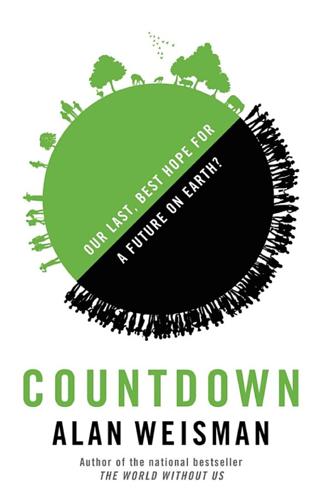
Countdown: Our Last, Best Hope for a Future on Earth?
by
Alan Weisman
Published 23 Sep 2013
Unintentionally, we have also spawned our own micro-threats, for which neither we nor anything alive have defenses. The crisis in Tel Aviv’s biggest sperm bank—just one man in one hundred now qualifies to be a donor—warns that Israel’s transformation of deserts into gardens may have depended too heavily on pesticides. The damaged semen may be due to endocrine disruptors found not just in agro-chemistry, but in pharmaceuticals, household cleaners, detergents, plastics, and even cosmetics and sunscreens. Mounting evidence links them to rising rates of breast and prostate cancer, autism, ovarian cysts, attention-deficit disorder, heart disease, autoimmune deficiency, obesity, diabetes, learning disabilities, and—if that weren’t alarming enough—scrambled sexuality in fauna, ranging from fish to frogs to alligators, polar bears, and humans.
…
“Difference Engine: Waste Not, Want Not.” Economist, January 20, 2012. Doherty, Leo F., Jason G. Bromer, Yuping Zhou, Tamir S. Aldad, Hugh S. Taylor. “In Utero Exposure to Diethylstilbestrol (DES) or Bisphenol-A (BPA) Increases EZH2 Expression in the Mammary Gland: An Epigenetic Mechanism Linking Endocrine Disruptors to Breast Cancer.” Hormones and Cancer, June 2010, 1(3):146-55 Draper Jr., William H. “Oral History Interview with General William H. Draper Jr.,” by Jerry N. Hess. Harry S. Truman Library, January 11, 1972. http://www.trumanlibrary.org/oralhist/draperw.htm. Eaton, Sam. “Antarctica Warming Raises Sea Level Rise Risk.”
…
The European Journal of Contraception and Reproductive Health Care, vol. 15 (June 2010): 157–59. _______.“Global Population Growth—Is It Sustainable?” Presented to the Parliamentary and Scientific Committee, October 22, 2007. Science in Parliament, vol. 65, no. 1 (Spring 2008): 18–19. Prins, Gail S. “Endocrine disruptors and prostate cancer risk.” Endocrine-Related Cancer, vol. 15 (2008) 649–56. Rettner, Rachael. “Steak Made from Human Excrement: Is It Safe?” MyHealthNewsDaily.com, June 17, 2011. http://www.myhealthnewsdaily.com/1400-poop-meat-safety.html. Richards, Gwendolyn. “Him or Herring? Chemicals Causing ‘Gender-Bending’ Fish in Alberta.”
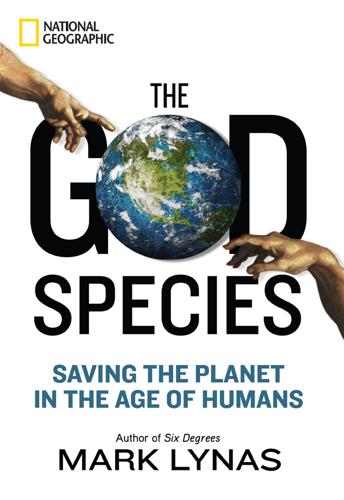
The God Species: Saving the Planet in the Age of Humans
by
Mark Lynas
Published 3 Oct 2011
Fisch et al., 1996: “Semen Analyses in 1283 Men from the United States over a 25-Year Period: No Decline in Quality,” Fertility and Sterility, 65, 1009–14. 16. H. Fisch, 2008: “Declining Worldwide Sperm Counts: Disproving a Myth,” Urologic Clinics of North America, 35, 137–47. 17. M.-H. Wang et al., 2008: “Endocrine Disruptors, Genital Development, and Hypospadias,” Journal of Andrology, 29, 499–505. 18. H. Fisch et al., 2010: “Rising Hypospadias Rates: Disproving a Myth,” Journal of Pediatric Urology, 6, 1, 37–9. 19. M. López-Cervantes et al., 2004: “Dichlorodiphenyldichloroethane Burden and Breast Cancer Risk: A Meta-analysis of the Epidemiologic Evidence,” Environmental Health Perspectives, 112, 2, 207–14. 20.
…
López-Cervantes et al., 2004: “Dichlorodiphenyldichloroethane Burden and Breast Cancer Risk: A Meta-analysis of the Epidemiologic Evidence,” Environmental Health Perspectives, 112, 2, 207–14. 20. M. Gammon et al., 2002: “Environmental Toxins and Breast Cancer on Long Island. II. Organochlorine Compound Levels in Blood,” Cancer Epidemiology Biomarkers and Prevention, 11, 8, 686–97. 21. S. Safe, 2004: “Endocrine Disruptors and Human Health: Is There a Problem,” Toxicology, 205, 1–2, 3–10. 22. A. Blaustein and P. Johnson, 2003: “The Complexity of Deformed Amphibians,” Front. Ecol. Environ., 1, 2, 87–94. 23. http://www.epa.gov/safewater/contaminants/basicinformation/atrazine.html. 24. T. Hayes et al., 2010: “Atrazine Induces Complete Feminization and Chemical Castration in Male African Clawed Frogs (Xenopus laevis),” PNAS, 107, 10, 4612–17. 25.
The Vegetarian Myth: Food, Justice, and Sustainability
by
Lierre Keith
Published 30 Apr 2009
First, they can lock onto estrogen receptors in the body, blocking true estrogen and other hormones. And second, they can also disrupt the body’s production of estrogen. If you believe that because a substance is “natural” it can’t hurt you, get over it. Arsenic is natural. So, for that matter, is uranium. Phytoestrogens are powerful endocrine disruptors, especially in the amounts consumed by vegetarians. And remember the many happy endings provided by another estrogen mimic, diethylstilbestrol, aka DES. Scientists have known that phytoestrogens disrupt mammalian reproduction since the 1940s, when sheep got “clover disease” from grazing pastures that had high levels of phytoestrogens in the plant mix.
…
The authors conclude that “a causal link is biologically feasible.”236 What about girls? Right now, there is an epidemic of precocious female puberty in this country. One percent of US American girls have markers of puberty such as breast development or pubic hair before age three. I think that PCBs in plastic and endocrine disruptors in industrial chemicals are serious concerns, and I don’t mean to let them off the hook. But precocious puberty breaks down by race: 14.7 percent of Caucasian girls show signs of puberty by age eight. But for African-American girls, that rate is 48.3 percent. That’s basically half. Please tell me your head is exploding with rage.
Invisible Women
by
Caroline Criado Perez
Published 12 Mar 2019
EDCs are known to be linked to breast cancer, and several studies have found that cosmetologists are at a particularly elevated risk of Hodgkin’s disease, multiple myeloma and ovarian cancer.30 When occupational health researchers Jim and Margaret Brophy investigated the chemicals used in automotive plastics workplaces (where plastic parts for motorised vehicles are produced) ‘we could not find any substances that they were using that weren’t suspected’ to be either a mammary carcinogen, and/or an endocrine disruptor. ‘If you’re camping or around a campfire and somebody throws in a plastic bottle or a styrofoam cup people run away,’ Brophy points out. ‘The smell is enough to tell you it’s toxic. Well that’s what these women are doing on a daily basis. They’re working on moulding machines which heat up these plastic pellets which are full of all kinds of EDCs.’
…
pdf=cancer 14 Rochon Ford, Anne (2014), “Overexposed, Underinformed”: Nail Salon Workers and Hazards to Their Health / A Review of the Literature National Network on Environments and Women’s Health’, RPSFM (Réseau pancanadien sur la santé des femmes et le milieu) 15 http://www.hazards.org/vulnerableworkers/ituc28april.htm 16 ‘Breast Cancer and Occupation: The Need for Action: APHA Policy Statement Number 20146, Issued November 18, 2014’, NEW SOLUTIONS: A Journal of Environmental and Occupational Health Policy; Rochon Ford (2014) 17 ‘Breast Cancer and Occupation: The Need for Action: APHA Policy Statement Number 20146, Issued November 18, 2014’; Brophy, James T., Keith, Margaret M. et al. (2012), ‘Breast cancer risk in relation to occupations with exposure to carcinogens and endocrine disruptors: a Canadian case-control study’, Environmental Health, 11:87 18 Rochon Ford (2014) 19 http://www.passblue.com/2017/07/05/females-exposed-to-nuclear-radiation-are-far-likelier-than-males-to-suffer-harm/ 20 Phillips, Ann M. (2014), ‘Wonderings on Pollution and Women’s Health’, in Scott, Dayna Nadine (ed.), Our Chemical Selves: Gender, Toxics, and Environmental Health, Vancouver 21 Scott, Dayna Nadine and Lewis, Sarah (2014), ‘Sex and Gender in Canada’s Chemicals Management Plan’, in Scott, Dayna Nadine (ed.), Our Chemical Selves: Gender, Toxics, and Environmental Health, Vancouver 22 Rochon Ford (2014) 23 Scott and Lewis (2014) 24 Rochon Ford (2014) 25 Scott and Lewis (2014) 26 Ibid. 27 Rochon Ford (2014) 28 Scott and Lewis (2014) 29 ‘Breast Cancer and Occupation: The Need for Action: APHA Policy Statement Number 20146, Issued November 18, 2014’, NEW SOLUTIONS: A Journal of Environmental and Occupational Health Policy 30 Rochon Ford (2014) 31 Brophy et al. (2012) 32 ‘Breast Cancer and Occupation: The Need for Action: APHA Policy Statement Number 20146, Issued November 18, 2014’, NEW SOLUTIONS: A Journal of Environmental and Occupational Health Policy 33 https://www.theguardian.com/lifeandstyle/2015/may/05/osha-health-women-breast-cancer-chemicals-work-safety 34 https://www.theguardian.com/lifeandstyle/2015/apr/30/fda-cosmetics-health-nih-epa-environmental-working-group 35 Rochon Ford (2014); Brophy et al. (2012); Scott and Lewis (2014) 36 Scott and Lewis (2014) 37 Brophy et al. (2012) 38 Scott and Lewis (2014) 39 http://www.hazards.org/compensation/meantest.htm 40 ‘Designing Tools and Agricultural Equipment for Women’, poster produced by Aaron M.
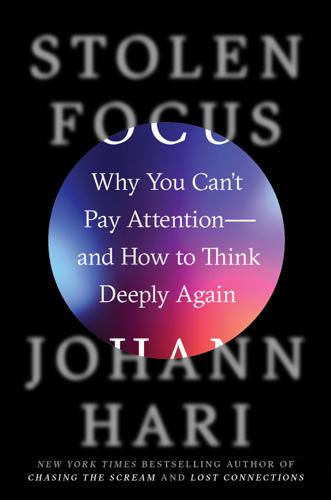
Stolen Focus: Why You Can't Pay Attention--And How to Think Deeply Again
by
Johann Hari
Published 25 Jan 2022
But Barbara Demeneix told me that trying to personally avoid pollutants today, at an individual level, is largely a fool’s errand in a landscape so filled with them. “We can eat bio [i.e., organic]. We can air our homes as often as possible. [We can] live in the countryside.” But when it comes to these endocrine disruptors, “there’s no escape. There’s no escape.” Not at the level of the isolated individual. To understand what we can actually do to solve the damage pollution is doing to our attention, I went to meet up with Bruce Lanphear by the rocks in Horseshoe Bay, on the West Coast of Canada, on a foggy day.
…
GO TO NOTE REFERENCE IN TEXT a pollutant named bisphenol A, or BPA: Nigg, Getting Ahead of ADHD, 146, 155; “BPA Rules in European Union Now in Force: Limit Strengthened 12 Fold,” Food Safety News, September 16, 2018, https://www.foodsafetynews.com/2018/09/bpa-rules-in-european-union-now-in-force-limit-strengthened-12-fold/. GO TO NOTE REFERENCE IN TEXT So she began to research whether these chemicals have any effect on these endocrine signals: B. Demeneix, “Endocrine Disruptors: From Scientific Evidence to Human Health Protection,” Policy Department for Citizens’ Rights and Constitutional Affairs, Directorate General for Internal Policies of the Union, PE 608.866 (2019). GO TO NOTE REFERENCE IN TEXT She warns that all children today are being born “precontaminated”: B.
The Story of Stuff: The Impact of Overconsumption on the Planet, Our Communities, and Our Health-And How We Can Make It Better
by
Annie Leonard
Published 22 Feb 2011
For example, although I avoided a toxic source like a vinyl raincoat, I may have been exposed to the same chemicals it contains and offgases—through the air, the water, or my food. Here is an overview of some of the chemicals in my body, along with some of their most widely known sources: Bisphenol A (BPA)—BPA is an endocrine disruptor, which means that it can interfere with the body’s hormones. It causes a variety of health problems, particularly to the reproductive system. BPA is used in many everyday products from baby bottles to plastic water bottles to the linings of most canned food containers. When buying your refillable water bottle, make sure to check for the BPA-free label.
…
Use: The chemical additives added to PVC are not bound to the plastic so they leach out or evaporate over time. That is why PVC items often reek of a “new car smell” and lead dust has been often found on PVC window frames and mini-blinds. The most common plasticizer used in PVC is DEHP, a suspected carcinogen and endocrine disruptor that is now showing up in human and wildlife bodies tested all over the planet. If we bring this Stuff into our homes, schools, and workplaces, we end up with these toxics in our bodies. Disposal: Whenever PVC is burned, dioxins and acidic gases are released. This happens when discarded PVC ends up in an open burn pile or a waste incinerator.
Green Interior Design
by
Lori Dennis
Published 14 Aug 2020
Wall panel products can be made from eco-friendly materials and are an attractive and welcome change to paint and wall cover. For many years, manufacturers offered PVC-based vinyl “wallpaper,” which was cheap, extremely durable, and easy to clean. Eventually it became known that vinyl wall covering off-gases plasticizers (known endocrine disruptors) into your living space and into landfills when discarded. It is ironic that this is what lined nursing homes and hospital rooms for years. Light has been shed on the detrimental effects that PVC-based wall cover has on indoor air quality. As a response, an entire green wall cover industry seemed to sprout overnight.
The Rational Optimist: How Prosperity Evolves
by
Matt Ridley
Published 17 May 2010
His evidence for this thesis was in essence that he had discovered urban west Africa to be a lawless, impoverished, unhealthy and rather dangerous place. Or ‘our stolen future’? In 1996 a book with this title claimed that sperm counts were falling, breast cancer was increasing, brains were becoming malformed and fish were changing sex, all because of synthetic chemicals that act as ‘endocrine disruptors’, which alter the hormonal balance of bodies. As usual, the scare proved greatly exaggerated: sperm counts are not falling, and no significant effect on human health from endocrine disruption has been detected. In 1995 the otherwise excellent scientist and writer Jared Diamond fell under the spell of fashionable pessimism when he promised: ‘By the time my young sons reach retirement age, half the world’s species will be extinct, the air radioactive and the seas polluted with oil.’
…
Abbasids 161, 178 Abelard, Peter 358 aborigines (Australian): division of labour 62, 63, 76; farming 127; technological regress 78–84; trade 90–91, 92 abortion, compulsory 203 Abu Hureyra 127 Acapulco 184 accounting systems 160, 168, 196 Accra 189 Acemoglu, Daron 321 Ache people 61 Acheulean tools 48–9, 50, 275, 373 Achuar people 87 acid rain 280, 281, 304–6, 329, 339 acidification of oceans 280, 340–41 Adams, Henry 289 Aden 177 Adenauer, Konrad 289 Aegean sea 168, 170–71 Afghanistan 14, 208–9, 315, 353 Africa: agriculture 145, 148, 154–5, 326; AIDS epidemic 14, 307–8, 316, 319, 320, 322; colonialism 319–20, 321–2; demographic transition 210, 316, 328; economic growth 315, 326–8, 332, 347; international aid 317–19, 322, 328; lawlessness 293, 320; life expectancy 14, 316, 422; per capita income 14, 315, 317, 320; poverty 314–17, 319–20, 322, 325–6, 327–8; prehistoric 52–5, 65–6, 83, 123, 350; property rights 320, 321, 323–5; trade 187–8, 320, 322–3, 325, 326, 327–8; see also individual countries African-Americans 108 agricultural employment: decline in 42–3; hardships of 13, 219–20, 285–6 agriculture: early development of 122–30, 135–9, 352, 387, 388; fertilisers, development of 135, 139–41, 142, 146, 147, 337; genetically modified (GM) crops 28, 32, 148, 151–6, 283, 358; hybrids, development of 141–2, 146, 153; and trade 123, 126, 127–33, 159, 163–4; and urbanisation 128, 158–9, 163–4, 215; see also farming; food supply Agta people 61–2 aid, international 28, 141, 154, 203, 317–19, 328 AIDS 8, 14, 307–8, 310, 316, 319, 320, 322, 331, 353 AIG (insurance corporation) 115 air conditioning 17 air pollution 304–5 air travel: costs of 24, 37, 252, 253; speed of 253 aircraft 257, 261, 264, 266 Akkadian empire 161, 164–5 Al-Ghazali 357 Al-Khwarizmi, Muhammad ibn Musa 115 Al-Qaeda 296 Albania 187 Alcoa (corporation) 24 Alexander the Great 169, 171 Alexander, Gary 295 Alexandria 171, 175, 270 Algeria 53, 246, 345 alphabet, invention of 166, 396 Alps 122, 178 altruism 93–4, 97 aluminium 24, 213, 237, 303 Alyawarre aborigines 63 Amalfi 178 Amazon (corporation) 21, 259, 261 Amazonia 76, 138, 145, 250–51 amber 71, 92 ambition 45–6, 351 Ames, Bruce 298–9 Amish people 211 ammonia 140, 146 Amsterdam 115–16, 169, 259, 368 Amsterdam Exchange Bank 251 Anabaptists 211 Anatolia 127, 128, 164, 165, 166, 167 Ancoats, Manchester 214 Andaman islands 66–7, 78 Andes 123, 140, 163 Andrew, Deroi Kwesi 189 Angkor Wat 330 Angola 316 animal welfare 104, 145–6 animals: conservation 324, 339; extinctions 17, 43, 64, 68, 69–70, 243, 293, 302, 338–9; humans’ differences from other 1, 2–4, 6, 56, 58, 64 Annan, Kofi 337 Antarctica 334 anti-corporatism 110–111, 114 anti-slavery 104, 105–6, 214 antibiotics 6, 258, 271, 307 antimony 213 ants 75–6, 87–8, 192 apartheid 108 apes 56–7, 59–60, 62, 65, 88; see also chimpanzees; orang-utans ‘apocaholics’ 295, 301 Appalachia 239 Apple (corporation) 260, 261, 268 Aquinas, St Thomas 102 Arabia 66, 159, 176, 179 Arabian Sea 174 Arabs 89, 175, 176–7, 180, 209, 357 Aral Sea 240 Arcadia Biosciences (company) 31–2 Archimedes 256 Arctic Ocean 125, 130, 185, 334, 338–9 Argentina 15, 186, 187 Arikamedu 174 Aristotle 115, 250 Arizona 152, 246, 345 Arkwright, Sir Richard 227 Armenians 89 Arnolfini, Giovanni 179 art: cave paintings 2, 68, 73, 76–7; and commerce 115–16; symbolism in 136; as unique human trait 4 Ashur, Assyria 165 Asimov, Isaac 354 Asoka the Great 172–3 aspirin 258 asset price inflation 24, 30 Assyrian empire 161, 165–6, 167 asteroid impacts, risk of 280, 333 astronomy 221, 270, 357 Athabasca tar sands, Canada 238 Athens 115, 170, 171 Atlantic Monthly 293 Atlantic Ocean 125, 170 Attica 171 Augustus, Roman emperor 174 Augustus the Strong, Elector of Saxony 184–5 Australia: climate 127, 241, 300, 334; prehistoric 66, 67, 69–70, 127; trade 187; see also aborigines (Australian); Tasmania Austria 132 Ausubel, Jesse 239, 346, 409 automobiles see cars axes: copper 123, 131, 132, 136, 271; stone 2, 5, 48–9, 50, 51, 71, 81, 90–91, 92, 118–19, 271 Babylon 21, 161, 166, 240, 254, 289 Bacon, Francis 255 bacteria: cross fertilisation 271; and pest control 151; resistance to antibiotics 6, 258, 271, 307; symbiosis 75 Baghdad 115, 177, 178, 357 Baines, Edward 227 Baird, John Logie 38 baking 124, 130 ‘balance of nature’, belief in 250–51 Balazs, Etienne 183 bald eagles 17, 299 Bali 66 Baltic Sea 71, 128–9, 180, 185 Bamako 326 bananas 92, 126, 149, 154, 392 Bangladesh 204, 210, 426 Banks, Sir Joseph 221 Barigaza (Bharuch) 174 barley 32, 124, 151 barrels 176 bartering vii, 56–60, 65, 84, 91–2, 163, 356 Basalla, George 272 Basra 177 battery farming 104, 145–6 BBC 295 beads 53, 70, 71, 73, 81, 93, 162 beef 186, 224, 308; see also cattle bees, killer 280 Beijing 17 Beinhocker, Eric 112 Bell, Alexander Graham 38 Bengal famine (1943) 141 benzene 257 Berlin 299 Berlin, Sir Isaiah 288 Bernard of Clairvaux, St 358 Berners-Lee, Sir Tim 38, 273 Berra, Yogi 354 Besant, Annie 208 Bhutan 25–6 Bible 138, 168, 396 bicycles 248–9, 263, 269–70 bin Laden, Osama 110 biofuels 149, 236, 238, 239, 240–43, 246, 300, 339, 343, 344, 346, 393 Bird, Isabella 197–8 birds: effects of pollution on 17, 299; killed by wind turbines 239, 409; nests 51; sexual differences 64; songbirds 55; see also individual species bireme galleys 167 Birmingham 223 birth control see contraception birth rates: declining 204–212; and food supply 192, 208–9; and industrialisation 202; measurement of 205, 403; population control policies 202–4, 208; pre-industrial societies 135, 137; and television 234; and wealth 200–201, 204, 205–6, 209, 211, 212; see also population growth Black Death 181, 195–6, 197, 380 Black Sea 71, 128, 129, 170, 176, 180 blogging 257 Blombos Cave, South Africa 53, 83 blood circulation, discovery of 258 Blunt, John 29 boat-building 167, 168, 177; see also canoes; ship-building Boers 321, 322 Bohemia 222 Bolivia 315, 324 Bolsheviks 324 Borlaug, Norman 142–3, 146 Borneo 339 Bosch, Carl 140, 412 Botswana 15, 316, 320–22, 326 Bottger, Johann Friedrich 184–5 Boudreaux, Don 21, 214 Boulton, Matthew 221, 256, 413–14 bows and arrows 43, 62, 70, 82, 137, 251, 274 Boxgrove hominids 48, 50 Boyer, Stanley 222, 405 Boyle, Robert 256 Bradlaugh, Charles 208 brain size 3–4, 48–9, 51, 55 Bramah, Joseph 221 Branc, Slovakia 136 Brand, Stewart 154, 189, 205 Brando, Marlon 110 brass 223 Brazil 38, 87, 123, 190, 240, 242, 315, 358 bread 38, 124, 140, 158, 224, 286, 392 bridges, suspension 283 Brin, Sergey 221, 405 Britain: affluence 12, 16, 224–5, 236, 296–7; birth rates 195, 200–201, 206, 208, 227; British exceptionalism 200–202, 221–2; climate change policy 330–31; consumer prices 24, 224–5, 227, 228; copyright system 267; enclosure acts 226, 323, 406; energy use 22, 231–2, 232–3, 342–3, 368, 430; ‘glorious revolution’ (1688) 223; income equality 18–19, 218; industrial revolution 201–2, 216–17, 220–32, 255–6, 258–9; life expectancy 15, 17–18; National Food Service 268; National Health Service 111, 261; parliamentary reform 107; per capita income 16, 218, 227, 285, 404–5; productivity 112; property rights 223, 226, 323–4; state benefits 16; tariffs 185–6, 186–7, 223; see also England; Scotland; Wales British Empire 161, 322 bronze 164, 168, 177 Brosnan, Sarah 59 Brown, Lester 147–8, 281–2, 300–301 Brown, Louise 306 Bruges 179 Brunel, Sir Marc 221 Buddhism 2, 172, 357 Buddle, John 412 Buffett, Warren 106, 268 Bulgaria 320 Burkina Faso 154 Burma 66, 67, 209, 335 Bush, George W. 161 Butler, Eamonn 105, 249 Byblos 167 Byzantium 176, 177, 179 cabbages 298 ‘Caesarism’ 289 Cairo 323 Calcutta 190, 315 Calico Act (1722) 226 Califano, Joseph 202–3 California: agriculture 150; Chumash people 62, 92–3; development of credit card 251, 254; Mojave Desert 69; Silicon Valley 221–2, 224, 257, 258, 259, 268 Cambodia 14, 315 camels 135, 176–7 camera pills 270–71 Cameroon 57 Campania 174, 175 Canaanites 166, 396 Canada 141, 169, 202, 238, 304, 305 Canal du Midi 251 cancer 14, 18, 293, 297–9, 302, 308, 329 Cannae, battle of 170 canning 186, 258 canoes 66, 67, 79, 82 capitalism 23–4, 101–4, 110, 115, 133, 214, 258–62, 291–2, 311; see also corporations; markets ‘Captain Swing’ 283 capuchin monkeys 96–7, 375 Caral, Peru 162–3 carbon dioxide emissions 340–47; absorption of 217; and agriculture 130, 337–8; and biofuels 242; costs of 331; and economic growth 315, 332; and fossil fuels 237, 315; and local sourcing of goods 41–2; taxes 346, 356 Cardwell’s Law 411 Caribbean see West Indies Carnegie, Andrew 23 Carney, Thomas 173 carnivorism 51, 60, 62, 68–9, 147, 156, 241, 376 carrots 153, 156 cars: biofuel for 240, 241; costs of 24, 252; efficiency of 252; future production 282, 355; hybrid 245; invention of 189, 270, 271; pollution from 17, 242; sport-utility vehicles 45 The Rational Optimist 424 Carson, Rachel 152, 297–8 Carter, Jimmy 238 Carthage 169, 170, 173 Cartwright, Edmund 221, 263 Castro, Fidel 187 Catalhoyuk 127 catallaxy 56, 355–9 Catholicism 105, 208, 306 cattle 122, 132, 145, 147, 148, 150, 197, 321, 336; see also beef Caucasus 237 cave paintings 2, 68, 73, 76–7 Cavendish, Henry 221 cement 283 central heating 16, 37 cereals 124–5, 125–6, 130–31, 143–4, 146–7, 158, 163; global harvests 121 Champlain, Samuel 138–9 charcoal 131, 216, 229, 230, 346 charitable giving 92, 105, 106, 295, 318–19, 356 Charles V: king of Spain 30–31; Holy Roman Emperor 184 Charles, Prince of Wales 291, 332 Chauvet Cave, France 2, 68, 73, 76–7 Chernobyl 283, 308, 345, 421 Chicago World Fair (1893) 346 chickens 122–3, 145–6, 147, 148, 408 chickpeas 125 Childe, Gordon 162 children: child labour 104, 188, 218, 220, 292; child molestation 104; childcare 2, 62–3; childhood diseases 310; mortality rates 14, 15, 16, 208–9, 284 Chile 187 chimpanzees 2, 3, 4, 6, 29, 59–60, 87, 88, 97 China: agriculture 123, 126, 148, 152, 220; birth rate 15, 200–201; coal supplies 229–30; Cultural Revolution 14, 201; diet 241; economic growth and industrialisation 17, 109, 180–81, 187, 201, 219, 220, 281–2, 300, 322, 324–5, 328, 358; economic and technological regression 180, 181–2, 193, 229–30, 255, 321, 357–8; energy use 245; income equality 19; innovations 181, 251; life expectancy 15; Longshan culture 397; Maoism 16, 187, 296, 311; Ming empire 117, 181–4, 260, 311; per capita income 15, 180; prehistoric 68, 123, 126; serfdom 181–2; Shang dynasty 166; Song dynasty 180–81; trade 172, 174–5, 177, 179, 183–4, 187, 225, 228 chlorine 296 cholera 40, 310 Chomsky, Noam 291 Christianity 172, 357, 358, 396; see also Catholicism; Church of England; monasteries Christmas 134 Chumash people 62, 92–3 Church of England 194 Churchill, Sir Winston 288 Cicero 173 Cilicia 173 Cisco Systems (corporation) 268 Cistercians 215 civil rights movement 108, 109 Clairvaux Abbey 215 Clark, Colin 146, 227 Clark, Gregory 193, 201, 401, 404 Clarke, Arthur C. 354 climate change 328–47, 426–30; costs of mitigation measures 330–32, 333, 338, 342–4; death rates associated with 335–7; and ecological dynamism 250, 329–30, 335, 339; and economic growth 315, 331–3, 341–3, 347; effects on ecosystems 338–41; and food supply 337–8; and fossil fuels 243, 314, 342, 346, 426; historic 194, 195, 329, 334, 426–7; pessimism about 280, 281, 314–15, 328–9; prehistoric 54, 65, 125, 127, 130, 160, 329, 334, 339, 340, 352; scepticism about 111, 329–30, 426; solutions to 8, 315, 345–7 Clinton, Bill 341 Clippinger, John 99 cloth trade 75, 159, 160, 165, 172, 177, 180, 194, 196, 225, 225–9, 232 clothes: Britain 224, 225, 227; early homo sapiens 71, 73; Inuits 64; metal age 122; Tasmanian natives 78 clothing prices 20, 34, 37, 40, 227, 228 ‘Club of Rome’ 302–3 coal: and economic take-off 201, 202, 213, 214, 216–17; and generation of electricity 233, 237, 239, 240, 304, 344; and industrialisation 229–33, 236, 407; prices 230, 232, 237; supplies 302–3 coal mining 132, 230–31, 237, 239, 257, 343 Coalbrookdale 407 Cobb, Kelly 35 Coca-Cola (corporation) 111, 263 coffee 298–9, 392 Cohen, Mark 135 Cold War 299 collective intelligence 5, 38–9, 46, 56, 83, 350–52, 355–6 Collier, Paul 315, 316–17 colonialism 160, 161, 187, 321–2; see also imperialism Colorado 324 Columbus, Christopher 91, 184 combine harvesters 158, 392 combined-cycle turbines 244, 410 commerce see trade Commoner, Barry 402 communism 106, 336 Compaq (corporation) 259 computer games 273, 292 computers 2, 3, 5, 211, 252, 260, 261, 263–4, 268, 282; computing power costs 24; information storage capacities 276; silicon chips 245, 263, 267–8; software 99, 257, 272–3, 304, 356; Y2K bug 280, 290, 341; see also internet Confucius 2, 181 Congo 14–15, 28, 307, 316 Congreve, Sir William 221 Connelly, Matthew 204 conservation, nature 324, 339; see also wilderness land, expansion of conservatism 109 Constantinople 175, 177 consumer spending, average 39–40 containerisation 113, 253, 386 continental drift 274 contraception 208, 210; coerced 203–4 Cook, Captain James 91 cooking 4, 29, 38, 50, 51, 52, 55, 60–61, 64, 163, 337 copper 122, 123, 131–2, 160, 162, 164, 165, 168, 213, 223, 302, 303 copyright 264, 266–7, 326 coral reefs 250, 339–40, 429–30 Cordoba 177 corn laws 185–6 Cornwall 132 corporations 110–116, 355; research and development budgets 260, 262, 269 Cosmides, Leda 57 Costa Rica 338 cotton 37, 108, 149, 151–2, 162, 163, 171, 172, 202, 225–9, 230, 407; calico 225–6, 232; spinning and weaving 184, 214, 217, 219–20, 227–8, 232, 256, 258, 263, 283 Coughlin, Father Charles 109 Craigslist (website) 273, 356 Crapper, Thomas 38 Crathis river 171 creationists 358 creative destruction 114, 356 credit cards 251, 254 credit crunch (2008) 8–10, 28–9, 31, 100, 102, 316, 355, 399, 411 Cree Indians 62 Crete 167, 169 Crichton, Michael 254 Crick, Francis 412 crime: cyber-crime 99–100, 357; falling rates 106, 201; false convictions 19–20; homicide 14, 20, 85, 88, 106, 118, 201; illegal drugs 106, 186; pessimism about 288, 293 Crimea 171 crocodiles, deaths by 40 Crompton, Samuel 227 Crookes, Sir William 140, 141 cruelty 104, 106, 138–9, 146 crusades 358 Cuba 187, 299 ‘curse of resources’ 31, 320 cyber-crime 99–100, 357 Cyprus 132, 148, 167, 168 Cyrus the Great 169 Dalkon Shield (contraceptive device) 203 Dalton, John 221 Damascus 127 Damerham, Wiltshire 194 Danube, River 128, 132 Darby, Abraham 407 Darfur 302, 353 Dark Ages 164, 175–6, 215 Darwin, Charles 77, 81, 91–2, 105, 116, 350, 415 Darwin, Erasmus 256 Darwinism 5 Davy, Sir Humphry 221, 412 Dawkins, Richard 5, 51 DDT (pesticide) 297–8, 299 de Geer, Louis 184 de Soto, Hernando 323, 324, 325 de Waal, Frans 88 Dean, James 110 decimal system 173, 178 deer 32–3, 122 deflation 24 Defoe, Daniel 224 deforestation, predictions of 304–5, 339 Delhi 189 Dell (corporation) 268 Dell, Michael 264 demographic transition 206–212, 316, 328, 402 Denmark 200, 344, 366; National Academy of Sciences 280 Dennett, Dan 350 dentistry 45 depression (psychological) 8, 156 depressions (economic) 3, 31, 32, 186–7, 192, 289; see also economic crashes deserts, expanding 28, 280 Detroit 315, 355 Dhaka 189 diabetes 156, 274, 306 Diamond, Jared 293–4, 380 diamonds 320, 322 Dickens, Charles 220 Diesel, Rudolf 146 Digital Equipment Corporation 260, 282 digital photography 114, 386 Dimawe, battle of (1852) 321 Diocletian, Roman emperor 175, 184 Diodorus 169 diprotodons 69 discount merchandising 112–14 division of labour: Adam Smith on vii, 80; and catallaxy 56; and fragmented government 172; in insects 75–6, 87–8; and population growth 211; by sex 61–5, 136, 376; and specialisation 7, 33, 38, 46, 61, 76–7, 175; among strangers and enemies 87–9; and trust 100; and urbanisation 164 DNA: forensic use 20; gene transfer 153 dogs 43, 56, 61, 84, 125 Doll, Richard 298 Dolphin, HMS 169 dolphins 3, 87 Domesday Book 215 Doriot, Georges 261 ‘dot-communism’ 356 Dover Castle 197 droughts: modern 241, 300, 334; prehistoric 54, 65, 334 drug crime 106, 186 DuPont (corporation) 31 dyes 167, 225, 257, 263 dynamos 217, 233–4, 271–2, 289 dysentery 157, 353 eagles 17, 239, 299, 409 East India Company 225, 226 Easter Island 380 Easterbrook, Greg 294, 300, 370 Easterlin, Richard 26 Easterly, William 318, 411 eBay (corporation) 21, 99, 100, 114, 115 Ebla, Syria 164 Ebola virus 307 economic booms 9, 29, 216 economic crashes 7–8, 9, 193; credit crunch (2008) 8–10, 28–9, 31, 100, 102, 316, 355, 399, 411; see also depressions (economic) ecosystems, dynamism of 250–51, 303, 410 Ecuador 87 Edinburgh Review 285 Edison, Thomas 234, 246, 272, 412 education: Africa 320; Japan 16; measuring value of 117; and population control 209, 210; universal access 106, 235; women and 209, 210 Edwards, Robert 306 Eemian interglacial period 52–3 Egypt: ancient 161, 166, 167, 170, 171, 192, 193, 197, 270, 334; Mamluk 182; modern 142, 154, 192, 301, 323; prehistoric 44, 45, 125, 126; Roman 174, 175, 178 Ehrenreich, Barbara 291 Ehrlich, Anne 203, 301–2 Ehrlich, Paul 143, 190, 203, 207, 301–2, 303 electric motors 271–2, 283 electricity 233–5, 236, 237, 245–6, 337, 343–4; costs 23; dynamos 217, 233–4, 271–2, 289 elephants 51, 54, 69, 303, 321 Eliot, T.S. 289 email 292 emigration 199–200, 202; see also migrations empathy 94–8 empires, trading 160–61; see also imperialism enclosure acts 226, 323, 406 endocrine disruptors 293 Engels, Friedrich 107–8, 136 England: agriculture 194–6, 215; infant mortality 284; law 118; life expectancy 13, 284; medieval population 194–7; per capita income 196; scientific revolution 255–7; trade 75, 89, 104, 106, 118, 169, 194; see also Britain Enron (corporation) 29, 111, 385 Erie, Lake 17 Erie Canal 139, 283 ethanol 240–42, 300 Ethiopia 14, 316, 319; prehistoric 52, 53, 129 eugenics 288, 329 Euphrates river 127, 158, 161, 167, 177 evolution, biological 5, 6, 7, 49–50, 55–6, 75, 271, 350 Ewald, Paul 309 exchange: etiquette and ritual of 133–4; and innovation 71–2, 76, 119, 167–8, 251, 269–74; and pre-industrial economies 133–4; and property rights 324–5; and rule of law 116, 117–18; and sexual division of labour 65; and specialisation 7, 10, 33, 35, 37–8, 46, 56, 58, 75, 90, 132–3, 350–52, 355, 358–9; and trust 98–100, 103, 104; as unique human trait 56–60; and virtue 100–104; see also bartering; markets; trade executions 104 extinctions 17, 43, 64, 68, 69–70, 243, 293, 302, 338–9 Exxon (corporation) 111, 115 eye colour 129 Ezekiel 167, 168 Facebook (website) 262, 268, 356 factories 160, 214, 218, 219–20, 221, 223, 256, 258–9, 284–5 falcons 299 family formation 195, 209–210, 211, 227 famines: modern 141, 143, 154, 199, 203, 302; pessimism about 280, 281, 284, 290, 300–302, 314; pre-industrial 45, 139, 195, 197 Faraday, Michael 271–2 Fargione, Joseph 242 farming: battery 104, 145–6; free-range 146, 308; intensive 143–9; organic 147, 149–52, 393; slash-and-burn 87, 129, 130; subsidies 188, 328; subsistence 87, 138, 175–6, 189, 192, 199–200; see also agriculture; food supply fascism 289 Fauchart, Emmanuelle 264 fax machines 252 Feering, Essex 195 Fehr, Ernst 94–6 female emancipation 107, 108–9, 209 feminism 109 Ferguson, Adam 1 Ferguson, Niall 85 Fermat’s Last Theorem 275 fermenting 130, 241 Ferranti, Sebastian de 234 Fertile Crescent 126, 251 fertilisation, in-vitro 306 fertilisers 32, 129, 135, 139–41, 142, 143, 145, 146, 147, 148, 149–50, 152, 155, 200, 337 Fibonacci 178 figs 125, 129 filariasis 310 Finland 15, 35, 261 fire, invention of 4, 50, 51, 52, 60, 274 First World War 289, 309 fish, sex-change 280, 293 fish farming 148, 155 fishing 62, 63–4, 71, 78–9, 81–2, 125, 127, 129, 136, 159, 162, 163, 327 Fishman, Charles 113 Flanders 179, 181, 194 flight, powered 257, 261, 264, 266 Flinders Island 81, 84 floods 128, 250, 329, 331, 334, 335, 426 Florence 89, 103, 115, 178 flowers, cut 42, 327, 328 flu, pandemic 28, 145–6, 308–310 Flynn, James 19 Fontaine, Hippolyte 233–4 food aid 28, 141, 154, 203 food miles 41–2, 353, 392; see also local sourcing food preservation 139, 145, 258 food prices 20, 22, 23, 34, 39, 40, 42, 240, 241, 300 food processing 29–30, 60–61, 145; see also baking; cooking food retailing 36, 112, 148, 268; see also supermarkets food sharing 56, 59–60, 64 food supply: and biofuels 240–41, 243, 300; and climate change 337–8; and industrialisation 139, 201–2; pessimism about 280, 281, 284, 290, 300–302; and population growth 139, 141, 143–4, 146–7, 192, 206, 208–9, 300–302 Ford, Ford Maddox 188 Ford, Henry 24, 114, 189, 271 Forester, Jay 303 forests, fears of depletion 304–5, 339 fossil fuels: and ecology 237, 240, 304, 315, 342–3, 345–6; fertilisers 143, 150, 155, 237; and industrialisation 214, 216–17, 229–33, 352; and labour saving 236–7; and productivity 244–5; supplies 216–17, 229–30, 237–8, 245, 302–3; see also charcoal; coal; gas, natural; oil; peat Fourier analysis 283 FOXP2 (gene) 55, 375 fragmentation, political 170–73, 180–81, 184, 185 France: capital markets 259; famine 197; infant mortality 16; population growth 206, 208; revolution 324; trade 184, 186, 222 Franco, Francisco 186 Frank, Robert 95–6 Franken, Al 291 Franklin, Benjamin 107, 256 Franks 176 Fray Bentos 186 free choice 27–8, 107–110, 291–2 free-range farming 146, 308 French Revolution 324 Friedel, Robert 224 Friedman, Milton 111 Friend, Sir Richard 257 Friends of the Earth 154, 155 Fry, Art 261 Fuji (corporation) 114, 386 Fujian, China 89, 183 fur trade 169, 180 futurology 354–5 Gadir (Cadiz) 168–9, 170 Gaelic language 129 Galbraith, J.K. 16 Galdikas, Birute 60 Galilee, Sea of 124 Galileo 115 Gandhi, Indira 203, 204 Gandhi, Sanjay 203–4 Ganges, River 147, 172 gas, natural 235, 236, 237, 240, 302, 303, 337 Gates, Bill 106, 264, 268 GDP per capita (world), increases in 11, 349 Genentech (corporation) 259, 405 General Electric Company 261, 264 General Motors (corporation) 115 generosity 86–7, 94–5 genetic research 54, 151, 265, 306–7, 310, 356, 358 genetically modified (GM) crops 28, 32, 148, 151–6, 283, 358 Genghis Khan 182 Genoa 89, 169, 178, 180 genome sequencing 265 geothermal power 246, 344 Germany: Great Depression (1930s) 31; industrialisation 202; infant mortality 16; Nazism 109, 289; population growth 202; predicted deforestation 304, 305; prehistoric 70, 138; trade 179–80, 187; see also West Germany Ghana 187, 189, 316, 326 Gibraltar, Strait of 180 gift giving 87, 92, 133, 134 Gilbert, Daniel 4 Gilgamesh, King 159 Ginsberg, Allen 110 Gintis, Herb 86 Gladstone, William 237 Glaeser, Edward 190 Glasgow 315 glass 166, 174–5, 177, 259 glass fibre 303 Global Humanitarian Forum 337 global warming see climate change globalisation 290, 358 ‘glorious revolution’ (1688) 223 GM (genetically modified) crops 28, 148, 151–6, 283, 358 goats 122, 126, 144, 145, 197, 320 Goethe, Johann von 104 Goklany, Indur 143–4, 341, 426 gold 165, 177, 303 golden eagles 239, 409 golden toads 338 Goldsmith, Edward 291 Google (corporation) 21, 100, 114, 259, 260, 268, 355 Gore, Al 233, 291 Goths 175 Gott, Richard 294 Gramme, Zénobe Théophile 233–4 Grantham, George 401 gravity, discovery of 258 Gray, John 285, 291 Great Barrier Reef 250 Greece: ancient 115, 128, 161, 170–71, 173–4; modern 186 greenhouse gases 152, 155, 242, 329; see also carbon dioxide emissions Greenland: ice cap 125, 130, 313, 334, 339, 426; Inuits 61; Norse 380 Greenpeace 154, 155, 281, 385 Grottes des Pigeons, Morocco 53 Groves, Leslie 412 Growth is Good for the Poor (World Bank study) 317 guano 139–40, 302 Guatemala 209 Gujarat 162, 174 Gujaratis 89 Gustavus Adolphus, King of Sweden 184 Gutenberg, Johann 184, 253 Guth, Werner 86 habeas corpus 358 Haber, Fritz 140, 412 Hadza people 61, 63, 87 Haiti 14, 301, 315 Halaf people 130 Hall, Charles Martin 24 Halley, Edmond 256 HANPP (human appropriation of net primary productivity) number 144–5 Hanseatic merchants 89, 179–80, 196 Hansen, James 426 hanta virus 307 happiness 25–8, 191 Harappa, Indus valley 161–2 Hardin, Garrett 203 harems 136 Hargreaves, James 227, 256 Harlem, Holland 215–16 Harper’s Weekly 23 Harvey, William 256 hay 214–15, 216, 239, 408–9 Hayek, Friedrich 5, 19, 38, 56, 250, 280, 355 heart disease 18, 156, 295 ‘hedonic treadmill’ 27 height, average human 16, 18 Heller, Michael 265–6 Hellespont 128, 170 Henrich, Joe 77, 377 Henry II, King of England 118 Henry, Joseph 271, 272 Henry, William 221 Heraclitus 251 herbicides 145, 152, 153–4 herding 130–31 Hero of Alexandria 270 Herschel, Sir William 221 Hesiod 292 Hippel, Eric von 273 hippies 26, 110, 175 Hiroshima 283 Hitler, Adolf 16, 184, 296 Hittites 166, 167 HIV/AIDS 8, 14, 307–8, 310, 316, 319, 320, 322, 331, 353 Hiwi people 61 Hobbes, Thomas 96 Hock, Dee 254 Hohle Fels, Germany 70 Holdren, John 203, 207, 311 Holland: agriculture 153; golden age 185, 201, 215–16, 223; horticulture 42; industrialisation 215–16, 226; innovations 264; trade 31, 89, 104, 106, 185, 223, 328 Holy Roman Empire 178, 265–6 Homer 2, 102, 168 Homestead Act (1862) 323 homicide 14, 20, 85, 88, 106, 118, 201 Homo erectus 49, 68, 71, 373 Homo heidelbergensis 49, 50–52, 373 Homo sapiens, emergence of 52–3 Hong Kong 31, 83, 158, 169, 187, 219, 328 Hongwu, Chinese emperor 183 Hood, Leroy 222, 405 Hooke, Robert 256 horses 48, 68, 69, 129, 140, 197, 215, 282, 408–9; shoes and harnesses 176, 215 housing costs 20, 25, 34, 39–40, 234, 368 Hoxha, Enver 187 Hrdy, Sarah 88 Huber, Peter 244, 344 Hueper, Wilhelm 297 Huguenots 184 Huia (birds) 64 human sacrifice 104 Hume, David 96, 103, 104, 170 humour 2 Hunan 177 Hungary 222 Huns 175 hunter-gatherers: consumption and production patterns 29–30, 123; division of labour 61–5, 76, 136; famines 45, 139; limitations of band size 77; modern societies 66–7, 76, 77–8, 80, 87, 135–6, 136–7; nomadism 130; nostalgia for life of 43–5, 135, 137; permanent settlements 128; processing of food 29, 38, 61; technological regress 78–84; trade 72, 77–8, 81, 92–3, 123, 136–7; violence and warfare 27, 44–5, 136, 137 hunting 61–4, 68–70, 125–6, 130, 339 Huron Indians 138–9 hurricanes 329, 335, 337 Hurst, Blake 152 Hutterites 211 Huxley, Aldous 289, 354 hydroelectric power 236, 239, 343, 344, 409 hyenas 43, 50, 54 IBM (corporation) 260, 261, 282 Ibn Khaldun 182 ice ages 52, 127, 329, 335, 340, 388 ice caps 125, 130, 313, 314, 334, 338–9, 426 Iceland 324 Ichaboe island 140 ‘idea-agora’ 262 imitation 4, 5, 6, 50, 77, 80 imperialism 104, 162, 164, 166, 172, 182, 319–20, 357; see also colonialism in-vitro fertilisation 306 income, per capita: and economic freedom 117; equality 18–19, 218–19; increases in 14, 15, 16–17, 218–19, 285, 331–2 India: agriculture 126, 129, 141, 142–3, 147, 151–2, 156, 301; British rule 160; caste system 173; economic growth 187, 358; energy use 245; income equality 19; infant mortality 16; innovations 172–3, 251; Mauryan empire 172–3, 201, 357; mobile phone use 327; population growth 202, 203–4; prehistoric 66, 126, 129; trade 174–5, 175, 179, 186–7, 225, 228, 232; urbanisation 189 Indian Ocean 174, 175 Indonesia 66, 87, 89, 177 Indus river 167 Indus valley civilisation 161–2, 164 industrialisation: and capital investment 258–9; and end of slavery 197, 214; and food production 139, 201–2; and fossil fuels 214, 216–17, 229–33, 352; and innovation 38, 220–24, 227–8; and living standards 217–20, 226–7, 258; pessimistic views of 42, 102–3, 217–18, 284–5; and productivity 227–8, 230–31, 232, 235–6, 244–5; and science 255–8; and trade 224–6; and urbanisation 188, 226–7 infant mortality 14, 15, 16, 208–9, 284 inflation 24, 30, 169, 289 influenza see flu, pandemic Ingleheart, Ronald 27 innovation: and capital investment 258–62, 269; and exchange 71–2, 76, 119, 167–8, 251, 269–74; and government spending programmes 267–9; increasing returns of 248–55, 274–7, 346, 354, 358–9; and industrialisation 38, 220–24, 227–8; and intellectual property 262–7, 269; limitlessness 374–7; and population growth 252; and productivity 227–8; and science 255–8, 412; and specialisation 56, 71–2, 73–4, 76–7, 119, 251; and trade 168, 171 insect-resistant crops 154–5 insecticides 151–2 insects 75–6, 87–8 insulin 156, 274 Intel (corporation) 263, 268 intellectual property 262–7; see also copyright; patents intensive farming 143–9 Intergovernmental Panel on Climate Change (IPCC) 330, 331, 332, 333–4, 338, 342, 347, 425, 426, 427, 428 internal combustion engine 140, 146, 244 International Planned Parenthood Foundation 203 internet: access to 253, 268; blogging 257; and charitable giving 318–19, 356; cyber-crime 99–100, 357; development of 263, 268, 270, 356; email 292; free exchange 105, 272–3, 356; packet switching 263; problem-solving applications 261–2; search engines 245, 256, 267; shopping 37, 99, 107, 261; social networking websites 262, 268, 356; speed of 252, 253; trust among users 99–100, 356; World Wide Web 273, 356 Inuits 44, 61, 64, 126 IPCC (Intergovernmental Panel on Climate Change) 330, 331, 332, 333–4, 338, 342, 347, 349, 425, 426, 427, 428 IQ levels 19 Iran 162 Iraq 31, 158, 161 Ireland 24, 129, 199, 227 iron 166, 167, 169, 181, 184, 223, 229, 230, 302, 407 irradiated food 150–51 irrigation 136, 147–8, 159, 161, 163, 198, 242, 281 Isaac, Glyn 64 Isaiah 102, 168 Islam 176, 357, 358 Israel 53, 69, 124, 148 Israelites 168 Italy: birth rate 208; city states 178–9, 181, 196; fascism 289; Greek settlements 170–71, 173–4; infant mortality 15; innovations 196, 251; mercantilism 89, 103, 178–9, 180, 196; prehistoric 69 ivory 70, 71, 73, 167 Jacob, François 7 Jacobs, Jane 128 Jamaica 149 James II, King 223 Japan: agriculture 197–8; birth rates 212; dictatorship 109; economic development 103, 322, 332; economic and technological regression 193, 197–9, 202; education 16; happiness 27; industrialisation 219; life expectancy 17, 31; trade 31, 183, 184, 187, 197 Jarawa tribe 67 Java 187 jealousy 2, 351 Jebel Sahaba cemeteries, Egypt 44, 45 Jefferson, Thomas 247, 249, 269 Jenner, Edward 221 Jensen, Robert 327 Jericho 127, 138 Jevons, Stanley 213, 237, 245 Jews 89, 108, 177–8, 184 Jigme Singye Wangchuck, King of Bhutan 25–6 Jobs, Steve 221, 264, 405 John, King of England 118 Johnson, Lyndon 202–3 Jones, Rhys 79 Jordan 148, 167 Jordan river 127 Joyce, James 289 justice 19–20, 116, 320, 358 Kalahari desert 44, 61, 76 Kalkadoon aborigines 91 Kanesh, Anatolia 165 Kangaroo Island 81 kangaroos 62, 63, 69–70, 84, 127 Kant, Immanuel 96 Kaplan, Robert 293 Kay, John 184, 227 Kazakhstan 206 Kealey, Terence 172, 255, 411 Kelly, Kevin 356 Kelvin, William Thomson, 1st Baron 412 Kenya 42, 87, 155, 209, 316, 326, 336, 353 Kerala 327 Kerouac, Jack 110 Khoisan people 54, 61, 62, 67, 116, 321 Kim Il Sung 187 King, Gregory 218 Kingdon, Jonathan 67 Kinneret, Lake 124 Klasies River 83 Klein, Naomi 291 Kleiner Perkins Caufield & Byers (venture capitalists) 259 knowledge, increasing returns of 248–50, 274–7 Kodak (corporation) 114, 386 Kohler, Hans-Peter 212 Korea 184, 197, 300; see also North Korea; South Korea Kuhn, Steven 64, 69 kula (exchange system) 134 !
Sustainable Minimalism: Embrace Zero Waste, Build Sustainability Habits That Last, and Become a Minimalist Without Sacrificing the Planet (Green Housecleaning, Zero Waste Living)
by
Stephanie Marie Seferian
Published 19 Jan 2021
Forest Stewardship Council (FSC) The FSC takes a stand against deforestation and certifies products derived from trees that are harvested from responsibly-managed and environmentally-conscious forests. Global Organic Textile Standard (GOTS) GOTS certifies textile products, like clothing, bedding, and more, that contain at least 95-percent certified organic fibers. MADE SAFE® MADE SAFE® identifies personal care and home products without toxic chemicals like endocrine disruptors, carcinogens, and high-risk pesticides. USDA Certified Organic A USDA Certified Organic label ensures that the food item contains 95 percent or more certified organic ingredients and is free of synthetic additives. 5. Assess Hidden Costs Many minimalists understand that the cost of an item runs much deeper than its sticker price, and that’s because every possession burdens buyers in the long-term with the two hidden costs of time and environmental impact.
The omnivore's dilemma: a natural history of four meals
by
Michael Pollan
Published 15 Dec 2006
I happen to believe the organic dinner I served my family is healthier than a meal of the same foods conventionally produced, but I'd be hard-pressed to prove it scientifically. What I could prove, with the help of a mass spectrometer, is that it contained little or no pesticide residue—the traces of the carcinogens, neurotoxins, and endocrine disruptors now routinely found in conventional produce and meat. What I probably can't prove is that the low levels of these toxins present in these foods will make us sick—give us cancer, say, or interfere with my son's neurological or sexual development. But that does not mean those poisons are not making us sick: Remarkably little research has been done to assess the effects of regular exposure to the levels of organophosphate pesticide or growth hormone that the government deems "tolerable" in our foods.
…
But that does not mean those poisons are not making us sick: Remarkably little research has been done to assess the effects of regular exposure to the levels of organophosphate pesticide or growth hormone that the government deems "tolerable" in our foods. (One problem with these official tolerances is that they don't adequately account for children's exposure to pesticides, which, because of children's size and eating habits, is much greater than adults'.) Given what we do know about exposure to endocrine disruptors, the biological impact of which depends less on dose than timing, minimizing a child's exposure to these 177 178 * THE O M N I VO R E ' S D I L E M M A chemicals seems like a prudent idea. I very much like the fact that the milk in the ice cream I served came from cows that did not receive injections of growth hormone to boost their productivity, or that the corn those cows are fed, like the corn that feeds Rosie, contains no residues of atrazine, the herbicide commonly sprayed on American cornfields.
Carbon: The Book of Life
by
Paul Hawken
Published 17 Mar 2025
The composition of more than fifty thousand chemicals remains confidential and not revealed to the public or regulators. In most cases, released chemicals build up cumulatively over the years. More than five hundred reported dead zones in the world’s lakes and oceans are caused by agrochemical runoff. Carcinogens, flame retardants, PFOAs, PCBs, heavy metal compounds, endocrine disruptors, phthalates, and glyphosate are found in most people alive today. These chemicals were introduced as having significant benefits to humankind when first manufactured and sold into the marketplace. The safety assurances concerning nanotubes are being proven false; government regulation cannot keep up with existing chemicals.
Tomatoland: How Modern Industrial Agriculture Destroyed Our Most Alluring Fruit
by
Barry Estabrook
Published 6 Jun 2011
Department of Agriculture studies found traces of thirty-five pesticides on conventionally grown fresh tomatoes: endosulfan, azoxystrobin, chlorothalonil, methamidophos, permethrin trans, permethrin cis, fenpropathrin, trifloxystrobin, o-phenylphenol, pieronyl butoxide, acetamprid, pyrimethanil, boscalid, bifenthrin, dicofol p., thiamethoxam, chlorpyrifos, dicloran, flonicamid, pyriproxyfen, omethoate, pyraclostrobin, famoxadone, clothianidin, cypermethrin, clothianidin, cypermethrin, fenhexamid, oxamyl, diazinon, buprofezin, cyazofamid, deltamethrin, acephate, and folpet. It is important to note that residues of these chemicals were below levels considered to be harmful to humans, but in high enough concentrations, three are known or probable carcinogens, six are neurotoxins, fourteen are endocrine disruptors, and three cause reproductive problems and birth defects. With all the help they can get from their chemical friends, and provided that they are not killed by frosts or blown over by hurricanes, Florida tomatoes are ready for picking after ten to fifteen weeks. Ready for picking, but by no means ripe.
Everything Under the Sun: Toward a Brighter Future on a Small Blue Planet
by
Ian Hanington
Published 13 May 2012
Researchers have even found evidence suggesting that exposure to some of these chemicals can exacerbate or even contribute to the development of asthma in children. Other chemicals may have harmful effects that don’t show up right away. For example, diethyl phthalate (DEP) is a cheap and versatile chemical widely used in cosmetic fragrances to make the scent last longer. But it is associated with a range of problems. The European Commission report on endocrine disruptors has listed DEP as a Category 1 priority substance, based on evidence that it interferes with hormone function. Phthalates have been linked to early puberty in girls, reduced sperm count in men, and reproductive defects in the developing male fetus (when the mother is exposed during pregnancy).
Happy Inside: How to Harness the Power of Home for Health and Happiness
by
Michelle Ogundehin
Published 29 Apr 2020
The main issue is that some of the chemicals used to create plastic are known to leach directly into food or water. Polycarbonate (used for water bottles and food-storage containers) and PVC (used to make bottles, cling film and the inner linings of some tin cans) contain Bisphenol A (BPA) and phthalates respectively, both known endocrine disruptors that adversely affect the production and levels of our hormones, as well as being associated with all manner of other health issues including asthma, cancer, obesity and autism. Regrettably, we are probably all exposed to some level of them on a daily basis. And while BPA and phthalates are the substances in the spotlight at the moment, given that plastic is a wholly synthetic product (derived from petroleum), who knows what else it may contain that might contaminate us?
The Thyroid Diet
by
Mary J. Shomon
Published 31 Aug 2004
Soy Experts can’t seem to agree on the subject, and there is a definite debate about the potentially harmful effects of overconsumption of isoflavone-intensive soy products. Soy is popular as a phytoestrogen for the same reason that it poses a danger to the thyroid, because in large enough quantities it functions as a hormone and antithyroid agent. The isoflavones in soy belong to the flavonoid chemical family, and flavonoids are considered endocrine disruptors—plants that act as hormones, disrupting the endocrine system. Flavonoids typically act against the thyroid by inhibition of thyroid peroxidase (TPO), which disturbs proper thyroid function. There are concerns for adult consumption of soy products. One U.K. study involving premenopausal women gave 60 grams of soy protein per day for 1 month.
The Big Ratchet: How Humanity Thrives in the Face of Natural Crisis
by
Ruth Defries
Published 8 Sep 2014
The Fire Ant Wars: Nature, Science, and Public Policy in Twentieth-Century America. University of Chicago Press, Chicago. Carson, R. 1962. Silent Spring. Houghton Mifflin, Boston. Carvalho, F. 2006. Agriculture, pesticides, food security and food safety. Environmental Science and Policy 9:685–692. Casals-Casas, C., and B. Desvergne. 2011. Endocrine disruptors: From endocrine to metabolic disruption. Annual Reviews of Physiology 73:135–162. Casida, J., and G. Quistad. 1998. Golden age of insecticide research: Past, present, or future? Annual Reviews of Entomology 43:1–16. Chapco, W., and G. Litzenberger. 2004. A DNA investigation into the mysterious disappearance of the Rocky Mountain grasshopper, mega-pest of the 1800s.
Days of Destruction, Days of Revolt
by
Chris Hedges
and
Joe Sacco
Published 7 Apr 2014
It is injected into the tomato beds and trapped under a layer of green polyethylene plastic mulch.14 Workers such as Sanchez, who have to lift up the mulch, routinely complain of eye and respiratory ailments, rashes, open sores, nausea, and headaches.15 The Environmental Protection Agency (EPA) and the National Institute for Occupational Safety and Health show that upward of twenty thousand farmworkers suffer from acute pesticide poisoning every year.16 USDA studies found traces of thirty-five pesticides on conventionally grown fresh tomatoes for sale in the United States. As Barry Estabrook notes, three of those chemicals found in high concentration are “known carcinogens, six are neurotoxins, fourteen are endocrine disruptors, and three cause reproduction problems and birth defects.”17 Tomatoes are harvested before they are ripe. They are gassed in packing plants with ethylene into an artificial ripeness.18 By the time the tomato reaches the dinner plate, as Estabrook points out in his book Tomatoland, it is largely devoid of taste, robbed of most core nutrients, and carrying residues of poison.
Green Swans: The Coming Boom in Regenerative Capitalism
by
John Elkington
Published 6 Apr 2020
It prescribes the following outcomes. In a sustainable society, nature is not subject to systematically increasing the following: 1.Concentrations of substances from the earth’s crust (such as fossil CO2, heavy metals, and minerals) 2.Concentrations of substances produced by society (such as antibiotics and endocrine disruptors) 3.Degradation by physical means (such as deforestation and draining of groundwater tables) 4.And in that society there are no structural obstacles to people’s health, influence, competence, impartiality, and meaning.7 Over the last few years, the Future-Fit Foundation has built on the Natural Step’s work, collaborating with a range of academic experts—including Robèrt himself—to co-evolve what it refers to as the eight properties of a future-fit society.
The Obesity Code: Unlocking the Secrets of Weight Loss
by
Jason Fung
Published 3 Mar 2016
Similarly, birth weight has increased by as much as half a pound (200 grams) over the last twenty-five years.7 The newborn cannot eat too much or exercise too little. What is going on here? Numerous hypotheses have been offered to explain newborn obesity. One popular theory suggests that certain chemicals (obesogens) in our modern environment lead to obesity, chemicals that are often endocrine disruptors. (That is, they disrupt the normal functional hormonal systems of the body.) Since obesity is a hormonal rather than a caloric imbalance, this notion does make some intuitive sense. Nonetheless, the majority of the data comes from animal studies. For example, the pesticides atrazine and DDE may cause obesity in rodents.8 However, no data is available for humans.
This Changes Everything: Capitalism vs. The Climate
by
Naomi Klein
Published 15 Sep 2014
This in turn creates a host of new environmental and health problems, including massive aquatic dead zones caused by agricultural runoff. In other words, rather than solving the fertility problem in the soil, we have simply moved it, transforming a land-based crisis into an ocean-based one. And the chain of infertility is longer still because some of the chemicals used in industrial farming are endocrine disruptors such as the herb killer atrazine, which research shows causes sterility in amphibians, fish, reptiles, and rats—as well as triggering bizarre spontaneous sex changes in male frogs. And these same chemicals have been linked to increased incidence of birth defects and miscarriages in humans, though the manufacturer of atrazine disputes all these links.
…
, 206, 310 Earth Mother/Mother Earth concept, 419, 423–24, 443–44 earthquakes, fracking and, 329 East Bay Tea Party, 38 Eastern Bloc, 75 Eckersley, Robyn, 77 Eckhart, Michael T., 67 EcoEquity, 417–18 ecological amnesia, 3–4 Ecological Economics, 185–86 Ecological Economics (Daly and Farley), 173 economic disruption: extractive industries and, 316, 386 minimizing of, 12 economic geologists, 46 economic growth, 21, 129–30, 186 atmospheric limits vs., 86–89 in capitalism, 89 climate change denial and, 3, 45–46, 59–60 corporate deregulation and, 19 dirty model of, 82 limits on, 185–86 orthodoxy of, 81, 94, 178 economic justice, 10, 59, 91, 94, 157 see also climate debt economy: climate action and, 21, 90, 124–26, 155, 252, 453 decentralized, 158 elite control over, 18 fracking and, 94 fossil fuel, 23, 45–46, 121, 173, 456 local, 7, 68–70, 71, 76, 85–86 planned, 94 post-growth, 178 resource-intensive, 21 wage and price controls in, 125 ecosystems: fertility cycle of, 438–39, 446–48 loss of, 13 restoration of, 93, 127, 444 ectopic pregnancy, 425 Ecuador, 13, 180, 197, 220, 377 Chevron lawsuit of, 309, 378 climate debt and, 408–9 constitutional rights of nature in, 443–44 EDF Energy, 149 Edmonton, Canada, 302 Edwards, Murray, 281 “effervescence of rebellion,” 465 Egypt, 158 El Chichón eruption (1982), 274 Eldorado Gold, Skouries forest project of, 293–94, 296–98, 303, 314, 342, 347, 445 elections: of 1992, 83 of 2008, 149 of 2012, 149 electricity grids, 90, 122, 133 electronic waste, 91 Ellis-Lamkins, Phaedra, 92 Elsipogtog First Nation, 299, 370, 373, 374 Elwha River, 374–75 Elysium, 59 Emerson, Ralph Waldo, 174 emission credits, 219–20 emission reduction, 16, 18–19, 31, 55, 73, 79, 85, 88, 90, 108–9, 127, 144n, 146, 154, 157–58, 213, 218, 283, 355 failure of, 256, 276 historical responsibility vs. capacity to contribute to, 417–18 voluntary, 232 see also climate treaty negotiations empathy, 46–54, 62–63 Enbridge: Canadian Security Intelligence Service as lobbyist for, 362 Michigan pipeline rupture of, 331–32, 338 profit-over-safety culture of, 331, 333 see also Northern Gateway pipeline Enbridge NB, 362 endocrine disruptors, 439 energy, public ownership of, 7, 284 energy conservation, 116–18 Energy Department, U.S., 102, 214, 247, 282 energy efficiency, 127 energy nationalization, 130, 454 energy plants, “combined-cycle,” 129 Energy Policy, 101, 102 energy sources, zero-carbon, 18 EnergyWire, 332 Engelfried, Nick, 314 Enhanced Oil Recovery (EOR), 247–48 Enlightenment, 159, 178 Environics, 36 Environment Agency (EA), U.K., 106–7 Environmental Action, 213 Environmental Coalition for NAFTA, 84 Environmental Defense Fund (EDF), 84, 191, 198, 201, 233n, 235–36, 257 carbon trading supported by, 218, 226–29 fracking supported by, 215–17, 235n, 355–56 pro-business makeover of, 207–10, 233 environmental impact assessments, 203 environmentalism: acceptable risk and, 335 astronaut’s-eye view adopted by, 286–87, 296 command and control, 204 grassroots, 305–10; see also Big Green; Blockadia Keystone pipeline and revival of, 303 top-down, failures of, 295 “environmentalism of the poor,” 202 environmental justice, 92, 155 see also climate debt environmental movement, 157, 197 cap-and-trade and, 229 golden age of environmental law in, 201–4 green consumerism and, 211–13 insider strategy of, 203–4 NAFTA supported by, 83–85 political timidity in, 184–85, 186–87 privileged origins of, 183, 201, 211–12 pro-business ideology in, 207–11, 213 radicalism in, 183–86, 201–3, 206–7 in Reagan era and following, 203–11 schisms in, 206–7 singlemindedness of, 153 see also Big Green Environmental Protection Agency (EPA), 48, 118, 227, 328 Northern Cheyenne and, 390, 393 Environmental Rights Action (Nigeria), 309 Environment Canada, 325, 326–37 ethane, 328 eucalyptus, 239 eugenics, taboo against, 278 Europe: emissions from, 40, 411 program cuts in, 110 “squares movement” in, 464 wealth in, 114 European Community, environmental law in, 202 European Parliament, 91n, 114 European Transport Workers Federation, 127 European Union, 218 airline taxes considered by, 249 Emissions Trading System (ETS) of, 219, 225, 226 fuel quality standards of, 71, 248–49 renewable energy in, 138 U.S. oil and gas exports restriction and, 71 WTO challenges brought against, 65, 70 WTO challenges brought by, 68–69 executive pay, 111, 112 extinctions, 14 extractive industries, 79, 121, 133, 141, 181, 213 alienation of onetime friends by, 313 Big Green and, 191–201 billionaires’ investments in, 235–37 climate change deniers funded by, 44–45, 149 depletion of conventional reserves in, 310 divestment movement and, 206, 353–58, 365, 401, 402–3 donations to environmental groups by, 196–97, 215–16 early victories against, 348–53 ecologically and socially responsible, 447 as economic disrupters, 316, 386 economic and political power of, 149, 151, 377–80, 384–87, 400, 403, 461 emissions regulations blocked by, 200 extreme projects of, 295, 303, 304, 310, 311, 315–34, 446 free trade agreements and, 358–60 geoengineering and, 281–84 government collusion with, 297–99, 303, 306–7, 308, 360, 361–66, 378–80 grassroots opposition to, 305–10; see also Blockadia; climate movement growth as measure of, 129–30 high risk in, 324–25, 331 Indigenous land rights and, see Indigenous peoples, land rights of infrastructures of, 315–24 lawsuits against, 112, 309, 368, 371–72, 378–80, 384, 386 lax regulation of, 129, 330–31, 333 lobbying by, 149–50 local ecology ignored by, 295 nationalization of, 130, 454 new technologies developed by, 145–46, 253, 310 polluter pays principle and, 110–19, 202–3 profit-seeking imperative of, 111, 126, 129, 148, 253, 330–31 progress blocked by, 110–11, 149 publicly owned, 130 public mistrust of, 330, 332, 333, 334 reserve-replacement ratio of, 146–47 sacrifice zones in, 172–73, 310–15 self-preservation instinct of, 149, 253 shareholders of, 111, 112, 128, 129, 146–47, 148 spills and accidents in, 330–34; see also specific accidents Steyer’s walking away from, 235 subsidies for, 70, 115, 118, 127, 418 tobacco companies compared to, 355 transient culture of, 343–44 water requirements of, 346 see also fossil fuels; specific industries and operations extractivism, 161–87, 442, 443, 459, 460–61 colonialism and, 169–70 defined, 169 postcolonial, 179–82 progressive, 181–82 sustainability and, 447 Exxon, 145, 147 ExxonMobil, 44–45, 111, 113, 150, 192, 196, 234, 236, 238, 282, 283, 314 Exxon Valdez oil spill, 337–39, 426 Eyre, Nick, 90 factories: green credits for, 219 retrofitting of, 122–23 fact resistance, 37 fairness: austerity and, 117–19 individual vs. corporate, 116–18 see also climate debt famine, 270, 272, 273, 274 Fanon, Frantz, 459 Farallon Capital Management, 234–35 Farley, Joshua, 173 farming, farmers, see agriculture Farrell, John, 99–100 FedEx, 51, 208, 210 feedback loops, 14 feed-in tariffs, 67, 131, 133 Feely, Richard, 434 feminist movement, 177, 453–54 Fenberg, Steve, 98–99 Ferguson, Brian, 349 Ferris, Deeohn, 314 fertility cycle, of ecosystems, 438–39, 446–48 fertility industry, 421–22 Feygina, Irina, 57 Figueres, Christiana, 200–201 financial crisis of 2008, 5–6, 9, 39, 44, 80, 88, 110, 120–26, 151, 158, 223, 392 financial markets, instability of, 19 financial transaction tax, 114 Finkenthal, Daniel, 207 firefighting, 72, 108, 109 First National People of Color Environmental Leadership Summit, 205 First Nations: in anti-pipeline campaigns, 340, 345, 365–66 government dismissal of pollution claims by, 326 water supplies of, 384 see also Indigenous peoples; specific peoples fisheries collapses, 14 Flannery, Tim, 176 flaring, of natural gas, 219, 305–6 Fleming, James, 263, 270 floods, 14, 72 austerity budgets and, 106–7 business opportunities in, 9 Florida, 330 Flounder Pounder, 425, 427 Foley, Jonathan, 58 Foner, Eric, 456 Food & Water Watch, 197, 356 food, 10 declining stocks of, 13 prices of, 9, 239n sovereignty, 135–36 see also agriculture; famine food chains, aquatic, 259 food miles, 78 Ford, 67 Ford Foundation, 198 Forest Ethics, 248 forests carbon sequestering by, 304 clear-cutting of, 296, 304, 310 privatization of, 8 Forster, E.
Pump Six and Other Stories
by
Paolo Bacigalupi
Published 15 Sep 2010
Against my will, I blush; Dmitri's mocking laughter rises briefly before dissolving into coughing spasms that leave him keeled over and gasping. He wipes his mouth on his lab coat's sleeve and studies the resulting bloody smear. "You should have sent her to me. I could have convinced her." Beside us, the girl lies like a wax dummy, staring at the ceiling. Some bizarre cocktail of endocrine disruptors has rendered her completely catatonic. The sight of her gives me courage "Do you have any more squeegees?" Dmitri laughs, sly and insinuating. His eyes flick to my damaged cheek. "And what would your sharp-nailed patient say, if she found out?" "Please, Dmitri. Don't. I hate myself enough already."
The Limits to Growth: The 30-Year Update
by
Donella H. Meadows
,
Jørgen Randers
and
Dennis L. Meadows
Published 15 Apr 2004
There are 209 of these chemicals, all created by adding chlorine atoms in various positions to the 2 joined benzene rings of the molecule called biphenyl. They are human-synthesized, not normally found in nature. 9. Soren Jensen, New Scientist 32 (1966): 612. 10. For a popular and comprehensive account of the endocrine disruptor story, see Theo Colborn, Dianne Dumanoski, and John P. Myers, Our Stolen Future (New York: Dutton, 1996), which also contains hundreds of references to the rapidly growing scientific literature on this subject. 11. The Soviet Union stopped making PCBs only in 1990. 12. J. M. Marquenie and P.
The Big Necessity: The Unmentionable World of Human Waste and Why It Matters
by
Rose George
Published 13 Oct 2008
There is also a transcript of a CBS story about the death of Daniel Pennock, in which EPA deputy administrator Paul Gilman says something he has probably regretted ever since. When he is asked if biosolids are safe, he replies with “I can’t answer it’s perfectly safe. I can’t answer it’s not safe.” Nancy has the focus and energy of a zealot, because despite her calm manner and her sweet tea, she is running on fury. She talks about endocrine disruptors, chemicals found in pesticides and plasticizers, for example, that mess with human hormones. She fulminates about E. coli spinach outbreaks. She tells me that one in a hundred American children is now born with autism, and that environmental chemicals are probably the cause. She quotes the Centers for Disease Control and Prevention (CDC) “body burden” study, which tests for the presence of 128 chemicals in the human body.
Hormone Repair Manual
by
Lara Briden
Published 14 Apr 2021
That said, it’s worth at least considering toxins, because they can cause problems such as: • bringing on menopause sooner • stimulating fibroid growth • contributing to perimenopausal symptoms • increasing the risk of long-term problems such as thyroid disease, insulin resistance, weight gain and heart disease. Toxins that affect hormones are called endocrine-disrupting chemicals (EDCs), or endocrine disruptors, and include pesticides, solvents, fire retardants, mercury, lead and plastic softeners such as bisphenol A (BPA). There are several mechanisms by which EDCs cause damage, including directly altering hormone levels, interfering with hormone receptors and impairing healthy estrogen metabolism.
Collapse: How Societies Choose to Fail or Succeed
by
Jared Diamond
Published 2 Jan 2008
The culprits include not only insecticides, pesticides, and herbicides, but also mercury and other metals, fire-retardant chemicals, refrigerator coolants, detergents, and components of plastics. We swallow them in our food and water, breathe them in our air, and absorb them through our skin. Often in very low concentrations, they variously cause birth defects, mental retardation, and temporary or permanent damage to our immune and reproductive systems. Some of them act as endocrine disruptors, i.e., they interfere with our reproductive systems by mimicking or blocking effects of our own sex hormones. They probably make the major contribution to the steep decline in sperm count in many human populations over the last several decades, and to the apparently increasing frequency with which couples are unable to conceive, even when one takes into account the increasing average age of marriage in many societies.
…
dendrochronology (tree ring study) Derr, Ken desertification Dominican Republic: agriculture of Balaguer in border of Haiti and bottom-up ecology movement in civil war in climate of consumerism in cooperation between Haiti and economy of emigration from environmental problems of face-to-face society in Falconbridgc iron/nickel mine forest management in future prospects immigrant groups in map national parks in NGOs in per-capita human impact in political instability in population of socioeconomic change in top-down environmental management in Trujillo in U.S. military occupation of Vedado del Yaque Donner Party, cannibalism of Dorset people drought DuPont Company “Dutch” elm disease Duvalier, François “Papa Doc,” Duvalier, Jean-Claude “Baby Doc,” East Africa, population in Easter Island agriculture on Anakena Beach birds of botanical surveys of civil war on clans, chiefs, and commoners of and climate change crematoria of decline and collapse of deforestation of diet of European impacts on geography of history of isolation of map as metaphor and Polynesia population of Rano Raraku quarry rats on rongo-rongo writing system of ropes of sheep grazing on slave raids on statues of ecocide education Edwards, Edmundo Egede, Hans Egypt, pyramids of Ehrlich, Paul Eliel family El Niño El Niño Southern Oscillation (ENSO) Endangered Species Act endocrine disruptors energy sources English, Nathan Enron Corporation environmental management: bottom-up approach to distribution in and the economy by exporting resource depletion as First World concern for the future hope for importance of and improving conditions mixed approach to one-liner objections to in past vs. present and population levels prediction errors in Rio convention on switching to other resources with technology top-down approach to and values environmental problems, twelve main types of Environmental Protection Agency (EPA) environmental trouble spots (map) Erhardt, Emil Eriksson, Leif Eriksson, Thorvald Erik the Red erosion: causes of consequences of control of and river sedimentation European Economic Community (EEC) European Union eutrophication evil, origins of Exxon Valdez Faeroe Islands religion in Viking colony in Falconbridge iron/nickel mine Falkow, Stan Fertile Crescent fertilizer, runoff of Firth, Raymond Fischer, Steven fishing aquaculture in Australia by-catch in in California certification in chain of custody in with dynamite and cyanide and extinct species in Greenland and health of stock in Japan management problems of and marine habitats and Marine Stewardship Council and mining in Montana and non-native species overfishing perverse subsidies in protein provided in sustainable and tragedy of the commons by trawling and water quality and whirling disease Flenley, John Florida, native species of Food and Drug Administration (FDA) food distribution food taboos Ford, Henry forest fires and air quality causes of costs of natural role of prevention of and soil quality suppression of forests: consumption of products from decline of depletion of, see deforestation direct ecological connection of fire-resistant fuel loads in functions of as habitat logging industry management of old-growth rainforests as renewable resources tree density in value in virgin Forest Service, U.S.
The World Without Us
by
Alan Weisman
Published 5 Aug 2008
PAHs were buoyed into the 20th century aboard clouds of exhaust from automobiles and coal-fired power plants; they’re also in the pungent odor of fresh asphalt. At Rothamsted, as at farms everywhere, they were introduced deliberately, in herbicides and pesticides. Dioxins, however, were unintended: they’re by-products formed when hydrocarbons combine with chlorine, with tenacious, disastrous results. Besides their role as sex-changing endocrine disruptors, their most infamous application before being banned was in Agent Orange, a defoliant that laid bare entire Vietnamese rain forests so that insurgents would have nowhere to hide. From 1964 to 1971, the United States doused Vietnam with 12 million gallons of Agent Orange. Four decades later, heavily dosed forests still haven’t grown back.
The Telomere Effect: A Revolutionary Approach to Living Younger, Healthier, Longer
by
Dr. Elizabeth Blackburn
and
Dr. Elissa Epel
Published 3 Jan 2017
Limit your consumption of large and farmed fish, which often contains accumulations of heavy metals and other industrial chemicals. Limit saccharin or other artificial sweeteners, as these can cross the placenta. (The newer artificial sweeteners may do the same; we expect more and more alarming findings.) Canned foods contain BPA (bisphenol A), a significant endocrine disruptor. Stick to what nature provides and consume a whole-foods diet. Avoid packaged foods with their many questionable additives. Avoid chemical exposures at home by wet-mopping frequently, using a vinegar-and-water mixture to clean most surfaces, and checking out safer cleaning products and cosmetics here: http://www.ewg.org/consumer-guides.
The Coke Machine: The Dirty Truth Behind the World's Favorite Soft Drink
by
Michael Blanding
Published 14 Jun 2010
(The study did not reveal the types of water it tested, say ing only that they were “popular” brands.) That spotty safety record of bottled water doesn’t let tap off the hook. The same analysts at EWG found that tap water from forty-two states met federal standards for contaminants but still included a range of toxic good ies, including gasoline additives and endocrine disruptors, for which the government had not set limits. In early 2008, the Associated Press reported traces of pharmaceutical drugs and hormones in the water in twenty-four American cities, affecting 41 million people. True, the amounts were virtu ally microscopic—present in parts per billion or parts per trillion—but doctors cautioned even those small amounts can have effects with repeated exposure.
Moby-Duck: The True Story of 28,800 Bath Toys Lost at Sea and of the Beachcombers, Oceanographers, Environmentalists, and Fools, Including the Author, Who Went in Search of Them
by
Donovan Hohn
Published 1 Jan 2010
The mere presence of a toxin does not make it a health risk, of course, as the precedent of mercury illustrates once again. Various factors—from dose size to developmental stage (fetuses and small children are most vulnerable) to genetic predispositions—can negate or amplify the danger, and the effects of endocrine disruptors like bisphenol A, which can play out in subtle ways over the course of a lifetime, are especially difficult to determine. High doses of bisphenol A, for instance, have been found to cause weight loss in rats. Counterintuitively, however, small doses administered in utero led to abnormal weight gain later in life.
Grand Transitions: How the Modern World Was Made
by
Vaclav Smil
Published 2 Mar 2021
Groningen: Groningen Growth and Development Centre, Faculty of Economics and Business, University of Groningen. TMG (Tokyo Metropolitan Government). 2019. Wholesale prices at Toyosu wholesale market. https://www.st.nmfs.noaa.gov/st1/market_news/japan-wholesale.txt Toulemon, L. 1988. Historical overview of fertility and age. Maturitas Supplement 1:5–14. Touraud, E. et al. 2011. Drug residues and endocrine disruptors in drinking water: Risk for humans? International Journal of Hygiene and Environmental Health 214:437–442. Tracy, D. 2017. GM once built these fascinating coal-powered turbine cars. https://jalopnik.com/gm-once-built-these-fascinating-coal-powered-turbine-ca-1791842557 Trading Economics. 2018.
The Brussels Effect: How the European Union Rules the World
by
Anu Bradford
Published 14 Sep 2020
In addition to these external reasons, K-REACH was also seen as key to protecting citizens’ health and the country’s ecosystem.264 Japan offers another example of the de jure Brussels Effect—albeit of a less exact kind. Japan has replicated some elements of REACH, but has also drawn other elements from Canada’s chemical legislation, such as prioritization and risk assessment.265 For example, it partly followed REACH in amending its Chemical Substances Control Act in 2009266 to designate endocrine disruptors as high-risk chemicals.267 Furthermore, Japan follows REACH in how it defines the scope of chemicals of high concern and provision of expedited review for substances already on the market.268 However, Japanese law imposes a lesser informational burden on the industry compared to REACH. Japan does not, for instance, extend the need to disclose information regarding the entire supply chain.
Collapse
by
Jared Diamond
Published 25 Apr 2011
The culprits include not only insecticides, pesticides, and herbicides, but also mercury and other metals, fire-retardant chemicals, refrigerator coolants, detergents, and components of plastics. We swallow them in our food and water, breathe them in our air, and absorb them through our skin. Often in very low concentrations, they variously cause birth defects, mental retardation, and temporary or permanent damage to our immune and reproductive systems. Some of them act as endocrine disruptors, i.e., they interfere with our reproductive systems by mimicking or blocking effects of our own sex hormones. They probably make the major contribution to the steep decline in sperm count in many human populations over the last several decades, and to the apparently increasing frequency with which couples are unable to conceive, even when one takes into account the increasing average age of marriage in many societies.
Behave: The Biology of Humans at Our Best and Worst
by
Robert M. Sapolsky
Published 1 May 2017
Wang et al., “Histone Deacetylase Inhibitors Facilitate Partner Preference Formation in Female Prairie Voles,” Nat Nsci 16 (2013): 919. 7. I. Weaver et al., “Epigenetic Programming by Maternal Behavior,” Nat Nsci 7 (2004): 847. 8. Y. Wei et al., “Paternally Induced Transgenerational Inheritance of Susceptibility to Diabetes in Mammals,” PNAS 111 (2014): 1873; M. Anway et al., “Epigenetic Transgenerational Actions of Endocrine Disruptors and Male Fertility,” Sci 308 (2005): 1466; K. Siklenka et al., “Disruption of Histone Methylation in Developing Sperm Impairs Offspring Health Transgenerationally,” Sci 350 (2016): 651. For the controversy, see J. Kaiser, “The Epigenetics Heretic,” Sci 343 (2014): 361. 9. E. Jablonka and M.