eurozone crisis
description: multi-year debt crisis in multiple EU countries since late 2009
149 results
The Social Life of Money
by Nigel Dodd · 14 May 2014 · 700pp · 201,953 words
was multiple bank failures, an economic downturn in most Western economies that may go on for some years yet, and a protracted sovereign debt crisis in the Eurozone whose economic and political consequences are likely to be profound. Central banks were under political pressure to loosen their monetary policies, and sometimes to
…
“morality play about collective identity” (Tognato 2012: 136). Aglietta has recently extended his theory of money as a pacifier in his analysis of the crisis within the Eurozone. The single currency, he argues, is akin to the gold standard: an external currency, beyond the reach of national governments. The euro is therefore
…
incomplete because it has no overarching sovereign that can act as a guarantor (Aglietta 2012: 23)—or pacifier. Fractionnement has overruled centralization since the Eurozone crisis began, amid violent upheavals that pitch citizen against state, and citizen against citizen, within countries that are deemed to be on the “periphery” of a
…
nineteenth century—really help to explain the global imbalances that fueled the subprime crisis, as well as the various other crises (e.g., the crisis in the Eurozone) that followed? Three and a half years after the Lehman bankruptcy, the Financial Times ran a series of articles under the heading “Capitalism in
…
saw major struggles between capital and labor being waged against the background of a new international regime of floating exchange rates, and the ongoing crisis within the Eurozone, whose devastating effect across classes and generations is still being played out. One of the classic analyses of the Bretton Woods crisis from the
…
-state could hardly have been more prescient. Besides the recent repeat performance of California (Harvey 2012: 32), there is an even stronger resonance in the Eurozone crisis, where citizens in several nation-states—Greece, Ireland, Italy, Portugal, and Spain—have been caught up in a situation that bears close comparison with what
…
—have been brutally exposed to a broader struggle between creditors and debtors that incorporates states (within and outside the Eurozone) and private financial institutions. The Eurozone crisis needs to be set in the context of the global banking crisis that immediately preceded it, which, in turn, has its own prehistory of global
…
costs of internal devaluation are severe and disproportionate because the burden of adjustment is placed almost entirely on deficit countries (O’Rourke 2011).38 The Eurozone crisis is especially interesting in the light of Marx’s theory of money for two key reasons. First, the fault line along which the crisis has
…
relations that any monetary regime seeks to conceal once it becomes the sole focus of attention (of policy as well as commentary and analysis). The Eurozone crisis offers a further example of how deeply a financial crisis can cut into the structure of society and of how monetary policies designed to secure
…
public institutions. Marazzi’s analysis of the demonetization of gold after the Bretton Woods crisis was one example of this phenomenon that we discussed. The Eurozone crisis was another. The second crucial point to take from this discussion concerns the role played by money as the primary conduit through which the effect
…
sort of underlying moral worth in the eyes of investors” (Fourcade 2013: 22). According to Wolfgang Streeck, this attitude has been especially pronounced during the Eurozone crisis, with Greece cast as the morally dubious debtor: “The moral discourse on Greek public finances focuses on ‘the Greek citizens’ and their presumed duty to
…
do not have the choices that would normally be open to them if they had their own central banks and their own currencies. The Eurozone crisis is a crisis of democratic capitalism, wherein governments have been facing conflicting demands from their citizens and their creditors52 in their attempts to manage rising and increasingly
…
been used by the IMF against Third World countries since the 1960s, and by European neoliberals against the most indebted member states in the present Eurozone crisis. At the heart of Hudson’s analysis is the “austerity myth” that relies on a bogus argument about excessive money creation by government as the
…
policy. The immediate political ramifications of this problem are potentially far-reaching. Take, for example, the relationship between “surplus” and “deficit” nations within the Eurozone. Since the crisis began, this relationship has been framed overwhelmingly in terms of the failure of the latter nations to “live within their means.” Not only have
…
, incomes and consumption would have been even worse. The folly of the miser indeed” (Dumas 2010: 169–70). Significantly, a “Keynesian” solution to the crisis in the Eurozone (using expenditure to stimulate aggregate demand) tends to be viewed as contrary to the interest of those states deemed to be strongest because it
…
take place in the interstitial spaces of the international system (Staudt 1998; Neuwirth 2011). Third, there is a transnational monetary union: although the Eurozone has been in crisis, it is by no means clear that the project will be abandoned altogether; indeed, with the inclusion of Latvia on January 1, 2014, the
…
, as has been made brutally plain since the crisis began. The costs of borrowing for households and small businesses have also diverged significantly during the Eurozone crisis. By February 2013, average mortgage interest rates were 2.86 percent in Germany, 3.97 percent in France, 3.94 percent in Italy and 3
…
establish a banking union support this argument because they are specifically designed to disentangle private from public debt, not to mutualize the latter. Intriguingly, the Eurozone crisis might be seen as reversing the terms of Susan Strange’s distinction between national money and international finance, with the latter (i.e., sovereign debt
…
. Throughout a series of financial crises during the past two decades—from emerging markets, to South American and other sovereign defaults, through to the current Eurozone crisis—the problems are invariably worse when countries borrow in foreign currency. It is less risky for a government to borrow in its own currency: from
…
the board of the European Central Bank (ECB), for example. It is also, as we are seeing now, a question of possible redistribution. Strikingly, the Eurozone crisis has often been framed in imperialist language, using terms such as “core” and “periphery” to capture the imbalances that underpin it. The so-called core
…
.” This is a problem associated with payment money. Such a group cannot be insolvent other than through the collapse of its own internal structures. The Eurozone crisis exposes the logical conflict that arises here: debts cannot be transformed from one logic (private debt) to another (collectivized debt). Arguments about the Eurozone becoming
…
). “Health and the Financial Crisis in Greece.” Lancet 379: 1001–1002. Fourcade, M. (2013). “The Economy as a Morality Play, and the Implications for the Eurozone Crisis.” Moral Categories in the Financial Crisis, M. Fourcade, P. Steiner, W. Streeck and C. Woll, Eds. Paris, Max Planck Sciences Po Centre on Coping with
…
; expansion of, 114; relationship to GDP, 114. See also capitalism; Wall Street system financialization, 10, 36, 61n22, 66–67, 391; and banking, 114; and the Eurozone crisis, 79; of money, 245, 298; as privatized Keynesianism, 76 First World War, 50, 59, 103, 225, 245, 256, 356, 362 fiscal cliff, 90, 386 fiscus
…
, 70, 72 new economic sociology, 279 New Economics Foundation (NEF), 374 new economy, 76, 77 New World, 13, 222, 223 New York fiscal crisis, 75, 77; parallels with Eurozone crisis, 79 Newton, Isaac, 109 Nicolayon, Sismondito, 65 Nietzsche, Friedrich, 12, 13, 36n, 136–42, 178, 181, 247, 271, 275, 291, 295, 318
…
, Carlo, 243 Vietnam War, 99, 298 violence, 47, 68; and debt, 91n, 100, 101; in de Sade, 169; and economics, 64; in the Eurozone, 261; and the financial crisis, 77n; generalized forms of, 225n16; and honor, 97; and mimesis, 43–45; and money, 43–46, 96, 250; and the sacred, 173; and
Cultural Backlash: Trump, Brexit, and Authoritarian Populism
by Pippa Norris and Ronald Inglehart · 31 Dec 2018
and society in post-industrial economies through the globalization of economic markets, compounded by the period-effect linked with the deep financial crash and Eurozone sovereign debt crisis.54 There is overwhelming evidence of powerful trends toward growing wealth inequality and declining real income for most of the population in the West
…
the ESS survey. The period-effects thesis suggests that a sudden economic downturn, such as the financial crash of 2007 or the sovereign debt crisis in the Eurozone member states in 2009, would tend to fuel economic grievances and thereby strengthen authoritarian values and populist attitudes. The impact of various economic characteristics
…
also vary substantially both across and within countries, as is illustrated by the dramatic contrasts between the impact of economic recession and exposure to the Eurozone debt crisis evident in Northern and Mediterranean European countries.2 Part IV compares 32 Western societies, examining how the financial crash in 2007/2008, and then
…
the Eurozone debt crisis in 2009/2010, strengthened authoritarian and populist values among citizens living in the debtor economies most vulnerable to these shocks, such as Greece and Spain
…
populist values was inconsistent. European countries varied substantially in how they fared following the 2007 financial crash; hence unemployment soared for many years following the Eurozone debt crisis in Spain, Portugal, and Greece, while the stronger economies in Northern Europe and Scandinavia recovered relatively well.39 To explore this issue further, we
…
markets to the flow of goods and labor across national borders, is expected to be deepened and accelerated by the shock of the financial and Eurozone debt crisis. The banking crash first struck in late 2007 and developed into a full-blown crisis with the collapse of the investment bank Lehman Brothers
…
; millions were thrown out of work, countless companies went bankrupt, and consumer confidence nosedived. Like dominoes, the aftershocks spread across the Atlantic, catalyzing the Eurozone debt crisis in late 2009.47 Some members of Europe’s 19-country euro-currency union saw a sharp decline in GDP growth, which then recovered relatively
…
the consequences of the financial crash in a relatively straightforward fashion.52 Even as the world was recovering from the 2008 meltdown, Greece provoked a Eurozone crisis in 2009–2010, when it revealed that it was far deeper in debt than official figures showed. Greek leaders have been in nearly continuous conflict
…
Podemos, founded in March 2014 by Pablo Iglesias as a progressive populist party, has been widely interpreted as a response to economic conditions, including the Eurozone debt crisis and the subsequent recession, problems of corruption and inequality, and record levels of youth unemployment.54 In the December 20, 2015 parliamentary elections, Podemos
…
correlated with authoritarian values – but the relationship was relatively weak. It is also noteworthy that despite both Spain and Greece being hard-hit by the Eurozone debt crisis, these countries are not located close together on either scatterplot. Part II Authoritarian-Populist Values 157 Table 5.2. Authoritarian and populist values correlated
…
-Populist Values 195 and Cyprus have both the strongest authoritarian values and the greatest hostility to immigrants. Greece has been at the forefront of the Euro- zone debt crisis, and at the forefront of the refugee transit zone across the Mediterranean. Several Central and Eastern European countries such as Russia, Slovenia, and Slovakia
…
(Syriza), a coalition of the radical left formed in 2004. In the January and September 2015 elections, in the midst of the sovereign debt crisis in the Eurozone, Syriza led coalition governments as the largest parliamentary party, in partnership the Independent Greeks (ANEL).62 The sovereign debt crisis in Greece, discussed in
…
are Portugal and Spain, where the economy has become a more important issue in recent years, partly because of the financial crash and debt crisis in the Eurozone. IV Conclusions This chapter has demonstrated that the strength or weakness of Authoritarian-Populist parties cannot be read straightforwardly by scrutinizing where they have
…
blundered by banking on the widespread 374 Brexit expectation that the pro-EU forces would win.21 But European problems multiplied, not least by the Eurozone crisis in countries like Spain and Greece, and by the refugee crisis. The ‘Vote Leave’ campaign emphasized the potential saving to the taxpayer from EU withdrawal
Crashed: How a Decade of Financial Crises Changed the World
by Adam Tooze · 31 Jul 2018 · 1,066pp · 273,703 words
, East Asia, Eastern Europe and Russia. And it went on doing so. Contrary to the narrative popular on both sides of the Atlantic, the eurozone crisis is not a separate and distinct event, but follows directly from the shock of 2008. The redescription of the crisis as one internal to the
…
recover. But amid the outrage this shambles should inspire, we are apt to forget another of its long-term consequences. The botched management of the eurozone crisis coming on the heels of the transatlantic financial crisis of 2008–2009 was damaging not only for millions of Europe’s citizens. It had dramatic
…
unheeding resistance from conservatives in Berlin and Frankfurt. Already in April 2010, in the judgment of the rest of the G20 and far beyond, the eurozone crisis was too dangerous and the Europeans too incompetent for them to be left to sort out their own affairs. To prevent Greece from becoming “another
…
on a crisis that had reached closure. The tasks that seemed urgent in 2013 were to explain the interconnected history of Wall Street and the eurozone crisis, to do justice to the transnational quality of the crisis—its effects across Eastern and Western Europe and Asia—to highlight the indispensable role of
…
political authority, that is all the more troubling given the deep functional dependence on the United States revealed not only by 2008 but by the eurozone crisis as well. What we have to reckon with now is that, contrary to the basic assumption of 2012–2013, the crisis was not in
…
EU—the colossus that “does not do geopolitics”—“sleepwalked” into conflict with Russia over Ukraine. Meanwhile, in the wake of the botched handling of the eurozone crisis, Europe witnessed a dramatic mobilization on both Left and Right. But rather than being taken as an expression of the vitality of European democracy in
…
ever before in their history, and one might have expected this to produce a huge surge in new public borrowing. Reading some commentary on the eurozone crisis, one might imagine that this was indeed what happened.30 But, despite the unprecedentedly low interest rates, there was, in fact, no public debt
…
, but the formation of the eurozone without an ironclad fiscal constitution did not lead to a festival of unrestrained sovereign borrowing. The backdrop to the eurozone crisis was, indeed, a gigantic surge in debt, but it was in the private, not the public, sector. The eurozone played host to the same
…
Run-up to Asset Price Busts,” IMF Working Papers (November 2009), figure 2. Where does Greece, the country that would become the epicenter of the eurozone crisis, fit in this picture? It is present, but vanishingly small. Of the annual flux in cross-border funding within the eurozone between 2004 and 2006
…
by Berlin. From there the crisis unfolded as a series of national struggles that after 2010 became once again entwined in the form of the eurozone crisis. In the end Europe could not escape a common solution, but it would take years of economic uncertainty and distress before it arrived at
…
that point. As the eurozone crisis would reveal, the national approach insisted on by Berlin was fundamentally unfit for purpose. But by focusing attention on the European dimension of interdependence, that
…
to calling on the IMF to help not just Greece but the eurozone as a whole. And it was not enough. Two years later the eurozone crisis was still menacing global financial stability. I Viewed against the wider canvas of the global crisis stretching from Wall Street to Seoul, the troubles
…
European Commission were united in wanting a Europe-wide solution. To the Greeks this was no doubt reassuring. As would be true throughout the eurozone crisis, there was little or no anti-bailout hysteria in France.8 Though the French would contribute almost as much in per capita terms to every
…
leap to Italy. Beyond Italy was Belgium and then France itself. It was this three-tiered structure of debt that drove the politics of the eurozone crisis from the French point of view: the small bankrupt sovereign debtors—Greece and Portugal—at the bottom; then the victims of the real estate
…
guarantor of the global financial system, the Fed. It was not a recipe for economic expansion. But in the absence of any solution to the eurozone crisis, it did at least promise a cushion of stability. Chapter 16 G-ZERO WORLD The commitment to austerity in 2010 drove critical economists to impatient
…
proper demeanor? Why was it only the “confidence” of investors that mattered?18 The new Left that began to take shape in response to the eurozone crisis would in due course shake up European politics.19 In Greece, the coalition of the radical Left, known as Syriza, a combination of antiglobalization movements
…
? Did anyone in Berlin know? No surprise that Gregor Gysi, the sharp-tongued spokesman of Die Linke, should lash Merkel’s handling of the eurozone crisis as an engine of chaos and confusion.4 The very least one can deduce is that the optimistic dogma under which democracy and markets were
…
has its risks, particularly when it is assumed that it is financial markets, not politics, that force the tension. Certainly in the course of the eurozone crisis that had not been the case. The pressure the more fragile members of the eurozone were under depended not on some inescapable clash of peoples
…
December 2011), and http://www.forecastsandtrends.com/article.php/770/. It was not the misery of youth unemployment in Spain and Greece that made the eurozone crisis into an object of global concern. The world would wake up late to what would be dubbed the “populist danger.” In 2011 it was the
…
that all that was at stake were matters of eurozone governance. The G20 premeeting issued a communiqué stressing that, in the face of the ongoing eurozone crisis, “[w]e commit to take all necessary actions to preserve the stability of banking systems and financial markets as required.” Geithner and his British counterpart
…
of globalization, democracy and markets, the abstractions that Merkel had bandied about with the pope. What defined the parameters of an acceptable solution to the eurozone crisis was the constitution of the Federal Republic, the autonomy of its central bank and the political interests of the German center-right. If the Americans
…
into play to compound the impasse. Aside from Poland, the other major EU member not in the eurozone was the UK. London had watched the eurozone crisis unfold with a mixture of Schadenfreude and frustration.63 On every possible occasion Prime Minister Cameron lectured the eurozone members on the need for deeper
…
thinking on fiscal policy.20 In the summer of 2012 its staff revisited the forecasts they had made in the spring of 2010 as the eurozone crisis began and discovered that they had systematically underestimated the negative impact of budget cuts. Whereas they had started the crisis believing that the multiplier was
…
me, it will be enough.” IV In retrospect, Draghi’s “whatever it takes” speech has come to be seen as the turning point of the eurozone crisis. In the aftermath, markets immediately calmed. Yields for the most vulnerable borrowers came down. There was no more talk of a eurozone breakup. It is
…
global financial community; a “friend of Ben”; an internationalized, urbane Italian, not a provincial German—who delivered this conclusion to the agonizing story of the eurozone crisis. The Draghi formula—America’s formula—was self-fulfilling. He spoke the magic words. The markets stabilized. The eurozone was saved by its belated Americanization
…
the terms of their 2004 accession, to join the euro in due course too. But progress in that direction was set back severely by the eurozone crisis. Polish foreign minister Sikorski announced in December 2011 that he looked forward to Poland joining the euro by 2016, but only if the currency
…
competitiveness and unit labor costs. For this too, as for budget discipline, Germany wanted contracts and rules. Merkel’s authority in the wake of the eurozone crisis was remarkable and Germany was the most comfortably situated of Europe’s economies. Labor markets were tight and global demand for Germany’s exports was
…
no more than niche appeal in Germany at the best of times. Its national sovereignist position came increasingly under pressure in the course of the eurozone crisis. It would have made a good basis for opposition. Inside a government constantly forced to make compromises to hold the eurozone together, the FDP
…
the coincidence of the ECB’s turn to monetary activism with Syriza’s election victory in January 2015, the economic and political consequences of the eurozone crisis finally caught up with each other. The conjuncture would have fateful consequences. Ironically, it was the ECB’s bond-buying program, long opposed by
…
the AfD—the right-wing, promarket party that had first come into existence in April 2013 to protest against Berlin’s endless concessions in the eurozone crisis. As Schäuble would snark, the AfD’s rise was 50 percent down to Draghi; the other half, presumably, was down to his boss and
…
conservatives to bear.82 How tightly the two were coupled would become clear in the second half of 2015 as the tensions left by the eurozone crisis continued to rack European politics. The anti-Syriza front in the Eurogroup had reason to worry. First in Portugal in October 2015, and then
…
Daily Express began campaigning for Brexit in November 2010 and became the first newspaper to align itself with UKIP.13 In October 2011, as the eurozone crisis reached its height, eighty Tory backbench MPs broke with government demanding a referendum on the Lisbon Treaty and further EU constitutional change.14 Polls in
…
which they regarded as a source of financial instability, from the center of euro-denominated finance. With the governments of Europe struggling to contain the eurozone crisis, it could not help but seem anomalous that most trading in euros and most transactions in euro-denominated derivatives took place in London. Many member
…
blocking the federalist agenda, Merkel would promise Cameron to exempt the City from any onerous regulations. That proved to be a misunderstanding. To navigate the eurozone crisis, Merkel needed Sarkozy and the SPD in the Bundestag far more than she needed Cameron. Feeling betrayed, Cameron vetoed the deal, leaving him looking like
…
reduced to an intergovernmental bargain. The clash was appallingly badly handled by Cameron, but it was not without logic. To get a grip on the eurozone crisis, Berlin and Paris clearly did need to move toward deeper fiscal and financial integration. At every meeting of the European Council, at the G20, at
…
Carney’s instruments were different—implementing QE rather than refusing it—it was a strategy of tension like that pursued by the ECB during the eurozone crisis. If the Bank of England kept its cool, allowing the pound to slide and the British economy to rebalance, there was no reason to
…
the drama. As such it has global significance. But it has its counterparts everywhere touched by the crisis. In Europe and in Asia too. The eurozone crisis posed the question over and over again. How could coalitions be assembled for unpopular but essential actions? Whose will, stamina, endurance, interests and willingness to
…
moderate parties of the Left, in Greece and France most notably. They paid the price for their inability to constructively counter the stresses of the eurozone crisis. In the Bundestag election of 2017, both of the two main parties in Germany, widely seen as the country that came through the crisis least
…
http://www.npr.org/templates/transcript/transcript.php?storyId=140948138. 31. S. Storm and C. W. Naastepad, “Myths, Mix-ups and Mishandlings: What Caused the Eurozone Crisis?,” Institute for New Economic Thinking Annual Conference, April 11, 2015, table 2. 32. P. Lourtie, “Understanding Portugal in the Context of the Euro Crisis,” in
…
2015. 11. For an interpretation that sees it as the key to the entire policy of Merkel’s government, see H. Thompson, “Germany and the Euro-Zone Crisis: The European Reformation of the German Banking Crisis and the Future of the Euro,” New Political Economy 20, no. 6 (2015), 851–870. 12. B
…
Times, March 30, 2011. 30. Bastasin, Saving Europe, 268; Gabor, “Power of Collateral,” 27; and D. M. Woodruff, “Governing by Panic: The Politics of the Eurozone Crisis,” Politics & Society 44.1 (2016), 81–116. 31. Bank of England, Financial Stability Report (December 2011). 32. P. Garheim, “Traders ‘Short’ Dollar as Currency Loses
…
7544. 63. C. Giles and G. Parker, “Osborne Urges Eurozone to ‘Get a Grip,’” Financial Times, July 20, 2011; and A. Woodcock and D. Higgens, “Eurozone Crisis: David Cameron Calls for Action,” Independent, December 2, 2011. 64. I. Traynor et al., “David Cameron Blocks EU Treaty with Veto, Casting Britain Adrift in
…
Guardian, December 9, 2011. 65. Bastasin, Saving Europe, 342–351. 66. Rapport Annuel de la Banque de France (Paris, 2011), 37, 92. 67. J. Daley, “Eurozone Crisis: The US Has to Ride to the Rescue Once Again,” Telegraph, December 3, 2011. 68. Spiegel, “If the Euro Falls, Europe Falls.” 69. “FT Person
…
Euro,” Financial Times, May 17, 2012. 17. B. Clift, “Le Changement? French Socialism, the 2012 Presidential Election and the Politics of Economic Credibility Amidst the Eurozone Crisis,” Parliamentary Affairs 66, no. 1 (2013), 106–123; and N. Hewlett, “Voting in the Shadow of the Crisis: The French Presidential and Parliamentary Elections of
…
,” Guardian, June 14, 2012. 33. J. Pisani-Ferry, “Tim Geithner and Europe’s Phone Number,” Bruegel, February 4, 2013. 34. “G20 Summit: Leaders Alarmed over Eurozone Crisis,” BBC News, June 19, 2012. 35. “Can This Man Save Europe?,” Time, February 20, 2012. 36. N. Véron, “Tectonic Shifts,” Finance & Development 51, no.
…
290, 316, 365, 410–11, 460 against bank nationalization or breakups, 294, 295, 296–98 Dodd-Frank Act and, 301–2, 303, 304, 305, 309 eurozone crisis and, 404–5, 410–11, 440 on global currency, 267–68 on Lehman collapse, 176, 177 on liquidity swap lines, 206, 211 memoir, Stress Test
…
, 26–27 on decay of American dream, 456 economic team of, 200–201 election of, 200, 277 Eurogroup-Syriza debt restructuring confrontation and, 523–24 eurozone crisis and, 384, 412–13, 433, 434 fiscal responsibility and, 351–52 G20 Cannes meeting and, 412–13 G20 London summit and, 268, 271 reelection
…
budget compromise with Republicans, 390–92 China containment strategy of, 486–89 contingency plans for bond market panic, 284–85 debate bank nationalization, 294–95 eurozone crisis, 2010–12 and, 335–36, 338–39, 344–45, 365, 384–85, 394, 404–5, 412–13, 433–35, 440–41, 523-24 fiscal
EuroTragedy: A Drama in Nine Acts
by Ashoka Mody · 7 May 2018
need to coordinate their economic policies. And as they learned to cooperate, peace would be even more firmly established. Despite the economic and political crisis of the eurozone over the past decade, some continue to believe in this vision. In fact, as the history I document in this book shows, key decision
…
hence, would raise the eurozone’s unemployment rate. Moreover, like the budget rule, price stability when pursued unthinkingly, can—as it did during the eurozone’s financial crisis—become a source of instability. But the ECB’s stability ideology is even more insulated from criticism than the budget rule, because the ECB
…
the single currency in 2008. They took particular delight in ridiculing critics who had predicted that the euro would fail. Those celebrations proved premature. Eurozone’s Rolling Crisis: Policymakers Respond with Half-Measures Already by mid-2007, the gathering financial crisis in the United States had trapped several eurozone banks seduced by
…
to ward off a gathering crisis. Milton Friedman’s ghost was at work: monetary policy badly implemented was causing long-term harm. The eurozone’s home-grown crisis started in October 2009 when the Greek government revealed that its budget deficit for the year was much larger than anticipated. European authorities could
…
stuck in its isolation to a misguided assessment of the eurozone’s economic condition. It thus generated intolerable financial stress and pushed the eurozone economy into a new crisis. Now Milton Friedman’s ghost was really at work. Italy’s Mario Draghi became ECB president in November that year, and while
…
had gone right. But sadly, European leaders made no attempt at economic or political course correction. More such years—and a more severe crisis—would further weaken the eurozone economy and pull harder at its political fabric. There was, however, a glimmer of hope. The world economy was beginning to grow,
…
mainly stuck to minding her German business. She had no patience for European initiatives, as she made clear at the height of the crisis. In October 2008, the eurozone’s leaders were under pressure to create a European financial shield that matched the financial protection that US authorities had set up for
…
by voters who identified her as "Mutti," a stereotypical mother who prudently manages her home. History, however, was forcing Merkel’s hand. A crisis loomed in a eurozone member country, and it demanded her attention. Her inner circle saw the euro as “a machine from hell,” a machine that she was “trying
…
financial lifeline was dangled before financial markets. The phrase “if needed” was destined to do a lot of heavy lifting in the management of the eurozone crisis. 242 e u r o t r a g e d y Cheap talk blended well with Merkel’s inclination to wait, an inclination that
…
believe that their leaders, and the rules under which they operated, worked to enhance prosperity and justice. The falling forward question, thus, was whether a eurozone crisis would unleash a groundswell of pro-European sentiment and solidarity, which then would help establish politically legitimate mechanisms that enjoyed widespread support for aiding distressed
…
that individual countries could slow down, or even hold up, the process of providing financial assistance. Delays and half measures were in the DNA of eurozone crisis management. Even when member nations did not explicitly delay decisions and implementation, the recognition of limits beyond which countries were unwilling to go checked the
…
in place but the lid had not yet been put on their financial crises. With Portugal and Spain as the most likely next stops, the eurozone crisis was spreading. On December 5, Luxembourg Prime Minister Juncker and Italian Economy and Finance Minister Giulio Tremonti came up with an enticing idea. “E-
…
years 2011–2012 “permanently” reduced the euro area’s “growth potential.”29 Once again, multiple studies reached the same conclusion: prolonged austerity during the eurozone’s darkest crisis years inflicted long-term damage.30 Workers who remained unemployed for long durations lost skills, and businesses delayed the introduction of new technologies into
…
again took credit for keeping inflation below 2 percent and for firmly anchoring inflation expectations. He spoke with pride of having successfully navigated the eurozone through the financial crisis. Quoting Jean Monnet’s refrain, Trichet ended with a flourish: “Continue, continue. There is no future for the people of Europe other
…
that.”141 Merkel had good reason to lend her political gravitas to Draghi. She did not have the funds to quell the out-of-control eurozone crisis. With OMTs in place, the need for German taxpayers’ support for Europe would greatly diminish. Merkel could keep pushing member states to tighten budgets
…
economic and financial crises. But such was the nature of the Eurosystem. The ECB’s rate hike on July 7, 2011 had pushed the eurozone into crisis, and its hesitant and half-hearted stimulus measures since then had let the crisis snowball into an existential threat to the euro area by early
…
them back from the edge of deflation. There was no solution to this problem. That was the nature of the eurozone tragedy. The eurozone had been in crisis nearly continuously since July 2007. Eurozone authorities had done little to revive the economy, either in the global phase of the crisis between 2007
…
working for them. Fearing that citizens in other countries would also vote against the constitution, European leaders abandoned the project. And once the eurozone’s economic and financial crisis gathered momentum, the fissure between Europe’s public and its ruling class widened dangerously. Especially in the dark days after the ECB’s
…
the Netherlands—played important but secondary roles. No one else mattered much, or at least mattered consistently.”160 Merkel, therefore, set the strategy for the eurozone’s crisis management. She relied on delays and ad hoc, last-minute solutions, which stored up more trouble for the future. She waited until a catastrophic
…
its underlying causes. The eventual cost of the crisis and financial rescue went up, while resentment and growing animosity drove Europeans apart. But not just eurozone crisis management, Merkel was shaping the entire economic policy framework of eurozone member states. On November 15, 2011, Volker Kauder, chairman of the CDU/CSU
…
eurozone states for a long time. A small group of technocrats and political leaders was running Europe, with Merkel making the key decisions on the eurozone’s crisis management and policy priorities. The other consequential decision makers, the ECB’s Trichet and Draghi, were accountable to no one. Large numbers of European
…
money markets. Twice—first in late 2008 after the Lehman Brothers collapse and again in late 2011 after the ECB’s rate increases triggered a eurozone crisis—the Fed’s added provision of dollars had relieved critical stress faced by eurozone banks.87 The Fed achieved even greater reach through its the
…
just days after the ECB gratuitously raised its policy interest rate and thus set in motion what was to be the gravest phase of the eurozone crisis, Draghi gave a glowing report on Italian banks. Still the governor of the Banca d’Italia but already slated to be the next ECB president
…
fatally undermine that program. The original conundrum remains. A single monetary policy for diverse countries cannot operate effectively without a mechanism to share risks in crisis conditions. Eurozone leaders cannot agree to a risk-sharing mechanism based on a democratically legitimate political contract. Under pressure during the crisis years, they agreed on
…
and then by disastrous policy errors in dealing with the eurozone’s own rolling crises between late 2009 and early 2014. While the eurozone economy stumbled from one crisis to another, the US economy recovered slowly but surely, bolstered by forceful monetary stimulus and aggressive efforts to revive the financial system (
…
Eurozone economies as a group did worse even relative to their own performance after the Great Depression. Indeed, since the onset of the global crisis in 2007, no eurozone economy has performed better than Japan did in its “lost decade.” As described in chapter 8, after Japan’s property-banking bubble burst
…
prices,” 2007–2016. production machinery, and innovative shop-floor management imparted a resilience that helped Japanese businesses make modest progress despite the policy errors. The eurozone’s crisis hit the southern economies—France, Greece, Italy, Portugal, and Spain—particularly hard. These countries had, to varying degrees, the double disadvantage of an incipient
…
Economic Outlook” Database; Eurostat (edat_lfse_20). 394 e u r o t r a g e d y rose almost continuously during the extended eurozone crisis and now are close to or above the risky 100 percent of GDP threshold. The more troubling disparity between the north and the south is
…
u r o t r a g e d y down, Germany maintained steady export growth. Especially between 2011 and 2014, while the eurozone stumbled from crisis to crisis, German exporters found willing buyers for their wares in America and Asia. In turn, this reliable buffer of export growth created spillover activity in
…
with other European countries. This is true for Germany and for all European countries (figure 9.7).130 The long years of the eurozone’s economic and financial crisis have reinforced a quarter-century-long tendency of slowly declining trade relationships within Europe. With that, Germany’s support for Europe has declined
…
background of long-term decline, social democrats imploded in the 2017 electoral cycle because they had little to offer in response to the eurozone’s crisis. Especially the acute crisis years, 2011–2012, demanded a political response. But social democrats had no new ideas at home and, while they claimed to champion
…
recreated. Rather, the financial crisis speeded up a historical political trend. Just as it was an economic critical juncture, which intensified the north- south eurozone divergence, the crisis was also a political critical juncture. The space vacated by social democrats was occupied, in part, by nationalist parties. Mainstream conservative parties, in a
…
save the euro. Two months later, the ECB followed up on Draghi’s promise by launching the OMT program, a step that defused the eurozone’s financial crisis. Draghi announced the ECB’s QE program in January 2015. Wim Duisenberg (1935–2005). Dutch economist and politician (Labor Party). Finance minister (1973–
…
continue to bail out other distressed financial institutions. June 2, 2008: Trichet celebrates euro’s first decade. Well into a full- blown global financial crisis, with several eurozone banks in distress and euro-area industrial output beginning to fall, Trichet celebrated the success of the euro. “The euro has been a remarkable
…
in 2013. AfD, born as an anti-euro political movement in September 2012 at the height of the timeline of key events 483 eurozone’s economic and political crisis, by now had turned into a nationalistic and xenophobic party. AfD supporters shared the low-income, low- education features of protest voters in
…
Institute for International Economics and Bruegel, Chantilly, France, September 13–14. https://piie.com/publications/papers/buchheit20110913.pdf. Buchheit, Lee, and Mitu Gulati. 2012. “The Eurozone Debt Crisis: The Options Now.” Capital Markets Law Journal (December): 1–8. Buchheit, Lee C., and G. Mitu Gulati. 2013. “The Gathering Storm: Contingent Liabilities in
…
the Euro, edited by Alberto Alesina and Francesco Giavazzi. Chicago: University of Chicago Press. Eichengreen, Barry, Verena Jung, Stephen Moch, and Ashoka Mody. 2014. “The Eurozone Crisis: Phoenix Miracle or Lost Decade?” Journal of Macroeconomics 39: 288–308. Eichengreen, Barry, and Kevin O’Rourke. 2010a. “A Tale of Two Depressions.” VoxEU, March
…
Does Italy Not Grow?” Bruegel Blog, October 10. http://bruegel.org/2014/10/why-does-italy-not-grow. Mody, Ashoka, and Damiano Sandri. 2012. “The Eurozone Crisis: How Banks and Sovereigns Came to Be Joined at the Hip.” Economic Policy 27: 199–230. Mody, Ashoka, and Diego Saravia. 2006. “Catalysing Private Capital
…
the Capitalists: How Open Financial Markets Challenge the Establishment and Spread Prosperity to Rich and Poor Alike. New York: Crown. Kindle edition. Rankin, Jennifer. 2015. “Eurozone Crisis: Which Countries Are for or against Grexit.” Guardian, July 12. Rankin, Jennifer. 2017. “Jean-Claude Juncker Criticises ‘Ridiculous’ European Redburn, Tom. 1992. “EC Leaders Vow
…
, May 27. Thuburn, Dario. 2013. “Monti: Sober Academic Who Saved Italy from Default.” Agence France-Presse, February 16. Thurston, Michael, and Jitendra Joshi. 2003. “Euro Zone in Crisis As France, Germany Stitch Up Deficit Deal.” Agence France-Presse, November 25. Tietmeyer, Hans. 1994. “The Relationship between Economic, Monetary and Political Integration.” In Monetary
…
race comparison, 393f Asmussen, Jörg, 274, 312, 319 Association of Greek Industries, 135 Atlante Fund, 376–377, 379 Auerbach, Alan, 288–289 Austria crisis recovery in, 393–394 eurozone membership, 121 public debt as percentage of GDP, 394f Austria (cont.) R&D/GDP ratio (1997), 176f ties to D-mark exchange rates
…
economic deceleration, 142 EDC Treaty rejected by, 28, 75–76 educational opportunities, 401–402 effort at achieving parity with Germany, 8 1870-2000, GDP, 25f eurozone crisis and, 392 eurozone membership, 121 exchange rate issues, 33, 39, 41 “face-saving device” request, 113 falling productivity, 168–169 franc/currency devaluations, 5,
…
273–280 distancing of Germany from Europe, 322–326 effort at repairing euro, 239 electoral victories, 237, 238 on Europe as “community of peace,” 245 eurozone crisis management, 335 Fischer’s criticism of, 264 global financial crisis and, 238, 239–240 growing resentment of, 17–18, 332 loans to Greece, 16, 246
…
NASDAQ index, 138 National Front party (France), 351, 363 National Institute of Economic and Social Research, 289 Netherlands austerity pursued by, 429–430 crisis recovery in, 393–394 eurozone membership, 121 nationalism in, 429–430 public debt ratios in, 286, 394f R&D/GDP ratio (1997), 176f rejection of European Constitution, 14
…
Jonathan, 289 Portugal bank pressures in, 209f bond yields in, 173f budgetary offenses of, 144 budget-deficit problem, 186 deflation prevention, 356 ECB and, 299 eurozone crisis in, 392 eurozone membership, 121 financial/cognitive bubble in, 186–187 French/German loans to, 172 IMF and, 293 increased lending to, 172 inflation growth
…
311, 342 corruption in, 182 credit boom, 180f debt burden/crisis, 308–310 deflation prevention, 356 ECB and, 299, 300, 307–308 economic contraction, 315 eurozone crisis in, 392 eurozone membership, 121 financial bubble, 181–183 financial/cognitive bubble in, 181–183 Finland’s approval of bailout for, 307–308 French/German
The Levelling: What’s Next After Globalization
by Michael O’sullivan · 28 May 2019 · 756pp · 120,818 words
. With democracy now under attack, it is to the Levellers we must turn for inspiration. As political ruptures occurred across Europe during and after the eurozone crisis and as the 2016 US presidential campaign intensified, the Putney Debates and the Levellers who inspired them kept coming to my mind. One of the
…
Greeks to their own educational system. An extreme case in point: the two individuals who dueled over Greece’s future in the heat of the eurozone crisis—George Papandreou, leader of the Panhellenic Socialist Movement (PASOK), and Antonis Samaras, leader of New Democracy—were roommates together at Amherst College. The cause and
…
in keeping the graduates of good local universities (such as Carnegie Mellon University and the University of Pittsburgh). With Greece now finally emerging from the eurozone crisis, I can think of few better investments than an overhaul of the Greek secondary and tertiary educational system (with a very large helping hand from
…
this respect they might well feel threatened by the very high levels of debt in today’s world and, to use the example of the eurozone crisis, by the very different and somewhat arbitrary way in which bad debts were resolved. Condensing some of these thoughts, we might presumptuously make a first
…
necessary action they could easily have taken in calmer times. Numerous Latin American economic crises, the global financial crisis, and the many chapters of the eurozone crisis show that politicians only act when financial market pain (as measured by volatility) and the prospect of economic collapse are acute. For instance, Germany only
…
view, technology may be the new banking sector). Financialized growth ultimately came undone and led to the global financial crisis, whose stresses later triggered the eurozone crisis. For much of the postcrisis period, the world economy has been driven by risk and liquidity cycles in which sentiment and eventually economic activity have
…
improvised attempt to cover up the shortcomings of the euro system. The cynic might point to the lesson offered by the various episodes of the eurozone financial crisis in which Europe’s politicians only seemed to act when pushed to do so by market volatility. The logical extension of this is that
…
to respond. For instance, it took five summits of EU heads to decide on measures that would stanch the financial and economic damage of the eurozone crisis. Against this backdrop, a third crisis in the near future centered on China would have a certain logic if not inevitability. Old Debt in New
…
growth, it is clear that the large world economies need to reduce debt levels and better manage risk taking. One discussion to emerge from the eurozone crisis centered on how countries might reduce debt. The main options are growing their economies, allowing inflation to rise, and restructuring the debt (note that as
…
the eurozone crisis deepened, the thinking of bodies like the IMF on debt forgiveness changed and it adopted a more pragmatic, favorable view of debt restructuring, albeit too
…
. Such an approach would be unlike that used in the United States after the global financial crisis and in Europe in the aftermath of the eurozone crisis, both of which left socioeconomic carnage in their wakes. To a certain extent the Chinese authorities have been taking actions that appear consistent with a
…
possibility that may help smooth the passage through a crisis is that the Chinese authorities, having watched the political fallout from the global financial crisis and the eurozone crisis, would take great care that the costs of an economic downturn would be borne by the wealthy and that some form of emergency
…
Union,” its early years might well be as shaky as those of the eurozone (and the early years of the United States system, also). The eurozone crisis and its subsequent tremors have done much to harm the credibility of the European Union and lessen confidence in the way it is run, and
…
has its role as a significant security power to use as a bargaining chip, and it is possible that any future political economy crisis in Europe or the eurozone will end up making Brexit look like a move of strategic genius. On the same side, it may now be pushed to take
…
to reposition itself as the brains trust of the G20. Growing wealth in Asia means that the World Bank is now concentrating on Africa, the eurozone crisis has diminished the IMF, and trade disputes (such as tariffs on steel) have exposed the WTO’s lack of clout. The economies of the Middle
…
. Many of its functions, such as research, economic surveillance, and capital raising, are better performed by the private sector and, increasingly, by central banks. The eurozone crisis has seen the IMF contort itself in terms of the policies it considers appropriate for different types of indebted countries.14 To an extent, much
…
versions. In today’s algorithmic, QE-driven economies and markets, such a simple contraption might seem well out of place, but given the way the eurozone crisis has habitually reared its head, Hamilton might feel that policy makers in Brussels could do a lot worse than build their own version of Phillips
…
momentum. If not, it may have to contend with a very large cohort of disenchanted citizens, in the same way that the aftermath of the eurozone crisis has bred disenchantment in countries such as Italy, Ireland, and Greece. The second, more human obstacle relates to the consequences of the development of a
…
pole in multipolar world, 221, 222–223, 233–237 problems, 233–235, 236, 237–238 setting up of businesses, 287–288 taxation, 286 treasury, 283 eurozone crisis and euro crisis, 104, 182, 234, 265 debt, 188, 195, 196 economic mechanisms and policy, 284–285 membership, 237, 278 stabilization levy, 286–287 exceptionalism, 247 Federal
Tower of Basel: The Shadowy History of the Secret Bank That Runs the World
by Adam Lebor · 28 May 2013 · 438pp · 109,306 words
officials argue that it does not have the power to act as an international financial regulator. Yet the BIS cannot escape its responsibility for the Euro-zone crisis. From the first agreements in the late 1940s on multilateral payments to the establishment of the Europe Central Bank in 1998, the BIS has been
…
neatly summarized the contradiction of a transnational currency with no transnational fiscal policy—a contradiction that remains unresolved and has both triggered and fueled the Eurozone crisis. The following month, Lamfalussy, during a discussion of the kind of controlling and supervisory budgetary methods needed for EMU, even suggested adding the word “enforceable
…
institution established through the treaty that brought the European Union into existence. However “input legitimacy” is less impressive than it may sound. As the crisis in the Eurozone has worsened the ECB’s “input legitimacy” has steadily evaporated. In a nod to democracy, it was decided that the Maastricht Treaty needed to
…
have slid into recession in part because of the ECB’s relentless demands to keep inflation below 2 percent. Despite his role in the unfolding Eurozone crisis, Trichet is now a much sought-after speaker on the international conference circuit. In May 2012 Trichet spoke at the Peterson Institute for International Economics
…
European Central Bank until he stepped down last fall,” which was indeed true, although not in the sense that Peterson intended. The solution to the Eurozone crisis, argued Trichet, was not less supranationalism and technocratic rule, but much more. Trichet called for what he described as “a quantum leap” of economic governance
…
(ECU), agent for, 210 European Monetary Cooperation Fund, agent for, 210 European Payments Union (EPU), agent for, 167 European unification, role in, 208–211, 258 Eurozone crisis, role in, xx–xxi evacuation of headquarters in World War II, 80–81 existence, question of need for, 262–263 founding of, xvii, 20–21
…
(EU) BIS, role of in, 208–211, 258 founding of, 219 similarities of to Nazi postwar plans, 220–223 Eurotower, 226 Eurozone, 225, 234–235 Eurozone crisis, xx–xxi, 252 Extraordinary General Meeting, 268 F Fannie Mae. See Federal National Mortgage Association Federal Home Loan Mortgage Corporation (FHLMC), 238 Federal National Mortgage
The Left Case Against the EU
by Costas Lapavitsas · 17 Dec 2018 · 221pp · 46,396 words
creation of the Southern periphery The unstable core of the EMU and the Central European periphery Notes 4 The Eurozone Crisis: Class Interests and Hegemonic Power The crisis erupts Imposing a neoliberal agenda An unstable and fraught equilibrium Notes 5
…
seemed to combine political liberalism and economic neoliberalism.4 The global crisis of 2007–9 and, even more, the Eurozone crisis of 2010–12 have left that image in tatters. The response of the EU to the crisis pointed to cold
…
wealth, propelling inequality to levels unprecedented in the post-war years. The policies of the EU to confront the Eurozone crisis have further favoured capital while worsening the conditions of labour. Against this background of economic and political malfunctioning, the
…
the social democrats. More broadly within the Left the dominant current is unwilling to acknowledge that the outbreak of the Eurozone crisis, as well as the ensuing regime of austerity and liberalization, have been induced by the very structure of the
…
has always been easier to detect hierarchy and power rather than solidarity and partnership. In the course of the Eurozone crisis it became clear that sovereignty has not drained away from individual member states to remotely the same degree. The
…
the activity that typically connects a central bank to its own state in contemporary capitalism. In the course of the Eurozone crisis, however, important changes have been wrought to its practices. The other vital institution of the EMU is the Stability
…
discipline. There is also no doubt that Article 125 has frayed considerably at the edges in the course of the Eurozone crisis, particularly after the bail-outs of Greece, Ireland, and Portugal, and the creation of the European Stability Mechanism (
…
share mutually in the obligations of another member state has not been directly contradicted. Furthermore, in the course of the Eurozone crisis the Pact evolved into the ‘Six Pack’, the ‘Two Pack’, the Fiscal Compact, and so on, which have
…
least in Germany. Conditions of exceptional instability have been created in both economy and society across Europe, climaxing in the Eurozone crisis, with disastrous implications for countries and social classes. By this token the existence of German hegemony remains under threat.
…
political scientists, with many denying its existence (see, e.g., McNamara and Jones 1996). The role of Germany in the Eurozone crisis ought to help settle that debate. 34. See Marx (1867: 240–4). 35. For further analysis of financialization from this
…
labour for several decades. On this basis it has come to dominate the EU, but it also induced the gigantic Eurozone crisis in 2010–12. German hegemony proved crucial in the subsequent restructuring of the EMU. It is necessary, therefore,
…
of lowering exchange rates: that is, by devaluing to reduce costs and prices. The fundamental conditions for triggering the Eurozone crisis were put in place. The implications of this defeat for labour for the broader functioning of German economy were also
…
the main victor of the ensuing intensification of class conflict was German industrial capital. The proximate cause of the Eurozone crisis was a violent reversal of capital flows into the crisis countries owing to large deficits on their current accounts and
…
was stable for most of the 2000s, as is shown in Figure 5. Public debt did not cause the Eurozone crisis, even in Greece. The rapid increase in public debt in Europe took place after the outbreak of the crisis.
…
the weakness of its domestic labour. In so doing, Germany set the ground for the out-break of the Eurozone crisis in 2010 as well as for the division of the EMU into a core and a Southern periphery. Figure 7
…
surplus is apparent, and is mostly due to the export of industrially produced commodities. After the outbreak of the Eurozone crisis, which constrained markets within the Eurozone, the German surplus began to derive increasingly from trade with the rest of
…
between the two peripheries. The Southern periphery registered large deficits in the 2000s, which were the immediate cause of the Eurozone crisis. The deficits have turned into small surpluses in the 2010s as austerity and bail-out programmes have been imposed by
…
and Italy has also been consistently weak, particularly in the aftermath of the great crisis of 2007–9 and the Eurozone crisis. Investment in the Southern periphery has completely collapsed, but note that investment in the Central European periphery has also
…
generalities about European unity, shared prosperity, and so on. To this purpose it is vital to consider closely the Eurozone crisis and particularly the responses to it by the institutions and governments of Europe. Notes 1. For an excellent and
…
. See, for instance, European Commission (2011, section II). 17. Considerable confusion surrounds the role of national competitiveness in the Eurozone crisis. The Commission’s approach is certainly misleading, but that should not imply denigrating the importance of national competitiveness in explaining the crisis
…
some of these developments for some time now (see its extensive report in International Monetary Fund 2013). 4 The Eurozone Crisis: Class Interests and Hegemonic Power The crisis erupts At the end of the 2000s the Southern periphery of the
…
and public debt had begun to accelerate. For the Southern periphery these developments were catastrophic since they ignited the Eurozone crisis in 2010.2 In narrow economic terms the Eurozone turmoil was a balance of payments crisis involving a sudden
…
. Not least, over the years ‘conditionality’ has helped impose a neoliberal policy agenda on stricken countries. The Eurozone ‘sudden stop’ crisis resulted from the profound imbalances that had built up in the EMU in the 2000s. By late 2009 is
…
Portugal and Ireland, out of financial markets in 2010, making it impossible to borrow and service public debt. But the Eurozone crisis was not a common ‘sudden stop’ crisis similar to those in developing countries in previous decades. If it were, a
…
of a common currency, the euro, meant that there were no foreign exchange rates that could fall. The Eurozone ‘sudden stop’ crisis acquired a peculiar and sinister form, forcing the economies and societies of the Southern periphery to take the full
…
time it continued to integrate the Central European periphery into its industrial exporting complex. By the end of the Eurozone crisis Germany had emerged as the dominant economic and political force of the EU. In more detail the following four
…
. Command over the final means of payment by the ECB was the most important lever in dealing with the Eurozone crisis, even though there is no single sovereign state behind the euro. This peculiarity of the common currency stamped the
…
stopped acting as an effective disciplining mechanism already since 2005, when even France and Germany by-passed it. As the Eurozone crisis unfolded, the Pact was substantially hardened through a battery of legislative changes, including the Six Pack, the Two Pack,
…
reason is not hard to find. The country displays in condensed form the main economic forces that led to the Eurozone crisis, the disastrous effects of the bail-outs, the class conflict at the roots of the turmoil, the international
…
.2 Gradually EU bureaucrats and politicians began to realize that things were rather more complicated, and that the crisis was systemic to the Eurozone. But a disparaging and haughty attitude never left the personnel of the Troika dealing with Greece in subsequent
…
As was noted even by De Grauwe (2011). Only a few voices at the time pointed to the general nature of the Eurozone crisis, and these typically came from outside the economics mainstream. See, for instance, Lapavitsas et al. (2010a), which subsequently appeared
…
credits. In effect, one central bank would be lending to another as payments are made. Since the outbreak of the Eurozone crisis the biggest creditor has been the Bundesbank and the biggest debtors, in order, have been the central banks of Italy
…
International Monetary Fund (2016: 31). 32. For a penetrating discussion of Gramsci’s concept and its usefulness in analysing the Eurozone crisis, see Sotiris (2018). 33. The predatory attitude of the Greek state toward society and its role in sustaining the power
…
, in terms of the weaknesses of the process of decision making in the EU and its outcomes.1 The crisis of the Eurozone and the turmoil of the 2010s have severely aggravated the democratic deficit of the EU. The structural problem is
…
as it is politically expedient for all to support the neoliberal transformation of the EU. In the course of the Eurozone crisis the democratic deficit of the EU became notably worse.6 Supranational EU institutions, including the Commission, the European Parliament,
…
Labour also lost out as its conditions worsened relative to capital across the EU. The damage wrought by the Eurozone crisis to the democratic credentials of the EU and the crucial role played by the absence of a European demos in
…
about Emmanuel Macron, an investment banker and minister of François Hollande, whose Socialist government followed the German lead throughout the Eurozone crisis. In electoral terms he was catapulted into the limelight as the French people rejected the established political system, leading
…
the Franco-German axis, which dictated terms in the EU for decades but declined precipitously in the course of the Eurozone crisis, could be revived, thus opening up the prospect of wider reform. In a key speech made in September
…
2010. The New World Order, London: Verso. Argyroulis, D. 2017. ‘“An Opportunity to Enhance the Cohesion of the Eurozone?” The Greek Sovereign Debt Crisis as a Negative Lesson’, paper presented at the UACES 47th Conference, Krakow, Poland, 4–6 September, available at:
…
earlier form at: https://www.chicagobooth.edu/blogs/informingreform/docs/taxevasion.pdf Baldwin, R. and F. Giavazzi (eds) 2015.The Eurozone Crisis: A Consensus View of the Causes and a Few Possible Solutions, VoxEU.org Book, London: CEPR Press. Barnard, C. 2008
…
Sense and Nonsense in the Treaty of Maastricht’, Economic Policy, 8(16): 57–100. Bulmer, S. 2014. ‘Germany and the Eurozone Crisis: Between Hegemony and Domestic Politics’, West European Politics, 37(6): 1244–63. Burda M. and J. Hunt 2011. ‘What Explains
…
the-age-of-banking-union/ De Grauwe, P. 2011. ‘A Less Punishing, More Forgiving Approach to the Debt Crisis in the Eurozone’, Centre for European Policy Studies Brief No. 230, January, available at: https://www.ceps.eu/system/files/book/
…
_uploads/pdfs/Studien/Studien_The_systemic_crisis_web.pdf Flassbeck, H. and C. Lapavitsas 2015. Against the Troika: Crisis and Austerity in the Eurozone, London and New York: Verso. Fukuyama, F. 1992. The End of History and the Last Man, New
…
Lindo, J. Michell, J.P. Painceira, E. Pires, J. Powell, A. Stenfors, and N. Teles 2010a. ‘Eurozone Crisis: Beggar Thyself and Thy Neighbour’, RMF Occasional Report, March, available at: http://erensep.org/2010/03/24/first-rmf-report-on-the
…
-eurozone-crisis-beggar-thyself-and-thy-neighbour/#more-146 Lapavitsas, C., A. Kaltenbrunner, G. Lambrinidis, D. Lindo, J. Meadway,
…
The Eurozone between Austerity and Default’, RMF Occasional Report, September, available at: http://erensep.org/2010/09/24/second-rmf-report-on-the-eurozone-crisis-eurozone-between-austerity-and-default/#more-145 Lapavitsas, C., A. Kaltenbrunner, G. Lambrinidis, D. Lindo, J. Meadway, J. Michell,
…
J.P. Painceira, E. Pires, J. Powell, A. Stenfors, N. Teles, and L. Vatikiotis 2012. Crisis in the Eurozone, London and New York: Verso. Lapavitsas C., T. Mariolis, and C. Gavrielidis 2017. ‘Eurozone Failure, German Policies, and a New Path
…
’, Competition and Change, 12(2): 184–-202. Storm, S. and C.W.M. Naastepad 2015. ‘NAIRU Economics and the Eurozone Crisis’, International Review of Applied Economics, 29(6): 843–77. Streeck, W. 2014. Buying Time: The Delayed Crisis of Democratic Capitalism
…
bad 80 bond-based in Greece 90 commercial credit 94 domestic credit 89 effects of bail-outs 96–7 Eurozone crisis 50 German lending 58–9 global crisis and 67 Greece restructures 92–3 interest rates 57 interstate lending 76
…
Europe Movement 121–2 EU deficit of 4–5, 113–18, 126–7 EU ideals of 1, 3 in Eurozone crisis 71, 117–18 Greek historical bloc 101–4 judiciary and 116–17 post-Brexit 140 powerless poor 5 against ruling
…
118 E Eastern Europe see Central/Eastern Europe economics ‘depoliticization’ of 3–4 ‘time-inconsistency’ 30–1 see also Eurozone crisis; global economic crisis; neoliberalism Emergency Liquidity Assistance 78 End of History and the Last Man, The (Fukuyama) 2 Engels, Friedrich The Communist
…
Growth Pact 34, 49 stabilizing exchange rates 26–9 SYRIZA negotiations and 110–12 transnational mechanism of 25 see also Eurozone crisis Eurogroup 72, 132 Working Group 72, 118, 132 European Central Bank (ECB) 31 dismantling the EMU and 132
…
currency; European Central Bank (ECB); European Commission; Eurozone crisis; Maastricht Treaty European Union Council decisions and democracy of 122 democratic deficit 113 Eurosystem 33–4 bonds and 75 Eurozone crisis attitudes in crisis 84 causes in Greece 83–6 competitiveness gap 81
…
24–5 Hungary in Central European periphery 9 migrant crisis and 119 not in Eurozone 62 opening of economy 44 in periphery 59–66 I industry Central/Eastern European periphery 61–2 in Eurozone crisis 59–60 German 11, 40, 50, 64
…
EU law 116–17 effect on Greece 85 German hegemony and 9–12 German ordoliberalism 45–6 imposed in Eurozone crisis 70–9 influence in EU 98 after Maastricht 14 toward monetary union 22–5 power in EU relations 72
…
2 Greece 87 technological change and 134–5 proportionality principle 18–19 public sector debt shifted to 72 Eurozone crisis and 71 neoliberal antipathy toward 8 PSI and 95 R racism, Brexit and 139 Reagan, Ronald 2 refugees crisis
…
of 5–6 migrant crisis 118–20 regulations Eurozone crisis and 71 imposed deregulation 72 right politics openings for authoritarianism 10 rejecting democracy 6 rights, individual 3
…
rise to government 104–5 signs third bail-out 102 surrender of 105 T TARGET2 91 taxation avoidance practices 101 Eurozone crisis and 71 Greece increase in 93 Hayek on federalism and 15 immunity in Greece 90 on wealth 134 technology,
…
creation of the Southern periphery The unstable core of the EMU and the Central European periphery Notes 4 The Eurozone Crisis: Class Interests and Hegemonic Power The crisis erupts Imposing a neoliberal agenda An unstable and fraught equilibrium Notes 5
Reaching for Utopia: Making Sense of an Age of Upheaval
by Jason Cowley · 15 Nov 2018 · 283pp · 87,166 words
the first time, most of those living in poverty are employed. Meanwhile, since the financial crash, Europe has been further destabilised by the eurozone crisis, the Greece crisis and the refugee crisis. The latest and most demanding disturbance to the balance of power is, of course, Brexit. No country has ever left the EU
Rethinking Capitalism: Economics and Policy for Sustainable and Inclusive Growth
by Michael Jacobs and Mariana Mazzucato · 31 Jul 2016 · 370pp · 102,823 words
her contributions to the literature on Modern Monetary Theory. Her book, The State, The Market and the Euro (Edward Elgar, 2003) predicted the debt crisis in the eurozone. She served as Chief Economist on the US Senate Budget Committee and as an economic advisor to the Bernie Sanders 2016 presidential campaign. She
…
to deal with the aftermath of the financial crisis. It is crucial to recognise here that the emergence of sovereign debt problems within the euro zone after the crisis broke in 2008 cannot be simply put down to ‘profligate spending’ by irresponsible governments. Notwithstanding legitimate concerns about Greek accounting practices and tax collection
…
the key to understanding the nature of the economic problems afflicting the euro zone. From the perspective of sectoral financial balances, what happened in euro-zone economies after the crisis was that the domestic private sector moved toward surplus, as indebted households cut back on spending, businesses shelved their investment plans and fragile
…
the size, but also the timing, of a major boost in investment which is key. The acute phase of the financial part of the euro zone sovereign debt crisis is hopefully over, though the Greek situation remains precarious and may reignite uncertainty in the future. This gives renewed urgency for a less austere
Young Money: Inside the Hidden World of Wall Street's Post-Crash Recruits
by Kevin Roose · 18 Feb 2014 · 269pp · 83,307 words
traders, who have more free time to go wild anyway. Chapter Seventeen “A European debt crisis had been raging”: For more on the Euro zone crisis, see “Timeline: The Unfolding Eurozone Crisis,” BBC News, June 13, 2012. “Banks were still taking on huge, leveraged positions in opaque and little-regulated markets”: Dominic Elliott, “Basel
Revolting!: How the Establishment Are Undermining Democracy and What They're Afraid Of
by Mick Hume · 23 Feb 2017 · 228pp · 68,880 words
Broken Markets: A User's Guide to the Post-Finance Economy
by Kevin Mellyn · 18 Jun 2012 · 183pp · 17,571 words
Paper Promises
by Philip Coggan · 1 Dec 2011 · 376pp · 109,092 words
The Best Business Writing 2013
by Dean Starkman · 1 Jan 2013 · 514pp · 152,903 words
The Death of Money: The Coming Collapse of the International Monetary System
by James Rickards · 7 Apr 2014 · 466pp · 127,728 words
The End of Wall Street
by Roger Lowenstein · 15 Jan 2010 · 460pp · 122,556 words
Unhappy Union: How the Euro Crisis - and Europe - Can Be Fixed
by John Peet, Anton La Guardia and The Economist · 15 Feb 2014 · 267pp · 74,296 words
Capital Without Borders
by Brooke Harrington · 11 Sep 2016 · 358pp · 104,664 words

The Dream of Europe: Travels in the Twenty-First Century
by Geert Mak · 27 Oct 2021 · 722pp · 223,701 words
Our Dollar, Your Problem: An Insider’s View of Seven Turbulent Decades of Global Finance, and the Road Ahead
by Kenneth Rogoff · 27 Feb 2025 · 330pp · 127,791 words
Globalists
by Quinn Slobodian · 16 Mar 2018 · 451pp · 142,662 words
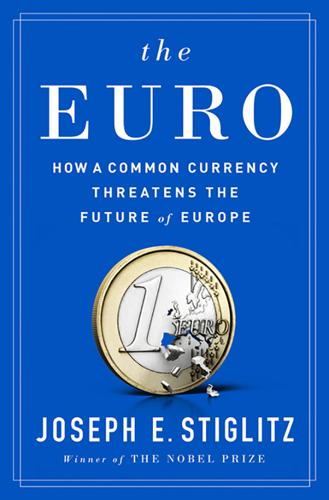
The Euro: How a Common Currency Threatens the Future of Europe
by Joseph E. Stiglitz and Alex Hyde-White · 24 Oct 2016 · 515pp · 142,354 words
The Shifts and the Shocks: What We've Learned--And Have Still to Learn--From the Financial Crisis
by Martin Wolf · 24 Nov 2015 · 524pp · 143,993 words
European Spring: Why Our Economies and Politics Are in a Mess - and How to Put Them Right
by Philippe Legrain · 22 Apr 2014 · 497pp · 150,205 words
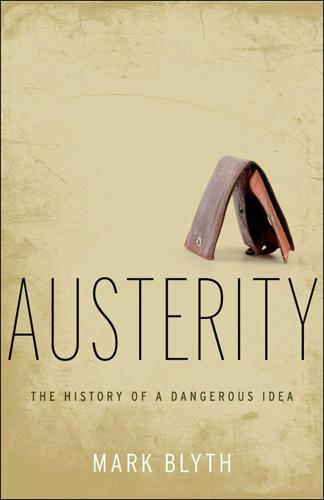
Austerity: The History of a Dangerous Idea
by Mark Blyth · 24 Apr 2013 · 576pp · 105,655 words
The Alchemists: Three Central Bankers and a World on Fire
by Neil Irwin · 4 Apr 2013 · 597pp · 172,130 words
When the Money Runs Out: The End of Western Affluence
by Stephen D. King · 17 Jun 2013 · 324pp · 90,253 words
Money and Government: The Past and Future of Economics
by Robert Skidelsky · 13 Nov 2018
Money: 5,000 Years of Debt and Power
by Michel Aglietta · 23 Oct 2018 · 665pp · 146,542 words
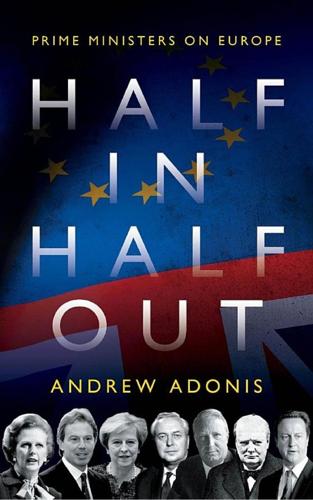
Half In, Half Out: Prime Ministers on Europe
by Andrew Adonis · 20 Jun 2018 · 235pp · 73,873 words
Straight Talk on Trade: Ideas for a Sane World Economy
by Dani Rodrik · 8 Oct 2017 · 322pp · 87,181 words
How Will Capitalism End?
by Wolfgang Streeck · 8 Nov 2016 · 424pp · 115,035 words
Shutdown: How COVID Shook the World's Economy
by Adam Tooze · 15 Nov 2021 · 561pp · 138,158 words
The Future of Money: How the Digital Revolution Is Transforming Currencies and Finance
by Eswar S. Prasad · 27 Sep 2021 · 661pp · 185,701 words
Capitalism 4.0: The Birth of a New Economy in the Aftermath of Crisis
by Anatole Kaletsky · 22 Jun 2010 · 484pp · 136,735 words
The Default Line: The Inside Story of People, Banks and Entire Nations on the Edge
by Faisal Islam · 28 Aug 2013 · 475pp · 155,554 words
Grave New World: The End of Globalization, the Return of History
by Stephen D. King · 22 May 2017 · 354pp · 92,470 words
The Populist Explosion: How the Great Recession Transformed American and European Politics
by John B. Judis · 11 Sep 2016 · 177pp · 50,167 words
War and Gold: A Five-Hundred-Year History of Empires, Adventures, and Debt
by Kwasi Kwarteng · 12 May 2014 · 632pp · 159,454 words
Other People's Money: Masters of the Universe or Servants of the People?
by John Kay · 2 Sep 2015 · 478pp · 126,416 words
Rewriting the Rules of the European Economy: An Agenda for Growth and Shared Prosperity
by Joseph E. Stiglitz · 28 Jan 2020 · 408pp · 108,985 words
The Only Game in Town: Central Banks, Instability, and Avoiding the Next Collapse
by Mohamed A. El-Erian · 26 Jan 2016 · 318pp · 77,223 words
The European Union
by John Pinder and Simon Usherwood · 1 Jan 2001 · 193pp · 48,066 words
The Curse of Cash
by Kenneth S Rogoff · 29 Aug 2016 · 361pp · 97,787 words
MegaThreats: Ten Dangerous Trends That Imperil Our Future, and How to Survive Them
by Nouriel Roubini · 17 Oct 2022 · 328pp · 96,678 words
Breakout Nations: In Pursuit of the Next Economic Miracles
by Ruchir Sharma · 8 Apr 2012 · 411pp · 114,717 words
Planet Ponzi
by Mitch Feierstein · 2 Feb 2012 · 393pp · 115,263 words
After the Music Stopped: The Financial Crisis, the Response, and the Work Ahead
by Alan S. Blinder · 24 Jan 2013 · 566pp · 155,428 words
Why It's Still Kicking Off Everywhere: The New Global Revolutions
by Paul Mason · 30 Sep 2013 · 357pp · 99,684 words
The Powerful and the Damned: Private Diaries in Turbulent Times
by Lionel Barber · 5 Nov 2020
The Global Minotaur
by Yanis Varoufakis and Paul Mason · 4 Jul 2015 · 394pp · 85,734 words
Capital in the Twenty-First Century
by Thomas Piketty · 10 Mar 2014 · 935pp · 267,358 words
Principles of Corporate Finance
by Richard A. Brealey, Stewart C. Myers and Franklin Allen · 15 Feb 2014
The Road to Somewhere: The Populist Revolt and the Future of Politics
by David Goodhart · 7 Jan 2017 · 382pp · 100,127 words
The Price of Time: The Real Story of Interest
by Edward Chancellor · 15 Aug 2022 · 829pp · 187,394 words
The End of Indexing: Six Structural Mega-Trends That Threaten Passive Investing
by Niels Jensen · 25 Mar 2018 · 205pp · 55,435 words
Profiting Without Producing: How Finance Exploits Us All
by Costas Lapavitsas · 14 Aug 2013 · 554pp · 158,687 words
Does Capitalism Have a Future?
by Immanuel Wallerstein, Randall Collins, Michael Mann, Georgi Derluguian, Craig Calhoun, Stephen Hoye and Audible Studios · 15 Nov 2013 · 238pp · 73,121 words

Roller-Coaster: Europe, 1950-2017
by Ian Kershaw · 29 Aug 2018 · 736pp · 233,366 words
The End of Growth
by Jeff Rubin · 2 Sep 2013 · 262pp · 83,548 words
How to Be a Liberal: The Story of Liberalism and the Fight for Its Life
by Ian Dunt · 15 Oct 2020
The Age of Stagnation: Why Perpetual Growth Is Unattainable and the Global Economy Is in Peril
by Satyajit Das · 9 Feb 2016 · 327pp · 90,542 words
How to Stop Brexit (And Make Britain Great Again)
by Nick Clegg · 11 Oct 2017 · 93pp · 30,572 words
Revolution Française: Emmanuel Macron and the Quest to Reinvent a Nation
by Sophie Pedder · 20 Jun 2018 · 337pp · 101,440 words
The Economics of Belonging: A Radical Plan to Win Back the Left Behind and Achieve Prosperity for All
by Martin Sandbu · 15 Jun 2020 · 322pp · 84,580 words
After Europe
by Ivan Krastev · 7 May 2017 · 100pp · 31,338 words
Hubris: Why Economists Failed to Predict the Crisis and How to Avoid the Next One
by Meghnad Desai · 15 Feb 2015 · 270pp · 73,485 words
The Rise and Fall of Nations: Forces of Change in the Post-Crisis World
by Ruchir Sharma · 5 Jun 2016 · 566pp · 163,322 words
Hard Times: The Divisive Toll of the Economic Slump
by Tom Clark and Anthony Heath · 23 Jun 2014 · 401pp · 112,784 words
The Production of Money: How to Break the Power of Banks
by Ann Pettifor · 27 Mar 2017 · 182pp · 53,802 words

The Rise of the Outsiders: How Mainstream Politics Lost Its Way
by Steve Richards · 14 Jun 2017 · 323pp · 95,492 words
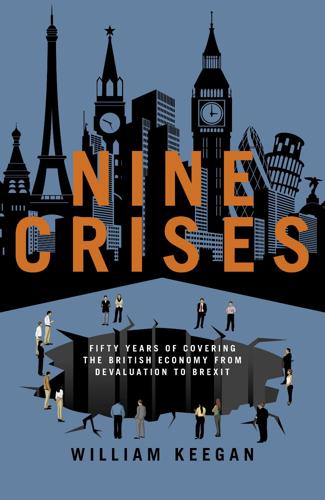
Nine Crises: Fifty Years of Covering the British Economy From Devaluation to Brexit
by William Keegan · 24 Jan 2019 · 309pp · 85,584 words
Eurowhiteness: Culture, Empire and Race in the European Project
by Hans Kundnani · 16 Aug 2023 · 198pp · 54,815 words
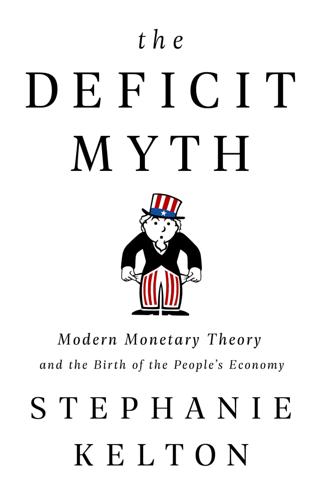
The Deficit Myth: Modern Monetary Theory and the Birth of the People's Economy
by Stephanie Kelton · 8 Jun 2020 · 338pp · 104,684 words
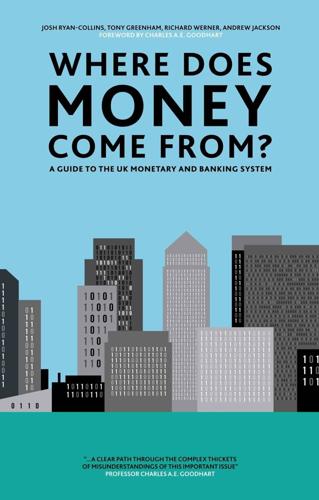
Where Does Money Come From?: A Guide to the UK Monetary & Banking System
by Josh Ryan-Collins, Tony Greenham, Richard Werner and Andrew Jackson · 14 Apr 2012
The Butterfly Defect: How Globalization Creates Systemic Risks, and What to Do About It
by Ian Goldin and Mike Mariathasan · 15 Mar 2014 · 414pp · 101,285 words
Capitalism: Money, Morals and Markets
by John Plender · 27 Jul 2015 · 355pp · 92,571 words

Alpha Trader
by Brent Donnelly · 11 May 2021
Stolen: How to Save the World From Financialisation
by Grace Blakeley · 9 Sep 2019 · 263pp · 80,594 words
The Entrepreneurial State: Debunking Public vs. Private Sector Myths
by Mariana Mazzucato · 1 Jan 2011 · 382pp · 92,138 words
A Pelican Introduction Economics: A User's Guide
by Ha-Joon Chang · 26 May 2014 · 385pp · 111,807 words
99%: Mass Impoverishment and How We Can End It
by Mark Thomas · 7 Aug 2019 · 286pp · 79,305 words
Connectography: Mapping the Future of Global Civilization
by Parag Khanna · 18 Apr 2016 · 497pp · 144,283 words
The Flat White Economy
by Douglas McWilliams · 15 Feb 2015 · 193pp · 47,808 words
Seven Crashes: The Economic Crises That Shaped Globalization
by Harold James · 15 Jan 2023 · 469pp · 137,880 words
The Making of Global Capitalism
by Leo Panitch and Sam Gindin · 8 Oct 2012 · 823pp · 206,070 words
Britannia Unchained: Global Lessons for Growth and Prosperity
by Kwasi Kwarteng, Priti Patel, Dominic Raab, Chris Skidmore and Elizabeth Truss · 12 Sep 2012
Corbyn
by Richard Seymour
Shocks, Crises, and False Alarms: How to Assess True Macroeconomic Risk
by Philipp Carlsson-Szlezak and Paul Swartz · 8 Jul 2024 · 259pp · 89,637 words
The Data Journalism Handbook
by Jonathan Gray, Lucy Chambers and Liliana Bounegru · 9 May 2012

Shadows of Empire: The Anglosphere in British Politics
by Michael Kenny and Nick Pearce · 5 Jun 2018 · 215pp · 64,460 words
SUPERHUBS: How the Financial Elite and Their Networks Rule Our World
by Sandra Navidi · 24 Jan 2017 · 831pp · 98,409 words
Brexit and Ireland: The Dangers, the Opportunities, and the Inside Story of the Irish Response
by Tony Connelly · 4 Oct 2017 · 356pp · 112,271 words
Extreme Money: Masters of the Universe and the Cult of Risk
by Satyajit Das · 14 Oct 2011 · 741pp · 179,454 words
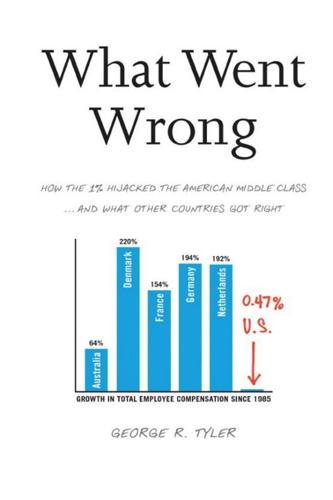
What Went Wrong: How the 1% Hijacked the American Middle Class . . . And What Other Countries Got Right
by George R. Tyler · 15 Jul 2013 · 772pp · 203,182 words
The Theft of a Decade: How the Baby Boomers Stole the Millennials' Economic Future
by Joseph C. Sternberg · 13 May 2019 · 336pp · 95,773 words
Cogs and Monsters: What Economics Is, and What It Should Be
by Diane Coyle · 11 Oct 2021 · 305pp · 75,697 words
Boom and Bust: A Global History of Financial Bubbles
by William Quinn and John D. Turner · 5 Aug 2020 · 297pp · 108,353 words
Earth Wars: The Battle for Global Resources
by Geoff Hiscock · 23 Apr 2012 · 363pp · 101,082 words
The Establishment: And How They Get Away With It
by Owen Jones · 3 Sep 2014 · 388pp · 125,472 words
The Dawn of Eurasia: On the Trail of the New World Order
by Bruno Macaes · 25 Jan 2018 · 287pp · 95,152 words
The Despot's Accomplice: How the West Is Aiding and Abetting the Decline of Democracy
by Brian Klaas · 15 Mar 2017

Chokepoints: American Power in the Age of Economic Warfare
by Edward Fishman · 25 Feb 2025 · 884pp · 221,861 words
Not One Inch: America, Russia, and the Making of Post-Cold War Stalemate
by M. E. Sarotte · 29 Nov 2021 · 791pp · 222,536 words
Flash Crash: A Trading Savant, a Global Manhunt, and the Most Mysterious Market Crash in History
by Liam Vaughan · 11 May 2020 · 268pp · 81,811 words
Germany Travel Guide
by Lonely Planet
Three Years in Hell: The Brexit Chronicles
by Fintan O'Toole · 5 Mar 2020 · 385pp · 121,550 words

Smarter Investing
by Tim Hale · 2 Sep 2014 · 332pp · 81,289 words

DIY Investor: How to Take Control of Your Investments & Plan for a Financially Secure Future
by Andy Bell · 12 Sep 2013 · 348pp · 82,499 words
The Globalization Paradox: Democracy and the Future of the World Economy
by Dani Rodrik · 23 Dec 2010 · 356pp · 103,944 words
The Marshall Plan: Dawn of the Cold War
by Benn Steil · 13 Feb 2018 · 913pp · 219,078 words
The Quiet Coup: Neoliberalism and the Looting of America
by Mehrsa Baradaran · 7 May 2024 · 470pp · 158,007 words

Border and Rule: Global Migration, Capitalism, and the Rise of Racist Nationalism
by Harsha Walia · 9 Feb 2021
The Future of Capitalism: Facing the New Anxieties
by Paul Collier · 4 Dec 2018 · 310pp · 85,995 words
India's Long Road
by Vijay Joshi · 21 Feb 2017
The WikiLeaks Files: The World According to US Empire
by Wikileaks · 24 Aug 2015 · 708pp · 176,708 words
Bean Counters: The Triumph of the Accountants and How They Broke Capitalism
by Richard Brooks · 23 Apr 2018 · 398pp · 105,917 words
Fall Out: A Year of Political Mayhem
by Tim Shipman · 30 Nov 2017 · 721pp · 238,678 words

Heads I Win, Tails I Win
by Spencer Jakab · 21 Jun 2016 · 303pp · 84,023 words
Barometer of Fear: An Insider's Account of Rogue Trading and the Greatest Banking Scandal in History
by Alexis Stenfors · 14 May 2017 · 312pp · 93,836 words
Stocks for the Long Run 5/E: the Definitive Guide to Financial Market Returns & Long-Term Investment Strategies
by Jeremy Siegel · 7 Jan 2014 · 517pp · 139,477 words

Lonely Planet Greek Islands
by Lonely Planet, Alexis Averbuck, Michael S Clark, Des Hannigan, Victoria Kyriakopoulos and Korina Miller · 31 Mar 2012
Average Is Over: Powering America Beyond the Age of the Great Stagnation
by Tyler Cowen · 11 Sep 2013 · 291pp · 81,703 words
The Fix: How Bankers Lied, Cheated and Colluded to Rig the World's Most Important Number (Bloomberg)
by Liam Vaughan and Gavin Finch · 22 Nov 2016
Basic Income And The Left
by henningmeyer · 16 May 2018
The World as It Is: A Memoir of the Obama White House
by Ben Rhodes · 4 Jun 2018 · 470pp · 148,444 words
Unknown Market Wizards: The Best Traders You've Never Heard Of
by Jack D. Schwager · 2 Nov 2020
Mobility: A New Urban Design and Transport Planning Philosophy for a Sustainable Future
by John Whitelegg · 1 Sep 2015 · 224pp · 69,494 words

Big Capital: Who Is London For?
by Anna Minton · 31 May 2017 · 169pp · 52,744 words
Making It Happen: Fred Goodwin, RBS and the Men Who Blew Up the British Economy
by Iain Martin · 11 Sep 2013 · 387pp · 119,244 words
Smart Money: How High-Stakes Financial Innovation Is Reshaping Our WorldÑFor the Better
by Andrew Palmer · 13 Apr 2015 · 280pp · 79,029 words
China's Great Wall of Debt: Shadow Banks, Ghost Cities, Massive Loans, and the End of the Chinese Miracle
by Dinny McMahon · 13 Mar 2018 · 290pp · 84,375 words
How to Own the World: A Plain English Guide to Thinking Globally and Investing Wisely
by Andrew Craig · 6 Sep 2015 · 305pp · 98,072 words
Belt and Road: A Chinese World Order
by Bruno Maçães · 1 Feb 2019 · 281pp · 69,107 words
The Politics of Pain
by Fintan O'Toole · 2 Oct 2019
Extreme Economies: Survival, Failure, Future – Lessons From the World’s Limits
by Richard Davies · 4 Sep 2019 · 412pp · 128,042 words
Broke: How to Survive the Middle Class Crisis
by David Boyle · 15 Jan 2014 · 367pp · 108,689 words
The Myth of Capitalism: Monopolies and the Death of Competition
by Jonathan Tepper · 20 Nov 2018 · 417pp · 97,577 words
Heroic Failure: Brexit and the Politics of Pain
by Fintan O'Toole · 22 Jan 2018 · 200pp · 64,329 words
The Great Reversal: How America Gave Up on Free Markets
by Thomas Philippon · 29 Oct 2019 · 401pp · 109,892 words

Thinking About It Only Makes It Worse: And Other Lessons From Modern Life
by David Mitchell · 4 Nov 2014 · 354pp · 99,690 words

Them and Us: How Immigrants and Locals Can Thrive Together
by Philippe Legrain · 14 Oct 2020 · 521pp · 110,286 words
The Long Game: China's Grand Strategy to Displace American Order
by Rush Doshi · 24 Jun 2021 · 816pp · 191,889 words

Frommer's Paris 2013
by Kate van Der Boogert · 24 Sep 2012
Win Every Argument: The Art of Debating, Persuading, and Public Speaking
by Mehdi Hasan · 27 Feb 2023 · 307pp · 93,073 words
Free Speech: Ten Principles for a Connected World
by Timothy Garton Ash · 23 May 2016 · 743pp · 201,651 words

The Human Swarm: How Our Societies Arise, Thrive, and Fall
by Mark W. Moffett · 31 Mar 2019 · 692pp · 189,065 words
Zero to One: Notes on Startups, or How to Build the Future
by Peter Thiel and Blake Masters · 15 Sep 2014 · 185pp · 43,609 words
This Is London: Life and Death in the World City
by Ben Judah · 28 Jan 2016 · 385pp · 119,859 words