flyover country

back to index

35 results

pages: 172 words: 48,747

The View From Flyover Country: Dispatches From the Forgotten America
by Sarah Kendzior
Published 24 Apr 2015

Louis had become an international symbol of dysfunction following protests against police brutality in Ferguson—but my old essays remained popular. My work served as a disturbing reminder that the political and economic crises I had documented not only remained, but had gotten worse. In 2015 I decided to collect the essays I had written for Al Jazeera, to call the collection The View from Flyover Country, and to sell it on the Internet. After the 2016 election, The View from Flyover Country became an online bestseller. This was partially due to the fact that I had predicted nearly all developments of the 2016 election and Trump’s win—my foresight was an unfortunate by-product of a lifetime spent studying foreign demagogues, along with an intimate understanding of deteriorating conditions in the United States.

Today, the problems I exposed in The View from Flyover Country, which were controversial five years ago, are now a part of mainstream political discourse. This would be a matter of profound relief if I believed the result was that they would be remedied instead of exploited. As the book gained popularity, I stayed where I am: in an impoverished blue city in a bright-red state, squarely in the center of the country. In the publishing world, this makes me an anomaly. In the 2015 introduction to this book, I wrote, “This is the view from the other America, from flyover country, the places and people often ignored.”

This edition of The View from Flyover Country contains the original essays in their original form because my goal has not changed. I am motivated today by the same thing that motivated me when I first wrote these pieces: I believe that problems, if exposed and documented, can be solved, and that suffering can be abated. It’s never clear what the result of discussing problems will be, but ignoring them is a clear road to destruction. Blind hope, in the end, is only blindness. If we want to figure out a way out of this situation, we need to reexamine how we got into it. —September 2017 PART I Flyover Country The View from Flyover Country In St.

Hiding in Plain Sight: The Invention of Donald Trump and the Erosion of America
by Sarah Kendzior
Published 6 Apr 2020

and The Apprentice on his father June 2016 Trump Tower meeting and Mueller investigation on Russia’s role in Trump Organization assets and Trump SoHo Trump, Fred Trump, Ivana Trump, Ivanka and The Apprentice and autocracy Born Rich (reality TV show) and Casablancas, John (modeling agent) marriage to Jared Kushner media coverage of and national security risks and nepotism SF-86 security clearance held by and Trump SoHo 2006 visit to Kremlin and Yosef, Rabbi Yitzhak Trump Organization discriminatory housing practices lawsuit against Mar-a-Lago and Sater, Felix 610 Park Avenue Condominiums Trump SoHo fraud lawsuit against Trump SoHo Hotel Trump Tower International Trump World Tower See also Trump Tower Trump Tower June 2016 meeting Manafort residence and money-laundering and Russian mafia Trump Tower International “truthiness” United Kingdom Brexit financial corruption and economic collapse poisoning of Alexander Litvinenko in poisoning of Yulia Skripal in and transnational criminal networks Uzbekistan Andijan massacre dissidents home-cooked Uzbek meals internet and online discourse Karimov, Islam kleptocracy Putin on Andijan massacre state censorship and freedom of speech Vance, Cyrus Vanunu, Mordechai View from Flyover Country, The (Kendzior) voter ID laws Voting Rights Act “war on terror” Ward, Vicky Watergate scandal “We Are Heading Into Dark Times—This Is How to Be Your Own Light” (Kendzior) Weichselbaum, Joseph Weinstein, Harvey Welch, Joseph Wexner, Les Whitaker, Matthew white supremacy in Canada and criminal networks and kleptocracy and Putin, Vladimir and Trump, Donald in the United States WikiLeaks Wilders, Geert Wilson, Darren Winner, Reality (anonymous whistleblower) World Trade Center attacks (1993) World Trade Organization Yazbeck, Sean Yosef, Yitzhak Zimmerman, George Also by Sarah Kendzior The View from Flyover Country About the Author SARAH KENDZIOR is best known for her reporting on St. Louis and the 2016 election, her academic research on authoritarian states, and her New York Times bestselling debut The View from Flyover Country. She is a cohost of the podcast Gaslit Nation and was named one of Foreign Policy’s “100 people you should be following on Twitter to make sense of global events.” Her reporting has been featured in Politico, The Atlantic, Fast Company, The New York Times, The Globe and Mail (Canada), and more.
In fall 2015, I predicted that Donald Trump would win the presidential election, and that once installed, he would decimate American democracy. It was the latest in a career of issuing unheeded warnings. For years, I had warned of the widespread erosion of American institutions and social trust. I wrote a series of essays documenting my nation’s demise, many of which were later published in my first book, The View from Flyover Country. The essays were shaped in part by the harsh conditions of Missouri, the state I call home, a state that had long been the bellwether of American politics and now served as the bellwether of American decline. But the crisis I documented was nationwide: rising political paranoia, opportunity-hoarding by wealthy elites, a “post-employment economy” of side hustles and unpaid labor, the weaponization of digital media by dictators and extremists, and the catastrophic consequences of unchecked corruption.

We live under the tyranny of the minority on a state level, which is subject to the tyranny of the minority on a national level, which is subject to the tyranny of the elite on an international level. After the 2016 election, a journalist wrote a profile of me called “A Cassandra in Trumpland.” Cassandra was a Greek goddess cursed to see the future but never be believed.1 That article was about my book The View from Flyover Country, a collection of essays written between 2012 and 2014 that was once viewed as pessimistic but is now heralded as prescient. I wrote about all of America, but I saw America through Missouri’s eyes, which means I saw hell and I saw it in advance. I have concluded that the surreal quality of Missouri life has prompted people to doubt my assertions even when I am simply listing the facts.

pages: 357 words: 99,456

Hate Inc.: Why Today’s Media Makes Us Despise One Another
by Matt Taibbi
Published 7 Oct 2019

Later, as Trump cruised toward the nomination, media execs couldn’t hide their excitement. Since-disgraced CBS jackass Les Moonves blurted out that Trump “may not be good for America, but it’s damn good for CBS,” adding, “the money’s rolling in.” Comments like these triggered an avalanche of anti-press complaints, this time not from flyover country (where hatred of the “elite” press was already considered a given) but from urban, left-leaning intellectuals, aka the media’s home crowd. An example was Ralph Nader, who focused on the entire system of commercial media. Nader said that campaign coverage had devolved into a profit bonanza in which media firms “cash in and give candidates a free ride.”

Any real assessment of what happened would have focused on the fact that the campaign press had been so pompous for so long in telling voters what “presidential” meant, and in dictating fealty to crass stupidities like “nuance” and “the beer standard,” that voters entering 2016 were willing to cheer any pol with the insight to tell us to fuck off. The subtext of all of this was that our rants about beer and “likability” and so on, were only the Washington press corps’ idea of what was important to a voter in flyover country. Given that most actual voters were sunk in debt, working multiple jobs, uninsured, saddled with ruined credit scores, and often battling alcohol and opiate addiction and other problems, it was a horrific aristocratic insult to tell people each election cycle that what really mattered to them was what candidate looked most convincing carrying a rifle on a duck hunt.

Various versions of the same explanation (spinoffs of Clinton’s “deplorable” observation) have become go-to explanations for the Trump phenomenon. But we see this answer most often applied to the question of our own unpopularity. Since Goldberg first went public and more so since Trump’s election, there have been repeat expeditions into flyover country, in search of the elusive source of the liberal bias religion. Take Margaret Sullivan of the Washington Post, who in late 2017 decided to tackle the issue. Sullivan was tired of the despicable abuse she was getting from MAGA-type readers,1 and decided to answer an angry, Trump-supporting letter-writer named Daniel Hastings.

pages: 220 words: 64,234

Fewer, Better Things: The Hidden Wisdom of Objects
by Glenn Adamson
Published 6 Aug 2018

After driving hundreds of miles through the barren scrubland of Oklahoma, Texas, and New Mexico, however, one can begin to appreciate the dimensions of Moncus’s achievement. He saw that just because something doesn’t seem all that special doesn’t mean you shouldn’t be curious about the stories it might tell, and anyway, what counts as special is very much a matter of opinion. The idea that “flyover country” (as many on the coasts unkindly call states in the Central and Mountain time zones) is devoid of culture is a persistent but pernicious myth. Over his fourteen years of collecting, in the 1950s and ’60s, Moncus managed to prove the opposite, hunting down every fragment of rural southwestern culture that he could, reputedly covering 120,000 miles in the process (which makes my own eight-thousand-mile trip, guided by GPS, look pretty paltry).

See also copies Falls, Susan, here farmers’ markets, here feel, learning by, here Ferrari, here F for Fake (film), here film sets, here fingers. See also touch creating with, here learning through, here Fitzner, Herman, here Fitzner, Lucille, here flags, here flat chisel, here flooring, here, here flyover country, here folk music, here food, wasted, here footwear, here, here Forest Products Laboratory, here forgery, here form, transforming, here formaldehyde, here, here, here France, Fenella, here freeganism, here fretsaw, here Freund, Ellen, here Fuller, Buckminster, here furniture fake, here identifying wood used in, here furniture-making, here, here future, the, here gaps, here garments, here gay culture exhibit, here Gee’s Bend quilts, here generosity, here genius loci, here Geographical Indications system, here Gerety, Frances, here Gershenfeld, Neil, here Gibbons, Grinling, here The Gift (Hyde), here gifts, here, here, here, here gigantic, the, here Giunti, Umberto, here glass curtain walls, here gold repair (kintsugi), here, here, here, here Google Art Project, here Gopnik, Adam, here The Graduate (film), here Grayling, A.

pages: 386 words: 113,709

Why We Drive: Toward a Philosophy of the Open Road
by Matthew B. Crawford
Published 8 Jun 2020

The Yellow Vests, named for the safety vests all motorists are required to carry in France, brought paralysis to parts of Paris and other cities nearly every weekend from late 2017 through early 2019, precipitating a major crisis for Emmanuel Macron’s government. It was prompted by a slight decrease in speed limits and a fuel tax, which hit the French equivalent of “flyover country” disproportionately. (Macron’s political base is mostly metropolitan, relies on the Paris Metro, and takes its own environmental virtue as one of its titles to rule.) The most significant material damage done by the protesters has been to France’s network of photo radar speed traps. (About 60 percent of them had been disabled as of January 2019.)

Toward the end of 2018, Emmanuel Macron faced mass political unrest on a scale France had not seen in the postwar era.11 The Yellow Vest movement, named for the high-visibility vests all motorists are required to carry in case of emergency, marched through French cities by the hundreds of thousands. The revolt was precipitated by two measures: a fuel tax intended to reduce carbon emissions, and a reduction in speed limits. These disproportionately affected the French equivalent of “flyover country,” or what the French geographer Christophe Guilluy calls “la France périphérique.” Out in the hinterland, one must do a lot of driving, so these proposals touched on concrete interests. The interests of metropolitan professionals in finance, media, and academia—the heart of Macron’s base—tilt differently.

We might be tempted to say, the dumber the city, the more eager it is to become a smart city. This is fair, so long as by “dumb” we mean not an actual cognitive impairment, but having a low standing in the smarty-pants political economy. Economically bludgeoned by developments of the last few decades, flyover country is determined to be forward thinking. Kansas City has declared itself the nation’s “smartest city” and hosts international conferences to tell others about this. Bob Bennett, the city’s tech guru, vibrates the region’s anxieties with a pitch-perfect phrase when he says, “Cities that fail to embrace technology today, that fail to embrace a data-driven approach, those cities will be in the digital Rust Belt 20 years from now.”3 As used in neoliberal economic chatter, “Rust Belt” means a place that failed to adapt to the inevitable, and therefore fell to decay and ultimate extinction.

pages: 279 words: 90,278

Heartland: A Memoir of Working Hard and Being Broke in the Richest Country on Earth
by Sarah Smarsh
Published 17 Sep 2018

We scarcely knew anyone who was truly “middle class.” We were “below the poverty line,” I’d later understand—distasteful to better-off whites, I think, for having failed economically in the context of their own race. And we were of a place, the Great Plains, spurned by more powerful corners of the country as a monolithic cultural wasteland. “Flyover country,” people called it, like walking there might be dangerous. Its people were “backward,” “rednecks.” Maybe even “trash.” Somehow, without yet understanding any of that consciously, I picked for you a name about dignity and respect. I used to say it over and over in my head, the way some girls wrote boys’ names in notebooks.

President Dwight Eisenhower, a native of rural Kansas, said, “Whatever America hopes to bring to pass in the world must first come to pass in the heart of America.” The countryside is no more our nation’s heart than are its cities, and rural people aren’t more noble and dignified for their dirty work in fields. But to devalue, in our social investments, the people who tend crops and livestock, or to refer to their place as “flyover country,” is to forget not just a country’s foundation but its connection to the earth, to cycles of life scarcely witnessed and ill understood in concrete landscapes. For Wendell Berry’s vision of a sustainable world, one in balance both economically and environmentally, the American heart needs a strong, well-supported, well-respected chamber outside its metropoles.

pages: 603 words: 182,781

Aerotropolis
by John D. Kasarda and Greg Lindsay
Published 2 Jan 2009

Or maybe the crises just keep mounting—according to one survey, “emergencies” stemming from ocean delays accounted for more than a third of all air shipments from China. The most common reasons, however, had to do with the high value of the products in question, coping with volatile consumer demand, and an outright need for speed in production. The last one is also why LA has begun a slow descent into flyover country as far as cargo is concerned. Asian airlines in particular have learned to skip its tangle of runways and freeways in favor of direct flights to Dallas to drop off their laptops. It’s Yogi Berra logic: nobody lands there anymore; it’s too crowded. Orange County: The Battle of El Toro “Airports come in two sizes,” Rem Koolhaas wrote, “too big and too small.”

Obama’s plan to spend $50 billion on infrastructure— including a pledge to pave 150 miles’ worth of runways—came too late. Renovations and expansion of the terminals should be finished by 2013. By then, San Francisco, Phoenix, and Las Vegas will all have new or improved airports. Will it be too late to prevent Los Angeles from descending into flyover country? “These aircraft don’t have to stop at LAX,” a city councilwoman explained. “People in the airline industry were telling me they could just pass us over. LAX was not getting its fair share of the future.” Dulles: America’s Wealthiest Invisible City President Dwight D. Eisenhower dropped his finger on a map of the rolling Virginia countryside and chose the site of his second great invasion.

Webber’s reference point was jet-setting academics like himself, who even then were ricocheting across the country from one conference to the next. Today, the obvious examples are omnipresent ones like Facebook. He was one of the first to realize that telecommunications and the jet had expanded the scope of communities worldwide. People could scatter, float, and re-form as necessary simply by hopping on a flight. He discovered flyover country: When people can interact with others across great distances and when they can readily move themselves into face-to-face positions as the need to do so arises, it scarcely matters whether a greenbelt intervenes or whether the space between them and their associates is used for houses and factories.
pages: 444 words: 151,136

Endless Money: The Moral Hazards of Socialism
by William Baker and Addison Wiggin
Published 2 Nov 2009

A report issued by Harvard University’s Joint Center for Housing Studies in July 2008 documented that even if interest rates fell by 1 percent, the median home price in 18 major metro areas would need to fall another 25 percent to return affordability to 2003 levels.15 Interestingly, the problem is not as acute for flyover country, because if rates fell that much nationwide, only a 2 percent adjustment in price would be necessary. The government bailout of the GSEs might restore confidence, but it may be a superficial fix. By long-term historical standards the entities would remain incredibly leveraged. The government would inject some $170 billion into them, but this is still a drop in the bucket.

They would not have to rely solely upon an assessment of character to choose their mate. Relationships therefore could become more of a business deal than a spiritual expression of love and long-term commitment, a proposition that dovetailed nicely with the shift to no-fault divorce. Values in flyover country have nonetheless persisted, where the population is largely conservative and Republican, marries early, and reproduces at least one-for-one. But in the large urban centers on the coasts evidence of the transformation to no family or the new business of marriage is commonplace. Nowhere is this more evident than in Manhattan.

pages: 215 words: 61,435

Why Liberalism Failed
by Patrick J. Deneen
Published 9 Jan 2018

Our society is increasingly defined by economic winners and losers, with winners congregating in wealthy cities and surrounding counties, while losers largely remain in place—literally and figuratively—swamped by a global economy that rewards the highly educated cognitive elite while offering bread crumbs to those left in “flyover country.” Trends observed decades ago by Robert Reich and Christopher Lasch, who decried “the secession of the successful” and the “revolt of the elite,” are today institutionalized through family, neighborhood, and schools, and replicated by generational succession.14 Children of the successful receive preparation for entry into the ruling class, while those who lack those attainments are much less capable of affording, and insufficiently knowledgeable about, the basic prerequisites needed to push their children into the upper echelon.

pages: 228 words: 68,880

Revolting!: How the Establishment Are Undermining Democracy and What They're Afraid Of
by Mick Hume
Published 23 Feb 2017

This condescending attitude towards the mass of people goes some way to explaining why those voters – who are quite intelligent enough to know when they are being patronised and insulted – refused to do as they were told at the polls. As conservative commentator Fred Weinberg wrote, the media’s basic message to Trump voters was: ‘You’re Uneducated and Deplorable’. Since most media people ‘never talk to real people’, they didn’t get the resentment felt by millions of Americans at ‘being told we live in “flyover country” … comprised of “uneducated” white males who do not understand that we need to be told how to live by “journalists” who live in the progressive bubble. Or by their elected friends.’42 Playing the new race card The second widespread attempt to explain away the ‘disaster’ of the referendum result and the ‘tragedy’ of the US election has also focused on the shortcomings of the electorate.

pages: 237 words: 69,985

The Longing for Less: Living With Minimalism
by Kyle Chayka
Published 21 Jan 2020

The four sections are slightly different in tone—moving from identifiable piano to angelic synth choruses to a meandering electro-organ-trumpet at the end. But there’s no arc to this progression, only continuity. The cover of Music for Airports is a cropped map with translucent blue grid lines and branching rivers. It’s an anonymous, unidentifiable place—flyover country, like the rectangles of space that scroll by on seat-back airplane screens. “The central idea was about music as a place you go to. Not a narrative, not a sequence that has some sort of teleological direction to it,”16 Eno later told Pitchfork. When it was released, listeners were interested if not compelled, which was partly the point.

pages: 246 words: 70,404

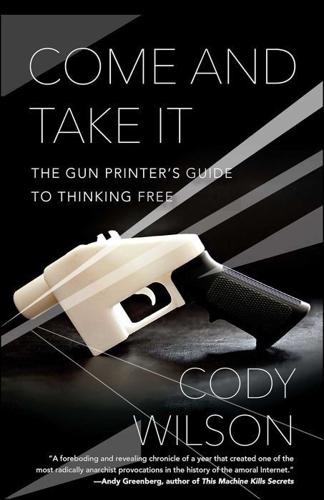
Come and Take It: The Gun Printer's Guide to Thinking Free
by Cody Wilson
Published 10 Oct 2016

Guslick managed to print some components for an AR-15 semiautomatic assault rifle—the kind of gun used in the Aurora, Colo., shootings—on a 3-D printer. He used ABS plastic. “The same plastic used to make Legos,” Guslick had said.1 Now tell me the man wasn’t a subversive. I was overjoyed at Guslick’s plain desire for mischief. He was throwing a big wink at everyone back home in flyover country. I had heard and read about Michael Guslick for some months now. An amateur gunsmith and engineer whose efforts to make a partially printed AR pistol had made it all over the web. I found his approach to the media sly and entertaining. My favorite take on the response to the work of Mr. Guslick, who went by the online handle Have Blue, came from a blog by Scott Locklin: Everyone and his brother is reposting one of the many articles on the guy who used a 3-D printer to build an AR-15 lower receiver.

pages: 319 words: 75,257

Trumpocalypse: Restoring American Democracy
by David Frum
Published 25 May 2020

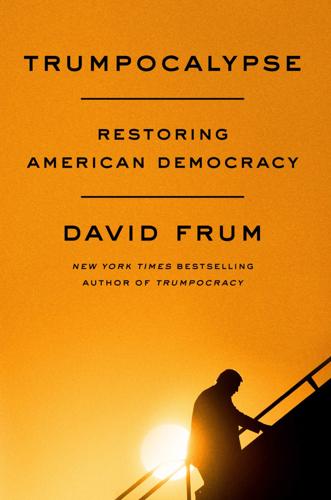
During the impeachment debate of December 2019, Representative Clay Higgins of Louisiana delivered his remarks standing before a map of all the Red-tinted counties Trump had won in 2016. We face this horror because of this map; this is what the Democrats fear. They fear the true will of we the people. They are deep established D.C. They fear, they call this Republican map flyover country. They call us deplorables. They fear our faith, they fear our strength, they fear our unity, they fear our vote, and they fear our president. How do you construe “the will of the people” from a map drawn to magnify unpeopled terrain? But that is the wrong question. The point of the Red-county map is not to elevate rocks and buffalo over people, but to elevate some people over others.

pages: 309 words: 81,243

The Authoritarian Moment: How the Left Weaponized America's Institutions Against Dissent
by Ben Shapiro
Published 26 Jul 2021

Just as in the universities, the liberals gave way to the radicals. HOLLYWOOD’S LONG HISTORY OF PREENING More broadly, the Academy’s move to formalize its heretofore-voluntary politics was merely the culmination of a long-lasting movement in Hollywood to propagandize on behalf of leftism, slap at flyover country, undercut traditional values, and excise those who disagree. Hollywood has been the preserve of political liberals for decades: the artistic community in the United States has typically leaned to the Left, a phenomenon that can be attributed to the counterculturalism that characterizes art itself.

pages: 246 words: 82,965

The Last Ride of the Pony Express: My 2,000-Mile Horseback Journey Into the Old West
by Will Grant
Published 14 Oct 2023

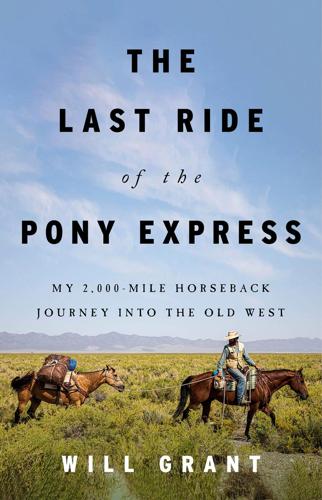
In the Great Basin Desert, the juxtaposition of the dry, sagebrush-steppe communities of the valleys with the montane communities of the ranges creates a highly biodiverse region. The mountain ranges are sometimes referred to as island communities because the deserts between confine the higher-existing species of plants and animals to geographically small areas.2 Most people are familiar with the Great Basin as flyover country. You can see it outside Las Vegas and south and west of Phoenix. Interstate 80 crosses it from Salt Lake City to Reno, Nevada. The stretch of the interstate across western Utah runs over the Bonneville Salt Flats, where the white plains are as level as a billiard table. That area is the Great Salt Lake Desert, known locally as the West Desert, and it includes the Great Salt Lake.

pages: 304 words: 86,028

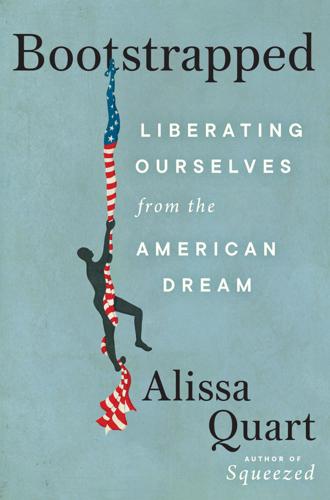
Bootstrapped: Liberating Ourselves From the American Dream
by Alissa Quart
Published 14 Mar 2023

“I personally didn’t know anyone who has gotten really sick or died” from the virus, he said, though someone in his town would eventually pass away as a result of infection, and the nephew of a friend would require hospitalization. He and his farmer neighbors still felt overlooked, living in “flyover” country, as he said. “People are frustrated—that’s what’s bringing this on: everyone feels the politicians are lining their own pockets and taking care of themselves,” he said. Roecker was also now using the first-person plural, as if he were speaking for the multitudes, as when he said, “We feel that the Democrats are taking away our individuality.”

pages: 326 words: 91,559

Everything for Everyone: The Radical Tradition That Is Shaping the Next Economy
by Nathan Schneider
Published 10 Sep 2018

Boulder’s present residents interpret his words in a variety of ways. For some, especially the older-timers, it’s a rebuke against the plentiful newcomers fleeing from the coasts, along with the traffic and construction projects they bring. For the newcomers, it evokes the discovery that here in flyover country, the cost of living turns out to be no lower than back on the coasts. And thus the curse is also a hypocrisy, one familiar among liberal utopias: the counterculture and inclusivity that attract so many new settlers have priced out any inclusive countercultures to come. Part of any curse is the curse of forever trying to lift it.

pages: 358 words: 103,103

Revolution Business
by Stross, Charles
Published 9 Apr 2009

She'd thought Brill was a naive ingenue and a scion of the outer families, not able to world-walk for herself, not realizing Angbard would never have turned her loose in Niejwein without planting one or more of his valkyries on her as spy and bodyguard. "My first time out was"-Brill looked pensive-"I was twelve, I think. But I had a false identity in my own name by the time I was fourteen. Thanks to the duke. He believed in starting them early." "Lucky cow." Elena giggled again. I am trapped on a school bus in the middle of flyover country with a bunch of overarmed and undersocialized postadolescents, Miriam realized, and there's no way out. She sighed. "Starting what early?" "Starting the doppelganger identities. It's only sensible, you know. He wanted to put as many of us as possible through the right kind of finishing school-Harvard, Yale, the Marine Corps-in case we ever have to evacuate."

Mindf*ck: Cambridge Analytica and the Plot to Break America
by Christopher Wylie
Published 8 Oct 2019

An effective Cambridge Analytica technique was to show subjects blogs that made fun of white people like them, such as People of Walmart. Bannon had been observing online communities on places like 4chan and Reddit for years, and he knew how often subgroups of angry young white men would share content of “liberal elites” mocking “regular” Americans. There had always been publications that parodied the “hicks” of flyover country, but social media represented an extraordinary opportunity to rub “regular” Americans’ noses in the snobbery of coastal elites. Cambridge Analytica began to use this content to touch on an implied belief about racial competition for attention and resources—that race relations were a zero-sum game.

Traffic: Genius, Rivalry, and Delusion in the Billion-Dollar Race to Go Viral
by Ben Smith
Published 2 May 2023

He was just forty-three, but he was fat and stressed, and his life was a mess. He was still riding his Vespa from Brentwood to an office in a dingy warehouse near Santa Monica. Andrew confessed to a friend that while he’d become a conservative rock star—“I could get laid in a geriatric center in flyover country”—he owed $133,000 to the Internal Revenue Service; he was still struggling to navigate the internal politics and secret flows of dark money that powered the right-wing media, including many far smaller and less successful sites. Andrew would sometimes have a drink by himself to unwind, so there was nothing unusual about his stop on February 29, 2012, at the Brentwood, a restaurant and bar near his house.

pages: 361 words: 111,500

Geography of Bliss
by Eric Weiner
Published 1 Jan 2008

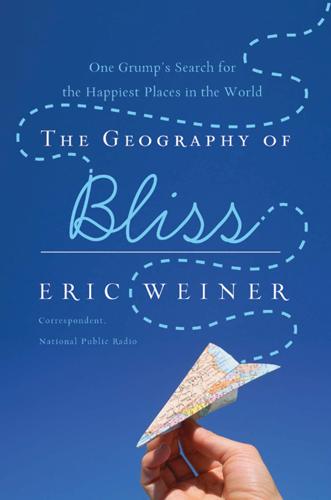
To fully understand the riddle that is Jared Bibler, you need to know something about international aviation. Iceland happens to lie directly on the North Atlantic air corridor. That means people jetting between New York and, say, London, fly directly over Iceland, just as people jetting between New York and Los Angeles fly directly over Kansas. Iceland, in other words, is a flyover country. Icelanders, like Kansans, I imagine, are not especially fond of those looking down at them from thirty-five-thousand feet. But a few years back an executive at Icelandair, the national airline, came up with a brilliant idea. Stopovers. Say you’re flying between New York and London. Icelandair will let you stop in Reykjavík for a few days at no extra charge.

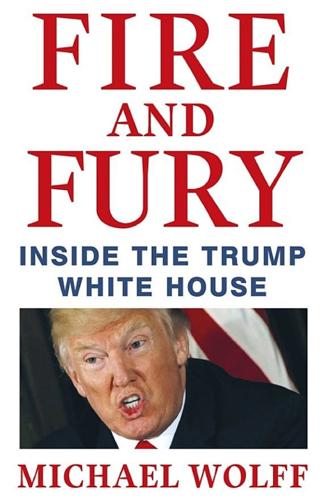
pages: 394 words: 112,770

Fire and Fury: Inside the Trump White House
by Michael Wolff
Published 5 Jan 2018

For goodness’ sake! Trump, in a smart move, picked up his media reputation and relocated it from a hypercritical New York to a more value-free Hollywood, becoming the star of his own reality show, The Apprentice, and embracing a theory that would serve him well during his presidential campaign: in flyover country, there is no greater asset than celebrity. To be famous is to be loved—or at least fawned over. The fabulous, incomprehensible irony that the Trump family had, despite the media’s distaste, despite everything the media knows and understands and has said about them, risen to a level not only of ultimate consequence but even of immortality is beyond worst-case nightmare and into cosmic-joke territory.

pages: 414 words: 117,581

Binge Times: Inside Hollywood's Furious Billion-Dollar Battle to Take Down Netflix
by Dade Hayes and Dawn Chmielewski
Published 18 Apr 2022

Compared with the treadmill of catering to advertisers and broad audiences, with ratings in secular decline and the zeitgeist overwhelmingly favoring cable and streaming, wrapping himself in the high-thread-count cloth of HBO felt right. In the months between his exit from NBC and his entrance at WarnerMedia, Greenblatt had envisioned taking over HBO before ending up with a far bigger job. He felt ready to trade the flyover country of Sunday Night Football and The Voice for shows with resonance among coastal influencers. At NBC, he had agitated in vain to get the company to commit to streaming. At WarnerMedia, the mission to stream couldn’t have been more clear. Reilly said there was never any overt friction with Greenblatt, whom he had known for decades, hung around with at conferences and the upfronts, and would meet for yearly dinners.

pages: 382 words: 114,537

On the Clock: What Low-Wage Work Did to Me and How It Drives America Insane
by Emily Guendelsberger
Published 15 Jul 2019

I skim story after Szechuangate story, looking for any hint of my own perspective, but the rare pieces that mention crew members at all do so in the context of speculation that we may have stolen sauce packets to sell on eBay.* I’d understood in theory before this that a ton of people despise and resent “the mainstream media.” But I’d always assumed that “media” meant cable news, or people who unironically use the words flyover country. I had zero problem with that, because I also despised and resented those people. That wasn’t me. I’ve also always joked that the world would be a better place if, like Mormons on mission, everybody had to work a terrible service job for a year or two. At the very least, it should be mandatory for anyone with aspirations in business, politics, or journalism.

pages: 642 words: 141,888

Like, Comment, Subscribe: Inside YouTube's Chaotic Rise to World Domination
by Mark Bergen
Published 5 Sep 2022

She opened that May newsletter with a GIF from The Handmaid’s Tale, a new symbol of women’s resistance under Trump. Stapleton and her peers knew Silicon Valley’s sexism flowed through Google and workplace dalliances were common. But many at Google believed tech-bro culture was a creature of younger, reckless companies like Uber and that bitter partisan squabbles happened out there in flyover country, far from its solar-paneled campus. This shared illusion shattered that summer. James Damore, a mid-level Google programmer, sent around a ten-page memorandum titled “Google’s Ideological Echo Chamber.” Conservatives at Google felt “alienated,” Damore wrote, though his central argument was that diversity hiring goals were bunk because they did not comport with his read of the science on gender.

pages: 454 words: 134,799

Why Nothing Works: Who Killed Progress--And How to Bring It Back
by Marc J Dunkelman
Published 17 Feb 2025

But the region, slightly smaller than England and defined more by forests than by fields, was typified less by Simon Legree than by Daniel Boone.1 Whites may have wielded the power, but far from enjoying sweet tea on the veranda of the Big House, most survived through subsistence farming, with poor families of all races tending to maintain an isolated, hardscrabble existence. The Tennessee Valley was, by some measure, flyover country before anyone coined the term. In the decades that followed the Civil War, the Upper South’s forests were abused by the timber industry, and over time the depleted landscape was left for dead. Robbed of its root systems and subjected to intermittent flooding, much of the area’s fertile topsoil eroded.

A Voyage Long and Strange: On the Trail of Vikings, Conquistadors, Lost Colonists, and Other Adventurers in Early America
by Tony Horwitz
Published 1 Jan 2008

To early Europeans, America seemed a world truly new, and their words give voice to the strangeness and wonder of discovery. What to make of luminous insects that seemed at night a “flame of fire”? Or of “hump-backed cows” with goatlike beards that pounded across the Plains? Even the endless prairie, derided today as “flyover country,” astonished those who first rode across it. “If a man lay down on his back he lost sight of the ground,” one Spanish horseman marveled of the flatness. Most exotic of all were America’s people, whom Columbus named los Indios, Verrazzano called la genta de la terra, and the early English referred to as the Naturals.

pages: 526 words: 158,913

Crash of the Titans: Greed, Hubris, the Fall of Merrill Lynch, and the Near-Collapse of Bank of America
by Greg Farrell
Published 2 Nov 2010

Over the course of several decades Merrill Lynch became a powerhouse through its incomparable network of brokers across the U.S., connecting Wall Street to Main Street. In the second half of the twentieth century, most large companies that sold stock to the public wanted to use Merrill Lynch as their sales force to reach investors not just in the big cities, but in the midsized burgs of flyover country. A TV commercial in the 1970s, showing a stampede of longhorns, declared that Merrill Lynch was “bullish on America,” and from that point forward, the symbol of the bull became synonymous with Merrill Lynch. The firm’s retail brokers became known as Merrill’s thundering herd. Across the United States, in every town where they set up shop, members of Merrill’s thundering herd were among the most prominent citizens, stalwarts of the local Rotary clubs, people who could be counted on to raise money for charitable causes.

pages: 559 words: 169,094

The Unwinding: An Inner History of the New America
by George Packer
Published 4 Mar 2014

He’d had a summer job at Conoco Oil in Houston between his first and second years, and they wanted him to come back and make a career there, but the thought of starting out at thirty-two grand and moving laterally every six months from Lake Charles, Louisiana, to Ponca City, Oklahoma, was at least as dismal as working for a trucking company. Connaughton came from flyover country—he didn’t want to work there. If he didn’t get a position at an investment bank like Salomon Brothers or Goldman Sachs, or else a management consulting firm like McKinsey, he would feel like a failure. Connaughton didn’t forget about Joe Biden. Working till midnight in the university library, he would put aside his finance books and dig up old issues of Time from the sixties and read again about the assassinations, Jack’s presidency, Bobby’s rise.

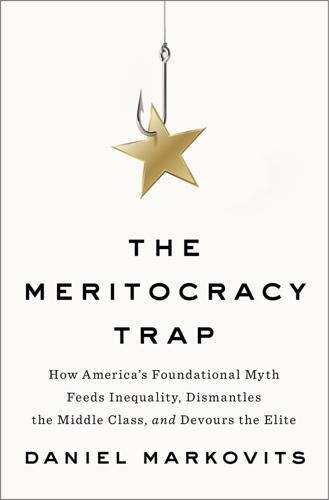
pages: 976 words: 235,576

The Meritocracy Trap: How America's Foundational Myth Feeds Inequality, Dismantles the Middle Class, and Devours the Elite
by Daniel Markovits
Published 14 Sep 2019

On the other hand, meritocracy inclines elites to chauvinistic contempt or even cruelty regarding inequalities that cannot be cast in terms of identity politics. Political correctness does not denounce calling rural communities “backward,” southerners “rednecks,” Appalachians “white trash,” and the bulk of the United States “flyover country.” Indeed, considered elite opinion as commonly rationalizes as condemns these slurs: a widely read essay in the National Review, for example, recently attacked white working-class communities as “economically . . . negative assets,” as “morally . . . indefensible,” and as “in thrall to a vicious, selfish culture whose main products are misery and used heroin needles,” before concluding that “they deserve to die”; and a columnist for the New York Times, after observing that immigrants outperform native-born Americans in meritocratic competitions, called native-born citizens “the stagnant pool in which our national prospects risk drowning” and proposed (now tongue-in-cheek) that only mass deportations of the native-born could save America.

pages: 800 words: 240,175

Wasps: The Splendors and Miseries of an American Aristocracy
by Michael Knox Beran
Published 2 Aug 2021

Chambers wanted to root himself and his family not only in the soil but “in the nation—that part of the nation each of whose days is a great creative labor.” That is the “part of the nation to which by choice I belong,” the America of the farmers and the small-town people who live “out there,” in what we now call flyover country, and whose virtues he contrasted with the falsity and decadence of much of the rest of the country. As a formula for national regeneration, it was of course hopeless. Not that Pipe Creek Farm was a vanity project; Chambers was not George III pretending to be a farmer, nor was his wife Marie Antoinette playing the milkmaid.

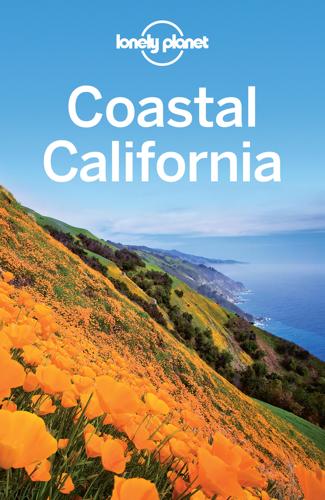
Coastal California
by Lonely Planet

It’s a steal for the beachside location and, even though sites are exposed in a grassy area and there isn’t much privacy, all have BBQs. Top of section Central Coast Includes » Santa Cruz Monterey Carmel-by-the-Sea Big Sur Hearst Castle Morro Bay Salinas San Luis Obispo Santa Barbara Wine Country Santa Barbara Why Go? Too often forgotten or dismissed as ‘flyover’ country between San Francisco and LA, this fairytale stretch of California coast is packed with wild Pacific beaches, misty redwood forests where hot springs hide, and rolling golden hills of fertile vineyards and farm fields. Here Hwy 1 pulls out all the stops, scenery-wise. Flower-power Santa Cruz and the historic port town of Monterey are gateways to the rugged wild lands of the bohemian Big Sur coast.

Coastal California Travel Guide
by Lonely Planet

Central Coast Along Highway 1 Santa Cruz Around Santa Cruz Monterey Pacific Grove Carmel-by-the-Sea Big Sur Point Piedras Blancas Mission San Antonio De Padua San Simeon Hearst Castle Cambria Cayucos Morro Bay Montana de Oro State Park Along Highway 101 San Juan Bautista Gilroy Salinas Pinnacles National Park San Miguel Paso Robles San Luis Obispo Avila Beach Pismo Beach Central Coast Why Go? Too often forgotten or dismissed as ‘flyover’ country between San Francisco and LA, this fairy-tale stretch of California coast is packed with wild beaches, misty redwood forests where hot springs hide, and rolling golden hills of fertile vineyards and farm fields. Coastal Hwy 1 pulls out all the stops, scenery-wise. Flower-power Santa Cruz and the historic port town of Monterey are gateways to the rugged wilderness of the bohemian Big Sur coast.

Northern California Travel Guide
by Lonely Planet

Central Coast Along Highway 1 Santa Cruz Around Santa Cruz Monterey Pacific Grove Carmel-by-the-Sea Big Sur Point Piedras Blancas Mission San Antonio De Padua San Simeon Hearst Castle Cambria Cayucos Morro Bay Montana de Oro State Park Along Highway 101 San Juan Bautista Gilroy Salinas Pinnacles National Park San Miguel Paso Robles San Luis Obispo Avila Beach Pismo Beach Central Coast Why Go? Too often forgotten or dismissed as ‘flyover’ country between San Francisco and LA, this fairy-tale stretch of California coast is packed with wild beaches, misty redwood forests where hot springs hide, and rolling golden hills of fertile vineyards and farm fields. Coastal Hwy 1 pulls out all the stops, scenery-wise. Flower-power Santa Cruz and the historic port town of Monterey are gateways to the rugged wilderness of the bohemian Big Sur coast.

California
by Sara Benson
Published 15 Oct 2010

Return to beginning of chapter Central Coast * * * MONTEREY BAY SANTA CRUZ AROUND SANTA CRUZ MONTEREY PACIFIC GROVE CARMEL-BY-THE-SEA BIG SUR & HIGHWAY 1 SOUTH BIG SUR PIEDRAS BLANCAS LIGHTSTATION HEARST CASTLE SAN SIMEON & AROUND CAMBRIA ESTERO BAY HIGHWAY 101 GILROY SAN JUAN BAUTISTA SALINAS PINNACLES NATIONAL MONUMENT MISSION SAN ANTONIO DE PADUA SAN MIGUEL PASO ROBLES SAN LUIS OBISPO AVILA BEACH PISMO BEACH ARROYO GRANDE GUADALUPE LOS ALAMOS SANTA BARBARA AREA LA PURíSIMA MISSION STATE HISTORIC PARK SANTA BARBARA WINE COUNTRY SANTA BARBARA CHANNEL ISLANDS NATIONAL PARK VENTURA * * * Too often forgotten or dismissed as ‘flyover’ country between San Francisco and Los Angeles, this stretch of coastal California is like a Japanese bento box packed with nearly everything you’ve come to California for: wild Pacific beaches, deep forests of redwood trees (the tallest on earth) where hot springs beckon, and rolling golden hills hiding fertile vineyards.