Retrofitting Suburbia, Updated Edition: Urban Design Solutions for Redesigning Suburbs
by Ellen Dunham-Jones and June Williamson · 23 Mar 2011 · 512pp · 131,112 words
physical boundaries between living, working, and playing. Instead of the compartmentalized worlds of the corporate Organization Man, today’s mix of uses supports the fluid, hybrid work styles of the growing creative class. Live-work lofts, Wi-Fi networks in coffee shops, and spaces for casual and formal networking, from dog runs
Age of the City: Why Our Future Will Be Won or Lost Together
by Ian Goldin and Tom Lee-Devlin · 21 Jun 2023 · 248pp · 73,689 words
dynamic cities would be less productive, less cohesive and less fulfilled. Our argument in this book is that, with the right initiative, the transition to hybrid work offers a window of opportunity to transform cities for the better. While much of this book focuses on the cities of the developed world, we
…
Covid-19 pandemic a significant share of office workers fled to the suburbs. This led a number of commentators to predict that the shift to hybrid working would lead to a permanent flight from inner urban areas in favour of the suburban and exurban periphery. If a worker only needs to commute
…
for an inner city lifestyle is not going away. When it comes to offices, however, there is reason to anticipate substantial and lasting disruption from hybrid working. While the share of the US labour force working remotely has fallen from its lockdown highs, it remains well above pre-pandemic levels, and seems
…
revenue.35 The key revenue sources cities rely on – property taxes, sales taxes and income taxes – will all be heavily impacted by the shift to hybrid working. The financial viability of public transport systems, whether funded by tickets or local taxation, will also need to be addressed. Yet there are, equally, opportunities
…
twentieth century entailed separating different areas of the city into different functional uses. This kind of separation will become increasingly untenable in a world of hybrid working. Business districts in particular must reimagine themselves for a working life less centred around the office. Canary Wharf, for example, is not only converting office
…
and investment across many years in order to reset the image of urban areas that inhabitants associate with work and not play. The shift towards hybrid working also presents an opportunity to bring the urban back into suburban. As knowledge professionals spend less time in central business districts and more time in
…
General Electric and McDonald’s moving their headquarters from the suburbs back into, respectively, the inner cities of Boston and Chicago.45 The shift to hybrid working, which allows a greater share of routine interactions with customers and suppliers to happen remotely, may help widen the circumference of locations in which companies
…
do it in the right way. Simply connecting Manchester to London risks drawing an even greater share of knowledge workers to the capital, particularly if hybrid working only requires them to be in Manchester for part of the week. Ensuring that Manchester is an attractive place for those workers to spend their
…
, here, here, here, here Houston here, here, here Howard, Ebenezer here Hudson River here Hugo, Victor here Hume, David here Hurricane Katrina here hybrid working, see remote and hybrid working ice melting here, here import substitution industrialization here InBev here India here, here, here, here, here, here, here, here, here fertility rates here Indonesia
…
coffeehouses here and Covid-19 pandemic here financial services here gentrification here, here, here Great Stink here, here heatwaves here, here house prices here, here hybrid working here, here immigration here, here incomes here, here mayoralty here migration into inner London here population growth here, here, here poverty here, here public transport
…
railways here, here, here, here, here high-speed rail here, here, here Ralston Purina here Reagan, Ronald here recycling here, here religion here remote and hybrid working here, here, here, here Renaissance Florence here, here, here renewable energy here, here Republic of Letters here République des Hyper Voisins here ‘resource curse’ here
…
Louis here, here, here Salesforce here San Diego here San Francisco here, here, here, here, here, here, here, here, here, here, here gentrification here, here hybrid working here, here San Francisco Bay Area here, here, here Santa Fe here São Paulo here Savonarola, Girolamo here Scientific American here Scott, Emmett J. here
A Splendid Exchange: How Trade Shaped the World
by William J. Bernstein · 5 May 2009 · 565pp · 164,405 words
Syria and Iraq, then in Iran, then in India, and finally in central Asia itself. When the two populations came into contact, the laws of hybridization worked their typical magic. The two types are similar enough to interbreed, and the first-generation offspring of a Bactrian and dromedary (the so-called F1
The Future of Technology
by Tom Standage · 31 Aug 2005
more to the Prius than clever marketing, however. To understand why, it is necessary to look under the bonnet at the way different kinds of hybrids work – for not all hybrids are the same. The simplest kind is the “stop-start” or “micro” hybrid, which is not generally regarded as a true
Ignition!: An Informal History of Liquid Rocket Propellants
by John Drury Clark · 14 Jun 1972 · 673pp · 88,905 words
that just a little more engineering work was needed to make the system work properly. Actually some twenty years elapsed before anybody could make a hybrid work. Meanwhile, back at the ranch— The most striking thing about propellant research in the United States during the war years is how closely it paralleled
…
then burn in the vapor phase? Or was a solid-state reaction involved? Or what? There were lots of questions, and very few answers, and hybrid work languished for some years. Only the Navy, at NOTS, kept at it, trying to learn some of the answers. The revival started in 1959 when
…
Lockheed, with an Army contract, started hybrid work. In 1961 ARPA got into hybrids in a big way, and by 1963 there were at least seven hybrid programs going. I was greatly amused
…
of hybrid combustion. (This, of course, should have been done at least ten years earlier, and before a lot of money had been sunk into hybrid work. But it’s always easier to get money for engineering than for fundamental research. Don’t ask me why.) Most of this work was done
Convergence Culture: Where Old and New Media Collide
by Henry Jenkins · 31 Jul 2006
in terms of corporate hybridity. Hybridity occurs when one cultural space—in this case, a national media industry— absorbs and transforms elements from another; a hybrid work thus exists betwixt and between two cultural traditions while providing a path that can be explored from both directions. Hybridity has often been discussed as
Culture and Imperialism
by Edward W. Said · 29 May 1994 · 549pp · 170,495 words
imperialism’s long cultural history, and—more tellingly—allow Fanon to formulate new strategies and goals for liberation. The Wretched of the Earth is a hybrid work—part essay, part imaginative story, part philosophical analysis, part psychological case history, part nationalist allegory, part visionary transcendence of history. It begins with a territorial
The Nowhere Office: Reinventing Work and the Workplace of the Future
by Julia Hobsbawm · 11 Apr 2022 · 172pp · 50,777 words
impact of shifting tectonic plates which were grinding away before Covid-19 happened: technology and its relationship to humans, flexible working – what we now call ‘hybrid working’ – but also bigger philosophical arguments about the meaning of work itself. As the legendary American social historian Studs Terkel put it in his epic study
…
called Reinventions offers some practical takeaways. In ‘Shift 1: Placeless, Timeless’ the issues of where and when we work are explored within the context of hybrid working becoming the norm in what is arguably the biggest mass workplace experiment ever undertaken. The inconsistencies of current approaches to RTO (return to office) are
…
happened overnight. But the pandemic catapulted them into view. I predict that identity politics will shift as a result of the new fundamental identities around hybrid work. ‘Shift 3: The Productivity Puzzle’ frames productivity, that notoriously problematic but vital metric, alongside the new kid on the corporate block, Purpose-with-a-capital
…
fixed place for work we now call the office has become a defining feature of professional, administrative work. It does not have to remain so. Hybrid working is in operation to some degree in all but a handful of professional workplaces (with the reminder that while there are many jobs which must
…
half of America’s jobs are projected to be freelance by 2030 and two-thirds of employers now regard some form of remote work or hybrid work as ‘the new norm’.3 Many companies are declaring themselves ‘fully remote’, meaning they have a competitive edge over those requiring presenteeism. Offices will need
…
business which can no longer magically attract the same kind of worker prepared to work in the same way they did before the pandemic.16 Hybrid working reflects the fact that mobility and freedom are the new prizes for the professional working class, who do not so much want to ‘clock on
…
micromanaging most of the time. A strict hierarchy prevails. And the fact that this hierarchy actually doesn’t really work with the new ways of [hybrid] working means that innovation is slower in our country; sometimes it’s even sabotaged by people next to you who are vying with you for the
…
mimic the old norms of when people sat side by side: People don’t feel part of anything in their work or not enough, and hybrid working increases this alienation. We’re focusing on building a more informal, more evolved kind of interface for people to connect with each other as during
…
from going ‘to’ the office to WFH – working from home. Post-pandemic the trend is clear. People want the choice and organisations are turning to hybrid working. There is currently no norm or standardisation but the expectation is that a three-day office week of some kind and a two-day WFH
…
Business School says that: ‘Hybrid will drive an even clearer divide between the traditional, ladder careers and the squiggly ones.’30 The challenges of a hybrid working life for ‘squiggly’ careers are not only logistical but also involve huge unanswered questions about a plethora of issues from tax to technology to boundaries
…
, while still being reachable and connected to what else is happening if they are needed. What all of this clearly adds up to is that hybrid working is fiendishly complex and has to be iterative. For all of its faults there was a simplicity about working from one fixed place with regular
…
, I wish I could work like that, not in a city, avoiding the commute.’ Now it’s becoming normal, you don’t have to disguise hybrid working or remote working or pass it off as something which needs excusing. It’s the commute which needs a serious justification now. The most obvious
…
leaders have been compelled to embrace. By the summer of 2021, 70 per cent of business leaders said they expected a blend of remote or hybrid working to be the norm but no one asked them whether they actually liked the idea.3 The assumption that returning to the office had to
…
at the core what the business need is. This is a moment of stocktake. Stocktake is a good way to put it. The push for hybrid working and the desire to view work from a more personal standpoint has affected not just employees but also employers, so ‘the boss’ also has to
…
and instead their role is far more complex and places considerable cost and burdens on them from property portfolio management to recruitment and training strategies. Hybrid working is neither cheap nor convenient for bosses, and arguably it raises a bigger question about agency: how much do people want to work at all
…
don’t doubt it. Yet the politics of power and identity are never far away in the new world of hybrid working. As Sir Vince Cable, former UK business secretary, put it: Hybrid working is unquestionably reinforcing the dividing line between the new labour aristocracy of professionals and senior managers and the proletariat of
…
are going to need to represent the kind of culture they want their company to project. This is no easy task, made much harder by hybrid work patterns and scattered workforces. It is Peter Drucker, prophetic again, who reminds us why culture creation is a supreme business priority in one of his
…
personal – does output (physical or intellectual) correspond to someone’s needs – and professional, is it aligned with the organisation’s needs? The hope is that hybrid working will usher in such flexible, work–life balance friendly policies that productivity will go up. It is too soon to tell if the effect of
…
elsewhere but undoubtedly the Nowhere Office ushers in a third machine age in which we will share desk space with robots sooner than we think. Hybrid working patterns plus the rise of VR mean that we will increasingly collaborate and work with colleagues in a virtual way – Meta’s announcement of Horizon
…
can we set about creating a new version that is focused on succeeding in all the ways that failed before? Pattern Management One risk of hybrid working is that it opens up so much possibility that there are no rules or systems at all and it hinders rather than aids productivity. Some
…
well as cope with the constant glare of the social media gaze, are arguably out of control. But the new schedules and team configurations that hybrid working demands offer an opportunity to rethink these structures and make things simpler. Simplicity itself is a valuable and proven strategic tool:12 General Electric’s
…
. Smaller, simpler teams see problems better. It makes sense to simplify systems when so much management energy will need to go into fresh challenges: scheduling hybrid working, reframing the measuring of performance. Many organisations are using daily check-ins with their team on Zoom or Microsoft Teams or Google Hangouts to cut
…
is the public face of management. And if, as I have established, management needs a dramatic overhaul in order to cope with the challenges of hybrid working, HR is at the front of the queue of what needs reforming. There is no doubt that in many cases the HR department has dramatically
…
our people’s shoes and think how would we want to be treated if it was me?’ This was true of all good leaders before hybrid working but is essential now. As Barbara Kellerman emphasised: If you’re a reasonably good manager in person, the likelihood is that you’re going to
…
healthy workplace all round. In other words, well-being needs to be recast, and have operational issues firmly embedded alongside simple, basic human values. Managing hybrid working at a basic operational level is clearly going to be key to ensuring that office life functions well in the Nowhere Office. Elliot Moss, partner
…
example, the pandemic has highlighted the way caregivers and working parents experience a double discrimination. Not only must they cope with their usual responsibilities but hybrid working often brings heavy additional pressures such as protecting those who are already vulnerable or home schooling – 62 per cent of working parents surveyed by the
…
both large and smaller families. Multiple-family households provide a great blueprint for new models of resilience, flexibility and understanding. The Nowhere Office with its hybrid-working, multi-generational workforce is like a multi-layered family. In short: workplace social health requires that the office functions like a community, a place where
…
, so we can get better at office life and so that office life can itself get better. 1. Healthy Hybrid A universal commitment to implement hybrid working intelligently and sustainably. It has to be functional and support social health and benefit everyone involved in the human supply chain of work – from innovator
…
by cybercrime. Fire and safety drills should be joined by cyberfail drills: this will be seen as essential office maintenance. 5. Working Less, Working Better Hybrid working is going to usher in more part-time, flexible work. The strategies and policies around this will develop far more quickly than at any point
…
://www.statista.com/statistics/263437/global-smartphone-sales-to-end-users-since-2007/ 5. 2021 Work Trend Index: Annual Report, The Next Great Disruption is Hybrid Work – Are We Ready?, 22 March 2021, https://ms-worklab.azureedge.net/files/reports/hybridWork/pdf/2021_Microsoft_WTI_Report_March.pdf 6. See also Ria
…
Patel, ‘Arup’s New Hybrid Work Model Allows 6,000 UK Employees to Choose Their Working Days Across a Seven-Day Week in New Era for Flexibly Working’, Arup, 20 May
…
2021, https://www.arup.com/news-and-events/arups-new-hybrid-work-model-allows-6000-uk-employees-to-choose-their-working-days 7. Sara Bean, ‘Digital Mobility to Work Anytime, Anywhere is Key to Job Satisfaction’, Workplace
…
/working-paper/2021-56/ 5. See Microsoft Work Trend Index 2021, https://www.microsoft.com/en-us/worklab/work-trend-index/hybrid-work; and the report itself, The Next Great Disruption is Hybrid Work – Are We Ready, 22 March 2021, https://ms-worklab.azureedge.net/files/reports/hybridWork/pdf/2021_Microsoft_WTI_Report_March
…
.com/hubfs/Retention%20Reports/2021%20Retention%20Report/Work%20Institutes%202021%20Retention%20Report.pdf 5. ‘2021 Work Trend Index: Annual Report, The Next Great Disruption Is Hybrid Work – Are We Ready?’, 22 March 2021, https://ms-worklab.azureedge.net/files/reports/hybridWork/pdf/2021_Microsoft_WTI_Report_March.pdf. 6. ‘Number of Freelance
User Friendly: How the Hidden Rules of Design Are Changing the Way We Live, Work & Play
by Cliff Kuang and Robert Fabricant · 7 Nov 2019
out to be disastrous. Eager to see their batteries being charged, drivers would mash the brake and watch the charging needle spike toward green. But hybrids work best when braking is slow, which allows the power from the spinning axles to be efficiently diverted. Hoping to create a display showing how much
The Measure of Progress: Counting What Really Matters
by Diane Coyle · 15 Apr 2025 · 321pp · 112,477 words
their surveys. However, while progress is being made on collecting data on t hese non- standard modes of employment, the economy continues to change. Hybrid work, partly online from home, and four-day weeks (rather than five-day) are emerging features of some labour markets (such as t hose of
…
life during the pandemic. I loathe online meetings thanks to this, while acknowledging how convenient they can be. But many people now prefer remote or hybrid work, and Stanford economist Nick Bloom and o thers argue that, if well managed, hybrid arrangements can increase individual and firm-level productivity, although it is
…
offline world is time saving, such as the avoidance of queues in shops and bank branches. Time saving is also an important feature of hybrid work, the saving coming from reduced commuting time. But the shifts are also time-using. Consuming services via the ubiquitous devices involves spending time, substituting for
…
(albeit saying only a little about the survey methodology) (MBO Partners). The enforced remote working in 2020–2022 clearly led to a step change in hybrid work (see Chapter 4). To the extent this means s ervice delivery across national boundaries, it has implications for interpreting trade statistics and understanding the
…
increase in use of US golf clubs 258 Chapter Nine compared with pre-pandemic times, as p eople reorganise how they spend their working time; hybrid working has introduced a new flexibility into one of the margins of choice (Bloom and Finan 2023). Yet Ian Steedman’s Consumption Takes Time (2001) is
…
and, 251; economic statistics and, 63; estimating stock of, 227; including health status in, 215 Human Development Index (HDI), 236, 243 human footprint, 205, 206 hybrid work, 120–21, 163 hyperscalers, 89, 167–69, 169–70, 196 ICT (digital information and communication technologies): enabling remote work, 163; factoryless goods production and, 79
Remote Work Revolution: Succeeding From Anywhere
by Tsedal Neeley · 14 Oct 2021 · 223pp · 60,936 words

The One Device: The Secret History of the iPhone
by Brian Merchant · 19 Jun 2017 · 416pp · 129,308 words
In Covid's Wake: How Our Politics Failed Us
by Stephen Macedo and Frances Lee · 10 Mar 2025 · 393pp · 146,371 words
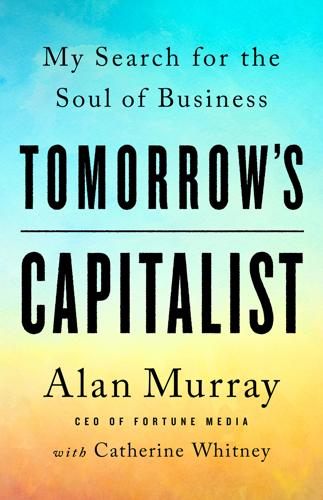
Tomorrow's Capitalist: My Search for the Soul of Business
by Alan Murray · 15 Dec 2022 · 263pp · 77,786 words

Goddess of the Market: Ayn Rand and the American Right
by Jennifer Burns · 18 Oct 2009 · 495pp · 144,101 words
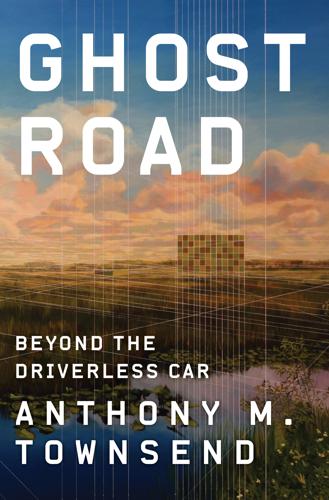
Ghost Road: Beyond the Driverless Car
by Anthony M. Townsend · 15 Jun 2020 · 362pp · 97,288 words
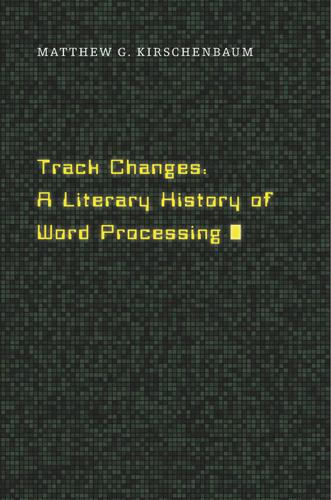
Track Changes
by Matthew G. Kirschenbaum · 1 May 2016 · 519pp · 142,646 words
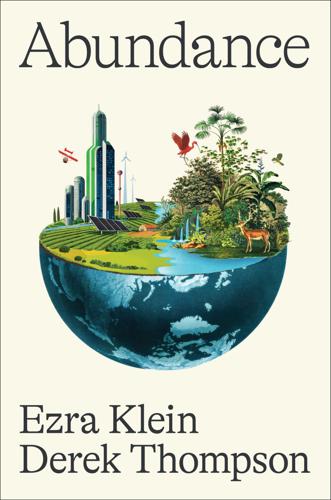
Abundance
by Ezra Klein and Derek Thompson · 18 Mar 2025 · 227pp · 84,566 words
The Future Is Analog: How to Create a More Human World
by David Sax · 15 Jan 2022 · 282pp · 93,783 words
Transport for Humans: Are We Nearly There Yet?
by Pete Dyson and Rory Sutherland · 15 Jan 2021 · 342pp · 72,927 words
Slow Productivity: The Lost Art of Accomplishment Without Burnout
by Cal Newport · 5 Mar 2024 · 233pp · 65,893 words
The Geek Way: The Radical Mindset That Drives Extraordinary Results
by Andrew McAfee · 14 Nov 2023 · 381pp · 113,173 words

The Other Slavery: The Uncovered Story of Indian Enslavement in America
by Andrés Reséndez · 11 Apr 2016 · 532pp · 162,509 words
Docker in Action
by Jeff Nickoloff and Stephen Kuenzli · 10 Dec 2019 · 629pp · 109,663 words