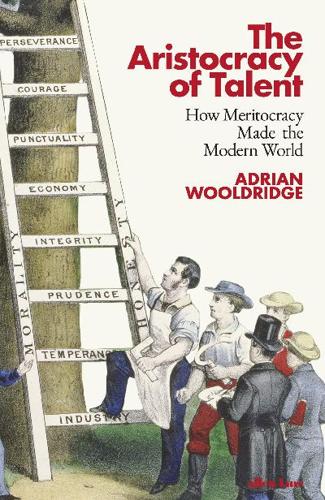
The Aristocracy of Talent: How Meritocracy Made the Modern World
by Adrian Wooldridge · 2 Jun 2021 · 693pp · 169,849 words
from then on, including those advanced by Michael Young in his classic book in 1958 and extending to today’s broadsides about the evils of hyper-meritocracy. He agreed with Jefferson about the existence of ‘a natural aristocracy among men, the grounds of which are virtue and talents’. Then he agonized about
Average Is Over: Powering America Beyond the Age of the Great Stagnation
by Tyler Cowen · 11 Sep 2013 · 291pp · 81,703 words
considerably from reading their work and from conversations with them. Contents Also by Tyler Cowen Title Page Copyright Dedication Epigraph PART I Welcome to the Hyper-Meritocracy 1 Work and Wages in iWorld 2 The Big Earners and the Big Losers 3 Why Are So Many People Out of Work? PART II
…
The New Geography 10 Relearning Education 11 The End of Average Science 12 A New Social Contract? Notes Acknowledgments Index PART I Welcome to the Hyper-Meritocracy 1 Work and Wages in iWorld This book is far from all good news. Being young and having no job remains stubbornly common. Wages for
…
better the world is at measuring value, the more demanding a lot of career paths will become. That is why I say “Welcome to the hyper-meritocracy” with a touch of irony. Firms and employers and monitors will be able to measure economic value with a sometimes oppressive precision. The coming world
…
of hyper-meritocracy I’m sketching is not necessarily a good and just way for an economy to run. It will be more productive, and it is true
…
. It does not, however, push the uninterested student to the head of the pack. Here is yet another way in which the idea of a hyper-meritocracy will apply to our future. The lessons are clear: Workable machine intelligence means that a good education no longer relies on living near a major
99%: Mass Impoverishment and How We Can End It
by Mark Thomas · 7 Aug 2019 · 286pp · 79,305 words
have no choice but to dismantle the welfare state. Tyler Cowen, Economics Professor at George Mason University, set out his vision of a free market ‘hyper-meritocracy’ in which poor people will be forced to move to low-cost housing and to accept vastly reduced support, pacified by computer games and digital
The Internet Is Not the Answer
by Andrew Keen · 5 Jan 2015 · 361pp · 81,068 words
truth” that wages for men, over the last forty years, have fallen by 28%.78 He describes the divide in what he calls this new “hyper-meritocracy” as being between “billionaires” like the Battery member Sean Parker and the homeless “beggars” on the streets of San Francisco, and sees an economy in
Ours to Hack and to Own: The Rise of Platform Cooperativism, a New Vision for the Future of Work and a Fairer Internet
by Trebor Scholz and Nathan Schneider · 14 Aug 2017 · 237pp · 67,154 words