Guns, germs, and steel: the fates of human societies
by Jared M. Diamond · 15 Jul 2005
evidently so difficult that there have been only a few occasions in history when people invented writing entirely on their own. The two indisputably independent inventions of writing were achieved by the Su merians of Mesopotamia somewhat before 3000 B.C. and by Mexican Indians before 600 B.C. (Figure 12.1); Egyptian
…
origins of writing is the great difficulty of inventing it, as we have already discussed. The other reason is that other opportunities for the independent invention of writing were preempted by Sumerian or early Mesoamerican writing and their derivatives. We know that the development of Sumerian writing took at least hun- dreds, possibly
…
E D USES and users of early writing suggest why writing appeared so late in human evolution. All of the likely or possible indepen- dent inventions of writing (in Sumer, Mexico, China, and Egypt), and all of the early adaptations of those invented systems (for example, those in Crete, Iran, Turkey, the Indus
Nexus: A Brief History of Information Networks From the Stone Age to AI
by Yuval Noah Harari · 9 Sep 2024 · 566pp · 169,013 words
. In the new computer-based networks, computers themselves are members and there are computer-to-computer chains that don’t pass through any human. The inventions of writing, print, and radio revolutionized the way humans connected to each other, but no new types of members were introduced to the network. Human societies were
…
composed of the same Sapiens both before and after the invention of writing or radio. In contrast, the invention of computers constitutes a revolution in membership. Sure, computers also help the network’s old members (humans) connect in
Money Changes Everything: How Finance Made Civilization Possible
by William N. Goetzmann · 11 Apr 2016 · 695pp · 194,693 words
as 7000 BCE. Whatever these things were—counters, game tokens, or mystical symbols, they were used by many different peoples and cultures long before the invention of writing. The objects are about the size of game pieces. Their stylization and simplification suggest that they were standardized for easy recognition—abstract and simple rather
…
for thousands of years in the ancient Near East—not just in the preliterate period. Why, for example, did the bullae system survive after the invention of writing? Also puzzling is that the widest variety of tokens appeared after the first writing began, not before—suggesting that the token and bullae system was
…
and the corporation that guarantees participation in the profits of the firm and a right to vote on its management. Although contracts existed before the invention of writing—and even before the invention of bullae—the hollow clay balls and their tokens are arguably the earliest archaeological evidence of contracts. Each bulla evidently
Paper: A World History
by Mark Kurlansky · 3 Apr 2016 · 485pp · 126,597 words
, an older man who is barefoot and slightly iconoclastic. One of its dialogues is titled “The Superiority of the Spoken Word. The Myth of the Invention of Writing.” Whether Socrates once expressed the ideas contained within the dialogue, perhaps to his young student Plato, or whether they represent Plato’s own reservations about
…
, frustrated by the limitations of recording everything with knotted string, ordered his officer Cangjie to come up with a better system, which led to the invention of writing. Cangjie had four eyes and taught writing to four students. The idea of Chinese characters came to him when a hoofprint of an unknown animal
The Musical Human: A History of Life on Earth
by Michael Spitzer · 31 Mar 2021 · 632pp · 163,143 words
like a character from Game of Thrones: Daenerys Targaryen, ‘stormborn’ rider of dragons. Except that Enheduanna really existed, which we know thanks to the Sumerians’ invention of writing, originally a modest tool for administering flood defences on the banks of the Tigris and Euphrates.17 Hence to the Mesopotamians’ long list of contributions
What Technology Wants
by Kevin Kelly · 14 Jul 2010 · 476pp · 132,042 words
that fairly applied laws, rather than nepotistic favoritism, is a good idea. We can outlaw certain punishments with treaties. We can encourage accountability with the invention of writing. We can consciously expand our circle of empathy. These are all inventions, products of our minds, as much as lightbulbs and telegraphs are. This cyclotron
…
propelled by technology. Society evolves in incremental doses; each rise in social organization throughout history was driven by an insertion of a new technology. The invention of writing unleashed the leveling fairness of recorded laws. The invention of standard minted coins made trade more universal, encouraged entrepreneurship, and hastened the idea of liberty
…
they died before reproducing, would be remembered. From a systems point of view, language enabled humans to adapt and transmit learning faster than genes. The invention of writing systems for language and math structured this learning even more. Ideas could be indexed, retrieved, and propagated more easily. Writing allowed the organization of information
The Moral Animal: Evolutionary Psychology and Everyday Life
by Robert Wright · 1 Jan 1994 · 604pp · 161,455 words
similarities between video and the written word were concealed by the fact that, at the time, the two media had different economic properties. Since the invention of writing in ancient times, a series of innovations—paper, ink, mass-produced paper, the printing press, better printing presses, better mail service—had made this means
…
of TV, the computer, the microcomputer, and allied technologies, this century has seen breakthroughs in information technology that rival all past such breakthroughs, even the inventions of writing, money, and the printing press. Given the centrality of information technology to non-zero-sumness, and the centrality of non-zero-sumness to social structure

A Place for Everything: The Curious History of Alphabetical Order
by Judith Flanders · 6 Feb 2020 · 404pp · 110,942 words
of the transistor in 1947 as ‘a key transitional event in the advent of the information age’. Other key moments, according to historians, include the invention of writing, of double-entry bookkeeping, printing, the telegraph and the computer. What is notable in this list is that none of these are inventions that created
…
., Rethinking and Recontextualizing Glosses: New Perspectives in the Study of Late Anglo-Saxon Glossography (Turnhout, Brepols, 2011) Lerner, Fred, The Story of Libraries: From the Invention of Writing to the Computer Age (New York, Continuum, 2009) Lieshout, H.H.M. van, The Making of Pierre Bayle’s Dictionnaire historique et critique (Amsterdam and
…
the Library, the Book and the Scholar in the Western World (Oxford, Chandos, 2010), pp. 12–13; Fred Lerner, The Story of Libraries: From the Invention of Writing to the Computer Age (New York, Continuum, 2009), pp. 16–17. 26. Hatzimichali, ‘Encyclopaedism’, in König and Woolf, Encyclopaedism from Antiquity, pp. 76–7. 27
How to Invent Everything: A Survival Guide for the Stranded Time Traveler
by Ryan North · 17 Sep 2018 · 643pp · 131,673 words
insanely valuable and dangerous item on the planet. Though the idea behind writing is simple—store invisible noises by transforming them into visible shapes—the invention of writing was actually an incredibly difficult thing for humans to do. It’s so difficult, in fact, that across all of human history, it has happened
The Life and Death of Ancient Cities: A Natural History
by Greg Woolf · 14 May 2020
in the First Millennium B.C., edited by Edward Herring and Kathryn Lomas, 213–225. London: Accordia Research Institute. Woods, Christopher, ed. 2010. Visible Language: Inventions of Writing in the Ancient Middle East and Beyond. Chicago: Oriental Institute of the University of Chicago. Woolf, Greg. 1993. “Rethinking the Oppida.” Oxford Journal of Archaeology
Is the Internet Changing the Way You Think?: The Net's Impact on Our Minds and Future
by John Brockman · 18 Jan 2011 · 379pp · 109,612 words

The Rise and Fall of the Third Chimpanzee
by Jared Diamond · 2 Jan 1991 · 436pp · 140,256 words
From Bacteria to Bach and Back: The Evolution of Minds
by Daniel C. Dennett · 7 Feb 2017 · 573pp · 157,767 words
The Singularity Is Near: When Humans Transcend Biology
by Ray Kurzweil · 14 Jul 2005 · 761pp · 231,902 words
The Fourth Age: Smart Robots, Conscious Computers, and the Future of Humanity
by Byron Reese · 23 Apr 2018 · 294pp · 96,661 words
Bourgeois Dignity: Why Economics Can't Explain the Modern World
by Deirdre N. McCloskey · 15 Nov 2011 · 1,205pp · 308,891 words
Writing on the Wall: Social Media - the First 2,000 Years
by Tom Standage · 14 Oct 2013 · 290pp · 94,968 words
Money: The Unauthorized Biography
by Felix Martin · 5 Jun 2013 · 357pp · 110,017 words
Future Politics: Living Together in a World Transformed by Tech
by Jamie Susskind · 3 Sep 2018 · 533pp
Debt: The First 5,000 Years
by David Graeber · 1 Jan 2010 · 725pp · 221,514 words
Nonzero: The Logic of Human Destiny
by Robert Wright · 28 Dec 2010
Enlightenment Now: The Case for Reason, Science, Humanism, and Progress
by Steven Pinker · 13 Feb 2018 · 1,034pp · 241,773 words

Coming of Age in the Milky Way
by Timothy Ferris · 30 Jun 1988 · 661pp · 169,298 words
Homo Deus: A Brief History of Tomorrow
by Yuval Noah Harari · 1 Mar 2015 · 479pp · 144,453 words
When Cultures Collide: Leading Across Cultures
by Richard D. Lewis · 1 Jan 1996
Is That a Fish in Your Ear?: Translation and the Meaning of Everything
by David Bellos · 10 Oct 2011 · 396pp · 107,814 words
Double Entry: How the Merchants of Venice Shaped the Modern World - and How Their Invention Could Make or Break the Planet
by Jane Gleeson-White · 14 May 2011 · 274pp · 66,721 words
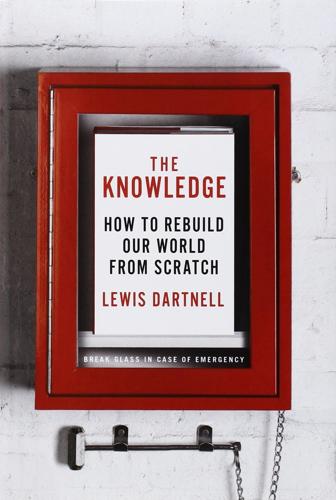
The Knowledge: How to Rebuild Our World From Scratch
by Lewis Dartnell · 15 Apr 2014 · 398pp · 100,679 words
Globish: How the English Language Became the World's Language
by Robert McCrum · 24 May 2010 · 325pp · 99,983 words
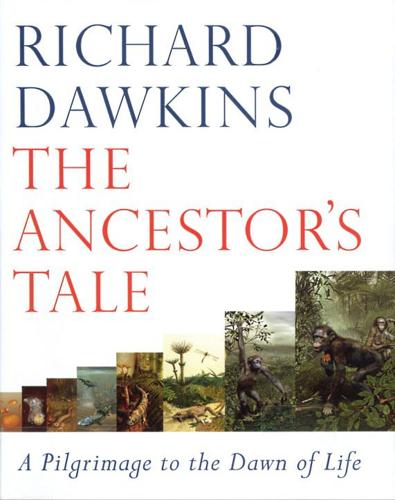
The Ancestor's Tale: A Pilgrimage to the Dawn of Evolution
by Richard Dawkins · 1 Jan 2004 · 734pp · 244,010 words
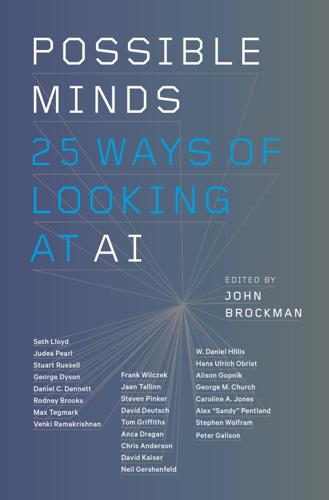
Possible Minds: Twenty-Five Ways of Looking at AI
by John Brockman · 19 Feb 2019 · 339pp · 94,769 words
Nomads: The Wanderers Who Shaped Our World
by Anthony Sattin · 25 May 2022 · 412pp · 121,164 words
Digital Barbarism: A Writer's Manifesto
by Mark Helprin · 19 Apr 2009 · 272pp · 83,378 words
Sex, Time, and Power: How Women's Sexuality Shaped Human Evolution
by Leonard Shlain · 2 Aug 2004 · 607pp · 168,497 words
Blueprint: The Evolutionary Origins of a Good Society
by Nicholas A. Christakis · 26 Mar 2019
Humankind: A Hopeful History
by Rutger Bregman · 1 Jun 2020 · 578pp · 131,346 words
The Strange Order of Things: The Biological Roots of Culture
by Antonio Damasio · 6 Feb 2018 · 289pp · 87,292 words
Team Human
by Douglas Rushkoff · 22 Jan 2019 · 196pp · 54,339 words
Darwin's Dangerous Idea: Evolution and the Meanings of Life
by Daniel C. Dennett · 15 Jan 1995 · 846pp · 232,630 words
The Road Ahead
by Bill Gates, Nathan Myhrvold and Peter Rinearson · 15 Nov 1995 · 317pp · 101,074 words
Against the Grain: A Deep History of the Earliest States
by James C. Scott · 21 Aug 2017 · 349pp · 86,224 words
These Strange New Minds: How AI Learned to Talk and What It Means
by Christopher Summerfield · 11 Mar 2025 · 412pp · 122,298 words

Winning the War on War: The Decline of Armed Conflict Worldwide
by Joshua S. Goldstein · 15 Sep 2011 · 511pp · 148,310 words
The Twittering Machine
by Richard Seymour · 20 Aug 2019 · 297pp · 83,651 words
What to Think About Machines That Think: Today's Leading Thinkers on the Age of Machine Intelligence
by John Brockman · 5 Oct 2015 · 481pp · 125,946 words
Who We Are and How We Got Here: Ancient DNA and the New Science of the Human Past
by David Reich · 22 Mar 2018 · 372pp · 110,208 words

Doughnut Economics: Seven Ways to Think Like a 21st-Century Economist
by Kate Raworth · 22 Mar 2017 · 403pp · 111,119 words
The Organized Mind: Thinking Straight in the Age of Information Overload
by Daniel J. Levitin · 18 Aug 2014 · 685pp · 203,949 words

The Information: A History, a Theory, a Flood
by James Gleick · 1 Mar 2011 · 855pp · 178,507 words
Future Shock
by Alvin Toffler · 1 Jun 1984 · 286pp · 94,017 words
Seeing Like a State: How Certain Schemes to Improve the Human Condition Have Failed
by James C. Scott · 8 Feb 1999 · 607pp · 185,487 words
The Idealist: Aaron Swartz and the Rise of Free Culture on the Internet
by Justin Peters · 11 Feb 2013 · 397pp · 102,910 words
Money: The True Story of a Made-Up Thing
by Jacob Goldstein · 14 Aug 2020 · 199pp · 64,272 words
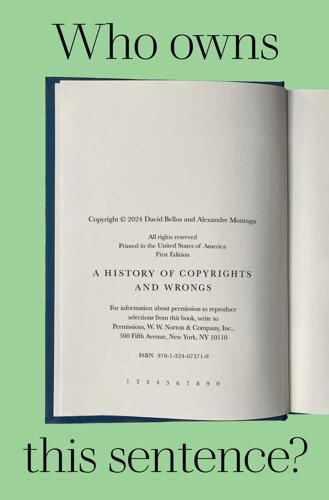
Who Owns This Sentence?: A History of Copyrights and Wrongs
by David Bellos and Alexandre Montagu · 23 Jan 2024 · 305pp · 101,093 words
Superbloom: How Technologies of Connection Tear Us Apart
by Nicholas Carr · 28 Jan 2025 · 231pp · 85,135 words
How PowerPoint Makes You Stupid
by Franck Frommer · 6 Oct 2010 · 255pp · 68,829 words
The Future of Money
by Bernard Lietaer · 28 Apr 2013
Fun Inc.
by Tom Chatfield · 13 Dec 2011 · 266pp · 67,272 words
The Last Lingua Franca: English Until the Return of Babel
by Nicholas Ostler · 23 Nov 2010 · 484pp · 120,507 words
The Patterning Instinct: A Cultural History of Humanity's Search for Meaning
by Jeremy Lent · 22 May 2017 · 789pp · 207,744 words
The Human Cosmos: A Secret History of the Stars
by Jo Marchant · 15 Jan 2020 · 544pp · 134,483 words
Upheaval: Turning Points for Nations in Crisis
by Jared Diamond · 6 May 2019 · 459pp · 144,009 words
Fall of Civilizations: Stories of Greatness and Decline
by Paul Cooper · 31 Mar 2024 · 583pp · 174,033 words
Free Speech: Ten Principles for a Connected World
by Timothy Garton Ash · 23 May 2016 · 743pp · 201,651 words

The Dark Net
by Jamie Bartlett · 20 Aug 2014 · 267pp · 82,580 words

Cities: The First 6,000 Years
by Monica L. Smith · 31 Mar 2019 · 304pp · 85,291 words

Heart of the Machine: Our Future in a World of Artificial Emotional Intelligence
by Richard Yonck · 7 Mar 2017 · 360pp · 100,991 words
Data-Ism: The Revolution Transforming Decision Making, Consumer Behavior, and Almost Everything Else
by Steve Lohr · 10 Mar 2015 · 239pp · 70,206 words
Work: A History of How We Spend Our Time
by James Suzman · 2 Sep 2020 · 909pp · 130,170 words
Rebel Ideas: The Power of Diverse Thinking
by Matthew Syed · 9 Sep 2019 · 280pp · 76,638 words
Total Recall: How the E-Memory Revolution Will Change Everything
by Gordon Bell and Jim Gemmell · 15 Feb 2009 · 291pp · 77,596 words

The 5 Types of Wealth: A Transformative Guide to Design Your Dream Life
by Sahil Bloom · 4 Feb 2025 · 363pp · 94,341 words
The Human Swarm: How Our Societies Arise, Thrive, and Fall
by Mark W. Moffett · 31 Mar 2019 · 692pp · 189,065 words

Composing a Further Life: The Age of Active Wisdom
by Mary Catherine Bateson · 13 Sep 2010 · 287pp · 99,131 words
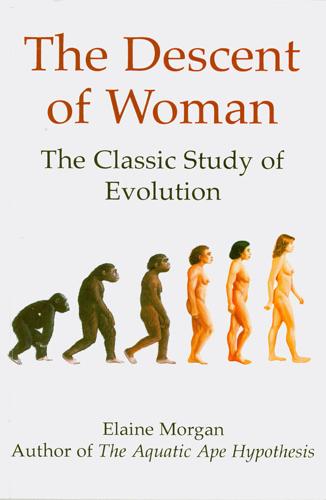
The Descent of Woman
by Elaine Morgan · 1 Feb 2001 · 293pp · 92,446 words
Extraterrestrial Civilizations
by Isaac Asimov · 2 Jan 1979 · 330pp · 99,226 words
Money: 5,000 Years of Debt and Power
by Michel Aglietta · 23 Oct 2018 · 665pp · 146,542 words
Black Code: Inside the Battle for Cyberspace
by Ronald J. Deibert · 13 May 2013 · 317pp · 98,745 words

Wind, Sand and Stars
by Antoine de Saint-Exupery and Lewis Galantiere · 1 Jan 1939 · 210pp · 67,361 words

Jaws
by Sandra Kahn,Paul R. Ehrlich · 15 Jan 2018
Twitter and Tear Gas: The Power and Fragility of Networked Protest
by Zeynep Tufekci · 14 May 2017 · 444pp · 130,646 words
The Network Imperative: How to Survive and Grow in the Age of Digital Business Models
by Barry Libert and Megan Beck · 6 Jun 2016 · 285pp · 58,517 words
The Revolt of the Public and the Crisis of Authority in the New Millennium
by Martin Gurri · 13 Nov 2018 · 379pp · 99,340 words

Factory Girls: From Village to City in a Changing China
by Leslie T. Chang · 6 Oct 2008 · 419pp · 125,977 words

Insight Guides South America (Travel Guide eBook)
by Insight Guides · 15 Dec 2022
Spin
by Robert Charles Wilson · 2 Jan 2005 · 541pp · 146,445 words

A World Beneath the Sands: The Golden Age of Egyptology
by Toby Wilkinson · 19 Oct 2020
Information: A Very Short Introduction
by Luciano Floridi · 25 Feb 2010 · 137pp · 36,231 words