it is difficult to get a man to understand something, when his salary depends on his not understanding it
17 results
Other People's Money: Masters of the Universe or Servants of the People?
by
John Kay
Published 2 Sep 2015
The psychologist David Tuckett had anticipated their response to Rajan’s challenge: ‘The doubts they [sceptics] raise about the new story need to be refuted and so are mocked and maligned through dismissal.’34 The great muckraker Upton Sinclair had expressed a deep insight into the relationship between the world of ideas and the world of practical men: ‘It is difficult to get a man to understand something, when his salary depends on his not understanding it.’35 Chapter 3 will describe another idea central to financialisation: the perceived need for liquidity. The Jackson Hole participants discussed risk with the aid of a well-worked-out framework of analysis with impressive intellectual coherence (if little empirical relevance). But when they – and others – discussed liquidity, they did so in a context with all the clarity of Mississippi mud. 3 Intermediation The role of the middleman There are some men whose only mission among others is to act as intermediaries; one crosses them like bridges and keeps going.
…
Their attitude was not the comprehensive immorality of the overt fraudster but the wilful blindness of those who do not ask questions when it would be embarrassing, or at least inconvenient, to know the answer. Upton Sinclair’s remark is again relevant: ‘it is difficult to get a man to understand something, when his salary depends on his not understanding it’. How profitable is the finance sector? Lucky fools do not bear the slightest suspicion that they may be lucky fools. Nassim Nicholas Taleb, Fooled by Randomness26 The herd instinct and associated competitive pressures led businesses to imitate the disastrous strategies of their rivals.
End This Depression Now!
by
Paul Krugman
Published 30 Apr 2012
When we ask why policy makers were so blind to the risks of financial deregulation—and, since 2008, why they have been so blind to the risks of an inadequate response to the economic slump—it’s hard not to recall Upton Sinclair’s famous line: “It is difficult to get a man to understand something, when his salary depends on his not understanding it.” Money buys influence; big money buys big influence; and the policies that got us where we are, while they never did much for most people, were, for a while at least, very good to a few people at the top. The Elite and the Political Economy of Bad Policies In 1998, as I mentioned in chapter 4, Citicorp—the holding company for Citibank—merged with Travelers Group to form what we now know as Citigroup.
Strong Towns: A Bottom-Up Revolution to Rebuild American Prosperity
by
Charles L. Marohn, Jr.
Published 24 Sep 2019
Coming from professionals who were compensated for building all this stuff, that attitude seemed stunningly self-serving. Don’t we have an obligation to make sure that what we built could plausibly be sustained by future generations? It was Upton Sinclair who said, “It is difficult to get a man to understand something when his salary depends on his not understanding it.” With a few notable exceptions, I found Sinclair’s observation maddeningly insightful. For me, the evidence was pointing to a conclusion I found difficult to believe, yet impossible to ignore: The more our cities build, the poorer they become. The Municipal Ponzi Scheme When local governments need professional assistance, they often issue what is called a request for proposal (RFP).

Walkable City: How Downtown Can Save America, One Step at a Time
by
Jeff Speck
Published 13 Nov 2012
I have also had good experiences recently working with municipal engineers in Carmel, Indiana; Cedar Rapids; and Fort Lauderdale. But, for most of the profession, Upton Sinclair’s famous observation still holds sway: “It is difficult to get a man to understand something when his salary depends on his not understanding it.” ●AAA: “Your Driving Costs,” 2010 edition, 7. The marginal operating cost of most vehicles is well below twenty cents per mile. This explains why Zipcar and the other urban car-share programs are so effective at reducing auto use. According to the company website, each “Zipcar takes at least 15 personally-owned vehicles off the road.”
The Wisdom of Frugality: Why Less Is More - More or Less
by
Emrys Westacott
Published 14 Apr 2016
People who are dependent on the favor of others will almost inevitably be anxious about how they are viewed by their patrons. This anxiety is unpleasant in itself and constrains what they feel comfortable doing or saying. Ultimately it is likely to affect—one might well say infect—their thinking. As Upton Sinclair famously observed, “It is difficult to get a man to understand something, when his salary depends on his not understanding it.”52 Thus when Epicurus says that “the greatest fruit of self-sufficiency is freedom,” he primarily has in mind freedom from any such inhibitions or anxieties, a condition he views as both conducive to moral integrity and necessary for peace of mind. Moral approval of self-sufficiency persists today, but in modified forms.
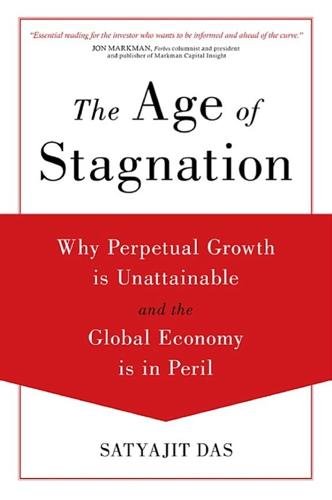
The Age of Stagnation: Why Perpetual Growth Is Unattainable and the Global Economy Is in Peril
by
Satyajit Das
Published 9 Feb 2016
They frequently did not understand the risk of the complex transactions. During a 2010 US Senate hearing on investment banking practices in the lead-up to the GFC, Goldman executives illustrated Upton Sinclair's observation: “It is difficult to get a man to understand something, when his salary depends on his not understanding it.”7 The following exchange occurred during the hearing: Senator Levin: “Don't you also have a duty to disclose an adverse interest to your client? Do you have that duty?” Dan Sparks (head of Goldman Sach's mortgage trading): “About?” Senator Levin: “If you have an adverse interest to your client, do you have the duty to disclose that to your client?”
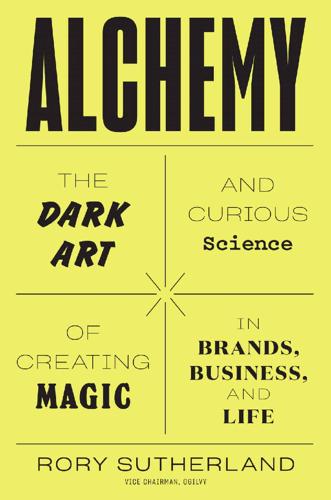
Alchemy: The Dark Art and Curious Science of Creating Magic in Brands, Business, and Life
by
Rory Sutherland
Published 6 May 2019
Surgeons felt challenged by keyhole surgery and other new, less invasive procedures that can be carried out with the support of radiographers, because they used skills different from those that they had spent a lifetime perfecting. Similarly, you can imagine how London black cab drivers feel about Uber. As the novelist Upton Sinclair once remarked, ‘It is difficult to get a man to understand something, when his salary depends on his not understanding it.’ One of the common arguments against vaping was that it renormalised smoking, because it looks a bit like smoking. I find that quite hard to believe, frankly. Whatever you think about smoking, it does look fairly cool – a remake of Casablanca with the cigarettes replaced with vaporisers would be somewhat less romantic.
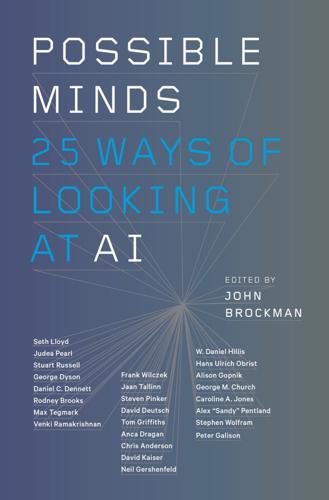
Possible Minds: Twenty-Five Ways of Looking at AI
by
John Brockman
Published 19 Feb 2019
The successful creation of AGI would be the biggest event in human history, so why is there so little serious discussion of what it might lead to? Here again, the answer involves multiple reasons. First, as Upton Sinclair famously quipped, “It is difficult to get a man to understand something, when his salary depends on his not understanding it.”* For example, spokesmen for tech companies or university research groups often claim there are no risks attached to their activities even if they privately think otherwise. Sinclair’s observation may help explain not only reactions to risks from smoking and climate change but also why some treat technology as a new religion whose central articles of faith are that more technology is always better and whose heretics are clueless scaremongering Luddites.
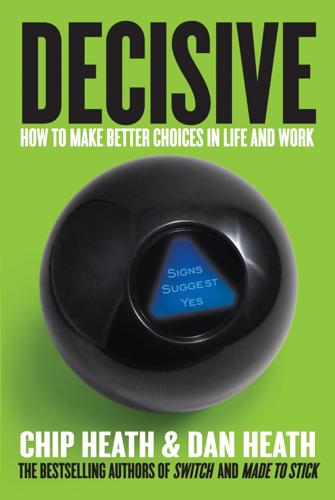
Decisive: How to Make Better Choices in Life and Work
by
Chip Heath
and
Dan Heath
Published 26 Mar 2013
The meta-study found that the confirmation bias was stronger in emotion-laden domains such as religion or politics and also when people had a strong underlying motive to believe one way or the other (as in Upton Sinclair’s observation, “It is difficult to get a man to understand something when his salary depends on his not understanding it!”). The confirmation bias also increased when people had previously invested a lot of time or effort in a given issue. In the previous section, we saw that it’s crucial to Widen Our Perspective in order to break out of a narrow frame; by doing that, we expand the number of options open to us.
The Unknowers: How Strategic Ignorance Rules the World
by
Linsey McGoey
Published 14 Sep 2019
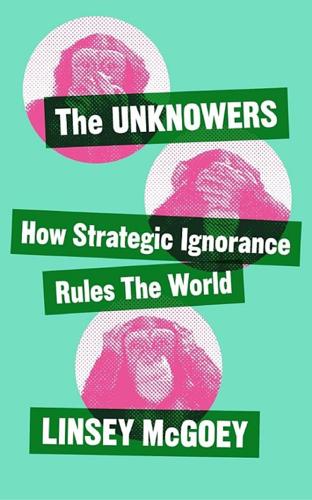
He was inspired particularly by Rousseau, who, as Bastiat put it, ‘never spoke more truly than when he said: It takes a great deal of scientific insight to discern the facts that are closest to us.’17 George Orwell reiterated the point when he famously observed, ‘To see what is in front of one’s nose needs a constant struggle.’ These are compelling but also obvious points in a way: we know that people struggle to accept inconvenient facts, and we also have a good idea of why (Upton Sinclair’s adage applies: ‘it is difficult to get a man to understand something, when his salary depends on his not understanding it’). What we don’t really know is how. How do some people ‘get away’ with sustained ignorance when others on lower rungs of a social ladder are treated as more ignorant than the elite? We need to better understand ignorance pathways: plausible accounts of how micro-ignorance contributes to larger unknowns, and the next chapters introduce such a pathway by exploring how the language of 19th-century theorists of political economy made it seem as if economic exchange in the 19th century marked a clear break from earlier forms of state-facilitated violent appropriation, even though many mercantile forms of corporate privilege did not end.
Sickening: How Big Pharma Broke American Health Care and How We Can Repair It
by
John Abramson
Published 15 Dec 2022
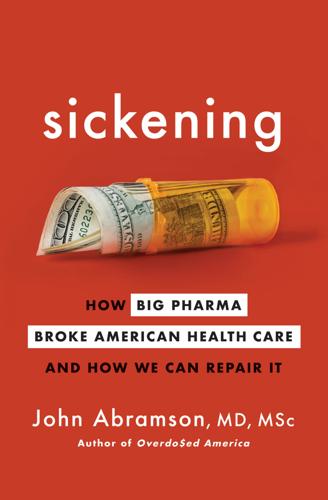
Doctors’ professional societies are dependent on money from industry, even as JAMA asks them to eliminate conflicts of interest in their development of guidelines. As the political writer and muckraker Upton Sinclair wrote: “It is difficult to get a man to understand something, when his salary depends on his not understanding it.” The National Academy of Medicine and the U.S. Agency for Healthcare Research and Quality have made repeated appeals, asking for CPGs that are independent of commercial influence, but those appeals have failed. Doctors are left in the untenable position of having the quality of their practice judged by their adherence to guidelines written by experts who often have financial ties to the drug industry and who rarely, if ever, have access to the underlying data necessary to independently evaluate the evidence from the primarily commercially funded clinical trials.
Doughnut Economics: Seven Ways to Think Like a 21st-Century Economist
by
Kate Raworth
Published 22 Mar 2017
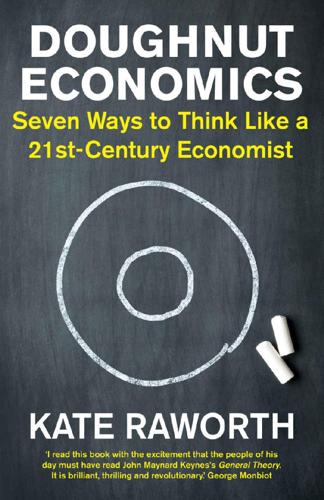
At the same time all of these countries’ global ecological footprints already far exceed Earth’s capacity: it would take four planets for everyone in the world to live as they do in Sweden, Canada and the US, and five planets for all to live like an Australian or Kuwaiti.16 Does this suggest that, while aiming to get into the Doughnut, high-income countries should give up on the pursuit of GDP growth and accept that it might no longer be possible? That is not a comfortable question to consider. As Upton Sinclair famously noted, ‘It is difficult to get a man to understand something, when his salary depends on his not understanding it.’17 Some staff at the OECD must be struggling with this now because, whether or not growth can be green and equitable, it doesn’t look like growth is coming in some of the world’s richest nations. The average GDP growth rate of 13 long-standing OECD member countries had fallen from over 5% in the early 1960s to under 2% by 2011.18 Diverse reasons for this have been suggested, from shrinking and ageing populations, falling labour productivity, and an overhang of debt to widening wealth inequality, rising commodity prices, and the costs of responding to climate change.19 Whatever the mix of reasons in each country, the declining long-term GDP growth trend raises the very real possibility that these economies could be close to the top of their S curves, with growth tailing off.
Arguing With Zombies: Economics, Politics, and the Fight for a Better Future
by
Paul Krugman
Published 28 Jan 2020
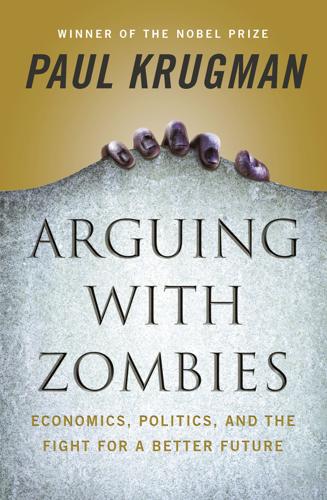
In particular, if you want to preserve protection for people with pre-existing conditions—the health issue that matters most to voters, including half of Republicans—Obamacare is the most conservative policy that can do that. The only other options are things like Medicare for All that would involve moving significantly to the left, not the right. Health economists have explained this point many times over the years; but as always, it’s difficult to get a man to understand something when his salary depends on his not understanding it. Still, let’s try one more time. If you want private insurers to cover people with pre-existing conditions, you have to ban discrimination based on medical history. But that in itself isn’t enough, because if policies cost the same for everyone, those who sign up will be sicker than those who don’t, creating a bad risk pool and forcing high premiums.
Think Like a Rocket Scientist: Simple Strategies You Can Use to Make Giant Leaps in Work and Life
by
Ozan Varol
Published 13 Apr 2020
Vested interests also reinforce the status quo. High-level executives at Fortune 500 companies shun innovation because their compensation is tied to short-term quarterly outcomes that may be temporarily disrupted by forging a new path. “It’s difficult to get a man to understand something,” Upton Sinclair said, “when his salary depends on his not understanding it.” If you were a horse breeder in Detroit in the early 1900s, you would have assumed that your competition was other breeders raising stronger and faster horses. If you ran a cab company ten years ago, you would have assumed that your competition was other cab companies. If you run airport security, you assume that the primary threat will come from another guy with a bomb in his shoe, so you “solve” terrorism by making everyone take off their shoes.
Likewar: The Weaponization of Social Media
by
Peter Warren Singer
and
Emerson T. Brooking
Published 15 Mar 2018
When Facebook employees confronted Mark Zuckerberg about then-candidate Trump’s vow to bar all Muslims from entering the United States, he acknowledged that it was indeed hate speech, in violation of Facebook’s policies. Nonetheless, he explained, his hands were tied. To remove the post would cost Facebook conservative users—and valuable business. It was exactly as observed by writer Upton Sinclair a century earlier: “It is difficult to get a man to understand something when his salary depends on his not understanding it.” Today, the role of social media firms in public life is one that evades easy description. They are profit-motivated, mostly U.S.-based businesses that manage themselves like global governments. They are charmingly earnest, preaching inclusivity even as they play host to the world’s most divisive forces.
The Joys of Compounding: The Passionate Pursuit of Lifelong Learning, Revised and Updated
by
Gautam Baid
Published 1 Jun 2020
It doesn’t take a lot of money to have a truly wealthy life, but it does take financial independence, which gives us control over our time. This is the important topic that we will address in the next chapter. CHAPTER 9 ACHIEVING FINANCIAL INDEPENDENCE It is difficult to get a man to understand something, when his salary depends on his not understanding it. —Upton Sinclair Whose bread I eat, his song I sing. —Charlie Munger Truth is hard to assimilate when it is opposed by interest. You cannot really understand how the world truly works unless you have financial independence. Once you achieve this state, it changes everything.
MONEY Master the Game: 7 Simple Steps to Financial Freedom
by
Tony Robbins
Published 18 Nov 2014
Myth 4 will help us quickly determine if the person on the other side of the desk is working for you or the name on their company’s letterhead. As “Deep Throat” from the Watergate scandal said: “Follow the money. Always follow the money.” CHAPTER 2.4 MYTH 4: “I’M YOUR BROKER, AND I’M HERE TO HELP” * * * “It is difficult to get a man to understand something, when his salary depends on his not understanding it.” —UPTON SINCLAIR LET ME GET THIS STRAIGHT So let us recap: The mutual funds sold to me are charging me astronomical fees that could strip me of up to 70% of my future nest egg. Over any sustained period of time, 96% of actively managed mutual funds are underperforming the market (or their benchmarks).