labour mobility
description: the ability of workers to move freely between different regions or occupations
39 results
Empire of Things: How We Became a World of Consumers, From the Fifteenth Century to the Twenty-First
by Frank Trentmann · 1 Dec 2015 · 1,213pp · 376,284 words
towns barred pedlars, and husbands beat their wives for leaving the house in search of work, with the full support of the authorities. Guilds restricted labour mobility. Together, husbands, fathers, churches and guilds exercised a social discipline unknown in England.140 Compare this to London in 1455, where the women who threw
Creating Unequal Futures?: Rethinking Poverty, Inequality and Disadvantage
by Ruth Fincher and Peter Saunders · 1 Jul 2001 · 267pp · 79,905 words
intensity of capitalist competition and the presence of a large reserve army of labour: chronic underemployment is the normal condition within the aggregate labor market . . . labour mobility is no longer a sufficient condition for the equalization of wage rates . . . low-wage firms . . . continue to find ample sources of cheap labour within the
…
factors likely to influence training, especially business size. For many of the other issues around low-paid jobs, Australian data are difficult to come by. Labour mobility figures in Australia show very little upward occupational mobility for low-skilled workers (ABS 1998, pp. 16–17) and research by Burgess and Campbell (1998
…
, Canberra ——1997d Australians’ Employment and Unemployment Patterns 1994–1996 Cat. No. 6286.0, ABS, Canberra ——1998a Schools. Australia Cat. No. 4221.0, ABS, Canberra ——1998b Labour Mobility Cat. No. 6209.0, ABS, Canberra ——1999 The Labour Force, Australia Cat. No. 6203.0, ABS, Canberra Australian Bureau of Statistics (ABS)/ Centre for Aboriginal
Immigration worldwide: policies, practices, and trends
by Uma Anand Segal, Doreen Elliott and Nazneen S. Mayadas · 19 Jan 2010 · 492pp · 70,082 words
conjoined with human rights. American Journal of International Law 70 (3) July. Meyers, E. 2002, November. Multinational cooperation, integration, and regimes: The case of international labour mobility. The Center for Comparative Immigration Studies (CCIS) Working Paper No. 61, pp. 1–64. Mitchell, J.C. 1959. The causes of labour migration. Bulletin of
…
Conclusions and Recommendations. www.independentasylumcommission.org.uk/files/ Saving%20Sanctuary.pdf (accessed 20.11.08). IOM (International Organisation for Migration) (2008) World Migration 2008: Managing Labour Mobility in the Evolving Global Economy. Geneva: IOM. Jones Finer, C. (ed.) (2006) Migration, Immigration, and Social Policy. Oxford: Blackwell Publishing. Kymlicka, W. (2003) ‘‘Immigration, citizenship
The Deluge: The Great War, America and the Remaking of the Global Order, 1916-1931
by Adam Tooze · 13 Nov 2014 · 1,057pp · 239,915 words
unions were strong enough to pay for half of Labour’s candidates.37 And this was backed outside Parliament by a truly unprecedented wave of labour mobilization. The upsurge in working-class militancy between 1910 and 1920 was a phenomenon that swept the entire world.38 Rather than seeing it as a
Exceptional People: How Migration Shaped Our World and Will Define Our Future
by Ian Goldin, Geoffrey Cameron and Meera Balarajan · 20 Dec 2010 · 482pp · 117,962 words
based on the stock estimates of temporary foreign workers in 2008. Philip Martin. 2008. “Low and Semi-Skilled Workers Abroad,” in World Migration 2008: Managing Labour Mobility in the Evolving Global Economy. Geneva: International Organization for Migration. Annual flow based on calculations in Goldin and Reinert, 2007: 258, table 6.3. c
…
family migrants, more than the next nine highest recipient countries combined. See Eleonore Kofman and Veena Meetoo. 2008. “Family Migration,” in World Migration 2008: Managing Labour Mobility in the Evolving Global Economy. Geneva: IOM, p. 165. Recipient countries and annual flows are derived from 2006 flows in part VI (country notes) of
…
in Northern Europe: Overview and Comparison,” presented at Clandestino Project Conference, London, 27 March 2009. 7. International Organization for Migration. 2008. World Migration 2008: Managing Labour Mobility in the Evolving Global Economy. Geneva: IOM, p. 515. 8. Stephen Castles and Godula Kosack. 1974. “How the Trade Unions Try to Control and Integrate
…
Skilled Foreign Workers,” Report to the UK Home Office, March 2002, p. 4. 13. Lindsay Lowell. 2008. “Highly Skilled Migration,” in World Migration 2008: Managing Labour Mobility in the Evolving Global Economy. Geneva: International Organization for Migration, p. 52. 14. Richard Florida, Charlotta Mellander, and Kevin Stolarick. 2008. “Inside the Black Box
…
et al., 2004. 25. Castles, 2006. 26. OECD, 2008: 133. 27. Philip Martin. 2008. “Low and Semi-Skilled Workers Abroad,” in World Migration 2008: Managing Labour Mobility in the Evolving Global Economy. Geneva: International Organization for Migration. 28. OECD, 2008: 126. 29. Martin, 2008: 91. 30. In 2001, Japan admitted approximately 100
…
for Public Policy Research, p. 14. 50. Stéphan Vincent-Lancrin. 2008. “Student Mobility, Internationalization of Higher Education and Skilled Migration,” in World Migration 2008: Managing Labour Mobility in the Evolving Global Economy. Geneva: IOM, p. 105. 51. OECD, 2008: 117. 52. IOM, 2005: 483. 53. Vincent-Lancrin, 2008. 54. IOM, 2005: 120
…
. The Economist. 2009c. “The Immigration Superhighway,” 18 April 2009, p. 29. 62. Eleonore Kofman and Veena Meetoo. 2008. “Family Migration,” in World Migration 2008: Managing Labour Mobility in the Evolving Global Economy. Geneva: IOM. 63. John Salt. 2005. “Types of Migration in Europe: Implications and Policy Concerns,” presented at European Population Conference
…
: 110. 149. United Nations, 2006: 56. 150. Ghosh, 2006: 54. 151. World Bank estimates cited in International Organization for Migration. 2008. World Migration 2008: Managing Labour Mobility in the Evolving Global Economy. Geneva: IOM, p. 533. 152. Ghosh, 2006: 57. 153. This paragraph draws on IOM, 2008: 152–153. 154. Michael A
…
. 45. Philip G. Altbach. 2004. “Higher Education Crosses Borders,” Change (March-April 2004). 46. Ibid. 47. International Organization for Migration. 2008. World Migration 2008: Managing Labour Mobility in the Evolving Global Economy. Geneva: IOM,p. 122. 48. Examples are drawn from Philip G. Altbach and Jane Knight. 2006. “The Internationalization of Higher
…
for Migration. 2000. World Migration Report. Geneva: IOM. ———. 2005. World Migration 2005: Costs and Benefits of International Migration. Geneva: IOM. ———. 2008. World Migration 2008: Managing Labour Mobility in the Evolving Global Economy. Geneva: IOM. ———. 2009. Towards Tolerance, Law, and Dignity: Addressing Violence against Foreign Nationals in South Africa. Geneva: IOM. Ivakhnyuk, Irina
…
. “The Human Tsunami,” Financial Times, 19 June 2009. Kofman, Eleonore, and Veena Meetoo. 2008. “Family Migration,” in International Organization for Migration, World Migration 2008: Managing Labour Mobility in the Evolving Global Economy. Geneva: IOM, pp. 151-172. Koslowski, Rey. 2002. “Human Migration and Pre-Modern World Politics,” International Studies Quarterly 46(3
…
the New Globalization Era,” SSRC Migration & Development Conference Paper No. 12. Brooklyn, NY: SSRC. Lowell, Lindsay. 2008. “Highly Skilled Migration,” in World Migration 2008: Managing Labour Mobility in the Evolving Global Economy. Geneva: International Organization for Migration. Lucas, Robert E. B. 2005. International Migration and Economic Development: Lessons from Low-Income Countries

The Atlantic and Its Enemies: A History of the Cold War
by Norman Stone · 15 Feb 2010 · 851pp · 247,711 words
should have given prosperity to the north as well, but there were formidable difficulties, especially to do with a system of ‘social’ housing that stopped labour mobility. Later on, Mrs Thatcher did admit that she wished she had handled some of the real, longer-term problems earlier. This was right: Britain became

The Precariat: The New Dangerous Class
by Guy Standing · 27 Feb 2011 · 209pp · 89,619 words
more questions, obtaining certificates to prove something or other, all these are painfully time consuming yet are usually ignored. A flexible labour market that makes labour mobility the mainstream way of life, and that creates LABOUR, WORK AND THE TIME SQUEEZE 121 a web of moral and immoral hazards in the flurry
Age of the City: Why Our Future Will Be Won or Lost Together
by Ian Goldin and Tom Lee-Devlin · 21 Jun 2023 · 248pp · 73,689 words
of education here decline in trust here deindustrialization here Gilded Age here Great Migration here house prices here, here immigration here industrialization here inequality here labour mobility here ‘magnet schools’ here parking spaces here patent filings here per capita emissions here, here per capita incomes here remote working here, here, here return
How Will Capitalism End?
by Wolfgang Streeck · 8 Nov 2016 · 424pp · 115,035 words
organized labour into a productive force and assigned democracy a positive economic function. The problem was that the viability of that model was contingent on labour mobilizing a sufficient amount of political and economic power, which it could do in the more or less closed national economies of the post-war era
European Spring: Why Our Economies and Politics Are in a Mess - and How to Put Them Right
by Philippe Legrain · 22 Apr 2014 · 497pp · 150,205 words
as Greece, do not. Their trade and investment ties would be much greater if the single market in services was completed. Contrary to popular perception, labour mobility within the eurozone remains low. Economies are also much less flexible than they ought to be, with the notable exception of Ireland. Self-evidently, the
…
policy. Eurozone economies are very different, often ossified and not as integrated as they ought to be: the EU single market remains woefully incomplete and labour mobility low. Moreover, even very open and flexible economies such as Ireland’s can get blown off course by a surge of foreign money that inflates
The Story of Work: A New History of Humankind
by Jan Lucassen · 26 Jul 2021 · 869pp · 239,167 words
The Technology Trap: Capital, Labor, and Power in the Age of Automation
by Carl Benedikt Frey · 17 Jun 2019 · 626pp · 167,836 words
The Dawn of Everything: A New History of Humanity
by David Graeber and David Wengrow · 18 Oct 2021

The Taste of War: World War Two and the Battle for Food
by Lizzie Collingham · 1 Jan 2011 · 927pp · 236,812 words
The Rise and Fall of the British Nation: A Twentieth-Century History
by David Edgerton · 27 Jun 2018
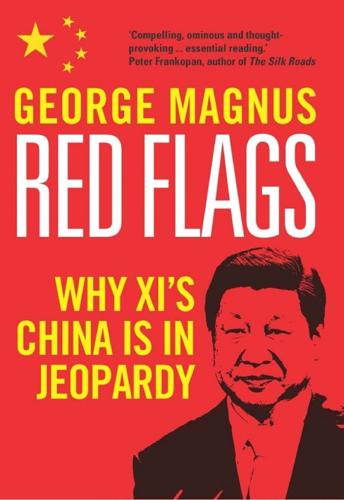
Red Flags: Why Xi's China Is in Jeopardy
by George Magnus · 10 Sep 2018 · 371pp · 98,534 words
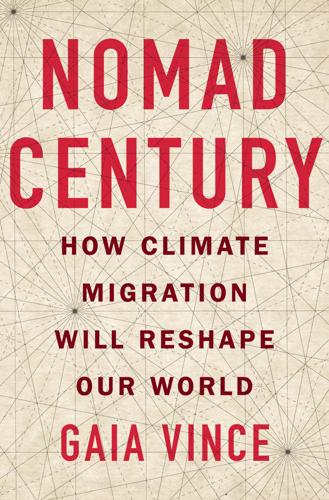
Nomad Century: How Climate Migration Will Reshape Our World
by Gaia Vince · 22 Aug 2022 · 302pp · 92,206 words
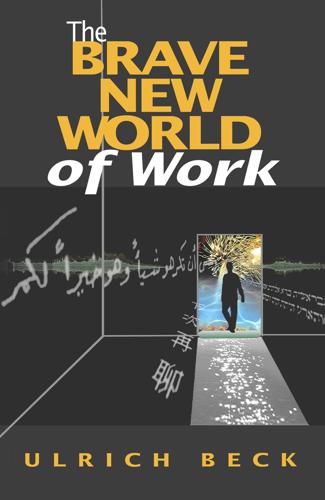
Brave New World of Work
by Ulrich Beck · 15 Jan 2000 · 236pp · 67,953 words
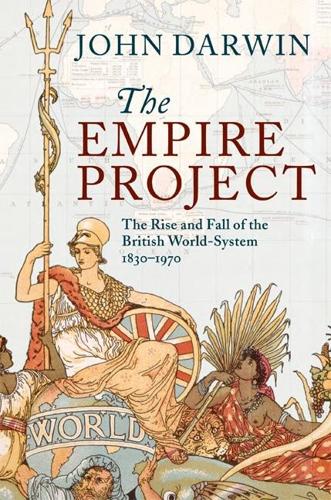
The Empire Project: The Rise and Fall of the British World-System, 1830–1970
by John Darwin · 23 Sep 2009
Open: The Story of Human Progress
by Johan Norberg · 14 Sep 2020 · 505pp · 138,917 words
Money and Government: The Past and Future of Economics
by Robert Skidelsky · 13 Nov 2018
Buying Time: The Delayed Crisis of Democratic Capitalism
by Wolfgang Streeck · 1 Jan 2013 · 353pp · 81,436 words
Rethinking the Economics of Land and Housing
by Josh Ryan-Collins, Toby Lloyd and Laurie Macfarlane · 28 Feb 2017 · 346pp · 90,371 words

Vanished Kingdoms: The History of Half-Forgotten Europe
by Norman Davies · 27 Sep 2011
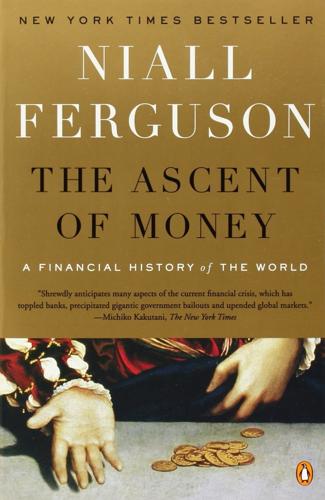
The Ascent of Money: A Financial History of the World
by Niall Ferguson · 13 Nov 2007 · 471pp · 124,585 words
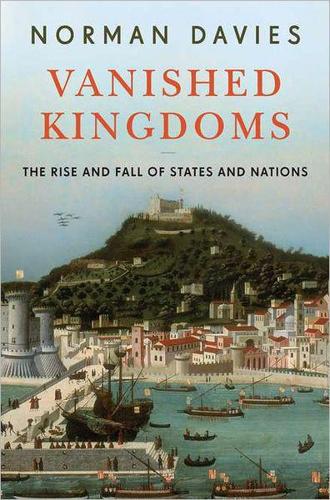
Vanished Kingdoms: The Rise and Fall of States and Nations
by Norman Davies · 30 Sep 2009 · 1,309pp · 300,991 words
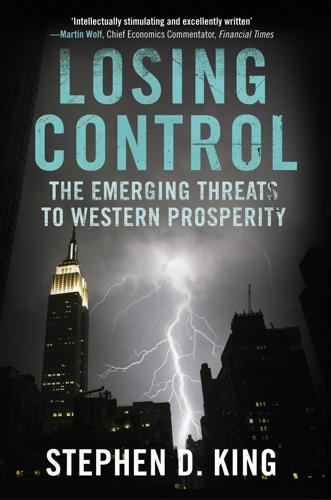
Losing Control: The Emerging Threats to Western Prosperity
by Stephen D. King · 14 Jun 2010 · 561pp · 87,892 words
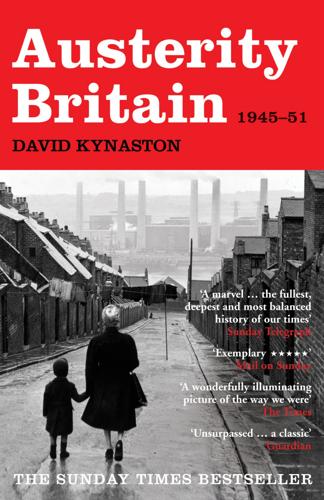
Austerity Britain: 1945-51
by David Kynaston · 12 May 2008 · 870pp · 259,362 words
The Shifts and the Shocks: What We've Learned--And Have Still to Learn--From the Financial Crisis
by Martin Wolf · 24 Nov 2015 · 524pp · 143,993 words
Liberty's Dawn: A People's History of the Industrial Revolution
by Emma Griffin · 10 Jun 2013
Why We Drive: Toward a Philosophy of the Open Road
by Matthew B. Crawford · 8 Jun 2020 · 386pp · 113,709 words
The Human Swarm: How Our Societies Arise, Thrive, and Fall
by Mark W. Moffett · 31 Mar 2019 · 692pp · 189,065 words

Brexit, No Exit: Why in the End Britain Won't Leave Europe
by Denis MacShane · 14 Jul 2017 · 308pp · 99,298 words
The Tyranny of Nostalgia: Half a Century of British Economic Decline
by Russell Jones · 15 Jan 2023 · 463pp · 140,499 words

Unhappy Union: How the Euro Crisis - and Europe - Can Be Fixed
by John Peet, Anton La Guardia and The Economist · 15 Feb 2014 · 267pp · 74,296 words

Three Years in Hell: The Brexit Chronicles
by Fintan O'Toole · 5 Mar 2020 · 385pp · 121,550 words

The Fair Trade Scandal: Marketing Poverty to Benefit the Rich
by Ndongo Sylla · 21 Jan 2014 · 193pp · 63,618 words
Birth of the Euro
by Otmar Issing · 20 Oct 2008 · 276pp · 82,603 words

Shadows of Empire: The Anglosphere in British Politics
by Michael Kenny and Nick Pearce · 5 Jun 2018 · 215pp · 64,460 words