Basic Income And The Left
by henningmeyer · 16 May 2018
short or medium term but might be possible in the longer term: for instance, new forms of taxation, such as a financial transaction tax or land value tax, or the creation of new money, along the lines of the quanti‐ tative easing practised by central banks since the financial crisis. None of these
Stolen: How to Save the World From Financialisation
by Grace Blakeley · 9 Sep 2019 · 263pp · 80,594 words
to all the world’s problems, without considering how we got to where we are in the first place. Policy prescriptions — from wealth taxes and land value taxes, to financial reform and housing reform — have to be situated within their political economic context. It is meaningless to speak of “policy” without speaking of
Inequality and the 1%
by Danny Dorling · 6 Oct 2014 · 317pp · 71,776 words
stories concerning how they made their money. 104. N. Shaxson, Treasure Islands. 105. It is of course an old campaign. Winston Churchill even supported a land value tax – perhaps because, although born at Blenheim Palace, he never owned it or had a chance of owning such a property. See C. Joseph, ‘Duke’s
The Glass Half-Empty: Debunking the Myth of Progress in the Twenty-First Century
by Rodrigo Aguilera · 10 Mar 2020 · 356pp · 106,161 words
even if remaining skeptical about its implementation: “Why Henry George had a point”, Economist, 2 Apr. 2015, https://www.economist.com/blogs/freeexchange/2015/04/land-value-tax 5 Sheidel, W., The Great Leveler: Violence and the History of Inequality from the Stone Age to the Twenty-First Century (Princeton University Press, 2017
Wonderland: How Play Made the Modern World
by Steven Johnson · 15 Nov 2016 · 322pp · 88,197 words
also a devotee of the then-influential economist Henry George, who had argued in his 1879 best-selling book Progress and Poverty for an annual “land-value tax” on all land held as private property—high enough to obviate the need for other taxes on income or production. Many progressive thinkers and activists
Corbyn
by Richard Seymour
the bottom 95 per cent. The basis of it was the Tory interpretation of Labour’s plan to investigate replacing the poll tax with the land value tax. Taking their estimate of the revenue that would be raised by such a tax, they claimed that, averaged out across households, Labour’s idea would
…
treble the amount of tax they were paying. But, of course, the point of the land value tax is that it is progressive – most households would pay less, while the wealthiest property barons would pay a lot more.53 By and large, given
…
negative equity”’, Daily Star, 30 May 2017; Gordon Rayner, ‘Tax on homes “to treble under Labour plans for Land Value Tax”’, Telegraph, 29 May 2017; Jon Stone, ‘Labour looks to replace Council Tax with a Land Value Tax’, Independent, 16 May 2017. 54Macer Hall, ‘May’s plan for a Fairer Britain’, Daily Express, 18 May 2017
Bitcoin: The Future of Money?
by Dominic Frisby · 1 Nov 2014 · 233pp · 66,446 words
harder to enforce and more costly to levy. In all probability, we’ll move towards the taxation of consumption and assets, rather than labour – a land value tax, even (see the footnote for more on land value tax177). Charles Hoskinson, CEO of Ethereum – dubbed ‘Bitcoin 2.0’ – says to me: I think it
…
around £25,000 in 2014. 177 The most obvious form of consumption tax, and the hardest to hide, is to tax use of the land – land value tax. Its proponents argue that it would also bring about the much needed re-balancing of land ownership. Seventy per cent of the UK, for example
The Finance Curse: How Global Finance Is Making Us All Poorer
by Nicholas Shaxson · 10 Oct 2018 · 482pp · 149,351 words
the property market; to radical transparency, forcing the names of the beneficial owners of all real estate in Britain into the public domain; to a land value tax, levied on the value of each square metre of underlying land, which could jimmy a stream of tax revenues out of wealthy foreigners who own
…
land in the UK, and channel this towards compelling social priorities, such as a basic income. A land value tax would be, if set up right, unavoidable: even if the land were held under an impenetrable Cook Islands trust, if whoever owns or controls or
Treasure Islands: Uncovering the Damage of Offshore Banking and Tax Havens
by Nicholas Shaxson · 11 Apr 2011 · 429pp · 120,332 words
they would otherwise be. Not only that, but a huge share of the profits of the financial sector derive ultimately from real estate business and land value. Tax land’s rental value, and you capture a big slice of this financial business, however much it is reengineered offshore. When Pittsburgh became one of
A Pelican Introduction: Basic Income
by Guy Standing · 3 May 2017 · 307pp · 82,680 words
to local circumstances. The third would be to pay a ‘basic rental income’ to everyone who rents rather than owns a property, financed by a land value tax. Of course, the UK housing situation is not unique. Other countries too face similar problems, especially the lack of affordable housing in the big cities
…
gaining proportionately more. High-income households would lose on average but relative to income the losses would be negligible. A more traditional proposal is a land value tax. Thomas Paine envisaged funding for his scheme coming from a ‘ground rent’ charged to property owners. Henry George campaigned for a land rent levy to
…
ownership is broadly in line with income and wealth. And in principle they could raise large sums. According to estimates cited by The Economist, a land value tax of 5 per cent charged on all US land would raise over $1 trillion, enough to pay every American $3,500 a year.29 This
Doughnut Economics: Seven Ways to Think Like a 21st-Century Economist
by Kate Raworth · 22 Mar 2017 · 403pp · 111,119 words
A Fine Mess
by T. R. Reid · 13 Mar 2017 · 363pp · 92,422 words
Dream Hoarders: How the American Upper Middle Class Is Leaving Everyone Else in the Dust, Why That Is a Problem, and What to Do About It
by Richard V. Reeves · 22 May 2017 · 198pp · 52,089 words
The People vs. Democracy: Why Our Freedom Is in Danger and How to Save It
by Yascha Mounk · 15 Feb 2018 · 497pp · 123,778 words

The Optimist: Sam Altman, OpenAI, and the Race to Invent the Future
by Keach Hagey · 19 May 2025 · 439pp · 125,379 words
Tenants: The People on the Frontline of Britain's Housing Emergency
by Vicky Spratt · 18 May 2022 · 371pp · 122,273 words
Big Capital: Who Is London For?
by Anna Minton · 31 May 2017 · 169pp · 52,744 words
Fall Out: A Year of Political Mayhem
by Tim Shipman · 30 Nov 2017 · 721pp · 238,678 words
Sacred Economics: Money, Gift, and Society in the Age of Transition
by Charles Eisenstein · 11 Jul 2011 · 448pp · 142,946 words
Green Economics: An Introduction to Theory, Policy and Practice
by Molly Scott Cato · 16 Dec 2008
How Did We Get Into This Mess?: Politics, Equality, Nature
by George Monbiot · 14 Apr 2016 · 334pp · 82,041 words
Rethinking the Economics of Land and Housing
by Josh Ryan-Collins, Toby Lloyd and Laurie Macfarlane · 28 Feb 2017 · 346pp · 90,371 words
Who Owns England?: How We Lost Our Green and Pleasant Land, and How to Take It Back
by Guy Shrubsole · 1 May 2019 · 505pp · 133,661 words
Markets, State, and People: Economics for Public Policy
by Diane Coyle · 14 Jan 2020 · 384pp · 108,414 words
The Joy of Tax
by Richard Murphy · 30 Sep 2015 · 233pp · 71,775 words
Why We Can't Afford the Rich
by Andrew Sayer · 6 Nov 2014 · 504pp · 143,303 words
The New Urban Crisis: How Our Cities Are Increasing Inequality, Deepening Segregation, and Failing the Middle Class?and What We Can Do About It
by Richard Florida · 9 May 2016 · 356pp · 91,157 words
The Divide: A Brief Guide to Global Inequality and Its Solutions
by Jason Hickel · 3 May 2017 · 332pp · 106,197 words
The New Enclosure: The Appropriation of Public Land in Neoliberal Britain
by Brett Christophers · 6 Nov 2018
Capitalism and Its Critics: A History: From the Industrial Revolution to AI
by John Cassidy · 12 May 2025 · 774pp · 238,244 words
Where We Want to Live
by Ryan Gravel · 2 Feb 2016 · 259pp · 76,797 words
The Rise and Fall of the British Nation: A Twentieth-Century History
by David Edgerton · 27 Jun 2018
Rentier Capitalism: Who Owns the Economy, and Who Pays for It?
by Brett Christophers · 17 Nov 2020 · 614pp · 168,545 words
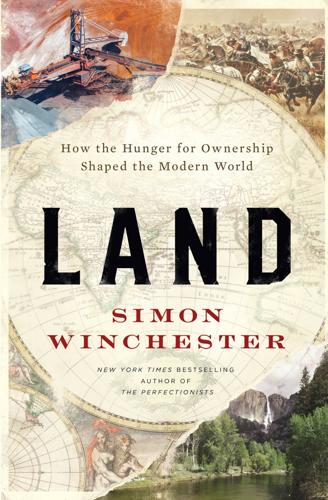
Land: How the Hunger for Ownership Shaped the Modern World
by Simon Winchester · 19 Jan 2021 · 486pp · 139,713 words
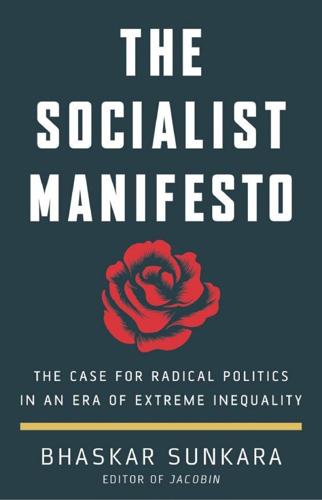
The Socialist Manifesto: The Case for Radical Politics in an Era of Extreme Inequality
by Bhaskar Sunkara · 1 Feb 2019 · 324pp · 86,056 words