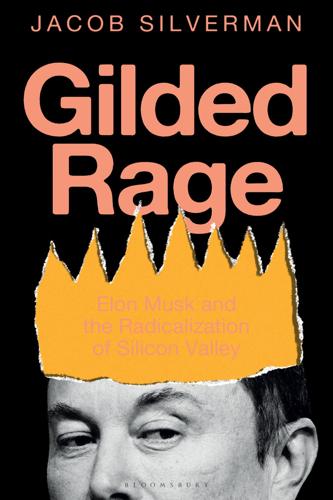
Gilded Rage: Elon Musk and the Radicalization of Silicon Valley
by Jacob Silverman · 9 Oct 2025 · 312pp · 103,645 words
held that people mimicked the desires of others, lusting after things that they were told were desirable. A person couldn’t avoid being influenced by mimetic desire, according to Girard, and in this Hobbesian vision, the frenzy of competition could spill over into violence. The solution was what Girard called the scapegoat
The Nerd Reich: Silicon Valley Fascism and the War on Democracy
by Gil Durán · 17 Aug 2026 · 317pp · 114,570 words
heavy use of René Girard, the late Stanford professor whose work he latched on to as a student. Girard was known for his theories of mimetic desire (that people learn desire by mimicking the desires of others) and scapegoating (that societies often resolve their tensions by punishing a symbolic scapegoat). For Girard
…
, the point of understanding these concepts was to avoid repeating them, since he believed that mimetic desire leads to mimetic rivalry, an existential competition that ends with the punishing of a scapegoat and, eventually, the apocalypse. Thiel has credited Girard’s idea
…
on mimetic desire for his decision to invest in Facebook, and his Antichrist lectures scapegoat his political opponents as literal Antichrists. Where Palaver and Girard saw warnings, Thiel
…
entrepreneur told Bernard, “there are people that are leveraging Christianity to get closer to Peter Thiel.” It was an almost perfect execution of hyperstition and mimetic desire: using influential tech figures to market Christianity to those who desire to be influential tech figures, spreading the meme of Christianity among the famously godless

Boom: Bubbles and the End of Stagnation
by Byrne Hobart and Tobias Huber · 29 Oct 2024 · 292pp · 106,826 words
yet declining industry. Bubbles also offer a partial escape from the trap of constantly comparing oneself to others. According to René Girard’s theory of mimetic desire, recently popularized among the Silicon Valley set by Peter Thiel, our wants tend to be borrowed from other people. We want not what we desire
…
ultimately results in violence. The emergence of altcoins, and the rivalry these competing cryptocurrencies have triggered, could be explained, through a Girardian lens, by the mimetic desire to copy the singularity of Bitcoin’s design and successful implementation. For a quantitative application of Girard’s mimetic theory that models the mimetic contagion
…
’s core insights is that our desire is mediated by the desire of others. (As an example, consider the rise of innumerable TikTok investor influencers.) Mimetic desire, he explains in his 1972 book Violence and the Sacred, is deeply antagonistic in nature and operates as the engine of social rivalry and conflict
…
. In contrast to mere imitation, which refers to the positive effects of copying someone else’s behavior (which facilitates learning, for example), mimetic desire—desiring the other’s desire—opens up a deeply violent dimension. Exploring anthropology, religious history, myth, and works from Shakespeare and 19th-century literature, Girard
…
shows that the same pattern repeats itself over and over again. Mimetic desire accumulates under the social surface until the tension is violently discharged in a sacrificial event. In ancient religions, this violence was collectively released through the
…
the smallest of disturbances, which can cascade into drawdowns, dislocations, or even abysmal crashes. Like the sacrificial systems of the ancient world, markets channel our mimetic desires and violently discharge the accumulating mimetic tension. In place of ritualistic sacrifice, we have catastrophic busts. In place of expelling a victim from the community
…
are not only effective vehicles for parallelization and coordination, they are also spontaneous mechanisms of autoregulation that convert and channel conflictual mimetic desires to productive use. In sum, markets collectivize contagious mimetic desires and suppress their violent discharge. The market achieves a quasi-sacred status in our desacralized culture; it represents a transcendent absolute
…
nurture them—have a messianic, even apocalyptic dimension. They not only reveal the world as it is but also as it could be. By harnessing mimetic desires and channeling violent or destructive mimetic tendencies into a productive form, they are able to contain runaway violence and, perhaps, even prevent the apocalypse. As

Age of Anger: A History of the Present
by Pankaj Mishra · 26 Jan 2017 · 410pp · 106,931 words
the new order created, often near simultaneously, global structures of feeling and thinking. And it sees ressentiment as the defining feature of a world where mimetic desire, or what Herzl called, approvingly, ‘Darwinian mimicry’, endlessly proliferates, and where the modern promise of equality collides with massive disparities of power, education, status and
…
, including nationalism. Rousseau, a guiding light for the German Romantics, proved to be more prescient than his Enlightenment compatriots in condemning commercial society based on mimetic desire, as a game rigged by and in favour of elites: a recipe, in other words, for class conflict, moral decay, social chaos and political despotism
…
was multi-sided; it came about as much through eager emulation as military conquest. The Crystal Palace, as Dostoyevsky feared, portended a universal surge of mimetic desire: people desiring and trying to possess the same objects. Germany, Russia and Japan set out to catch up with Britain and France in the nineteenth
…
with personalized pin stripes. The key to mimic man’s behaviour lies not in any clash of opposed civilizations, but, on the contrary, in irresistible mimetic desire: the logic of fascination, emulation and righteous self-assertion that binds the rivals inseparably. It lies in ressentiment, the tormented mirror games in which the
…
the ‘favourable variations’ and rejecting the ‘injurious variations’ – to society at large. Progress still looked as inevitable as when Adam Smith first linked it to mimetic desire and aggressive mutual competition, but after Darwin and the rise of the masses the workings of the invisible hand no longer seemed adequate. * * * Drastic measures
…
antagonisms and creeping despotism dog-eat-dog politics and economy elites as not politically vulnerability frustrated aspiration growth as end-all of political life and mimetic desire moneyed elite and the rest Rousseau’s condemnation of and Schiller see also bourgeois society communications and transport Communism Bolshevism brutal suppression of in Third
…
castle ceremony (1817) Ghadar Party Ghotbzadeh, Sadegh Gifford, Gabrielle Girard, René globalization characteristics of as conjoined with international radicalism Keynes on nineteenth-century surge of mimetic desire and older forms of authority present-day clamour against and privatization of war Tocqueville’s warnings on de Gobineau, Arthur, Essay on the Inequality of
…
(2006) see also individual countries Miglio, Gianfranco Mill, John Stuart mimesis and Adam Smith’s theories appropriative mimicry and commercial society Herzl’s’Darwinian mimicry’ mimetic desire national emulation and ressentiment and Rousseau and violence and Westernizing dictators Mishima, Yukio modernity Anglo-America as maker of modern world Enlightenment inauguration of and
…
European imperialism fin de siècle rejections of German counter-tradition and Khomeini latecomers to Marshall Berman’s definition and mimetic desire modernization from above and Naipaul’s ‘mimic men’ and post-colonial nations reappearance of mythic volk violent history of and Voltaire-Rousseau battle West vs
…
identity as default metaphysics of modern world disaffected educated classes and Dostoyevsky German Romantics growth of in post-colonial states and jingoism and Kierkegaard and mimetic desire and ‘narcissism of small difference’ and Nazism and Nietzsche and political spectrum present-day and Rousseau in Russian literature Max Scheler’s theory ‘superfluous’ groups
Summer of Our Discontent: The Age of Certainty and the Demise of Discourse
by Thomas Chatterton Williams · 4 Aug 2025 · 242pp · 76,315 words
—or models—that our own desires first disclose themselves to us, and this can and does spur tension and rivalry if left to develop indefinitely. “Mimetic desire leads to escalation as our shared desire reinforces and inflames our belief in the value of the object.” Such escalation is untenable, holding the potential
…
else entirely or nothing at all—the order that was restored through his personal destruction was fueled, at least on one level, by a corresponding mimetic desire for prestige and career advancement. It cannot be overstated that one immense side effect of social justice activism is the redistribution at scale of recognition
On the Edge: The Art of Risking Everything
by Nate Silver · 12 Aug 2024 · 848pp · 227,015 words
René Girard—Peter Thiel’s favorite philosopher[*16]—this tendency to mirror what other people covet, what he calls “mimetic desire,” is at the very heart of the human condition. And when you combine mimetic desire with modern-day meme culture—“mime” and “mimetic” have the same Greek root word, mīmēma, meaning that which
…
a middle involving moneylines rather than point spreads is a scalp. Midriver*: The region of the River centered around finance and investing, particularly Wall Street. Mimetic desire: The idea proposed by René Girard that people imitate what others covet. This can contribute to market instability because assets may become focal points due
…
stocks, 310, 489 Mencken, H. L., 72–73 Mickelson, Phil, 197n middle (sports betting), 489 Midriver, 21, 489 Miller, Ed, 134–35, 172, 177n, 186 mimetic desire, 330–31, 489 See also conformity Mindlin, Ivan “Doc,” 195 mining (crypto), 489 misclick, 489 misogyny, 68, 118–19 Mitchell, Melanie, 450, 459 mixed strategies

Valley of Death: How Big Tech Is Fueling the Future of War
by Sharon Weinberger · 21 Sep 2026 · 281pp · 98,857 words
have pursued a PhD, but he remained deeply interested in philosophy. At Stanford, Thiel was captivated by the French-born philosopher René Girard and his mimetic desire theory, which essentially posited that people don’t have innate desires—they just want what others want. Beyond academia, Thiel was also—and perhaps even
Everybody Loses: The Tumultuous Rise of American Sports Gambling
by Danny Funt · 20 Jan 2026 · 285pp · 100,897 words
matter how much bad press their kind receives, and willing to revamp their identity to match whatever sports bettors consider aspirational at a given time. “Mimetic desire,” explained Rufus Peabody, widely considered one of this era’s sharpest sports bettors. (He does not sell picks.)I “They’re selling a feeling,” he
Merchants of Truth: The Business of News and the Fight for Facts
by Jill Abramson · 5 Feb 2019 · 788pp · 223,004 words
could be precisely targeted. Zuckerberg’s early backer Peter Thiel was a student of the philosopher René Girard, who came up with the concept of “mimetic desire” and invoked it to explain Facebook’s essence. “Man is the creature who does not know what to desire, and who turns to others in
…
, 83 Miami Herald, 201 Mic, 275 Miller, Judith, 79, 80, 93, 385 Miller, Katherine, 305, 308–9, 316–17, 321 Miller, Zeke, 129, 135, 339 mimetic desire, 273 MIT Media Lab, 16, 18 Mohonk Group, 76 Mojica, Jason: journalistic credibility of, 356 sexual harassment accusations against, 361–63 Veltroni’s affair with
The Knowledge Economy
by Roberto Mangabeira Unger · 19 Mar 2019 · 268pp · 75,490 words
in the small-scale and relatively expensive form of craft manufacture. This characteristic potential of advanced manufacturing and knowledge-deep services gives more room to mimetic desire. To a large extent, we want what others want. Beyond the bare necessities of the preservation and reproduction of life, human desire has no fixed
The Social Life of Money
by Nigel Dodd · 14 May 2014 · 700pp · 201,953 words
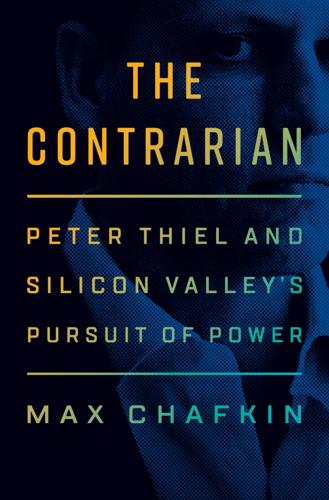
The Contrarian: Peter Thiel and Silicon Valley's Pursuit of Power
by Max Chafkin · 14 Sep 2021 · 524pp · 130,909 words
The Unwinding: An Inner History of the New America
by George Packer · 4 Mar 2014 · 559pp · 169,094 words
Your Face Belongs to Us: A Secretive Startup's Quest to End Privacy as We Know It
by Kashmir Hill · 19 Sep 2023 · 487pp · 124,008 words
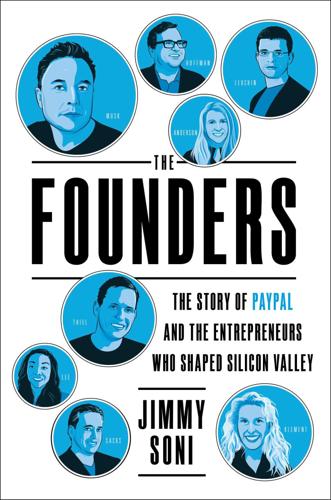
The Founders: The Story of Paypal and the Entrepreneurs Who Shaped Silicon Valley
by Jimmy Soni · 22 Feb 2022 · 505pp · 161,581 words