The Rise and Fall of the Neoliberal Order: America and the World in the Free Market Era
by Gary Gerstle · 14 Oct 2022 · 655pp · 156,367 words
employment would then be quickly restored. Reagan, seemingly, had found a way to draw on conservative racial and religious fury to propel his anti-government, neoliberal agenda. That was quite a feat. He found a partner in Jerry Falwell, who founded the Moral Majority in 1979 to promote Christian values in American
Vanishing New York
by Jeremiah Moss · 19 May 2017 · 479pp · 140,421 words
behind the curtain, the invisible hands pulling all the levers. Those hands belong to the globalized world order of the so-called free market, the neoliberal agenda launched in the late 1970s to destroy socioeconomic progressivism, the stuff that made New York so New York. In cities across America and the world
The Finance Curse: How Global Finance Is Making Us All Poorer
by Nicholas Shaxson · 10 Oct 2018 · 482pp · 149,351 words
going on here. Cutting taxes is good. Why? Because it’s “competitive”. Why is “competitive” good? Because it means lower taxes!’ That plays into the neoliberal agenda that doesn’t like the common good. The notion of being a human that merits some reasonable standard has been totally dismantled. And it’s
…
”’, Euractiv.com, 3 June 2009. 32. The European Parliament, a bolshier but weaker European institution which often tries to push back against the Commission’s neoliberal agenda, declared in December 2015 that it ‘regrets that the Commission chose not to use the ordinary legislative procedure for the decisions regarding National Competitiveness Boards
Rethinking Capitalism: Economics and Policy for Sustainable and Inclusive Growth
by Michael Jacobs and Mariana Mazzucato · 31 Jul 2016 · 370pp · 102,823 words
off for being incorporated within markets. The privatisation and outsourcing of industries and services owned by public authorities have been among the hallmarks of the neoliberal agenda. By privatisation one means the full transfer to private ownership of the activity in question. Under outsourcing the activity remains publicly owned, but its performance
…
sectors partly because of the strong presence of network externalities, so competition remains oligopolistic. Although a call for deregulation is a fundamental part of the neoliberal agenda, in reality it produces a major increase in regulation, but with a changed purpose. In theory neoliberal regulation would only work out what a market
The Quiet Coup: Neoliberalism and the Looting of America
by Mehrsa Baradaran · 7 May 2024 · 470pp · 158,007 words
pursue justice through the court system and have padded the coffers of corporations. Closing the courthouse to average consumers was a major priority of the neoliberal agenda and one of the most successful transformations in American law engineered by Federalist Society judges and Law and Economics scholars. As previously discussed, 1970 was
The Great Turning: From Empire to Earth Community
by David C. Korten · 1 Jan 2001
of 1982 created the necessary pretext for the IMF and World Bank — operating under the direction of the U.S. Treasury Department — to impose the neoliberal agenda on indebted low-income countries. Through their structural-adjustment programs, the IMF and World Bank stripped governments, some democratically elected, of their ability to set
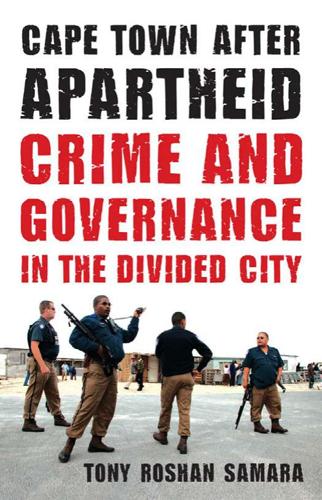
Cape Town After Apartheid: Crime and Governance in the Divided City
by Tony Roshan Samara · 12 Jun 2011 · 252pp · 13,581 words
the vantage point of the urban core, through a discourse of criminality, obscuring, or perhaps misrepresenting, the larger, more fundamental conflict between the city’s neoliberal agenda, security, and the demands of communities for socioeconomic development. Considered alongside the troubling rise in complaints by residents against police, the choice by state actors

McMindfulness: How Mindfulness Became the New Capitalist Spirituality
by Ronald Purser · 8 Jul 2019 · 242pp · 67,233 words
individualistic spirituality, perfectly accommodated to dominant cultural values and requiring no substantive change in lifestyle.18 Such an individualistic spirituality is clearly linked with the neoliberal agenda of privatization, especially when masked by the ambiguous language used in mindfulness. Market forces are already exploiting the momentum of the mindfulness movement, reorienting its

A Brief History of Neoliberalism
by David Harvey · 2 Jan 1995 · 318pp · 85,824 words
to uphold. In this situation, however, it can marshal one secret weapon: international competition and globalization can be used to discipline movements opposed to the neoliberal agenda within individual states. If that fails, then the state must resort to persuasion, propaganda or, when necessary, raw force and police power to suppress opposition
…
collective corporation, and this poses the problem of how to ensure citizen loyalty. Nationalism is an obvious answer, but this is profoundly antagonistic to the neoliberal agenda. This was Margaret Thatcher’s dilemma, for it was only through playing the nationalism card in the Falklands/Malvinas war and, even more significantly, in
…
publications (such as Commentary).20 US neoconservatives favour corporate power, private enterprise, and the restoration of class power. Neoconservatism is therefore entirely consistent with the neoliberal agenda of elite governance, mistrust of democracy, and the maintenance of market freedoms. But it veers away from the principles of pure neoliberalism and has reshaped
…
. Their aim is to counteract the dissolving effect of the chaos of individual interests that neoliberalism typically produces. They in no way depart from the neoliberal agenda of a construction or restoration of a dominant class power. But they seek legitimacy for that power, as well as social control through construction of
…
departments in the US research universities—and these helped train most of the world’s economists—had fallen into line by broadly cleaving to the neoliberal agenda that emphasized the control of inflation and sound public finance (rather than full employment and social protections) as primary goals of economic policy. All of
…
prepared by the Social Democrats, who were increasingly pressed to find ways out of the economic stagnation. Their partial implementation of some parts of the neoliberal agenda suggested acceptance of the persuasive analyses of the SNS. It was the left rather than the right that now lacked ideas. The unions were persuaded

Border and Rule: Global Migration, Capitalism, and the Rise of Racist Nationalism
by Harsha Walia · 9 Feb 2021
Cooperation), where sixty-four thousand Latin American military and elite counter-insurgency forces have trained. In Zelaya’s place, successive narco-governments favorable to a neoliberal agenda of special economic zones and corporate plunder have been installed. Present-day counterinsurgency operations are layered with the paramilitarized landscape of the war on drugs
Inventing the Future: Postcapitalism and a World Without Work
by Nick Srnicek and Alex Williams · 1 Oct 2015 · 357pp · 95,986 words
Why We Can't Afford the Rich
by Andrew Sayer · 6 Nov 2014 · 504pp · 143,303 words

The Global Auction: The Broken Promises of Education, Jobs, and Incomes
by Phillip Brown, Hugh Lauder and David Ashton · 3 Nov 2010 · 209pp · 80,086 words

A Generation of Sociopaths: How the Baby Boomers Betrayed America
by Bruce Cannon Gibney · 7 Mar 2017 · 526pp · 160,601 words

The Left Case Against the EU
by Costas Lapavitsas · 17 Dec 2018 · 221pp · 46,396 words

Stolen: How to Save the World From Financialisation
by Grace Blakeley · 9 Sep 2019 · 263pp · 80,594 words
How to Speak Money: What the Money People Say--And What It Really Means
by John Lanchester · 5 Oct 2014 · 261pp · 86,905 words
The Production of Money: How to Break the Power of Banks
by Ann Pettifor · 27 Mar 2017 · 182pp · 53,802 words

Doughnut Economics: Seven Ways to Think Like a 21st-Century Economist
by Kate Raworth · 22 Mar 2017 · 403pp · 111,119 words

There Is No Planet B: A Handbook for the Make or Break Years
by Mike Berners-Lee · 27 Feb 2019
Radical Cities: Across Latin America in Search of a New Architecture
by Justin McGuirk · 15 Feb 2014 · 246pp · 76,561 words
The Trouble With Billionaires
by Linda McQuaig · 1 May 2013 · 261pp · 81,802 words
Mythology of Work: How Capitalism Persists Despite Itself
by Peter Fleming · 14 Jun 2015 · 320pp · 86,372 words
The Populist Explosion: How the Great Recession Transformed American and European Politics
by John B. Judis · 11 Sep 2016 · 177pp · 50,167 words
Bricks & Mortals: Ten Great Buildings and the People They Made
by Tom Wilkinson · 21 Jul 2014 · 341pp · 89,986 words

The Euro: How a Common Currency Threatens the Future of Europe
by Joseph E. Stiglitz and Alex Hyde-White · 24 Oct 2016 · 515pp · 142,354 words
The Glass Half-Empty: Debunking the Myth of Progress in the Twenty-First Century
by Rodrigo Aguilera · 10 Mar 2020 · 356pp · 106,161 words

Revolution at Point Zero: Housework, Reproduction, and Feminist Struggle
by Silvia Federici · 4 Oct 2012 · 277pp · 80,703 words
Stakeholder Capitalism: A Global Economy That Works for Progress, People and Planet
by Klaus Schwab · 7 Jan 2021 · 460pp · 107,454 words
Municipal Dreams: The Rise and Fall of Council Housing
by John Boughton · 14 May 2018 · 325pp · 89,374 words

Disaster Capitalism: Making a Killing Out of Catastrophe
by Antony Loewenstein · 1 Sep 2015 · 464pp · 121,983 words
Stakeholder Capitalism: A Global Economy That Works for Progress, People and Planet
by Klaus Schwab and Peter Vanham · 27 Jan 2021 · 460pp · 107,454 words
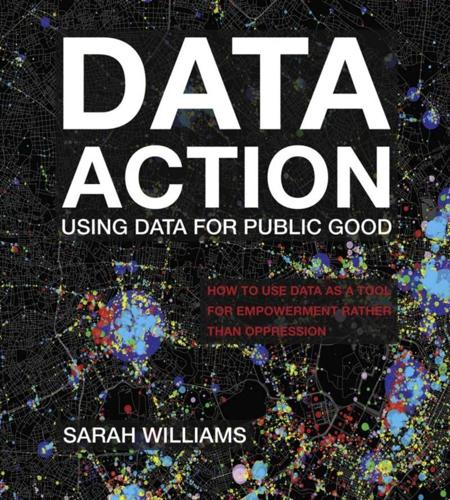
Data Action: Using Data for Public Good
by Sarah Williams · 14 Sep 2020

The Sport and Prey of Capitalists
by Linda McQuaig · 30 Aug 2019 · 263pp · 79,016 words
Capitalism: A Ghost Story
by Arundhati Roy · 5 May 2014 · 91pp · 26,009 words
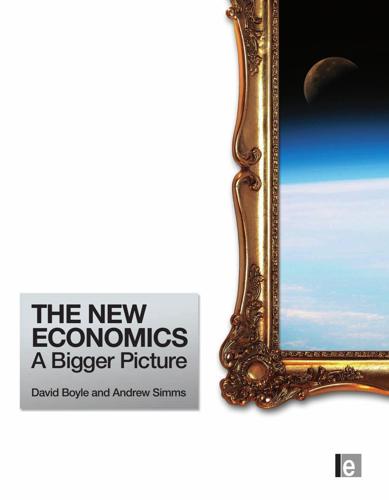
The New Economics: A Bigger Picture
by David Boyle and Andrew Simms · 14 Jun 2009 · 207pp · 86,639 words

EuroTragedy: A Drama in Nine Acts
by Ashoka Mody · 7 May 2018