The Danger Within Us
by Jeanne Lenzer · 12 Dec 2017 · 328pp · 98,127 words
, which is associated with an estimated 45,000 avoidable deaths per year.44 Despite the promise of the Affordable Care Act of 2010 (often called Obamacare), unpayable medical bills continue to be the leading cause of bankruptcy in the US.45–47 As we spend more and more each year on
…
movement, called healthcare an essential element of social justice that demands the same sort of mass action farm workers had to take. He said although Obamacare “is an achievement over what we had…it falls far short of what is needed. Far too many people still don’t have care.” He
Tailspin: The People and Forces Behind America's Fifty-Year Fall--And Those Fighting to Reverse It
by Steven Brill · 28 May 2018 · 519pp · 155,332 words
rules were also counted. The spending was actually higher, $3.5 billion, in 2009 and 2010 when consequential legislation, such as the Affordable Care Act (Obamacare) and the Dodd-Frank financial reform bill, was being debated. All of that lobbying was more directly protected by the First Amendment than Martin Redish
…
just by Republicans, but by some leading Democrats, including Montana senator Max Baucus. Baucus would later become the Senate Finance Committee chairman who helped write Obamacare—which, in return for the drug industry’s support (including using its PAC money to run ads supporting the law), also did not include a
…
the White House, none of his or the congressional Republicans’ proposals to relieve Americans from high health insurance premiums that Republicans charged were caused by Obamacare included anything related to controlling what is actually the most obvious factor in rising insurance premiums: skyrocketing drug prices. In the first six months of
…
the Republicans took over the House and then the Senate. During the two years of the Obama administration when Democrats controlled Congress, Obama did get Obamacare passed, but only after having to eliminate plans, at the behest of some of the Democrats whose votes he needed, to include a liberal “public
…
refuse to yield any ground to the other, the result is a dysfunctional government. The Republicans’ unanimous, virulent opposition to the Affordable Care Act, or Obamacare, from the day President Obama took office offers a vivid example. The proposal Obama and Democrats in Congress put together in 2009 was not something
…
protection against those costs through insurance or some other mechanism (such as government-provided health care). Just as Romney had done, and Nixon had proposed, Obamacare attempted little to deal with the first problem. As explained earlier, to the dismay of many Democrats in the House and Senate, there would be
…
payer that would insure all Americans and use its buying power to negotiate lower prices. Although Democrats enjoyed majorities in the House and Senate when Obamacare was being drafted, the health care lobby, by far the most well funded in Washington, had leaned on enough Democrats on Capitol Hill to make
…
same mandate. Nonetheless, although their usual allies in the pharmaceutical and most other medical industry sectors either supported or did not oppose it, Republicans attacked Obamacare when it was proposed and just as relentlessly in the years after it was passed with only Democratic votes (except for one Republican House member
…
the form of the pungent turns of phrase that had become a Luntz specialty since he had coined “death tax” to demonize the inheritance tax. Obamacare’s “government takeover of health care” would “put some bureaucrat between you and your doctor,” Republicans said. These messages, along with completely fictional claims that
…
the Tea Party groups that sprang up in the spring and summer of 2009 and made blocking Obamacare their battle cry. At no time did the Republicans offer an alternative to Obamacare, no doubt because Obamacare had always been their alternative—which foretold the embarrassment they would suffer seven years later when they
…
support—Eisenhower’s interstate highway system, Kennedy’s nuclear test ban treaty, Johnson’s civil rights laws and Medicare and Medicaid. The bipartisan breakdown over Obamacare was anything but an outlier. Checks and balances had been weaponized. In the midst of the financial crisis, the Republicans had refused to back Obama
…
of the original fight to pass it and the prospect of repeal when the other party took over. That, of course, is what happened to Obamacare, which became law with only one Republican vote. Because it continued to be so bitterly attacked by Republicans, even the traditionally routine process of cleaning
…
substantive but incremental steps to improve the law, as both parties had repeatedly done in prior decades to fix major legislation. In fact, long after Obamacare became the law of the land, Republican House Speaker John Boehner often continued referring to it as a “bill,” as if it was still being
…
. Ignoring their own party leaders, they refused to agree on a deal to extend the budget even temporarily unless President Obama eliminated all funding for Obamacare. It was an obviously ridiculous demand, but they held out for nearly two weeks before popular disgust forced party leaders to break the Hastert Rule
…
and former Republican Senate majority leader (and physician) Bill Frist, working with Democratic and Republican staff experts, had produced a sensible set of fixes for Obamacare. BPC had an infrastructure plan ready to go, as well as proposals for reforming the federal budgeting process, for streamlining government regulations, and for fixes
…
that overwhelming majorities of Americans favor. As we have seen, the version of health care “reform” that could make it out of Congress in 2010, Obamacare, was a law that produced government-subsidized profit increases for all the players in the industry. The health care lobby, by far the most heavily
…
premiums for employer-provided health insurance) grew 460 percent. The percentage of workers who were no longer offered insurance (at least until the passage of Obamacare) either because employers decided they could not afford it or because they shifted to outsourced, contract workers to avoid the cost, also increased. That cut
…
governors, not a Washington mandate. As the Tea Party sprang up, however, the union was able to convince these ultra-anti-Washington conservatives that, like Obamacare, Common Core—which, again, was created and implemented by the National Governors Association—was another Washington assault on freedom. Except for Florida’s Jeb Bush
…
the website that the Obama administration built to launch the consumer health care insurance exchanges that were central to Obamacare. By the end of the first hour of the launch of the Obamacare e-commerce site on October 1, 2013, the system was down, and no one knew why. Because it had
…
discarded, original e-commerce site had taken more than two years to build. Obama told me he had “learned a lot of lessons” from the Obamacare crash, “and we’ve taken steps to apply those lessons across the government.” The primary lesson involved a fresh look by the administration, from the
…
make them un-poor. These are the people who depend on food stamps, rental assistance, unemployment insurance, and Medicaid, or the premium subsidies on the Obamacare health insurance exchanges. A political leader with the right skills should be able to rally them—the poor and those hovering near the poverty line
…
worse.” Obama undercut his efforts to break the fever with poor messaging and, sometimes, poor management, such as the debacle that accompanied the launch of Obamacare. He failed to accompany the programs funded by his stimulus program, such as infrastructure upgrades, with the kind of marketing that would have conveyed to
…
his initiative that was funding the improvements and the jobs created by them. He failed to drive home to poor and middle-class families how Obamacare was meant for them, something they only realized when the Republicans tried to take it away seven years later. There was little effort to showcase
…
? The Electoral Consequences of Rising Trade Exposure,” NBER Working Paper No. 22637, September 2016, http://www.nber.org/papers/w22637. 7 DYSFUNCTIONAL DEMOCRACY Obamacare: I wrote a book about Obamacare, Bitter Pill: Money, Politics, Backroom Deals, and the Fight to Fix Our Broken Healthcare System, published by Random House in 2015. Except
…
this statement, for example, he moves from calling it a law to a bill and back again: http://abcnews.go.com/Politics/video/john-boehner-obamacare-wreaks-havoc-american-families-21085758. immigration reform law: The Border Security, Economic Opportunity, and Immigration Modernization Act (S.744) passed in the Senate with a
…
/cgi/viewcontent.cgi?article=1011&context=caselrev. shut down the government: In late September, Senator Cruz filibustered for over twenty-one hours in opposition to Obamacare: https://www.c-span.org/video/?c4466033/sen-ted-cruz-complete-remarks. Gridlock over the health care bill caused a shutdown that began on October
Arguing With Zombies: Economics, Politics, and the Fight for a Better Future
by Paul Krugman · 28 Jan 2020 · 446pp · 117,660 words
: After the Khaki Election Social Security Scares Inventing a Crisis Buying into Failure Social Security Lessons Privatization Memories Where Government Excels 2. THE ROAD TO OBAMACARE Essay: Developing a Positive Agenda Ailing Health Care Health Care Confidential Health Care Terror The Waiting Game Health Care Hopes Fear Strikes Out
…
Obamacare Fails to Fail Imaginary Health Care Horrors 3. THE ATTACK ON OBAMACARE Essay: The Cruelty Caucus Three Legs Good, No Legs Bad Obamacare’s Very Stable Genius Get Sick, Go Bankrupt, and Die How Democrats Can Deliver
…
rise to $708 billion and Medicaid spending to $361 billion. The actual numbers for 2014 were 600 and 301, respectively, despite the Medicaid expansion under Obamacare. At least some of this unexpectedly low cost can be attributed to measures included in the Affordable Care Act. And strange to say, this was
…
what doesn’t. Privatized retirement schemes work very badly; Social Security works very well. And we should build on that success. 2 The Road to Obamacare DEVELOPING A POSITIVE AGENDA I’M NOT A REAL HEALTH CARE ECONOMIST, BUT I PLAY ONE ON TV—AND, more important, on the Times op
…
(kind of like the Bush Social Security push). Was there any chance of a successful do-over? Yes, there was. The Affordable Care Act, aka Obamacare, was an incomplete and imperfect reform, but it nonetheless extended essential health care to tens of millions of Americans. But getting there was anything but
…
looked far closer to political feasibility than Medicare for All. Hence the Affordable Care Act, aka Obamacare. The columns in this section document how the argument evolved, how the plan went, and what happened when Obamacare went into effect. AILING HEALTH CARE April 11, 2005 Those of us who accuse the administration
…
after the column went to press that Mr. Gingrich said it referred to Johnson’s Great Society policies, not to the 1964 Civil Rights Act. OBAMACARE FAILS TO FAIL July 13, 2014 How many Americans know how health reform is going? For that matter, how many people in the news media
…
make a compelling headline, and the people who falsely predicted doom just keep coming back with dire new warnings. Consider, in particular, the impact of Obamacare on the number of Americans without health insurance. The initial debacle of the federal Web site produced much glee on the right and many negative
…
those receiving federal subsidies—the great majority of those signing up—the average net premium was only $82 a month. Yes, there are losers from Obamacare. If you’re young, healthy, and affluent enough that you don’t qualify for a subsidy (and don’t get insurance from your employer), your
…
. You might ask why, if health reform is going so well, it continues to poll badly. It’s crucial, I’d argue, to realize that Obamacare, by design, by and large doesn’t affect Americans who already have good insurance. As a result, many people’s views are shaped by the
…
politics, but Representative Pete Sessions of Texas, the chairman of the House Rules Committee, recently set a new standard when he declared the cost of Obamacare “unconscionable.” If you do “simple multiplication,” he insisted, you find that the coverage expansion is costing $5 million per recipient. But his calculation was a
…
about an issue if he won’t bother to read budget office reports. But that is, of course, how it’s been all along with Obamacare. Before the law went into effect, opponents predicted disaster on all levels. What has happened instead is that the law is working pretty well. So
…
, in fact, happened. Costs aren’t the only area where enemies of reform prefer to talk about imaginary disasters rather than real success stories. Remember, Obamacare was also supposed to be a huge job-killer. In 2011, the House even passed a bill called the Repealing the Job-Killing Health Care
…
Law Act. Health reform, opponents declared, would cripple the economy and in particular cause businesses to force their employees into part-time work. Well, Obamacare went into effect fully at the beginning of 2014—and private-sector job growth actually accelerated, to a pace we haven’t seen since the
…
who want full-time work but can’t get it—has dropped sharply. But the usual suspects talk as if their dire predictions came true. Obamacare, Jeb Bush declared a few weeks ago, is “the greatest job suppressor in the so-called recovery.” Finally, there’s the never-ending hunt for
…
snarks and boojums—for ordinary, hard-working Americans who have suffered hardship thanks to health reform. As we’ve just seen, Obamacare opponents by and large don’t do math (and they’re sorry when they try). But all they really need are a few sob stories
…
’t been able to find those stories. Early last year, Americans for Prosperity, a Koch brothers–backed group, ran a series of ads featuring alleged Obamacare victims—but not one of those tales of woe stood up to scrutiny. More recently, Representative Cathy McMorris Rodgers of Washington State took to Facebook
…
to ask for Obamacare horror stories. What she got instead was a torrent of testimonials from people whose lives have been improved, and in some cases saved, by health
…
news about costs hasn’t made it through at all: according to a recent poll by Vox.com, only 5 percent of Americans know that Obamacare is costing less than predicted, while 42 percent think the government is spending more than expected. And the favorable experiences of the roughly 16 million
…
argument is ever dropped, no matter how overwhelming the evidence that it’s wrong. And the result is that imaginary disasters can overshadow real successes. Obamacare isn’t perfect, but it has dramatically improved the lives of millions. Someone should tell the voters. 3 The Attack on
…
CRUELTY CAUCUS WHERE WERE YOU IN JUNE 2012, WHEN THE SUPREME COURT HANDED down its crucial decision on the constitutionality of Obamacare? If you have no idea, you’re not a health policy nerd. I, on the other hand, am. I was on vacation in England, sitting
…
it wouldn’t cost them anything. At first you could possibly have rationalized refusal to expand Medicaid as a strategic move, an attempt to discredit Obamacare as a whole. But the A.C.A. has been in effect for a long time now; if refusing to expand Medicaid was going to
…
a much bigger share of the G.O.P. base, and a solid majority of professional Republican politicians. Which brings me to the campaign against Obamacare after the 2016 election once again briefly gave the G.O.P. unified control of Congress and the White House. Republicans finally had the chance
…
away from tens of millions, even the G.O.P. balked at the prospect. What was left was a campaign of sabotage: trying to undermine Obamacare by striking at its provisions in ways that didn’t too obviously take away people’s health insurance, but made insurance harder to get, more
…
purely about hurting the act’s beneficiaries, and in some cases actually cost more money than leaving the act intact. The good news was that Obamacare’s architects built better than many, including myself, had realized. The law was hardly immune to sabotage, but it proved more robust than many had
…
? I have no idea. But this seems like a good moment to review why Republicans can’t come up with a non-disastrous alternative to Obamacare. It’s not because they’re stupid (although they have become stunningly anti-intellectual). It’s because you can’t change any major element of
…
. In states with G.O.P. governors, 21 percent of the population lives in such counties; in Democratic-governor states, less than 2 percent. So Obamacare is, though nobody will believe it, a well-thought-out law that works where states want it to work. It could and should be made
…
in the number of uninsured? The answer is, all of them. After all these years of denouncing Obamacare, then, Republicans have no idea how to do better. Or, actually, they have no ideas at all. OBAMACARE’S VERY STABLE GENIUS April 9, 2018 Front pages continue, understandably, to be dominated by the
…
what? Voters are right. If Republicans retain control of both houses of Congress, we can safely predict that they’ll make another try at repealing Obamacare, taking health insurance away from 25 million or 30 million Americans. Why? Because their attempts to sabotage the program keep falling short, and time is
…
been remarkably stable when you bear in mind that it’s being administered by people trying to make it fail. What’s the secret of Obamacare’s stability? The answer, although nobody will believe it, is that the people who designed the program were extremely smart. Political reality forced them to
…
did manage to create a system that’s pretty robust to shocks, including the shock of a White House that wants to destroy it. Originally, Obamacare was supposed to rest on a “three-legged stool.” Private insurers were barred from discriminating based on pre-existing conditions; individuals were required to buy
…
), after-subsidy premiums have actually gone down for many people. And that leaves the G.O.P. very, very frustrated. From the beginning, Republicans hated Obamacare not because they expected it to fail, but because they feared that it would succeed, and thereby demonstrate that government actually can do things to
…
another all-out push to destroy the act—because they’ll know that it’s probably their last chance. Indeed, if they don’t kill Obamacare soon, the next step will probably be an enhanced program that lets Americans of all ages buy into Medicare. So voters are right to believe
…
can tell, the only Republican in Congress with anything resembling a spine. As a result, if Republicans hold Congress in November, they will indeed repeal Obamacare. That’s not a guess: it’s an explicit promise, made by Vice President Mike Pence last week. But what about the problems that sank
…
particular, if you want to preserve protection for people with pre-existing conditions—the health issue that matters most to voters, including half of Republicans—Obamacare is the most conservative policy that can do that. The only other options are things like Medicare for All that would involve moving significantly to
…
case in New York, where premiums for individual policies were very high before the A.C.A.—and promptly fell by half when Obamacare went into effect. For what Obamacare did was provide incentives to get healthy people to sign up, too. On one side there was a penalty for not having
…
with the mandate, and have succeeded in driving premiums higher; but the system is still standing thanks to those subsidies. The point, again, is that Obamacare is the most conservative option for covering pre-existing conditions, and if Republicans really cared about the scores of millions of Americans with such conditions
…
rate was still above 10 percent. What made the difference? Solid-blue California, with a Democratic governor and Legislature, did all it could to make Obamacare work: It expanded Medicaid, operated its own marketplace, and made major efforts to get people signed up. North Carolina, under Republican rule, did none of
…
government plans—as alternatives to private insurance? The point is that while the new House majority won’t be able to do much beyond defending Obamacare, at least for now, its allies in the states can do much more, and in the process deliver on the agenda the whole party ran
…
the revenue involved could be raised by fairly narrow-gauge taxes—in particular, taxes that hit only high-income Americans. That is, in fact, how Obamacare was financed: the revenue component came almost entirely from taxes on high incomes (there were some small items like the tax on tanning parlors). And
…
. It was tested in 2013, when Barack Obama allowed some of the Bush tax cuts to expire, while raising some other taxes to pay for Obamacare; the economy just kept chugging along. It was, finally, tested by Donald Trump, who passed a big tax cut in 2017 amid promises of another
…
deal in itself, but which add up to significant tax increases on almost two-thirds of middle-class taxpayers. Meanwhile, the bill would partially repeal Obamacare, in a way that would sharply reduce aid to lower-income families and raise the cost of insurance for many in the middle class. You
…
more than limit misery: they can be liberating. I’ve known many people who stuck with jobs they disliked for fear of losing health coverage; Obamacare, flawed as it is, has noticeably reduced that kind of “lock in,” and a full guarantee of health coverage would make our society visibly freer
…
the good. There are valid arguments for the superiority of a single-payer, Medicare for All–type health system over hybrid public-private alternatives like Obamacare. But in 2009, when there was the first real chance at health reform in fifteen years, it was clear that the country wasn’t ready
…
appealing slogan, and hash out many of the details. You don’t want to be like the Republicans, who spent years talking big about repealing Obamacare, but never worked out a realistic alternative. So what does the Green New Deal mean? It’s not entirely clear, which is what makes it
…
using executive action to cut taxes on the rich by an extra $100 billion. There’s also health policy, where Trump, having failed to repeal Obamacare—which would have been a huge blow to working families—has engaged instead in a campaign of sabotage that has probably raised premiums by almost
…
important extent, a referendum on the Affordable Care Act; health care, not Donald Trump, dominated Democratic campaigning. And voters delivered a clear verdict: they want Obamacare’s achievements, the way it expanded coverage to roughly 20 million people who would otherwise have been uninsured, to be sustained. But on Friday, Reed
…
Excels Ailing Health Care Health Care Confidential Health Care Terror The Waiting Game Health Care Hopes Fear Strikes Out Obamacare Fails to Fail Imaginary Health Care Horrors Three Legs Good, No Legs Bad Obamacare’s Very Stable Genius Get Sick, Go Bankrupt, and Die How Democrats Can Deliver on Health Care Running
…
“hijacked” commission of, 198–200 and revenue growth, 225 stimulus plan of, 104, 107–8, 113–14, 115–17, 118–20, 131, 193, 206, 362 Obamacare, see Affordable Care Act O’Brien, Michael, 126 Ocasio-Cortez, Alexandria (AOC), 234, 236, 237, 320–21 Occupy Wall Street, 285 O’Connor, Reed, 367
Sickening: How Big Pharma Broke American Health Care and How We Can Repair It
by John Abramson · 15 Dec 2022 · 362pp · 97,473 words
Goes American Health Care 6. How Doctors Know 7. Manufacturing Belief 8. Market Failure in Medical Knowledge Part III: Moving Forward 9. The Limits of Obamacare 10. The Key to Meaningful Reform: Fix the Knowledge Problem 11. Reform from the Bottom Up Afterword Acknowledgments Notes Index About the Author Copyright About
…
care among eleven wealthy nations, and it is the only country to have declined on this measure since 2010, despite the expanded access provided by Obamacare. And since 2000, Americans’ healthy life expectancy has plummeted from thirty-eighth in the world to sixty-eighth in 2019 (now behind China, Cuba, and
…
as a whole is being harmed. The final part of this book begins with a summary of the achievements and limitations of recent reform, particularly Obamacare. Going forward, meaningful reform — expanding health-care access to all Americans, improving Americans’ health, and containing our medical spending — will require standing up to the
…
citizens to purchase prescription drug coverage starting in 2006, but the program specifically prohibited the government from negotiating price with the manufacturers. And in 2010, Obamacare legislation specifically prohibited the consideration of cost-effectiveness in coverage decisions for government programs or guideline recommendations. (More on these issues in chapters 8 and
…
good value” and “the return on spending has been high.” And in 2010, Jonathan Gruber, professor of economics at MIT and a key architect of Obamacare, posited that, for those with good insurance, American health care was the best in the world. Moreover, he asserted, only 10 percent of spending was
…
is particularly noteworthy because it occurred during the second half of the longest period of economic expansion in modern times and after the implementation of Obamacare, which, starting in 2014, extended health-care coverage to almost twenty million previously uninsured Americans. But perhaps longevity is just too crude a measure to
…
only the efficacy side of the equation. Then in 2010 came a stunning demonstration of Big Pharma’s political muscle: The final version of the Obamacare legislation mandated continuation of the asymmetry of information by specifically banning consideration of cost-effectiveness studies in government-related coverage decisions or guideline recommendations. (As
…
will be discussed in the following chapter, Big Pharma committed $150 million to pay for advertisements supporting passage of Obamacare.) A New England Journal of Medicine article asked: “How can our market-driven health system work efficiently if participants lack information about the relationship between
…
national investment in medical care and the social determinants of health. This is addressed in part III. Part III Moving Forward 9 The Limits of Obamacare Politically and emotionally, I would have found it a lot more satisfying to just go after the drug and insurance companies and see if we
…
’t been full-bore efforts at reform, including the unsuccessful Clinton health plan put forth in 1993 and, more recently, Obamacare, which is the primary focus of this chapter. The success of Obamacare in extending health-care coverage to many millions of Americans is clear. But in the legislative process that produced
…
Obamacare, broader reforms — including government-sponsored cost-effectiveness research and a public option to compete on the exchanges with private insurance plans — met with insurmountable resistance.
…
Any future reforms will likely encounter as much, if not more, pushback. OBAMACARE: ACCOMPLISHMENTS AND LIMITATIONS The current era of U.S. health-care reform began in 2010 with the passage of the Patient Protection and Affordable Care
…
Act, aka Obamacare. The final product of the legislative battles provides important lessons about the limits of reform, even in the context of Democratic control of both houses
…
Romneycare (health-care reform implemented in Massachusetts in 2006 that relied heavily on recommendations from the conservative Heritage Foundation and served as the template for Obamacare), the health-care industries will support expansion of coverage “because that creates more customers.” Notwithstanding this advice, once in office, President Obama struggled to achieve
…
institute was specifically prohibited from performing cost-effectiveness studies that would “establish what type”* of health care is cost effective or recommended. In other words, Obamacare was forbidden to make exactly the kind of comparative analyses that were necessary for the market to create efficiency. The second cost-saving reform sacrificed
…
influx of non-cost-controlled retail customers, it pledged $150 million to pay for advertisements in support of Obamacare. AHIP, the lobbying arm of American Health Insurance Plans, supported the plan because, without Obamacare, states’ movement toward mandatory coverage of preexisting conditions was pushing the cost of non-group insurance so high
…
that this niche of their market was at risk of collapsing. In the four years following the passage of Obamacare, the value of the stock of large health insurers doubled, going up twice as much as the Dow Jones Industrial Average. When the dust finally
…
settled, the reforms included in Obamacare remained safely within the realm of win-win in the sense that more uninsured Americans would gain coverage and more money would be made by
…
the drug, insurance, and hospital companies. And this would hold as long as taxpayers were willing to foot the bill for those subsidies. By 2016, Obamacare had decreased the number of uninsured Americans by 40 percent, to a low of 26.7 million — an improvement, for sure, yet still a far
…
the quality and relevance of the scientific evidence available to doctors and other health-care professionals. IGNORING THE WILL OF THE PEOPLE The failure of Obamacare to address many popularly held views about health-care reform was not an anomaly. In a now-classic 2014 paper, Professors Martin Gilens and Benjamin
…
, reflecting the strong influence of Big Pharma and other “economic elites,” has not meaningfully addressed any of these publicly supported positions since the passage of Obamacare. Instead, Pharma once again demonstrated its influence by gaining overwhelming legislative support for the 21st Century Cures Act in 2016. The bill, actively supported by
…
for the drug companies). And second, more than half of the funding for the bill, $3.5 billion, was taken away from money in the Obamacare Prevention and Public Health Fund that had been earmarked specifically for underfunded population-health interventions, like vaccination and smoking-cessation programs, as well as for
…
, more than two-thirds of senators and representatives — split almost evenly between Democrats (47 percent) and Republicans (53 percent) — accepted money from the pharmaceutical industry. Obamacare reduced the percentage of uninsured U.S. adults from 20 percent in 2010 to 12 percent in 2018. But expanding coverage required giving up other
…
paradoxically, as the percentage of uninsured Americans declined, U.S. longevity not only failed to improve but actually decreased. Even without these industry-threatening measures, Obamacare never enjoyed bipartisan support, and the Republicans continued their attempts to repeal it or have it struck down by the courts. Going forward, reform will
…
continue, at least initially, in the same direction as Obamacare, with the goal of further reducing the number of uninsured Americans. The proposed expansion of coverage will be achieved by increasing federal subsidies to make
…
insurance affordable for more lower- and middle-income Americans. But, as President Obama made clear early in the legislative negotiations that culminated in Obamacare, the goals of reform will not be met without both expanding coverage and containing costs. And this cannot be done without proceeding into the territory
…
missing part is the role of government in ensuring that those profits do not come at the expense of society. — BINYAMIN APPELBAUM, New York Times Obamacare extended health-care coverage to 40 percent of previously uninsured Americans and the profits of the drugmakers, insurance companies, and hospitals increased, but, as discussed
…
uninsured Americans by (1) offering coverage to people who qualify for Medicaid but live in states that rejected federal funds to broaden Medicaid eligibility after Obamacare was implemented and (2) increasing federal subsidies to individuals and families so they don’t have to pay more than 8.5 percent of their
…
a powerful dose of reality. Vermont’s state legislature had passed the plan in 2011 with strong support from progressive health-care advocates, who saw Obamacare’s abandonment of the public option as unnecessary capitulation to the private insurance industry. Disappointingly, as implementation progressed, projections showed total health-care spending would
…
lesson: Building a firm and realistically informed constituency for reform must be done before trying to legislate changes. As American health care currently stands, the Obamacare approach of expanding coverage and appeasing the vested interests cannot be extrapolated to universal coverage because, as President Obama made clear in 2009, the cost
…
benefit) and the public (receiving a far less-than-commensurate health benefit). The result has been entirely predictable. Despite the expanded health-care coverage of Obamacare, our citizens’ longevity has continued to lose ground in comparison to longevity in other wealthy countries, and pre-pandemic Americans’ life spans actually declined in
…
, https://www.healthsystemtracker.org/chart-collection/mortality-rates-u-s-compare-countries/#item-leading-causes-death-mortality-rates-higher-u-s-comparable-countries. provided by Obamacare: Sawyer and McDermott, “How Do Mortality Rates.” of just 10.7 percent: Rabah Kamal et al., “Health Spending and the Economy,” Health System Tracker, https
…
/why-warren-buffetts-health-care-project-haven-failed-111839197.html. “From biotechnology”: https://www.jpmorgan.com/commercial-banking/industries/life-sciences. 9. THE LIMITS OF OBAMACARE “Politically and emotionally”: Barack Obama, “A President Looks Back on His Toughest Fight,” New Yorker, October 26, 2020. “market society”: Michael J. Sandel, “What Isn
…
Looks Back.” risk of collapsing: Brill, America’s Bitter Pill. Dow Jones Industrial Average: “Health Care Stocks: Performance Under Obamacare,” healthcarereform.procon.org, https://healthcarereform.procon.org/health-care-stocks-performance-under-obamacare/. a low of 26.7 million: Jennifer Tolbert, Kendal Orgera, and Anthony Damico, “Key Facts About the Uninsured Population
…
-consumer (DTC) advertising, 152 negative stomach acid action, 152–53 omeprazole and, 150 published studies, 151 Novo Nordisk, 61, 70 Obama, Barack, 195–97, 201 Obamacare, 4, 86, 194 cost effectiveness studies in, 170 expansion of coverage, 195, 201 Medicaid expansion, 197–98 Patient-Centered Outcomes Research Institute (PCORI), 197 pharmaceutical
…
industry response, 198 public insurance option, 195–97 Romneycare, 195 White House meeting, 196 Obamacare Prevention and Public Health Fund, 200 off-label prescriptions definition of, 20 legality, 36 marketing of, 21 Operation Warp Speed, xiv, xvi–xvii Organisation for
…
Cochrane Collaboration; evidence-based medicine Partnership for America’s Health Care Future, 204 patents, pharmaceuticals, 95, 154 Patient Protection and Affordable Care Act (2010). See Obamacare pension fund managers, 188 Pfizer Bextra guilty plea, xxiv–xxv mRNA vaccine, xv–xvii, xix–xx Neurontin Publication Subcommittee, 34 Neurontin trial jury award, 37
…
administrative complexity (especially billing), failures in care delivery (especially failure to provide preventive care), overtreatment (especially at the end of life), and fraud and abuse. * Obamacare initially included a public insurance option to compete with private health insurance coverage in the hope of driving down both premiums and underlying health-care
…
but at least equally effective recombinant human insulin instead of the newer insulin analogs. † The federal government initially covered 100 percent of the cost of Obamacare’s Medicaid expansion, meaning there was no cost to the states; that amount declined gradually to 90 percent by 2020. * Of course, expanding coverage is

Why We're Polarized
by Ezra Klein · 28 Jan 2020 · 412pp · 96,251 words
go on, as president, to create the Environmental Protection Agency, consider a basic minimum income, and propose a national health-care plan more ambitious than Obamacare—spoke with derision of those who sought to cleave the parties by their beliefs. “It would be a great tragedy if we had our two
…
as Medicare was in both conception and execution, it received seventy Republican votes in the House as well as thirteen Republican votes in the Senate. Obamacare, by contrast, was modeled off Mitt Romney’s reforms in Massachusetts and built atop many Republican ideas;V it relied on private insurers for the
…
bulk of its coverage expansion and ended up sacrificing its public option. But as compromised as Obamacare was in design, and as desperate as the Obama administration was for bipartisan support—and believe me, I covered that fight, they would’ve traded
…
with the Democratic Party to create Medicare, a single-payer health-care system for the elderly. In 2010, not a single congressional Republican voted for Obamacare, a health-care plan based on the system Republican governor Mitt Romney designed in Massachusetts. Under any definition, the 2010 system was more sorted and
…
politicians found themselves in the middle. But was the 2010 system more ideologically extreme? I’d argue, under our normal ideological definitions, it wasn’t—Obamacare was a public-private system with Republican roots that paid for itself through a mixture of tax increases and spending cuts, while Medicare was a
…
now in favor of some sort of individual mandate.”8 This process led, eventually, to the Patient Protection and Affordable Care Act—better known as Obamacare—which also included an individual mandate. The bill was designed to be a compromise proposal, and for a time, it looked like it was. In
…
reliable liberals to the court. Yet Republicans, more often than not, appoint justices who vote with the other side on critical decisions.”27 What the Obamacare case did convince many of was the waning legitimacy of the Supreme Court. The near success of what seemed like a ridiculous argument to liberals
…
Kennedy and Roberts of motivated reasoning on behalf of the Court itself—they knew it would’ve been institutionally disastrous for the Court to overturn Obamacare, so they found an excuse to back down. And while I obviously find one of those arguments more persuasive than the other, I can’t
…
tells us we can’t trust our own reason. How do we reason our way out of that? I first wrote about motivated reasoning and Obamacare’s individual mandate in 2012. In response to that piece, the psychologist Paul Bloom wrote an article in the Atlantic that didn’t quarrel with
…
this gotcha: “notice that Klein doesn’t reach for a social-psychology journal when articulating why he and his Democratic allies are so confident that Obamacare is constitutional.”30 Bloom’s right, of course. But the implications are more radical than he seemed prepared to admit. The question isn’t whether
…
entire issue more fully and evenhandedly,” the researchers concluded. III. I should note that this fight is ongoing. Republicans subsequently took Congress, failed to repeal Obamacare, but changed the law so the mandate’s penalty was zero dollars. Then, a group of Republican attorneys general launched the Texas v. Azar case
…
proves is that in the Obama era, attitudes on race began shaping attitudes on virtually all political questions. The black-white divide in support for Obamacare was 20 percentage points larger than the black-white divide over Bill Clinton’s similarly controversial health-care proposal, for instance. But it wasn’t
…
around Supreme Court nominations. Deeper political divides are leading to more partisan cases: consider the Right’s multiyear effort to convince the Court to destroy Obamacare, a campaign with no corollary in the aftermath of, say, Medicare’s or Medicaid’s passage. Partisan disagreement and paralysis in Congress are making the
…
a laser-like focus on Cornhusker interests. But he was in a bind. The choice on Obamacare was yes/no. Democrats needed his vote to pass the law. Nelson wanted the law to pass. But Obamacare was unpopular back home, and Nelson was up for reelection in 2012. He was caught between
…
career, his party, and his conscience. Nelson’s solution was to split the ideological interests of Nebraska’s Republicans from the financial interests of Nebraskans. Obamacare’s Medicaid expansion was built with an unusual structure. Typically, Medicaid is funded by a roughly 60:40 split between the federal government and the
…
or paralysis? I choose governance, in part because I trust the American people to ultimately look out for their own interests. Democrats who worry that Obamacare would’ve been repealed in the absence of the filibuster give too little credit to a country that would’ve noticed health care being canceled
…
, 76–77 “access-oriented” donors, 189 Achen, Christopher, 94, 95 activism, identity and, 156 Adams, John, 11 advertising, culture reflected in, 112 Affordable Care Act (Obamacare; 2010), 5, 15, 33, 83, 98–99, 101, 109, 182, 207–9, 212, 256 African Americans, 20, 117, 230–31 bias against, 34, 114 disenfranchisement
…
emblematic of change, 103 Garland nomination by, 198–99, 203–4 media coverage of, 165–66 polarization paradox of, 65–70 Senate run of, 185 Obamacare, see Affordable Care Act Obama presidency, 14–15, 105, 113, 132, 134, 195, 228 coalition of, 136 end of, 114, 120–21, 134 as racially
America's Bitter Pill: Money, Politics, Backroom Deals, and the Fight to Fix Our Broken Healthcare System
by Steven Brill · 5 Jan 2015 · 554pp · 167,247 words
February. They were fed up, they proclaimed, with bailouts, crony capitalism, secret deals, and the government relentlessly trying to interfere with their lives. To them, Obamacare epitomized all that. The next day, in Adel, Iowa, Chuck Grassley got booed off the stage by hecklers holding “You’re fired” signs. Their principal
…
had generally kept the doctors’ payments from being reduced, typically freezing them with little or no upticks for inflation. In return for getting support for Obamacare from doctors and their main trade group, the American Medical Association, the Obama administration, Kennedy’s staff, and Baucus’s staff had all promised the
…
Obama’s celebration of Ted Kennedy’s “large-heartedness.” “You lie,” Wilson shouted when the president promised that undocumented aliens would not be covered by Obamacare. Obama was telling the truth. No version of the pending draft covered people who were in the country illegally. Nonetheless, Wilson’s outburst hogged much
…
corrected in a routine “fix” that would get a unanimous vote. However, with Republicans already talking about repeal, no unanimous vote on anything related to Obamacare was likely. “ASSUMPTION THAT PASSAGE = EXECUTION, WHICH IS WORRISOME” The night of the House vote, Obama gathered his staff on the Truman Balcony for a
…
central federal website. A “PENALTY,” NOT A “TAX” The reason their prognosis had changed so much for the worse was simple: The vituperative politics of Obamacare hadn’t subsided following its passage. Quite the opposite. It had intensified. Repeal had become a Republican rallying cry for the 2010 midterm elections. And
…
insurance policies would be canceled on December 31. AN EARLY TECH WIN On June 30, 2010, the Department of Health and Human Services launched an Obamacare-related website that suggested that anyone worried about the agency’s digital proficiency was crying wolf. The site, envisioned as a forerunner to the exchanges
…
everything we could from Washington. But we kept it as our program.” Even the name was Kentucky-bred. To Kentuckians this would be “Kynect,” not Obamacare. Other governors took the opposite approach. In Minnesota, Republican Tim Pawlenty, preparing for a 2012 presidential race, announced that he would turn down all grants
…
she was not certain of its existence. CHAPTER 14 AN OFFICE BECOMES A CENTER—AND IT MATTERS January—June 2011 “ONCE OCIIO BECAME CCIIO, IMPLEMENTING [OBAMACARE] became pretty much impossible.” Huh? That was the explanation that was later offered to me by a senior Obama administration official as troubles with the
…
the regular annual appropriation process that the House controlled. This included the money for OCIIO. Worried not only about that, but also about the baggage Obamacare now seemed to present going into the president’s 2012 reelection campaign, the administration went into a full defensive crouch. The bureaucratic upshot was that
…
million getting welfare checks in 1997 when President Clinton compromised with the Republicans and reformed the program. Put simply, between the subsidies and Medicaid expansion, Obamacare was a massive income redistribution program providing health insurance to those who could not pay for it—something Democrats in a different time might have
…
been proud, rather than afraid, to acknowledge. But heading into the 2012 reelection campaign, it was better to trumpet Obamacare as a modern innovation that would force another hidebound industry to be more competitive. “Expedia for health insurance” was a more winning bumper sticker than
…
added was in designing and building user-friendly, efficient technology systems and websites for complicated government programs. The other teams working in the administration on Obamacare were assured by the CMS procurement officials that CGI was the smart choice. The firm had handled other CMS contracts well and had won high
…
owned and ran Seton, declined to respond to requests for comment on his hospital’s billing or collections policies. Senator Grassley’s provisions in the Obamacare bill that prohibit tax-exempt hospitals from charging chargemaster rates to patients needing financial aid would have restricted the Daughters of Charity in this situation
…
prices. Aware of the leverage that drug companies—especially those with unique lifesaving products—have on the market, most developed countries had, by the time Obamacare was passed, regulated what drugmakers could charge, limiting their profit margins. In fact, the drugmakers’ securities filings routinely warned investors of tighter price controls that
…
had become a sophisticated consumer, having learned about those policies with annual limits the hard way. As a result, she had a major complaint about Obamacare. She thought the Obama administration had been too lenient in dealing with inadequate insurance policies. After Lambrew issued her rules allowing policies like Scott’s
…
the government’s lawyer, Solicitor General Donald Verrilli, that “you are changing the relationship of the individual to the government.” What was additionally discouraging to Obamacare supporters—including Liz Fowler, who was in the chamber on the second day—was that Solicitor General Verrilli let the hostility knock him off-balance
…
focused, would collect $27 million. Filipic was working closely with David Simas, another campaign alumnus who had been assigned to supervise the White House’s Obamacare messaging and marketing, much the way he had worked on the communications effort during the congressional deliberations. But Filipic had another, more important day-to
…
unambiguous. On May 9, 2013, three weeks after the Baucus “train wreck” hearing, Beshear used the consultants’ white paper to justify his decision to expand Obamacare to reach every poor person in his state. “The expansion,” he declared at a press conference, “will help hundreds of thousands of Kentucky families, dramatically
…
mandate was in place. Better yet, Kushner’s investor deck noted, Oscar expected that 80 percent of its customers would be buying that insurance with Obamacare’s federal subsidies. Oscar would be competing for those customers, the investment presentation said, with “legacy” insurers who had “hard-to-read mailers, poor communication
…
the website posting, Treasury was giving up, at least for now. “The Administration is announcing that it will provide an additional year before the ACA [Obamacare] mandatory employer and insurer reporting requirements begin,” the Treasury notice declared. Despite having had three years and three months since the law was signed in
…
analyst writing on the Seeking Alpha website recommended insurance company stocks, which he said were undervalued given the likely positive impact of the launch of Obamacare. Indeed, the stocks of the major insurers had all jumped dramatically since President Obama had signed the law in March 2010, outpacing the overall post
…
federal Office of Personnel Management should issue a clarification that made sure Grassley’s intention would prevail. But now this had been exploited by the Obamacare opponents. Across the blogosphere and cable news echo chamber there were outraged complaints that Congress and the administration were secretly seeking to exempt Congress and
…
his dental department ($1.798 million). PTSD? Polls taken throughout September 2013 showed the cost of all the bad press. CNN reported that support for Obamacare had slipped from 51 percent in January to 39 percent. Fox News reported that “68 percent of Americans are concerned about their personal healthcare” under
…
dominate campaigns, issue advocacy, and lobbying in a way that similarly encouraged fighting until the bitter end, rather than compromise. So, the CMS people launching Obamacare were right. Almost anything anyone did or said threatened to spark another firefight in today’s Washington. In September 2013, they didn’t dare look
…
off in monthly payments” of $100, extending over the next five years. But what about those provisions that Iowa senator Chuck Grassley had inserted into Obamacare prohibiting exactly that kind of collection suit by purportedly nonprofit hospitals unless and until the hospital made aggressive efforts to determine if the person needed
…
the Shelbyville enrollment center that day had been put into the Medicaid program that Beshear had expanded, a plurality that would ultimately mirror all Kentucky Obamacare enrollments. (Eighty percent would qualify for Medicaid.) The fifth family lived about 100 percent above the poverty line of $24,000 for a family
…
be better news. Meantime, Obama and his team had a government shutdown and debt ceiling to contend with. Monday, October 7, began with White House Obamacare communications guru David Simas initiating a series of tweets alternating between attacking Republicans for the shutdown and retweeting good news stories about someone having successfully
…
enrolled in Obamacare. That same morning Bryan Sivak replied to an email from an executive at Amazon’s Web services division. It had been sent to him because
…
, another insurer, WellPoint, told stock analysts during a conference call that it was raising its earnings estimates for the year and that interest in the Obamacare exchanges appeared “robust.” STAND-UPS AND HICCUPS It was above a “Smile Center” dental clinic in a nondescript office building in Columbia, Maryland, in a
…
about fifty people enrolled. Meantime, Filipic’s opposite numbers at Generation Opportunity—the group organized and funded by the Koch brothers and other opponents of Obamacare to discourage the young from enrolling—applied their brand of humor to the opportunity Filipic’s former White House colleagues had handed them. They gave
…
appeared with Emanuel on a panel at the Council on Foreign Relations in Manhattan to discuss the American healthcare system. When I casually mentioned that Obamacare had neglected tort reform, Emanuel angrily declared that “President Obama has done more for medical tort reform than any president in history.” As he
…
stopped pulling $913 a month out of her checking account and refunded it. CHAPTER 23 THE FINISH LINE January 1–April 15, 2014 ALTHOUGH THE OBAMACARE WEBSITE HAD NOW OBVIOUSLY RECOVERED there was still no smoothly functioning electronic link connecting the exchange to the insurance companies so that someone signing up
…
been mistakenly denied a mammogram because the outsourced service that vetted radiology procedures had mislabeled her request. OBAMA ON THE ATTACK On January 28, 2014, Obamacare was back in the headlines. The president devoted a portion of his State of the Union address to it, attacking House Republicans for now having
…
they never expected.” MORE FRIDAY NIGHT REGULATIONS AND MORE PULLBACKS FROM THE LAW On Friday night, March 14, 2014, CMS issued 335 pages of new Obamacare regulations, documenting a further retreat from the original law. Grandfathering restrictions on insurance plans that did not meet the law’s coverage requirements were loosened
…
federal contract qualifying the company to do multiple projects for the General Services Administration. Should we admire Oscar and its founders and be glad that Obamacare gave birth to their different kind of insurance company? Sure. However, the harder question is whether Oscar’s consumer-centric ethos, cool technology, and commonsense
…
doing for healthcare what travel websites did for buying airplane tickets. In fact, while travel agents have been largely pushed aside by travel websites, the Obamacare exchanges create more need for insurance agents. Beyond all that, does the Affordable Care Act really provide affordable care? Yes, for millions of Americans. But
…
the hospital probably loses “something” on Medicaid patients. Yet, as we can now tell from the rosy earnings reports from publicly held hospital chains since Obamacare launched, even the expansion of Medicaid boosts hospital profits because these patients now have insurance and, therefore, do not become charity cases or debt-collection
…
circumstances, the information either wasn’t there or was inaccurate, which, in fact, spurred pending suits against Blue Cross Blue Shield in California soon after Obamacare launched. The result has been competition only on the price of monthly premiums, with consumers often disappointed when they later realized they could not go
…
step beyond consolidation? “That seems right,” Cosgrove said. In fact, he added, “We recently applied for an insurance license.” “AETNA IS BLOCKBUSTER” Major laws like Obamacare usually get tinkered with and improved in the years following their initial passage. However, in today’s Washington that is not a likely prospect anytime
…
Stuart Altman and David Shactman (Prometheus Books, 2011). Landmark, a book published by The Washington Post’s reporting staff, who exhaustively covered the passage of Obamacare as it happened, also provided important grounding as I began my reporting. I also want to thank Professor Uwe Reinhardt, the renowned Princeton healthcare economist
…
problems quickly. QUESTION 7 With regard to #4 in the letter (the political climate), how would you explain the difference in what has happened with Obamacare following its passage compared to the mostly-bipartisan acceptance of Social Security and Medicare once the political fights over passing that legislation were over? (I
…
House Energy and Commerce Committee that I reviewed and that committee’s subsequent report: http://archives.republicans.energycommerce.house.gov/Media/file/PDFs/20120531ObamacareDeals.pdf. 12 Harry Reid immediately turned his attention to making sure that he could keep every Democrat on board. Baucus, however, still wanted a
…
workers’ healthcare benefits: Zeke Emanuel and the journal of a White House staff member. Emanuel also describes this debate in a book he wrote about Obamacare: Reinventing American Health Care: How the Affordable Care Act Will Improve Our Terribly Complex, Blatantly Unjust, Outrageously Expensive, Grossly Inefficient, Error Prone System (New York
…
and enrollment figures were all checked against state records. CHAPTER 14: AN OFFICE BECOMES A CENTER—AND IT MATTERS 1 “Once OCIIO became CCIIO, implementing [Obamacare] became pretty much impossible”: Everyone involved at the Department of Health and Human Services, the Centers for Medicare and Medicaid Services, and the White House
…
a reporter for Louisville newspaper LEO Weekly: Can be found at http://fatlip.leoweekly.com/2014/05/23/mitch-mcconnell-says-kynect-is-unconnected-to-obamacare-dodges-questions-on-nsa-spying-and-coal-making-us-sick/. CHAPTER 24: STUCK IN THE JALOPY 1 From 2011 to 2013, the median physicians’
The Rise and Fall of American Growth: The U.S. Standard of Living Since the Civil War (The Princeton Economic History of the Western World)
by Robert J. Gordon · 12 Jan 2016 · 1,104pp · 302,176 words
world while providing only partial coverage. On the eve of the passage of the Patient Protection and Affordable Care Act of 2010, better known as Obamacare, 16 percent of U.S. citizens lacked health coverage, higher than the 12 percent who had lacked insurance in 1987.124 The burden of lack
…
cover a pre-existing condition but who were denied coverage because of that very condition. It is too early to determine the overall effect of Obamacare on the share of health care spending in GDP or the efficacy of medical care. The program has three beneficial features. First, it deals directly
…
annual premium cost to $828 per year, or only $69 per month. In fact, 85 percent of those who signed up for health coverage under Obamacare in 2015 were eligible for subsidies. Second, despite the high deductibles, an extensive set of preventive screening tests is offered free of any copays, including
…
preventive screening would be paid for by the patient up to the limit of the deductible.126 The problems with Obamacare begin with its complexity. An inquiry in February 2015 to the Obamacare website healthcare.gov for my state of Illinois lists 142 different plans, each offering a different menu of premiums
…
ever-changing lists of drugs that are covered, that require high copays, or that are not covered at all.127 The complexity and restrictions of Obamacare contrast notably with the simplicity of Medicare and its single-payer system, from which most doctors and hospitals accept payments. In its effort to obtain
…
option, apparently fearing an onslaught of opposition from lobbyists for the private insurance industry. Although it is much too soon to gauge the effects of Obamacare on health wellness indicators such as life expectancy, it is encouraging that, as shown in figure 14–7, the long-term increase in the share
…
of medical care spending in GDP appears to have stopped, at least temporarily, during 2010–13, even before Obamacare enrollments began in 2014. CONCLUSION The U.S. health care system changed dramatically after 1940 in its methods of treating illness, in its organization of
…
system, although the distinction between in-network and out-of-network providers made managed care quite unpopular. The problem of limited networks was exacerbated by Obamacare, which suffered from the complexity of hundreds of different plans, each offering narrow provider networks that were plagued with relatively high provider turnover. At least
…
Obamacare helped to bridge the coverage gap with medical insurance that was subsidized along a sliding scale depending on income, that was available without denial for
…
(2006), p. 64. 124. Winship (2012), p. 17. 125. Yount (2001), p. 25. 126. Facts about subsidies from obamacarefacts.com/costof-obamacare and about preventive screening from obamacarefacts.com/Obamacare-preventive-care/. 127. Details in this paragraph and the quotation are from Rosenthal (2015), p. 7. 128. Bud (2007), p. 3. 129
…
; debt of, 607, 629–30, 638; economic growth promoted by, 310–16; Interstate Highway System built by, 389–93; Medicare and Medicaid programs of, 489; Obamacare program of, 493–95; regulation by, 649; World War II manufacturing financed by, 564 Federal Housing Authority, 369 Feldstein, Martin, 650 females. See women feminist
…
price of light, 119; on value of health and life expectancy, 242–44, 323 nursing schools, 230 nutrition. See diet; food Obama, Barack, 628–29 Obamacare (Patient Protection and Affordable Care Act; 2010), 493–95, 496–97 obesity, 345–47, 371, 469 O’Brien, Jeffrey, 479 occupations: from 1870 to 2009
…
tires, 150; on software and business methods, 649; for telegraph, 177; for telephone, 181, 183, 204; for television, 413 Patient Protection and Affordable Care Act (Obamacare; 2010), 493–95, 496–97 Patients’ Bill of Rights, 477 paved roads, 157–59 pawnbrokers, 292, 296 peddlers, 78, 88, 295 penicillin, 224, 324, 465
The Theft of a Decade: How the Baby Boomers Stole the Millennials' Economic Future
by Joseph C. Sternberg · 13 May 2019 · 336pp · 95,773 words
fiscal-stimulus bill he and Democratic allies on Capitol Hill passed broke records for one-off spending legislation. The Affordable Care Act, also known as Obamacare, sought to remake a health care system that accounted for around one-sixth of annual economic output. He signed a sweeping overhaul of Wall Street
…
incomplete. I’m not the first to point out that the social and economic problems Vance describes long predate the Lehman Brothers bankruptcy, the bailouts, Obamacare, or any of the other bruising policy and political debates that have emerged in the wake of the Great Recession. Vance was writing about his
…
least for some investors in some industries. To see why that approach was such a disaster, look no further than the Affordable Care Act, or Obamacare. Obamacare was an attempt to solve a glaring problem: in a new economy of constant employment churn (and where there were fewer and fewer mid-paying
…
1943 ruled that premiums would enjoy the same tax benefits for employers as wages.42 A cockamamie health care market was born. In some ways, Obamacare did try to break this nonsensical link between employment and health insurance. The marketplaces the law created for individuals to buy insurance, sometimes with subsidies
…
their first thirty employees, they’d pay “only” for twenty. ‡ For a more detailed, and alarming, analysis of the “penalty arithmetic” that discouraged hiring under Obamacare, from which these numbers are taken, see Casey B. Mulligan, Side Effects and Complications: The Economic Consequences of Health-Care Reform (Chicago: University of Chicago
…
. In 2010, Washington effectively took over sole responsibility for student lending. This provision got wrapped up in legislation related to the Affordable Care Act, or Obamacare because the Obama administration hoped the “savings” achieved by “cutting out the middleman” in student lending could fund both more health care spending and more
…
on the fly, without a full debate about the long-term consequences, and in ways that mainly benefited Boomers and Gen Xers. And then came Obamacare. This isn’t a book about everything that was and remains wrong with America’s system for providing and financing health care. It would be
…
understood younger voters. And although Republicans won’t like to hear this, some elements of Obama’s program did speak to Millennial concerns. Such as Obamacare. We’ve seen how the Affordable Care Act is a fiscal time bomb for Millennials, but it did hold out a solution for a big
…
He’s ‘Not Thrilled’ About Interest Rate Hikes,” CNBC.com, July 19, 2018. Index Abe, Shinzo/“Abenomics,” 206–207 abortion views, 217n Affordable Care Act/Obamacare “Cadillac tax,” 167, 168 CLASS (Community Living Assistance and Support) program, 169 Congressional Budget Office on, 168 description/problems, 166–170, 186, 233 education loans
…
, 153 Harris, Kamala, 214 Hawley, Josh, 212 HCAI (Housing Credit Availability Index), 139, 139n health care electronic medical records, 235 See also Affordable Care Act/Obamacare; health insurance health insurance economic security and, 65 employer-based insurance/history, 65, 66 See also Affordable Care Act
…
/Obamacare Hillbilly Elegy (Vance), 45 HOLC (Home Owner Loan Corporation), 119–120 Home Owner Loan Corporation (HOLC), 119–120 housing amortizing mortgage, 120, 120n balloon loans,
…
policies and, 18, 19, 24, 64, 73, 93–94, 97–101 regulation and, 229 unpaid internships and, 73 See also Affordable Care Act/Obamacare Obamacare. See Affordable Care Act/Obamacare Ocasio-Cortez, Alexandria election to Congress, 211 as Millennial, 211, 219 policy positions/views, 211, 222 taxes and, 195, 197 Occupy Wall Street
Kill Switch: The Rise of the Modern Senate and the Crippling of American Democracy
by Adam Jentleson · 12 Jan 2021 · 400pp · 108,843 words
off their plans and forced to shop for health care on their own, minus the contributions, they would be the beneficiaries of an “exemption” under Obamacare. It was an absurd theory, and it would amount to a financial hit of thousands of dollars for the average person.2 Privately, Republicans agreed
…
let it get out there that this is for the Spkr and Ldr to ask the President to carve us out of the requirements of Obamacare.” Krone replied, suggesting that the White House tell reporters that the meeting was about immigration. Sommers wrote back, “I really don’t care what it
…
Senate to the superminority’s will. By the fall of 2013, the fight over his amendment had become part of a larger push to defund Obamacare. The fight was led by Senator Ted Cruz of Texas. Congress controls the power of the purse, so all the funding needed to implement
…
Obamacare passed through the Senate. Cruz urged Republicans to block all funding bills related to Obamacare. There was one problem with his strategy: it had no chance of success. Congressional Democrats were not going
…
Burr were calling on them to do the responsible thing, and the leaders knew full well that Vitter’s amendment, Cruz’s push to defund Obamacare, and the ante-upping drive to shut down the government were all pathologically irresponsible. But on the other hand, they were scared to publicly oppose
…
looking over their shoulders, terrified of becoming the Tea Party’s next target. In 2013, this constellation of forces took up the fight to defund Obamacare and shut down the government. Heritage provided Cruz with a platform to make his case. At a Heritage-sponsored speech in August, Cruz delivered a
…
firm and gave Republicans nothing. Under pressure from an outraged public, Republicans caved, allowing the government to reopen with nothing to show for their effort. Obamacare remained untouched. “Goose egg, nothing, we got nothing,” said GOP representative Thomas H. Massie. The Tea Party’s strategy had been a disaster, it seemed
…
interviewer pointed out that several Republicans were negotiating with Democrats, but Kyl rejected any prospect of Republican support on the final product, flatly stating that Obamacare “will not be a bipartisan product.”42 The arm-twisting became an open secret; in July, the Los Angeles Times reported that Grassley was “under
…
member post if not for the healthcare debate,” the story concluded.52 After the story ran, Snowe told McConnell she’d changed her mind about Obamacare. When the bill came to the floor, Snowe assured him, she would vote against it. She later explained that McConnell “doesn’t twist arms so
…
in securing a bare majority for major legislation was on full display in their quixotic quest to repeal the Affordable Care Act, otherwise known as Obamacare. Despite campaigning on repeal for seven years, Republicans struggled to follow through once they controlled both chambers of Congress and the White House.117 In
…
. 34.Alberta, American Carnage. 43. 35.Acosta, Jim. “Romney Once Touted Parts of ‘Romneycare’ as a National Model.” CNN. March 7, 2011. 36.Lane, Thomas. “Obamacare & Romneycare Are ‘the Same Fucking Bill’ Says Former Romney Adviser.” Talking Points Memo. November 16, 2011. 37.Butler, Stuart. “Assuring Affordable Health Care for All
…
Americans.” Heritage Foundation. 6. 38.Ornstein, Norm. “The Real Story of Obamacare’s Birth.” Atlantic. July 6, 2015. 39.Brill, Steven. America’s Bitter Pill. New York: Random House, 2015. 93. 40.Alberta, American Carnage. 69. 41
…
; and Mascaro, Lisa. “GOP Ready to Make ‘Pledge to America.’ ” Los Angeles Times. September 23, 2010. 118.Werner, Erica; and Fram, Alan. “No Repeal for ‘Obamacare’ in Humiliating Defeat for Trump.” Associated Press. March 24, 2017. 119.Rovner, Julie. “Timeline: Despite GOP’s Failure to Repeal
…
Obamacare, the ACA Has Changed.” Kaiser Health News. April 5, 2018. 120.Scott, Dylan; and Kliff, Sarah. “Why Obamacare Repeal Failed.” Vox. July 31, 2017. 121.Pear, Robert; and Kaplan, Thomas. “Senate Rejects Slimmed-Down
…
Obamacare Repeal as McCain Votes No.” New York Times. July 27, 2017. A1. 122.Cummings, William. “Senate Republicans Resist
…
, Mark. “Romney, Defying the Party He Once Personified, Votes to Convict Trump.” New York Times. February 5, 2020. 130.Guskin, Emily; and Clement, Scott. “Republicans’ Obamacare Repeal Was Never Really That Popular.” Washington Post. July 28, 2017; Easley, Cameron. “Poll: Voters Aren’t Happy with GOP Oversight of Trump Administration.” Morning
…
, 130 bills blocked by Democratic filibusters, 244 Jesse Helms and, 149 Republican Party and, 149–50 Abramowitz, Alan I., 131 ACA (Affordable Care Act), see Obamacare ADA (Americans for Democratic Action), 80 Adams, John Quincy, 32–33, 48, 49 Ad Age, 190 advice and consent, 199–200 Affordable Care Act (ACA
…
), see Obamacare African Americans and election of 1960, 105 and New Deal programs, 72 and realignment of Republican Party, 131 and Republican Party, 95–96 and shifting
…
for Scalia’s replacement, 226 election of 2010, 138 election of 2016, 225 election of 2018, 297 as obstructionist, 126 and Republican push to defund Obamacare, 136 and Tea Party tensions with McConnell in Senate, 224 and 2013 government shutdown, 152 C-SPAN2, 7–8 culture wars, Jesse Helms and, 150
…
), 134–39, 150–53 GQ magazine, 221 Graham, Franklin Porter, 140 Grassley, Chuck and Brett Kavanaugh nomination, 231–32 and nuclear option, 199, 223 and Obamacare fight, 214–16 and Senate Judiciary Committee, 230 Grayson, Trey, 138, 220–22 Great Alignment, The (Abramowitz), 131 Great Britain, 33, 35 Great Compromise imbalance
…
, 199 Hasen, Richard, 220 Hatch, Orrin, 199–200, 223, 228 Hawaii, 127 Hawley, Josh, 126 Hayden, Carl, 82 Hayne, Robert, 36 health care reform, see Obamacare Heck, Joe, 156 Heitkamp, Heidi, 176 Heller, Dean, 156 Heller, Joseph, 64 Hell’s Canyon dam, 101–2 Helms, Jesse, 139–53 arrival in Senate
…
finance reform, 218; see also McCain-Feingold Act death of, 234 election of 2000, 194 Charles Keating and, 193 and McConnell v. FEC, 197–98 Obamacare repeal vote, 234 on Harry Reid’s control of amendment votes, 176 Trump’s comments on, 181 McCain-Feingold Act (Bipartisan Campaign Reform Act), 193
…
–7 need to undo damage caused by, 254 and nuclear option, 120, 198–201, 223 number of filibusters employed by, 208 and Obamacare obstruction, 214–15, 217–18 and Obamacare repeal attempts, 234 on obstructing Obama, 5 Rand Paul and, 221 persuasion methods, 217 on potential Democratic win in 2016, 229–30
…
Court appointment battles, 10, 182–84, 226–30 2004 Democratic National Convention speech, 208 and 2013 government shutdown, 134, 152 and Vitter amendment, 134–35 Obamacare McConnell’s obstruction, 212–17 public option, 245 Republican push to defund, 136 Tea Party opposition to, 138 Trump-era attempts to repeal, 233–34
…
, Marjory Stoneman Douglas High School shooting, 20 Parliament, 56–57, 247 Parra, José, 155 party-unity score, 121 Patient Protection and Affordable Care Acts, see Obamacare patronage, 50 Patton (movie), 205 Paul, Rand, 138, 221 Pearson, Drew, 96 Pelosi, Nancy, 152, 204 Pence, Mike, 205, 234 Percy, Charles, 146 “petticoat affair
…
battle, 184, 228–30 Jesse Helms and, 146–47 and Martin Luther King Jr. Day bill, 151–52 and McCain-Feingold bill, 194–96 and Obamacare bill, 213–17 obstruction of Obama as rational, 120–21 and polarization, 121–22 as predominantly white, 129 and red state/blue state divide, 19
The Ones We've Been Waiting For: How a New Generation of Leaders Will Transform America
by Charlotte Alter · 18 Feb 2020 · 504pp · 129,087 words
the primary. The incumbent Democrat retired, making it a race for an open seat. She was running a fairly typical Republican campaign, focusing on ending Obamacare, reforming the tax code, and creating jobs—but she was a young woman up against a self-funded millionaire who had already run twice for
…
their cohort, by contrast, tended to avoid the brinkmanship of their older colleagues. One of the first bills Elise ever sponsored repealed a badly enforced Obamacare requirement that employers automatically enroll new employees into their company’s health care plan—Obama signed it into law as part of a budget agreement
…
2017. Shortly after Trump took office, he and the Republican Congress attempted to do what the GOP had been promising for years: repeal and replace Obamacare. It didn’t help their cause that the “replace” part of the promise was empty: for all the rhetoric, the GOP never offered a plan
…
ACA repeal despite the intense local resistance, but it set the stage for a showdown in the Senate. After Trump celebrated the House passage of Obamacare repeal, Indivisible groups kept up the pressure. They coordinated protests at the offices of Maine senator Susan Collins, Alaska senator Lisa Murkowski, and Arizona senator
…
John McCain—the three votes they would need to prevent Obamacare repeal in the Senate. The 62 Indivisible groups in Maine, 16 in Alaska, and 141 in Arizona coordinated with disability rights groups like National ADAPT
…
condemning a wounded gladiator, shocking his party with a thumbs-down vote. The Indivisible resistance didn’t single-handedly kill the GOP’s repeal of Obamacare—that honor belonged to Collins, Murkowski, and McCain. But the publicity around the historic vote galvanized hundreds of local organizers to redouble their efforts on
…
of women still supported her. “I’ve seen Haley in action, and we can count on her to protect the gains we’ve made with Obamacare,” Hillary said. “Please vote for Haley Stevens on Tuesday.” That day, Haley was canvassing wearing a blue top and black pants and an orange wrist
…
state, she was able to push back on some of Trump’s agenda as his presidency wore on. While she backed his efforts to repeal Obamacare (a litmus test issue in the pre-Trump era), she opposed his tariffs and voted against his tax plan, mostly because it wouldn’t allow
…
the right wing Freedom Caucus, so it didn’t pass. Carlos was still a small-government conservative, so he voted with his party on repealing Obamacare (even though one hundred thousand of his constituents relied on it), and he supported Trump’s tax bill. But he was also more outspoken against
…
9, no. 1 (March 2011), scholar.harvard.edu/files/williamson/files/tea_party_pop_0.pdf. drawn with devil horns: “Lloyd Doggett’s Meeting on Obamacare,” YouTube video, August 1, 2009, youtube.com/watch?time_continue=5&v=a8UjY3YDlwA. or presented with nooses: Glenn Thrush, “Rep. Kratovil Hung in Effigy by
…
Collins’ Offices, Maine Resists, June 21, 2017, maineresists.org/event/statewide-visits-susan-collins-offices/. and 141 in Arizona: Charlotte Alter, “How Women Helped Save Obamacare,” TIME, July 29, 201, time.com/4878724/donald-trump-gop-health-care-women/. places that leaned Democratic: “‘Gerrymandering on Steroids’: How Republicans Stacked the Nation
…
, March 22, 2012, mlive.com/news/grand-rapids/2012/03/us_rep_justin_amash_votes_agai.html. “eliminate the ACA completely”: Maureen Groppe, “Republicans modify Obamacare repeal bill to win more GOP votes,” USA Today, March 20, 2017, usatoday.com/story/news/politics/2017/03/20/republicans-modify
…
-obamacare-repeal-bill-appease-conservatives/99427432/. opposed pretty much all environmental regulations: National Environmental Scorecard: Representative Justin Amash (R), LCV.org, n.d., scorecard.lcv.org/
Equal Is Unfair: America's Misguided Fight Against Income Inequality
by Don Watkins and Yaron Brook · 28 Mar 2016 · 345pp · 92,849 words
Planet Ponzi
by Mitch Feierstein · 2 Feb 2012 · 393pp · 115,263 words
Pandemic, Inc.: Chasing the Capitalists and Thieves Who Got Rich While We Got Sick
by J. David McSwane · 11 Apr 2022 · 368pp · 102,379 words
Fire and Fury: Inside the Trump White House
by Michael Wolff · 5 Jan 2018 · 394pp · 112,770 words
Dark Money: The Hidden History of the Billionaires Behind the Rise of the Radical Right
by Jane Mayer · 19 Jan 2016 · 558pp · 168,179 words
Crashed: How a Decade of Financial Crises Changed the World
by Adam Tooze · 31 Jul 2018 · 1,066pp · 273,703 words
The Elements of Choice: Why the Way We Decide Matters
by Eric J. Johnson · 12 Oct 2021 · 362pp · 103,087 words
Listen, Liberal: Or, What Ever Happened to the Party of the People?
by Thomas Frank · 15 Mar 2016 · 316pp · 87,486 words

The Impulse Society: America in the Age of Instant Gratification
by Paul Roberts · 1 Sep 2014 · 324pp · 92,805 words
Griftopia: Bubble Machines, Vampire Squids, and the Long Con That Is Breaking America
by Matt Taibbi · 15 Feb 2010 · 291pp · 91,783 words
The Fourth Revolution: The Global Race to Reinvent the State
by John Micklethwait and Adrian Wooldridge · 14 May 2014 · 372pp · 92,477 words
A Generation of Sociopaths: How the Baby Boomers Betrayed America
by Bruce Cannon Gibney · 7 Mar 2017 · 526pp · 160,601 words
It's Better Than It Looks: Reasons for Optimism in an Age of Fear
by Gregg Easterbrook · 20 Feb 2018 · 424pp · 119,679 words
Quit Like a Millionaire: No Gimmicks, Luck, or Trust Fund Required
by Kristy Shen and Bryce Leung · 8 Jul 2019 · 389pp · 81,596 words
People, Power, and Profits: Progressive Capitalism for an Age of Discontent
by Joseph E. Stiglitz · 22 Apr 2019 · 462pp · 129,022 words
Radical Markets: Uprooting Capitalism and Democracy for a Just Society
by Eric Posner and E. Weyl · 14 May 2018 · 463pp · 105,197 words
Two Nations, Indivisible: A History of Inequality in America: A History of Inequality in America
by Jamie Bronstein · 29 Oct 2016 · 332pp · 89,668 words
The Decadent Society: How We Became the Victims of Our Own Success
by Ross Douthat · 25 Feb 2020 · 324pp · 80,217 words
Stress Test: Reflections on Financial Crises
by Timothy F. Geithner · 11 May 2014 · 593pp · 189,857 words
Big Business: A Love Letter to an American Anti-Hero
by Tyler Cowen · 8 Apr 2019 · 297pp · 84,009 words
Defending the Free Market: The Moral Case for a Free Economy
by Robert A. Sirico · 20 May 2012 · 267pp · 70,250 words
Can It Happen Here?: Authoritarianism in America
by Cass R. Sunstein · 6 Mar 2018 · 434pp · 117,327 words
The Third Pillar: How Markets and the State Leave the Community Behind
by Raghuram Rajan · 26 Feb 2019 · 596pp · 163,682 words
The Tyranny of Merit: What’s Become of the Common Good?
by Michael J. Sandel · 9 Sep 2020 · 493pp · 98,982 words
Undoing the Demos: Neoliberalism's Stealth Revolution
by Wendy Brown · 6 Feb 2015
Where Does It Hurt?: An Entrepreneur's Guide to Fixing Health Care
by Jonathan Bush and Stephen Baker · 14 May 2014 · 238pp · 68,914 words
Strangers in Their Own Land: Anger and Mourning on the American Right
by Arlie Russell Hochschild · 5 Sep 2016 · 435pp · 120,574 words
The Rise of the Outsiders: How Mainstream Politics Lost Its Way
by Steve Richards · 14 Jun 2017 · 323pp · 95,492 words
How to Run a Government: So That Citizens Benefit and Taxpayers Don't Go Crazy
by Michael Barber · 12 Mar 2015 · 350pp · 109,379 words
On the Road: Adventures From Nixon to Trump
by James Naughtie · 1 Apr 2020
When More Is Not Better: Overcoming America's Obsession With Economic Efficiency
by Roger L. Martin · 28 Sep 2020 · 600pp · 72,502 words
Servants of the Damned: Giant Law Firms and the Corruption of Justice
by David Enrich · 5 Oct 2022 · 373pp · 108,788 words
Devil's Bargain: Steve Bannon, Donald Trump, and the Storming of the Presidency
by Joshua Green · 17 Jul 2017 · 296pp · 78,112 words
The Great Divide: Unequal Societies and What We Can Do About Them
by Joseph E. Stiglitz · 15 Mar 2015 · 409pp · 125,611 words
Deaths of Despair and the Future of Capitalism
by Anne Case and Angus Deaton · 17 Mar 2020 · 421pp · 110,272 words
America, You Sexy Bitch: A Love Letter to Freedom
by Meghan McCain and Michael Black · 31 May 2012 · 367pp · 117,340 words
Enlightenment Now: The Case for Reason, Science, Humanism, and Progress
by Steven Pinker · 13 Feb 2018 · 1,034pp · 241,773 words
The Politics Industry: How Political Innovation Can Break Partisan Gridlock and Save Our Democracy
by Katherine M. Gehl and Michael E. Porter · 14 Sep 2020 · 627pp · 89,295 words
The Digital Doctor: Hope, Hype, and Harm at the Dawn of Medicine’s Computer Age
by Robert Wachter · 7 Apr 2015 · 309pp · 114,984 words

The Cult of Smart: How Our Broken Education System Perpetuates Social Injustice
by Fredrik Deboer · 3 Aug 2020 · 236pp · 77,546 words
Evil Geniuses: The Unmaking of America: A Recent History
by Kurt Andersen · 14 Sep 2020 · 486pp · 150,849 words
The Dying Citizen: How Progressive Elites, Tribalism, and Globalization Are Destroying the Idea of America
by Victor Davis Hanson · 15 Nov 2021 · 458pp · 132,912 words
The Deficit Myth: Modern Monetary Theory and the Birth of the People's Economy
by Stephanie Kelton · 8 Jun 2020 · 338pp · 104,684 words
Fed Up: An Insider's Take on Why the Federal Reserve Is Bad for America
by Danielle Dimartino Booth · 14 Feb 2017 · 479pp · 113,510 words
The Vanishing Middle Class: Prejudice and Power in a Dual Economy
by Peter Temin · 17 Mar 2017 · 273pp · 87,159 words
We the Corporations: How American Businesses Won Their Civil Rights
by Adam Winkler · 27 Feb 2018 · 581pp · 162,518 words
Paper Girl: A Memoir of Home and Family in a Fractured America
by Beth Macy · 6 Oct 2025 · 373pp · 97,653 words
The Complacent Class: The Self-Defeating Quest for the American Dream
by Tyler Cowen · 27 Feb 2017 · 287pp · 82,576 words
Good Economics for Hard Times: Better Answers to Our Biggest Problems
by Abhijit V. Banerjee and Esther Duflo · 12 Nov 2019 · 470pp · 148,730 words
Doing Harm: The Truth About How Bad Medicine and Lazy Science Leave Women Dismissed, Misdiagnosed, and Sick
by Maya Dusenbery · 6 Mar 2018 · 504pp · 147,722 words
Dopesick: Dealers, Doctors and the Drug Company That Addicted America
by Beth Macy · 4 Mar 2019 · 441pp · 124,798 words
Squeezed: Why Our Families Can't Afford America
by Alissa Quart · 25 Jun 2018 · 320pp · 90,526 words
Trumpocalypse: Restoring American Democracy
by David Frum · 25 May 2020 · 319pp · 75,257 words
Value of Everything: An Antidote to Chaos The
by Mariana Mazzucato · 25 Apr 2018 · 457pp · 125,329 words
Economic Dignity
by Gene Sperling · 14 Sep 2020 · 667pp · 149,811 words
The Powerful and the Damned: Private Diaries in Turbulent Times
by Lionel Barber · 5 Nov 2020
Weapons of Math Destruction: How Big Data Increases Inequality and Threatens Democracy
by Cathy O'Neil · 5 Sep 2016 · 252pp · 72,473 words
The Patient Will See You Now: The Future of Medicine Is in Your Hands
by Eric Topol · 6 Jan 2015 · 588pp · 131,025 words
Humble Pi: A Comedy of Maths Errors
by Matt Parker · 7 Mar 2019
The Scandal of Money
by George Gilder · 23 Feb 2016 · 209pp · 53,236 words
The Age of Illusions: How America Squandered Its Cold War Victory
by Andrew J. Bacevich · 7 Jan 2020 · 254pp · 68,133 words
The Road to Ruin: The Global Elites' Secret Plan for the Next Financial Crisis
by James Rickards · 15 Nov 2016 · 354pp · 105,322 words
The Centrist Manifesto
by Charles Wheelan · 18 Apr 2013 · 104pp · 30,990 words

The Knowledge Illusion
by Steven Sloman · 10 Feb 2017 · 313pp · 91,098 words
McMindfulness: How Mindfulness Became the New Capitalist Spirituality
by Ronald Purser · 8 Jul 2019 · 242pp · 67,233 words
The Populist Explosion: How the Great Recession Transformed American and European Politics
by John B. Judis · 11 Sep 2016 · 177pp · 50,167 words
Power Systems: Conversations on Global Democratic Uprisings and the New Challenges to U.S. Empire
by Noam Chomsky and David Barsamian · 1 Nov 2012
A Fine Mess
by T. R. Reid · 13 Mar 2017 · 363pp · 92,422 words
Falter: Has the Human Game Begun to Play Itself Out?
by Bill McKibben · 15 Apr 2019
Merchants of Truth: The Business of News and the Fight for Facts
by Jill Abramson · 5 Feb 2019 · 788pp · 223,004 words
The Unwinding: An Inner History of the New America
by George Packer · 4 Mar 2014 · 559pp · 169,094 words

The Narrow Corridor: States, Societies, and the Fate of Liberty
by Daron Acemoglu and James A. Robinson · 23 Sep 2019 · 809pp · 237,921 words
Hacking Politics: How Geeks, Progressives, the Tea Party, Gamers, Anarchists and Suits Teamed Up to Defeat SOPA and Save the Internet
by David Moon, Patrick Ruffini, David Segal, Aaron Swartz, Lawrence Lessig, Cory Doctorow, Zoe Lofgren, Jamie Laurie, Ron Paul, Mike Masnick, Kim Dotcom, Tiffiniy Cheng, Alexis Ohanian, Nicole Powers and Josh Levy · 30 Apr 2013 · 452pp · 134,502 words

Doctored: The Disillusionment of an American Physician
by Sandeep Jauhar · 18 Aug 2014 · 320pp · 97,509 words
Everydata: The Misinformation Hidden in the Little Data You Consume Every Day
by John H. Johnson · 27 Apr 2016 · 250pp · 64,011 words
The End of Accounting and the Path Forward for Investors and Managers (Wiley Finance)
by Feng Gu · 26 Jun 2016
The New Class Conflict
by Joel Kotkin · 31 Aug 2014 · 362pp · 83,464 words
Dead People Suck: A Guide for Survivors of the Newly Departed
by Laurie Kilmartin · 13 Feb 2018 · 119pp · 36,128 words
The Financial Crisis and the Free Market Cure: Why Pure Capitalism Is the World Economy's Only Hope
by John A. Allison · 20 Sep 2012 · 348pp · 99,383 words
When McKinsey Comes to Town: The Hidden Influence of the World's Most Powerful Consulting Firm
by Walt Bogdanich and Michael Forsythe · 3 Oct 2022 · 689pp · 134,457 words
Raising Lazarus: Hope, Justice, and the Future of America’s Overdose Crisis
by Beth Macy · 15 Aug 2022 · 389pp · 111,372 words

Calypso
by David Sedaris · 28 May 2018 · 201pp · 62,452 words
Bad Blood: Secrets and Lies in a Silicon Valley Startup
by John Carreyrou · 20 May 2018 · 359pp · 110,488 words
Dark Towers: Deutsche Bank, Donald Trump, and an Epic Trail of Destruction
by David Enrich · 18 Feb 2020 · 399pp · 114,787 words
Women Talk Money: Breaking the Taboo
by Rebecca Walker · 15 Mar 2022 · 322pp · 106,663 words
The Viral Underclass: The Human Toll When Inequality and Disease Collide
by Steven W. Thrasher · 1 Aug 2022 · 361pp · 110,233 words
New Laws of Robotics: Defending Human Expertise in the Age of AI
by Frank Pasquale · 14 May 2020 · 1,172pp · 114,305 words

Uncharted: How to Map the Future
by Margaret Heffernan · 20 Feb 2020 · 335pp · 97,468 words
J.K. Lasser's Your Income Tax 2014
by J. K. Lasser · 5 Oct 2013 · 1,845pp · 567,850 words

How Big Things Get Done: The Surprising Factors Behind Every Successful Project, From Home Renovations to Space Exploration
by Bent Flyvbjerg and Dan Gardner · 16 Feb 2023 · 353pp · 97,029 words
The Authoritarian Moment: How the Left Weaponized America's Institutions Against Dissent
by Ben Shapiro · 26 Jul 2021 · 309pp · 81,243 words
Rigged: How the Media, Big Tech, and the Democrats Seized Our Elections
by Mollie Hemingway · 11 Oct 2021 · 595pp · 143,394 words
Green Tyranny: Exposing the Totalitarian Roots of the Climate Industrial Complex
by Rupert Darwall · 2 Oct 2017 · 451pp · 115,720 words
Forward: Notes on the Future of Our Democracy
by Andrew Yang · 15 Nov 2021
Who Owns the Future?
by Jaron Lanier · 6 May 2013 · 510pp · 120,048 words
Other People's Money: Masters of the Universe or Servants of the People?
by John Kay · 2 Sep 2015 · 478pp · 126,416 words
The Road to Somewhere: The Populist Revolt and the Future of Politics
by David Goodhart · 7 Jan 2017 · 382pp · 100,127 words
Conscience of a Conservative: A Rejection of Destructive Politics and a Return to Principle
by Jeff Flake · 31 Jul 2017 · 138pp · 43,748 words
Bit by Bit: How P2P Is Freeing the World
by Jeffrey Tucker · 7 Jan 2015
Our Dollar, Your Problem: An Insider’s View of Seven Turbulent Decades of Global Finance, and the Road Ahead
by Kenneth Rogoff · 27 Feb 2025 · 330pp · 127,791 words

Dataclysm: Who We Are (When We Think No One's Looking)
by Christian Rudder · 8 Sep 2014 · 366pp · 76,476 words
We Were Eight Years in Power: An American Tragedy
by Ta-Nehisi Coates · 2 Oct 2017 · 349pp · 114,914 words

Transaction Man: The Rise of the Deal and the Decline of the American Dream
by Nicholas Lemann · 9 Sep 2019 · 354pp · 118,970 words
The Price of Life: In Search of What We're Worth and Who Decides
by Jenny Kleeman · 13 Mar 2024 · 334pp · 96,342 words
May Contain Lies: How Stories, Statistics, and Studies Exploit Our Biases—And What We Can Do About It
by Alex Edmans · 13 May 2024 · 315pp · 87,035 words
Invisible Women
by Caroline Criado Perez · 12 Mar 2019 · 480pp · 119,407 words
This Is Not Fame: A "From What I Re-Memoir"
by Doug Stanhope · 5 Dec 2017 · 323pp · 100,923 words

We Are Never Meeting in Real Life
by Samantha Irby · 14 Apr 2017 · 234pp · 84,737 words
Traffic: Genius, Rivalry, and Delusion in the Billion-Dollar Race to Go Viral
by Ben Smith · 2 May 2023
Waco Rising: David Koresh, the FBI, and the Birth of America's Modern Militias
by Kevin Cook · 30 Jan 2023 · 277pp · 86,352 words
Rich White Men: What It Takes to Uproot the Old Boys' Club and Transform America
by Garrett Neiman · 19 Jun 2023 · 386pp · 112,064 words
#Republic: Divided Democracy in the Age of Social Media
by Cass R. Sunstein · 7 Mar 2017 · 437pp · 105,934 words
The Golden Passport: Harvard Business School, the Limits of Capitalism, and the Moral Failure of the MBA Elite
by Duff McDonald · 24 Apr 2017 · 827pp · 239,762 words
They Don't Represent Us: Reclaiming Our Democracy
by Lawrence Lessig · 5 Nov 2019 · 404pp · 115,108 words
The Death of Money: The Coming Collapse of the International Monetary System
by James Rickards · 7 Apr 2014 · 466pp · 127,728 words
Infonomics: How to Monetize, Manage, and Measure Information as an Asset for Competitive Advantage
by Douglas B. Laney · 4 Sep 2017 · 374pp · 94,508 words
Simple Rules: How to Thrive in a Complex World
by Donald Sull and Kathleen M. Eisenhardt · 20 Apr 2015 · 294pp · 82,438 words
Melting Pot or Civil War?: A Son of Immigrants Makes the Case Against Open Borders
by Reihan Salam · 24 Sep 2018 · 197pp · 49,240 words
Dual Transformation: How to Reposition Today's Business While Creating the Future
by Scott D. Anthony and Mark W. Johnson · 27 Mar 2017 · 293pp · 78,439 words
Rockonomics: A Backstage Tour of What the Music Industry Can Teach Us About Economics and Life
by Alan B. Krueger · 3 Jun 2019

Lonely Planet's Best of USA
by Lonely Planet
Work Optional: Retire Early the Non-Penny-Pinching Way
by Tanja Hester · 12 Feb 2019 · 231pp · 76,283 words
Dreams of Leaving and Remaining
by James Meek · 5 Mar 2019 · 232pp · 76,830 words
Robot Rules: Regulating Artificial Intelligence
by Jacob Turner · 29 Oct 2018 · 688pp · 147,571 words

Mindf*ck: Cambridge Analytica and the Plot to Break America
by Christopher Wylie · 8 Oct 2019
Sandy Hook: An American Tragedy and the Battle for Truth
by Elizabeth Williamson · 8 Mar 2022 · 574pp · 148,233 words
Not Working: Where Have All the Good Jobs Gone?
by David G. Blanchflower · 12 Apr 2021 · 566pp · 160,453 words
Poverty for Profit
by Anne Kim · 384pp · 112,825 words
Recoding America: Why Government Is Failing in the Digital Age and How We Can Do Better
by Jennifer Pahlka · 12 Jun 2023 · 288pp · 96,204 words
No More Work: Why Full Employment Is a Bad Idea
by James Livingston · 15 Feb 2016 · 90pp · 27,452 words
The Politics of Bitcoin: Software as Right-Wing Extremism
by David Golumbia · 25 Sep 2016 · 87pp · 25,823 words
Exercise Every Day: 32 Tactics for Building the Exercise Habit (Even If You Hate Working Out)
by S.J. Scott · 19 Mar 2015 · 128pp · 28,129 words
That Used to Be Us
by Thomas L. Friedman and Michael Mandelbaum · 1 Sep 2011 · 441pp · 136,954 words
Shaky Ground: The Strange Saga of the U.S. Mortgage Giants
by Bethany McLean · 13 Sep 2015 · 160pp · 6,876 words
Who Gets What — and Why: The New Economics of Matchmaking and Market Design
by Alvin E. Roth · 1 Jun 2015 · 282pp · 80,907 words

The Intelligence Trap: Revolutionise Your Thinking and Make Wiser Decisions
by David Robson · 7 Mar 2019 · 417pp · 103,458 words
MONEY Master the Game: 7 Simple Steps to Financial Freedom
by Tony Robbins · 18 Nov 2014 · 825pp · 228,141 words
Cultural Backlash: Trump, Brexit, and Authoritarian Populism
by Pippa Norris and Ronald Inglehart · 31 Dec 2018
Humans as a Service: The Promise and Perils of Work in the Gig Economy
by Jeremias Prassl · 7 May 2018 · 491pp · 77,650 words
Nervous States: Democracy and the Decline of Reason
by William Davies · 26 Feb 2019 · 349pp · 98,868 words
The Rise and Fall of the Neoliberal Order: America and the World in the Free Market Era
by Gary Gerstle · 14 Oct 2022 · 655pp · 156,367 words
Sleeping Giant: How the New Working Class Will Transform America
by Tamara Draut · 4 Apr 2016 · 255pp · 75,172 words
The Vanishing Neighbor: The Transformation of American Community
by Marc J. Dunkelman · 3 Aug 2014 · 327pp · 88,121 words
Live Work Work Work Die: A Journey Into the Savage Heart of Silicon Valley
by Corey Pein · 23 Apr 2018 · 282pp · 81,873 words
Give People Money
by Annie Lowrey · 10 Jul 2018 · 242pp · 73,728 words
Seasteading: How Floating Nations Will Restore the Environment, Enrich the Poor, Cure the Sick, and Liberate Humanity From Politicians
by Joe Quirk and Patri Friedman · 21 Mar 2017 · 441pp · 113,244 words

The Space Barons: Elon Musk, Jeff Bezos, and the Quest to Colonize the Cosmos
by Christian Davenport · 20 Mar 2018 · 390pp · 108,171 words
Free Speech: Ten Principles for a Connected World
by Timothy Garton Ash · 23 May 2016 · 743pp · 201,651 words
But What if We're Wrong? Thinking About the Present as if It Were the Past
by Chuck Klosterman · 6 Jun 2016 · 281pp · 78,317 words
The Light That Failed: A Reckoning
by Ivan Krastev and Stephen Holmes · 31 Oct 2019 · 300pp · 87,374 words
The Job: The Future of Work in the Modern Era
by Ellen Ruppel Shell · 22 Oct 2018 · 402pp · 126,835 words
The Misadventures of Awkward Black Girl
by Issa Rae · 10 Feb 2015
Rendezvous With Oblivion: Reports From a Sinking Society
by Thomas Frank · 18 Jun 2018 · 182pp · 55,234 words

21 Lessons for the 21st Century
by Yuval Noah Harari · 29 Aug 2018 · 389pp · 119,487 words

The View From Flyover Country: Dispatches From the Forgotten America
by Sarah Kendzior · 24 Apr 2015 · 172pp · 48,747 words
Miracle Cure
by William Rosen · 14 Apr 2017 · 515pp · 117,501 words
Educated
by Tara Westover · 20 Feb 2018 · 359pp · 115,701 words
Think Like a Rocket Scientist: Simple Strategies You Can Use to Make Giant Leaps in Work and Life
by Ozan Varol · 13 Apr 2020 · 389pp · 112,319 words
Caste: The Origins of Our Discontents
by Isabel Wilkerson · 14 Sep 2020 · 470pp · 137,882 words
The Road to Unfreedom: Russia, Europe, America
by Timothy Snyder · 2 Apr 2018
The Death of Truth: Notes on Falsehood in the Age of Trump
by Michiko Kakutani · 17 Jul 2018 · 137pp · 38,925 words

How to Talk to a Science Denier: Conversations With Flat Earthers, Climate Deniers, and Others Who Defy Reason
by Lee McIntyre · 14 Sep 2021 · 407pp · 108,030 words
Last Best Hope: America in Crisis and Renewal
by George Packer · 14 Jun 2021 · 173pp · 55,328 words

A Pelican Introduction Economics: A User's Guide
by Ha-Joon Chang · 26 May 2014 · 385pp · 111,807 words
Hard Times: The Divisive Toll of the Economic Slump
by Tom Clark and Anthony Heath · 23 Jun 2014 · 401pp · 112,784 words
The Evolution of Everything: How New Ideas Emerge
by Matt Ridley · 395pp · 116,675 words
The Rich and the Rest of Us
by Tavis Smiley · 15 Feb 2012 · 181pp · 50,196 words
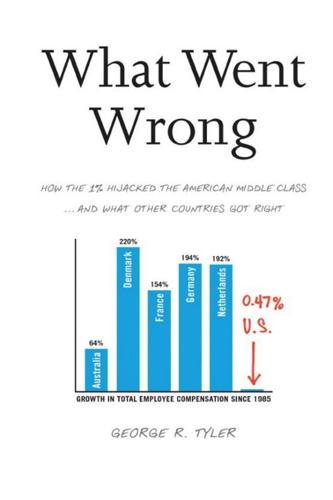
What Went Wrong: How the 1% Hijacked the American Middle Class . . . And What Other Countries Got Right
by George R. Tyler · 15 Jul 2013 · 772pp · 203,182 words

USA Travel Guide
by Lonely, Planet
Big Data: A Revolution That Will Transform How We Live, Work, and Think
by Viktor Mayer-Schonberger and Kenneth Cukier · 5 Mar 2013 · 304pp · 82,395 words
The Upstarts: How Uber, Airbnb, and the Killer Companies of the New Silicon Valley Are Changing the World
by Brad Stone · 30 Jan 2017 · 373pp · 112,822 words
WTF?: What's the Future and Why It's Up to Us
by Tim O'Reilly · 9 Oct 2017 · 561pp · 157,589 words
The Four: How Amazon, Apple, Facebook, and Google Divided and Conquered the World
by Scott Galloway · 2 Oct 2017 · 305pp · 79,303 words
Trick Mirror: Reflections on Self-Delusion
by Jia Tolentino · 5 Aug 2019 · 305pp · 101,743 words
Augmented: Life in the Smart Lane
by Brett King · 5 May 2016 · 385pp · 111,113 words

A Book for Her
by Bridget Christie · 1 Jul 2015 · 252pp · 85,441 words

A Year of Living Danishly: My Twelve Months Unearthing the Secrets of the World's Happiest Country
by Helen Russell · 14 Sep 2015 · 322pp · 99,918 words
This Chair Rocks: A Manifiesto Against Ageism
by Ashton Applewhite · 10 Feb 2016 · 312pp · 84,421 words
The Upswing: How America Came Together a Century Ago and How We Can Do It Again
by Robert D. Putnam · 12 Oct 2020 · 678pp · 160,676 words
The Startup Way: Making Entrepreneurship a Fundamental Discipline of Every Enterprise
by Eric Ries · 15 Mar 2017 · 406pp · 105,602 words

The Secret Life of Groceries: The Dark Miracle of the American Supermarket
by Benjamin Lorr · 14 Jun 2020 · 407pp · 113,198 words
Free Money for All: A Basic Income Guarantee Solution for the Twenty-First Century
by Mark Walker · 29 Nov 2015
Hustle and Gig: Struggling and Surviving in the Sharing Economy
by Alexandrea J. Ravenelle · 12 Mar 2019 · 349pp · 98,309 words

Dark Matters: On the Surveillance of Blackness
by Simone Browne · 1 Oct 2015 · 326pp · 84,180 words
We Need New Stories: Challenging the Toxic Myths Behind Our Age of Discontent
by Nesrine Malik · 4 Sep 2019
No Such Thing as a Free Gift: The Gates Foundation and the Price of Philanthropy
by Linsey McGoey · 14 Apr 2015 · 324pp · 93,606 words
Don't Burn This Book: Thinking for Yourself in an Age of Unreason
by Dave Rubin · 27 Apr 2020 · 239pp · 62,005 words
The Quiet Damage: QAnon and the Destruction of the American Family
by Jesselyn Cook · 22 Jul 2024 · 321pp · 95,778 words
After the Fall: Being American in the World We've Made
by Ben Rhodes · 1 Jun 2021 · 342pp · 114,118 words
Dream Hoarders: How the American Upper Middle Class Is Leaving Everyone Else in the Dust, Why That Is a Problem, and What to Do About It
by Richard V. Reeves · 22 May 2017 · 198pp · 52,089 words
The Mission: A True Story
by David W. Brown · 26 Jan 2021
Small Men on the Wrong Side of History: The Decline, Fall and Unlikely Return of Conservatism
by Ed West · 19 Mar 2020 · 530pp · 147,851 words
Nomad Capitalist: How to Reclaim Your Freedom With Offshore Bank Accounts, Dual Citizenship, Foreign Companies, and Overseas Investments
by Andrew Henderson · 8 Apr 2018 · 403pp · 110,492 words

Hillbilly Elegy: A Memoir of a Family and Culture in Crisis
by J. D. Vance · 27 Jun 2016 · 223pp · 77,566 words
Disaster Capitalism: Making a Killing Out of Catastrophe
by Antony Loewenstein · 1 Sep 2015 · 464pp · 121,983 words
Powerhouse: The Untold Story of Hollywood's Creative Artists Agency
by James Andrew Miller · 8 Aug 2016 · 790pp · 253,035 words

Pax Technica: How the Internet of Things May Set Us Free or Lock Us Up
by Philip N. Howard · 27 Apr 2015 · 322pp · 84,752 words
The Next Shift: The Fall of Industry and the Rise of Health Care in Rust Belt America
by Gabriel Winant · 23 Mar 2021 · 563pp · 136,190 words
The Man Who Solved the Market: How Jim Simons Launched the Quant Revolution
by Gregory Zuckerman · 5 Nov 2019 · 407pp · 104,622 words
Smart Money: How High-Stakes Financial Innovation Is Reshaping Our WorldÑFor the Better
by Andrew Palmer · 13 Apr 2015 · 280pp · 79,029 words
Data-Ism: The Revolution Transforming Decision Making, Consumer Behavior, and Almost Everything Else
by Steve Lohr · 10 Mar 2015 · 239pp · 70,206 words

What's the Matter with White People
by Joan Walsh · 19 Jul 2012 · 284pp · 85,643 words
Licence to be Bad
by Jonathan Aldred · 5 Jun 2019 · 453pp · 111,010 words
Rise of the Robots: Technology and the Threat of a Jobless Future
by Martin Ford · 4 May 2015 · 484pp · 104,873 words
Gray Lady Down: What the Decline and Fall of the New York Times Means for America
by William McGowan · 16 Nov 2010 · 316pp · 91,969 words

Eastern USA
by Lonely Planet

Freedom Without Borders
by Hoyt L. Barber · 23 Feb 2012 · 192pp · 72,822 words
Why America Must Not Follow Europe
by Daniel Hannan · 1 Mar 2011 · 31pp · 7,670 words
Pity the Billionaire: The Unexpected Resurgence of the American Right
by Thomas Frank · 16 Aug 2011 · 261pp · 64,977 words
Bureaucracy
by David Graeber · 3 Feb 2015 · 252pp · 80,636 words
Future Crimes: Everything Is Connected, Everyone Is Vulnerable and What We Can Do About It
by Marc Goodman · 24 Feb 2015 · 677pp · 206,548 words
Uberland: How Algorithms Are Rewriting the Rules of Work
by Alex Rosenblat · 22 Oct 2018 · 343pp · 91,080 words
Talk on the Wild Side
by Lane Greene · 15 Dec 2018 · 284pp · 84,169 words
India's Long Road
by Vijay Joshi · 21 Feb 2017
Dreamland: The True Tale of America's Opiate Epidemic
by Sam Quinones · 20 Apr 2015 · 433pp · 129,636 words
Lost at Sea
by Jon Ronson · 1 Oct 2012 · 375pp · 106,536 words
The Meritocracy Myth
by Stephen J. McNamee · 17 Jul 2013 · 440pp · 108,137 words

Nine Pints: A Journey Through the Money, Medicine, and Mysteries of Blood
by Rose George · 22 Oct 2018 · 453pp · 130,632 words
Better, Stronger, Faster: The Myth of American Decline . . . And the Rise of a New Economy
by Daniel Gross · 7 May 2012 · 391pp · 97,018 words
Radicalized
by Cory Doctorow · 19 Mar 2019 · 444pp · 84,486 words
How Did We Get Into This Mess?: Politics, Equality, Nature
by George Monbiot · 14 Apr 2016 · 334pp · 82,041 words

Word by Word: The Secret Life of Dictionaries
by Kory Stamper · 14 Mar 2017 · 341pp · 95,752 words
Messing With the Enemy: Surviving in a Social Media World of Hackers, Terrorists, Russians, and Fake News
by Clint Watts · 28 May 2018 · 324pp · 96,491 words
New Power: How Power Works in Our Hyperconnected World--And How to Make It Work for You
by Jeremy Heimans and Henry Timms · 2 Apr 2018 · 416pp · 100,130 words
If Mayors Ruled the World: Dysfunctional Nations, Rising Cities
by Benjamin R. Barber · 5 Nov 2013 · 501pp · 145,943 words
Twitter and Tear Gas: The Power and Fragility of Networked Protest
by Zeynep Tufekci · 14 May 2017 · 444pp · 130,646 words

Never Bet Against Occam: Mast Cell Activation Disease and the Modern Epidemics of Chronic Illness and Medical Complexity
by Lawrence B. Afrin M. D., Kendra Neilsen Myles and Kristi Posival · 15 Jan 2016
Bootstrapped: Liberating Ourselves From the American Dream
by Alissa Quart · 14 Mar 2023 · 304pp · 86,028 words
The Lords of Easy Money: How the Federal Reserve Broke the American Economy
by Christopher Leonard · 11 Jan 2022 · 416pp · 124,469 words
Confessions of a Crypto Millionaire: My Unlikely Escape From Corporate America
by Dan Conway · 8 Sep 2019 · 218pp · 68,648 words
Rough Sleepers: Dr. Jim O'Connell's Urgent Mission to Bring Healing to Homeless People
by Tracy Kidder · 17 Jan 2023 · 270pp · 88,213 words
How Elites Ate the Social Justice Movement
by Fredrik Deboer · 4 Sep 2023 · 211pp · 78,547 words
Markets, State, and People: Economics for Public Policy
by Diane Coyle · 14 Jan 2020 · 384pp · 108,414 words
Limitarianism: The Case Against Extreme Wealth
by Ingrid Robeyns · 16 Jan 2024 · 327pp · 110,234 words
Why Nothing Works: Who Killed Progress--And How to Bring It Back
by Marc J Dunkelman · 17 Feb 2025 · 454pp · 134,799 words
On the Clock: What Low-Wage Work Did to Me and How It Drives America Insane
by Emily Guendelsberger · 15 Jul 2019 · 382pp · 114,537 words

American Gun: The True Story of the AR-15
by Cameron McWhirter and Zusha Elinson · 25 Sep 2023 · 525pp · 166,724 words
Doing Time Like a Spy
by John Kiriakou · 11 May 2017 · 299pp · 96,608 words
The Euro and the Battle of Ideas
by Markus K. Brunnermeier, Harold James and Jean-Pierre Landau · 3 Aug 2016 · 586pp · 160,321 words
Straphanger
by Taras Grescoe · 8 Sep 2011 · 428pp · 134,832 words
Termites of the State: Why Complexity Leads to Inequality
by Vito Tanzi · 28 Dec 2017

Economists and the Powerful
by Norbert Haring, Norbert H. Ring and Niall Douglas · 30 Sep 2012 · 261pp · 103,244 words
The Great Race: The Global Quest for the Car of the Future
by Levi Tillemann · 20 Jan 2015 · 431pp · 107,868 words

The Extreme Centre: A Warning
by Tariq Ali · 22 Jan 2015 · 160pp · 46,449 words
The Health Gap: The Challenge of an Unequal World
by Michael Marmot · 9 Sep 2015 · 414pp · 119,116 words

Superforecasting: The Art and Science of Prediction
by Philip Tetlock and Dan Gardner · 14 Sep 2015 · 317pp · 100,414 words
When to Rob a Bank: ...And 131 More Warped Suggestions and Well-Intended Rants
by Steven D. Levitt and Stephen J. Dubner · 4 May 2015 · 306pp · 85,836 words
Big Data and the Welfare State: How the Information Revolution Threatens Social Solidarity
by Torben Iversen and Philipp Rehm · 18 May 2022
Democracy for Sale: Dark Money and Dirty Politics
by Peter Geoghegan · 2 Jan 2020 · 388pp · 111,099 words
How to Stand Up to a Dictator
by Maria Ressa · 19 Oct 2022