opioid epidemic
description: a public health crisis involving the excessive use and abuse of opioid drugs
135 results
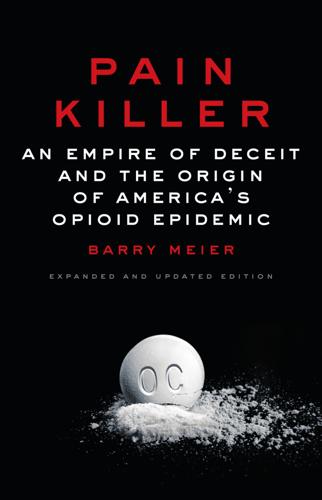
Pain Killer: An Empire of Deceit and the Origins of America’s Opioid Epidemic
by Barry Meier · 29 Oct 2020
2003. Library of Congress Cataloging-in-Publication Data Names: Meier, Barry, author. Title: Pain killer : an empire of deceit and the origin of America’s opioid epidemic / Barry Meier. Description: 2nd edition. | New York : Random House, 2018. | Includes bibliographical references and index. Identifiers: LCCN 2018010496 | ISBN 9780525511106 (hardback : alk. paper) | ISBN 9780525511090
…
them in 2016—involved “opioids,” prescription painkillers or illegal drugs derived from compounds either found in the opium poppy or synthesized in a lab. The opioid crisis has become woven into the fabric of everyday American life. In hospitals, newborns, separated from the narcotics coursing through the bloodstream of their addicted mothers
…
that might have been contained with an early response had morphed into a hydra. Every catastrophe, natural or man-made, has a beginning. For the opioid crisis, the seed was a drug called OxyContin. When OxyContin first appeared in the mid-1990s, it was heralded as a “wonder” drug that would change
…
obscurity, scores of internal Purdue emails and other records unearthed by investigators are finally available to shed new light on the origin story of the opioid crisis. OxyContin was not a “wonder” drug. It was the gateway drug to the most devastating public-health disaster of the twenty-first century. ONE Pill
…
wrestle with OxyContin, those separate mandates came into conflict and set off a decade of governmental paralysis that would instead widen the scope of the opioid crisis. Purdue began its own campaign against Nagel, telling reporters that the DEA was beating up on the company to enhance its own prestige. Nagel’s
…
group that represents state-level drug regulators, the National Association of State Controlled Substances Authorities (NASCSA), heard an urgent call to action about a looming opioid crisis. A New York State official, John Eadie, told his colleagues that federal data showed that young people were increasingly experimenting with legal opioids and that
…
America’s growing appetite for opioids, began to produce massive quantities of cheap heroin for shipment into the United States. As the scope of the opioid epidemic took shape, federal officials and professional groups such as the American Medical Association did little, if anything, to stem the tide. Even sensible recommendations from
…
offered, a bright light, both shocking and clarifying, would have shone on the actions of Purdue. That light would have illuminated the origins of the opioid epidemic and likely altered its course, sparing thousands of lives that would soon be lost. ELEVEN Empire of Deceit In 2018, an
…
opioid epidemic that began two decades earlier with OxyContin finally seized the nation’s attention. Over 250,000 Americans had died from overdoses involving prescription painkillers. Every
…
versions of fentanyl were rapidly driving up the overall numbers of overdose deaths. President Donald J. Trump, pointing to the death toll, officially declared the opioid crisis a national emergency. In early 2018, he announced a plan that included increasing addiction treatment and reducing the medical use of opioids. In that same
…
approach to drug dealers, including using the death penalty. It wasn’t clear how his administration planned to fund its proposals to deal with the opioid crisis, but experts acknowledged that government officials had failed to stem an epidemic when they had had the chance. “We didn’t get ahead of it
…
; nobody got ahead of it,” said Dr. Scott Gottlieb, appointed by President Trump to head the FDA. Journalists also sought to give the opioid crisis a face, that of the Sackler family. In 2017, both Esquire magazine and The New Yorker magazine published lengthy accounts that depicted Raymond and Mortimer
…
. By 2017, sales of OxyContin had exceeded $31 billion, but her wing of the Sackler family had never made a dime from the drug. “The opioid epidemic is a national crisis and Purdue Pharma’s role in it is morally abhorrent to me,” she said. Though the federal prosecutor Randy Ramseyer predicted
…
pills. Over that same five-year period, more than 1,700 people in West Virginia died from fatal overdoses involving prescription opioids. Meanwhile, as the opioid epidemic intensified, drug-industry lobbyists succeeded in 2016 in getting a law passed that made it harder for the DEA to block shipments of pain pills
…
transcript of Hogen’s message to Raymond Sackler, Howard Udell, Michael Friedman, and Hogen. Both Udell and Hogen sent subsequent letters of apology. As the opioid epidemic expanded, it was not only the Justice Department that failed to take desperately needed steps. Drug regulators, lawmakers, medical associations, and even public-health officials
…
just as its patent on the original form of the painkiller was expiring. The company took a number of other steps to help curtail the opioid crisis, such as funding prescription-monitoring programs and helping to distribute naloxone, the drug used to reverse overdoses. Also, Purdue said that in 2016 it ended
…
government had Purdue on the ropes. But Justice Department officials balked when they had the opportunity and allowed the last, best chance to slow the opioid epidemic to slip away. EPILOGUE The War Against Pain Revisited Much has happened since the first publication of this book in 2003. But perhaps the biggest
…
of those advocates, Dr. Scott Fishman, said. “What we didn’t realize is that patients would use these drugs to opt out of life.” The “opioid crisis” is actually two separate crises, each with its own causes and solutions. One involves illegal narcotics, such as counterfeit fentanyl, and requires the attention of
…
Over the past two decades, countless people have generously shared their insights, knowledge, and stories with me about the medical use of opioids and the opioid epidemic. But Pain Killer would never have been written without the participation and patience of Art Van Zee, Sue Ella Kobak, Jane Myers, Lindsay Myers, Russell
…
the firing list. However, Brownlee was not fired. 11. Empire of Deceit Esquire magazine: Christopher Glazek’s article, “The Secretive Family Making Billions from the Opioid Crisis,” appeared on October 16, 2017. The New Yorker: Patrick Radden Keefe’s article, “The Family That Built an Empire of Pain,” appeared on October 30
Raising Lazarus: Hope, Justice, and the Future of America’s Overdose Crisis
by Beth Macy · 15 Aug 2022 · 389pp · 111,372 words
United States Congress debated how to hold to account the Sackler family, sole owners of Purdue Pharma, whose OxyContin painkiller was the taproot of the opioid crisis. The Sacklers are just one node in a vast network of opioid lawsuits broadly acknowledged to be the most complicated in American history. Under
…
. The epidemic continues to shape-shift. When prescription pills grew harder to access in the aughts, drug cartels launched a second wave of the opioid crisis—heroin—understanding better than anyone that heroin and OxyContin are chemical cousins, and an opioid-addicted person’s fear of withdrawal guaranteed repeat customers. A
…
peer into the country’s most intractable problems—homelessness, disability, domestic violence, child neglect—you see the persistence of dopesickness everywhere. “If we fix the opioid crisis, we fix America,” one reader e-mailed me, envisioning a country where meaningful work, health care, and social supports become not only embedded into
…
bad we were having to rely on mutual aid from suburban cities thirty miles away. The national media was calling us ‘Ground Zero of the opioid crisis.’” Driving around Dayton in those days, Montgomery County sheriff Rob Streck was reminded of the television show The Walking Dead. “When you were sitting
…
politicians, too. “We are deeply in your debt,” Nancy Pelosi, then the House Minority Leader, told her at a press conference in support of opioid-epidemic funding in 2018. When I first met with PAIN in December 2019, the group was at a crossroads. Confused by the morass of opioid litigation
…
get a lot worse before they would begin to turn around. In working-class communities where pain medications were aggressively prescribed, job losses and the opioid crisis were perniciously entwined. One nearby factory owner told me it took five applicants to find one who could pass a drug test. That ratio
…
Under Obama, drug czar Michael Botticelli had begun to steer the office toward a more public health–oriented approach. But Trump’s handling of the opioid epidemic was more hype than substance. In two years, he proposed only $900,000 in additional funding to address the epidemic, less than one-tenth
…
always acted “legally and ethically.” The duo blamed the press for blaming the Sacklers while acknowledging that OxyContin addiction had played a role in the opioid crisis. But they stopped short of admitting anything other than wanting to help millions of Americans in pain. As a mother, Kathe Sackler said, her
…
distributors were giving defendants opportunities for repeated delays, much to the detriment of needy places like West Virginia, desperate to recoup costs stemming from the opioid crisis. The drug companies will “pull every trick in the book to delay because there’s this opioid fatigue, and people are getting tired of
…
talk about issues pending in an active case he oversees? To Quinn, it was the same kind of corporate cozying up that had launched the opioid epidemic—akin to Purdue paying 5,000 doctors, nurses, and pharmacists to give speeches to their peers about the miracle of OxyContin. “We’ve all
…
release them. In 2019, United States Supreme Court chief justice John Roberts gave Slone the court’s highest judicial honor for his work on the opioid crisis. Slone was masterful at turning skeptics into collaborators, figuring out how to schmooze a pilot project into being and, once the benefits were too
…
harms and overdose deaths. In recent years, law enforcement agencies, the CDC, and other medical authorities had overreacted to the first wave of the opioid crisis by clamping down too hard on opioid-prescribing. In fact, it is dangerous to force-taper or cut off pain patients, which often sends them
…
,500. “It goes up every time I check it,” Willis said. A recent report fairly screamed the news with a bold subhead exclaiming, “The opioid epidemic is stealing prime-age men from the labor market,” causing a 40-percent decline in the number of working-age men. Mark Willis had not
…
responsibility, the family did acknowledge that “OxyContin, a prescription medicine that continues to help people suffering from chronic pain, unexpectedly became part of an opioid crisis that has brought grief and loss to far too many families and communities.” They also agreed to comply with an unusual hearing request in mid
…
will, or call it caring for the patient. The opioid-litigation money is a once-in-a-generation opportunity. The Sacklers willfully created the opioid crisis. They shamelessly lied to the health care community and enlisted their aid in carrying out a murderous rampage that has victimized hundreds of thousands of
…
, ncbi.nlm.nih.gov/books/NBK448203. $10 billion: Madeline Holcombe, “The Sackler family withdrew more than $10 billion from Purdue Pharma during the country’s opioid crisis,” CNN, October 21, 2020. It sounded good: Scott Higham and Lenny Bernstein, “The Drug Industry’s Triumph Over the DEA,” Washington Post, October 15,
…
got”: Transcript of December 17, 2020 hearing; see: https://www.rev.com/blog/transcripts/the-role-of-purdue-pharma-and-the-sackler-family-in-the-opioid-epidemic-full-hearing-transcript. A theory began circulating: Vox reporter German Lopez, author interview, October 11, 2019; and bioethicist and author Travis Rieder, author interview,
…
Washington Post, December 7, 2016. more than $300 million: Office of Inspector General, “States’ Use of Grant Funding for a Targeted Response to the Opioid Crisis,” March 13, 2020, https://oig.hhs.gov/oei/reports/oei-BL-18-00460.asp. “stuck in an airport somewhere”: Dr. Andrew Kolodny, as quoted by
…
”: Nan Goldin, author interview, July 24, 2020. on a par with Sally Mann: See: Thessaly La Force, “Nan Goldin Survived Overdose to Fight the Opioid Epidemic,” New York Times Style Magazine, June 11, 2018, https://www.nytimes.com/2018/06/11/t-magazine/a-heroin-chic-photographers-new-project-tackling-the
…
-opioid-epidemic.html; and Janna Malamud Smith, “Art, Drugs and Money: How to View the Complicated Legacy of Arthur M. Sackler,” WBUR Cognoscenti, March 29, 2019, https://www.wbur.org/cognoscenti/2019/03/29/sackler-oxycontin-opioid-crisis-art-janna-malamud-smith. bad-boy hijinks:
…
“ended up running a treatment”: Sami Alloy, author interview, February 19, 2021. Joe Biden pledged: German Lopez, “Joe Biden’s new plan to end the opioid epidemic is the most ambitious in the field,” Vox, March 6, 2020, https://www.vox.com/policy-and-politics/2020/3/6/21167803/joe-biden
…
-opioid-epidemic-plan-drug-overdoses. there was no mention: Abraham Gutman, “Joe Biden and the Kinder, Gentler War on Drugs,” Newsday, October 22, 2020, https://www.
…
OxyContin marketing. But no one is going to prison,” Vox, October 21, 2020, https://www.vox.com/2020/10/21/21526868/purdue-pharma-oxycontin-opioid-epidemic-department-of-justice; also United States Department of Justice, “Founder and Former Chairman of the Board of Insys Therapeutics Sentenced to 66 Months in Prison
…
and treatment innovator Nikki King between 2016 and early 2020 was published in The Atlantic: “America’s Other Epidemic: A New Approach to Fighting the Opioid Crisis as It Quietly Rages On” (May 2020). Subsequent interviews since the publication of that piece are noted. quintupled: Kids Count Data Center, comparing 2012
…
-chair of the bankruptcy’s Unsecured Creditors Committee. virtual gathering: The hearing was called “The Role of Purdue Pharma and the Sackler Family in the Opioid Epidemic,” December 17, 2020. “a setup since day one”: Ryan Hampton, text messages to author, December 17, 2020. “The world is hearing us”: OxyJustice, Zoom
…
,’” Harvard Gazette, December 1, 2021. less than a fourth: Mike Moore, e-mail to author, November 16, 2021. “walking-around sense”: See: Bill Whitaker, “Opioid Crisis: The Lawsuits That Could Bankrupt Manufacturers and Distributors,” 60 Minutes, December 16, 2018. just three months: Mike Moore, e-mail to author, February 15, 2021
…
and Prevention, December 17, 2020, https://www.cdc.gov/media/releases/2020/p1218-overdose-deaths-covid-19.html. $26 billion: Amanda Bronstad, “Lawyers Suing Over Opioid Crisis Announce $26 B Proposed Settlement,” Law.com, November 5, 2020. food fight: Mike Moore, e-mail to author, February 18, 2021. (died at age
…
dies at 70,” Washington Post, May 24, 2021. “we are screwed”: Barry Meier, Pain Killer: An Empire of Deceit and the Origin of America’s Opioid Epidemic, 2d ed. (New York: Penguin Random House, 2018), 163, footnoting a secret prosecution memo from the 2007 federal case. Meier has reported on the memo
…
and Ralph Brubaker, “The Sacklers Could Get Away With It,” New York Times, July 22, 2020, https://www.nytimes.com/2020/07/22/opinion/sacklers-opioid-epidemic.html. “nearly impossible”: Paul Hanly, author interviews, July 1, 2020, and August 12, 2020. failed to disclose: Jonathan Randles, “Purdue Lawyers Face Disclosure Questions
…
Mortality in the United States,” JAMA Network (January 10, 2020), https://jamanetwork.com/journals/jamanetworkopen/fullarticle/2758476; and Kendal Orgera and Jennifer Tolbert, “The Opioid Epidemic and Medicaid’s Role in Facilitating Access to Treatment,” KFF, May 24, 2019, https://www.kff.org/medicaid/issue-brief/the
…
-opioid-epidemic-and-medicaids-role-in-facilitating-access-to-treatment/. last or next to last: “2018 Annual Report,” America’s Health Rankings, United Health Foundation, 2022,
…
/reports/2018-annual-report/findings-state-rankings. cumbersome access barriers: “Spotlight on Mississippi: Best Practices and Next Steps in the Opioid Epidemic,” American Medical Association, May 2019, https://www.end-opioid-epidemic.org/wp-content/uploads/2019/05/AMA-Paper-Spotlight-on-Mississippi-May-2019_FOR-WEB.pdf. had overdosed and died: Damian
…
and prisons puts a vulnerable population of around 2.3 million people at risk,” writes German Lopez, “How America’s prisons and jails perpetuate the opioid epidemic,” Vox, January 30, 2020. jail-cell window: Sahana Karpoor, author interview, March 3, 2021. more than three times as many: Surry had 250 of
…
, “In Surrey, ‘Harm Reduction’ Drug Approaches a Hard Sell,” The Tyee, September 26, 2014. Chapter Nine “worst mistake”: Norah O’Donnell, “Former FDA head: Opioid epidemic one of ‘great mistakes of modern medicine,’” CBS Evening News, May 9, 2016. Woodcock continued approving: Beth Macy, “He Lost His Son to an Overdose
…
called “Mass Tort Chapter 11 Cases Today,” December 10, 2021, American Bankruptcy Institute. deaths remained significantly lower: Abby E. Alpert et al., “Origins of the Opioid Crisis and Its Enduring Impacts,” National Bureau of Economic Research, November 2019. “in and out of jail”: Dema Hadieh, author interview, March 3, 2021. Operation
…
pick at odds with push for ‘harm reduction’ policies,” The Guardian, November 5, 2021. “locked up until they’re clean”: “The Generation Lost to the Opioid Crisis,” VICE News, December 11, 2019. Pollini herself was physically threatened: Dr. Robin Pollini, author interview, April 6, 2021. blocked from receiving funds: West Virginia
…
Coronavirus in Boston’s Homeless Community,” WBUR, March 23, 2020; Deborah Becker, “Focus Remains on Troubled Boston Area Amid Concerns the Pandemic Is Worsening the Opioid Crisis,” WBUR, November 19, 2020. “we had overdose teams”: Dr. David E. Smith, author interview, April 21, 2021. coined the phrase: Smith has been given
…
off the naysayers: Judge Duane Slone, author interview, April 25, 2020. highest judicial honor: “Tennessee judge receives highest judicial honor for his work on the opioid epidemic,” Knoxcounty.org, November 26, 2019. Barbecue and Sweet Tea: Donnie Varnell, author interview, February 16, 2021. less likely to get stuck: Max Blau, “Southern
…
states slowly embracing harm reduction to curb opioid epidemic,” PBS NewsHour, April 17, 2019. changed their tune: Dr. William Cooke, author interview, July 15, 2021, and “Boone County Jail becomes first in Indiana
…
. crippling fear of the ringer: Alexis Pleus, testimony, “The SACKLER Act and Other Policies to Promote Accountability for the Sackler Family’s Role in the Opioid Epidemic,” US House Committee on Oversight and Reform, June 8, 2021. Forbes list: Alex Morrell, “The OxyContin Clan: The $14 Billion Newcomer to Forbes 2015
…
inventor told them that would be dangerous,” Daily Mail, January 19, 2019. trial’s most telling moment: Rick Archer, “Ex-Purdue Chair Denies Blame for Opioid Crisis,” Law360, August 18, 2021. send by a Minneapolis woman: Stephanie Lubinski, January 6, 2021, to Judge Robert D. Drain, Case No. 19-23649,
…
County, Indiana, in 2020 and 2021. opioid case agglomeration: Danny Hakim, William K. Rashbaum, and Ronie Caryn Rabin, “The Giants at the Heart of the Opioid Crisis,” New York Times, April 22, 2019. Hillbilly Heroin. OC.: Eric Eyre, “Analysis: There’s Nothing Funny About an Addiction Crisis,” Mountain State Spotlight, May
…
$20 million in cash and $25 million worth of buprenorphine; see: Julie Carr Smyth and Geoff Mulvihill, “$260 million deal averts 1st federal trial on opioid crisis,” Associated Press, October 21, 2019. highest overdose-death rate: Paul Farrell, “In the United States District Court for the Southern District of West Virginia,”
…
Pill Express: Ibid., 221. in less than four hours: Andrew Joseph, “26 overdoses in just hours: Inside a community on the front lines of the opioid epidemic,” STAT, August 22, 2016. One in five babies: Kris Maher and Sara Randazzo, “Landmark Opioid Trial Opens in West Virginia,” Wall Street Journal, May
…
Amanda Coleman, author interview, September 21, 2021. “just staggering”: Ibid., “We reflect it”: Brendan Pierson, “Big three drug distributors blame doctors, regulators in trial over opioid epidemic,” Reuters, May 3, 2021. 20.8 million: Eric Eyre, “Drug firms shipped 20.8M pain pills to WV town with 2,900 residents,” Charleston Gazette
…
graduate medical training, about two-thirds of training programs do not support training in prescribing buprenorphine,” Sharfstein and Olsen wrote in “Making Amends for the Opioid Epidemic,” JAMA Forum, April 16, 2019. federal funding of syringes: Alex Ruoff, “Record Overdose Deaths Prompt Congress to Reconsider Needle Aid,” Bloomberg Government, July 22,
…
,” American Journal of Public Health (April 2019). “right now we have”: Greg Williams, author interview, August 2, 2021. Williams outlines his fixes for the opioid crisis in “What Would Dr. Kirk Do with This Moment?: An Open Letter to SAMHSA Single State Authorities,” Third Horizon Strategies, April 1, 2021, https://thirdhorizonstrategies
Deaths of Despair and the Future of Capitalism
by Anne Case and Angus Deaton · 17 Mar 2020 · 421pp · 110,272 words
those of whites as late as the early 1990s, fell as white rates rose, closing the distance between them to 20 percent. Since 2013 the opioid epidemic has spread to black communities, but until then, the epidemic of deaths of despair was white. In the chapters that follow, we document the decline
…
one part of the country, or much the same everywhere? And, above all, why is it happening? As we shall see, the alcohol, suicide, and opioid epidemics are an essential part of the story, but we need to discuss a few other issues before we get there. In chapter 1, when we
…
and without a college degree is particularly notable. The increase in black mortality in the most recent years comes from an interaction between the current opioid epidemic and the earlier drug epidemic in the black community. As we shall see in chapter 9, the epidemic has most recently been driven by fentanyl
…
African American inner-city communities faced a crisis of crack cocaine in the 1980s. The crack epidemic shows both contrasts and parallels with the current opioid epidemic. Crack was cheap and offered an immediate high that was highly addictive. Crime rates increased, as those addicted looked for money for their next fix
…
were hungry for the escape that they seemed to offer. During the crack epidemic, the inner city offered few legitimate avenues of progress. In the opioid crisis, it is less educated whites, many of whom do not see a promising economic future, or a promising future in any aspect of their lives
…
important risk factor for suicide; the victim believes that the intolerable pain will never get better. The treatment of pain is a root of the opioid epidemic. The brain’s natural opioid system controls both euphoria and pain relief. People use the language of pain and hurt to describe “social pain,” from
…
much of the discussion of alcohol applies to drugs too. In the next chapter, we turn to one particular facet of current drug overdoses, the opioid epidemic, in part because there is much to discuss, but also because the etiology of the drug epidemic provides a clue to the overall story of
…
use of opioids both by the public and by physicians, and the Harrison Narcotics Act of 1914 marked the end of the first great American opioid epidemic. The act severely restricted the use and sale of opioids, and heroin was entirely banned ten years later. The sale and possession of opioids became
…
comparison with an epidemic of smallpox or the influenza epidemic that killed millions in the US and around the world in 1918–19. In the opioid epidemic, the agents were not viruses or bacteria but rather the pharmaceutical companies that manufactured the drugs and aggressively pushed their sales; the members of Congress
…
is expected to appeal, but other suits are pending.35 We tell these stories because they illustrate the failure of democratic politics to address the opioid epidemic. Marino’s district was heavily affected by opioids, as was that of one of the bill’s sponsors in the House, Representative Marsha Blackburn of
…
working class, less educated people, whose already distressed lives were fertile ground for corporate greed, a dysfunctional regulatory system, and a flawed medical system. The opioid epidemic did not happen in other countries both because they had not destroyed their working class and because their pharmaceutical companies are better controlled and their
…
whole. Death by accidental overdose is the most prevalent of the three kinds of deaths of despair; many of these can be attributed to the opioid epidemic spurred by the industry, though we need also to look at the deterioration in lives that predisposed some people to addiction. Deaths by suicide and
…
–305, https://doi.org/10.1111/j.1540-6237.2007.00458.x. Chapter 2: Things Come Apart 1. Brookings Institution, 2017, Policy approaches to the opioid crisis, featuring remarks by Sir Angus Deaton, Rep. Ann McLane Kuster, and Professor Bertha K. Madras: An event from the USC-Brookings Schaeffer Initiative for Health
…
Policy, Washington, DC, November 3, https://www.brookings.edu/wp-content/uploads/2017/11/es_20171103_opioid_crisis_transcript.pdf. 2. Unless otherwise noted, throughout the book, we will refer to white non-Hispanics as “whites,” black non-Hispanics as “blacks,” and Hispanics
…
, 66, 601–29, https://doi.org/10.1146/annurev-psych-010213-115146. 2. National Academies of Sciences, Engineering, and Medicine, 2017, Pain management and the opioid epidemic: Balancing societal and individual benefits and risks of prescription opioid use, National Academies Press, https://doi.org/10.17226/24781. 3. Rob Boddice, 2017, Pain
…
, American Psychiatric Association, Kindle. 3. Zachary Siegel, 2018, “I’m so sick of opioid disaster porn,” Slate, September 12, https://slate.com/technology/2018/09/opioid-crisis-photo-essays-leave-out-recovery.html. 4. DuPont, Selfish brain, loc. 2093 of 8488, Kindle. 5. Kay Redfield Jamison, 2000, Night falls fast: Understanding suicide
…
, 57(3), 208–12, https://www.ncbi.nlm.nih.gov/pmc/articles/PMC6375792/; Andrew Goodman-Bacon and Emma Sandoe, 2017, “Did Medicaid expansion cause the opioid epidemic? There is little evidence that it did,” Health Affairs, August 23, https://www.healthaffairs.org/do/10.1377/hblog20170823.061640/full. 32. Energy and Commerce
…
.gov/wp-content/uploads/2018/12/Opioid-Distribution-Report-FinalREV.pdf. 33. Brit McCandless Farmer, 2019, “The opioid epidemic: Who is to blame?,” 60 Minutes Overtime, February 24, https://www.cbsnews.com/news/the-opioid-epidemic-who-is-to-blame-60-minutes/; Scott Higham and Lenny Bernstein, 2017, “The drug industry’s triumph over
…
-legal-supply-wont-stop-the-overdose-crisis. 35. Katie Thomas and Tiffany Hsu, 2019, “Johnson and Johnson’s brand falters over its role in the opioid crisis,” New York Times, August 27. 36. District of Massachusetts, US Attorney’s Office, Department of Justice, 2019, “Founder and four executives of Insys Therapeutics convicted
…
given the drug are different from those on whom it was tested. 38. National Academies of Sciences, Engineering, and Medicine, 2017, Pain management and the opioid epidemic: Balancing societal and individual benefits and risks of prescription opioid use, National Academies Press, https://doi.org/10.17226/24781. 39. Allen Frances, quoted in
…
Corwin, Steven, 201 Cotton, Tom, 285n5 Courtwright, David, 115, 118, 274n11, 274n12 Cowen, Tyler, 286n6 Cox, Daniel, 265n8, 279n28 crack cocaine epidemic, 5, 62, 64; opioid epidemic and, 68–69 Craig, Stuart V., 283n27 creative destruction, 235 Crestor, 197 crime, 68, 179 crime rates, 5, 69 crony capitalism, 245. See also rent
…
oligopolies, 230–31. See also market power oligopsonies, 236. See also market power Olshansky, Jay, 268n10 Open Society Policy Center, 242 Operation Golden Flow, 122 opioid epidemic, 2, 6, 31, 40, 67, 83, 97, 112–121, 113, 124, 126, 146, 192, 247; African Americans and, 66, 67, 68, 137; crack cocaine epidemic
Dopesick: Dealers, Doctors and the Drug Company That Addicted America
by Beth Macy · 4 Mar 2019 · 441pp · 124,798 words
by the day. The enormity of America’s drug problem was finally dawning on them and on the rest of us—two decades after the opioid epidemic first took root. (Although the word “opiate” historically refers to drugs derived from the opium poppy and “opioid” to chemical versions, the now more
…
the country, it historically starts in the big cities and gradually spreads to the hinterlands, as in the cases of cocaine and crack. But the opioid epidemic began in exactly the opposite manner, grabbing a toehold in isolated Appalachia, Midwestern rust belt counties, and rural Maine. Working-class families who were traditionally
…
The People v. Purdue Pennington Gap, Lee County, Virginia Former coal-mining facility, Lee County, Virginia Chapter One The United States of Amnesia Though the opioid epidemic would go on to spare no segment of America, nowhere has it settled in and extracted as steep a toll as in the depressed former
…
overdose, their central finding of “a marked increase in the all-cause mortality of middle-aged white non-Hispanic men and women” demonstrates that the opioid epidemic rests inside a host of other diseases of despair statistically significant enough to reverse “decades of progress in mortality.” At roughly the same time the
…
Clearly, the problem wasn’t just of some people dying sooner; it was of white Americans dying in their prime. The story of how the opioid epidemic came to change this country begins in the mid to late 1990s, in Virginia’s westernmost point, in the pie-shaped county sandwiched between Tennessee
…
love and memory of randall nuss and others. More than a decade later, as journalists and policy makers tried to pinpoint where and how the opioid crisis began, images from the rainy rally in Abingdon would get recycled in news accounts, the prescient parents marching with their signs, and next to them
…
Objects in Mirror Are Closer Than They Appear Hidden Valley, Roanoke County, Virginia Strasburg High School, Strasburg, Virginia Chapter Five Suburban Sprawl Awareness of the opioid crisis has typically come in waves, often celebrity-studded and well covered by the media: the death by overdose of Philip Seymour Hoffman, in 2014, then
…
become an ideal transfer station for the region’s transition from dope to pills, then back to dope. It was the perfect incubator for the opioid epidemic—a cultural and geographic crossroads. It was big enough for users to easily forge drug connections and yet small enough for the drug dealers to
…
very carefully discern, and parents should always monitor the medicines their children and teenagers are on,” said Cheri Hartman, a Roanoke psychologist. Lembke pins the opioid epidemic not just on physician overprescribing fueled by Big Pharma but also on the broader American narrative that promotes all pills as a quick fix. Between
…
, but their stories would also expose how families operate inside the sizable gaps that have opened up between the two institutions tasked with addressing the opioid epidemic: the criminal justice and health care systems. While shame too often cloaks these gaps in secrecy, some doctors, drug dealers, and pharmaceutical companies continue
…
most distressed counties and towns. But people in their late teens and twenties didn’t often die from booze. The real perfect storm fueling the opioid epidemic had been the collapse of work, followed by the rise in disability and its parallel, pernicious twin: the flood of painkillers pushed by rapacious pharma
…
tobacco! Everyone at my school was in the same boat. No one had any money.” Chapmanville was, in retrospect, another perfect breeding ground for the opioid epidemic, with OxyContin moving in just as most of the mines were shutting down in the late 1990s, and the only viable economic option—beyond disability
…
can be saved.” (In 2017, Urbanski knocked Ashlyn’s sentence down even more.) On what he thinks of law enforcement’s efforts to quell the opioid epidemic: Not much. The system is too rigidified, as Garfield would say, not nimble enough to combat heroin’s exponential growth. The drug’s too addictive
…
prevented MAT-certified doctors from treating more than 100 patients at a time, a cap adjusted to 275 later that year in response to the opioid crisis. Access to MAT in Virginia would broaden greatly in 2017, thanks largely to the efforts of Dr. Hughes Melton, a Lebanon addiction specialist tapped
…
hodgepodge, divided not only along geographical but also firm ideological lines. In late 2016, Virginia State Health Commissioner Marissa J. Levine declared the state’s opioid crisis a public health emergency, noting that three Virginians were dying every day from drug overdose and that emergency departments across the state were seeing more
…
the office of the White House drug czar, reducing its budget by $364 million, despite Trump’s campaign vow to combat the nation’s growing opioid epidemic, and backed health care changes that would have put the most vulnerable users at risk. After a backlash, Trump rolled back his proposal to relatively
…
work (a serious barrier in rural areas), the latter paid for by grants from the local Rotary Club. While the government’s response to the opioid crisis had been molasses-slow, mired in bureaucracy, funding woes, and slow-to-close treatment gaps, here was an example of volunteers stepping in to patch
…
J. David Haddox gave a speech urging members of the Richmond Academy of Medicine not to be swayed by the narrative taking shape around the opioid epidemic. His company was working to create new and “safer” painkillers, he said. The assembled doctors were unimpressed. What can we do, they wanted to
…
Haddox remained firmly on point. “What’s getting lost here is the prevalence of chronic pain in this country,” he said. The optics of the opioid epidemic had clearly been bad for business. While Ronnie turned gray in prison and Kristi prepared the next seasonal decorations for Jesse’s grave, the Sacklers
…
live with possibly dangerous or at least risky new drugs—because Big Pharma’s going to keep churning them out.” * The birthplace of the modern opioid epidemic—central Appalachia—deserves the final word in this story. It is, after all, the place where I witnessed the holiest jumble of unmet needs, where
…
Dr. Hughes Melton, set up practice in 2000 because he wanted to treat the underserved. Melton was helping direct the state’s response to the opioid crisis; among his initiatives was a new statewide push for syringe exchange and some tighter controls on MAT prescribing. His wife, Sarah Melton, a pharmacy professor
…
if I keep living the way I am.” She was dead now, her grieving family a perfect microcosm of the nation’s response to the opioid epidemic: well-meaning but as divided as it was helpless, and utterly worn out. Police were investigating, but Alan Henry theorized that Tess “had gotten
…
witnessed for thwarting governmental rigidity and indifference to turning back the crisis. Acknowledgments This book stands on the shoulders of several important works about the opioid crisis that came before it: Barry Meier’s Pain Killer, Sam Quinones’s Dreamland, Anna Lembke’s Drug Dealer, MD, and Tracey Helton Mitchell’s Big
…
18, 2016. a single batch of heroin was about to land: “26 Overdoses in Just Hours: Inside a Community on the Front Lines of the Opioid Epidemic,” Andrew Joseph, STAT, Aug. 22, 2016. West Virginia’s indigent burial-assistance program: Christopher Ingraham, “Drugs Are Killing So Many People in West Virginia
…
I stood: Author interview, Kristi Fernandez, May 23, 2016. When a new drug sweeps the country: Author interview, historian David Courtwright; the advent of the opioid epidemic was masterfully chronicled for the first time in Paul Tough, “The Alchemy of OxyContin,” New York Times Magazine, July 29, 2001. the German elixir peddlers
…
Ganey survey upped the pressure: Author interview, Dr. David Davis, March 16, 2017. financial toll of $1 trillion: As reported in Altarum, “Economic Toll of Opioid Crisis in U.S. Exceeded $1 Trillion Since 2001,” Feb. 13, 2018. “An additional $500 billion is estimated through 2020 if current conditions persist,” the health
…
costs at $504 billion in 2015 alone, according to “Council of Economic Advisers Report: The Underestimated Cost of the Opioid Crisis,” Nov. 20, 2017, https://www.whitehouse.gov/briefings-statements/cea-report-underestimated-cost-opioid-crisis/. only a few voices of dissent: Seddon R. Savage, “Long-Term Opioid Therapy: Assessment of Consequences and Risks
…
), 327–28. Declining workforce participation wasn’t just: Author interview, Monnat. Princeton economist Alan B. Krueger’s 2017 study also backs Monnat’s thesis: “The opioid crisis and depressed labor force participation are now intertwined in many parts of the U.S.,” he said, in the Brookings Institution paper “Where Have All
…
-articles/where-have-all-the-workers-gone-an-inquiry-into-the-decline-of-the-u-s-labor-force-participation-rate/. Related: Fred Dews, “How the Opioid Epidemic Has Affected the U.S. Labor Force, County-by-County,” Brookings Institution, Sept. 7, 2017. Packaged in Harlem, the heroin was shaped: Details of
…
. But each time a derivative was banned: As cited by DEA spokesman Russ Baer in Sara Ganim, “China’s Fentanyl Ban a ‘Game Changer’ for Opioid Epidemic, DEA Officials Say,” CNN, Feb. 16, 2017; Kathleen McLaughlin, “Underground Labs in China Are Devising Potent New Opiates Faster Than Authorities Can Respond,” Science,
…
more than died from AIDS in 1995: Centers for Disease Control and Prevention, as outlined in charts in German Lopez and Sarah Frostenson, “How the Opioid Epidemic Became America’s Worst Drug Crisis Ever, in 15 Maps and Charts,” Vox, March 29, 2017. sixty-five new cases reported that year: NAS
…
Safe Sites for Addicts to Inject Legal Drugs,” Washington Post, Jan. 27, 2017. a purple ally patch: Martha Bebinger, “Hacking a Solution to Boston’s Opioid Crisis,” WBUR, Sept. 12, 2016. piloting fentanyl test strips: Bebinger, “As Fentanyl Deaths Rise, an Off-Label Tool Becomes a Test for the Killer Opioid,”
…
O’Brien, Sept. 4, 2016. reducing needle-injected HIV instances: Address by Dr. Leana Wen, Baltimore City Health Department director, Poynter Institute’s “Covering the Opioid Crisis,” Washington, D.C., Sept. 26, 2016. Conservative then–Indiana governor Mike Pence responded: Alan Schwarz and Mitch Smith, “Needle Exchange Is Allowed After H.I
…
on ‘Very Very Strong’ Policies to Combat Opioids,” NPR, March 1, 2018. The White House was criticized as viewing the drug czar position (and the opioid epidemic) as an afterthought, with Carroll nominated for it only after disappointing Trump as deputy chief of staff: Matthew Yglesias, “A Telling Anecdote About Trump and
…
, Orlando, FL, April 2017, slide 14. 10 percent of the addicted population manages: Address by then–drug czar Michael Botticelli, Poynter Institute’s “Covering the Opioid Crisis,” Washington, D.C., Sept. 26, 2016. There are about 23 million Americans diagnosed with diabetes, according to 2017 Centers for Disease Control and Prevention figures
…
billion lie: Michael Corkery, Jessica Silver-Greenberg, and David Segal, “Addiction, Inc.: Marketing Wizards and Urine-Testing Millionaires: Inside the Lucrative Business of America’s Opioid Crisis,” New York Times, Dec. 27, 2017. “we don’t have good data”: Author interview, Dr. John Kelly, Jan. 2, 2018. “killing people for that myth
…
state of Ohio to make Purdue and other companies pay for the consequences of the crisis: Alana Semuels, “Are Pharmaceutical Companies to Blame for the Opioid Epidemic?,” Atlantic, June 2, 2017. Cabell County, West Virginia, sued ten wholesale drug distributors, not Purdue, for flooding the state with painkillers, including forty million
…
charged with drafting it: Told to me privately by a Centers for Disease Control and Prevention program analyst at the Poynter Institute’s “Covering the Opioid Crisis,” Washington, D.C., Sept. 26, 2016. residency programs in the field of addiction medicine: Author interview, Campbell, and David E. Smith, “The Evolution of Addiction
…
leaders just not responding”: Author interview, Bryan Stevenson, July 12, 2017. “really bad for you”: Aubrey Whelan and Don Sapatkin, “Advisers: Trump Won’t Declare Opioid Crisis a National Emergency,” Philadelphia Inquirer, Aug. 9, 2017. A few days later, he seemed to change his mind: Brianna Ehley, “Trump Says He Will Declare
…
Opioid Crisis a ‘National Emergency,’” Politico, Aug. 10, 2017. the so-called emergency was retrumpeted: In ninety-day increments, federal agencies could more freely use existing money
…
to mitigate the crisis, and Trump’s aides pledged that eventually Trump would release more money for treatment: Julie Hirschfeld Davis, “Trump Declares Opioid Crisis a ‘Health Emergency’ But Requests No Funds,” New York Times, Oct. 26, 2017. seven Americans were dying of overdose: Zachary Siegel, “Where Are the Opioid
…
, 197, 200 Coffman, Kevin, 156, 166, 240 Comey, James, 82 Cormier, Dana, 162 Cotto, Orlando, 194–95 Courtwright, David, 59–60 criminal justice system: and opioid epidemic, 138, 147–49, 156, 157, 194, 203, 207, 217, 218, 220–21, 240, 251–56, 270, 281, 283, 290, 292, 301. See also drug
…
, 133, 139–40 Drug Enforcement Administration: fentanyl regulations, 201; on first responders, 283; and hired mules, 192–93; investigation of Purdue Pharma, 69–70; on opioid epidemic, 40, 44, 61; and OxyContin national action plan, 50; and physician cases, 77; reclassification of hydrocodone-based drugs, 197–98 drug-prevention advocacy, 113–14
…
Clyde, 49 High Intensity Drug Trafficking Area program, 198, 200 Highpower, 212, 214, 285–86 Hispanics, 280 HIV: and needle-exchange programs, 239, 271, 278; opioid epidemic compared to HIV epidemic, 5, 45, 207–8, 221, 280, 284 Hodsden, Kimberle, 161 Hoffman, Philip Seymour, 103 Holder, Eric H., Jr., 157 Homer, 250
…
iatrogenic addiction, 21, 23, 24, 26, 59, 60 imprisonment: of heroin distributors, 3–5, 9, 108–9, 157, 171, 194; and mass incarceration, 252; and opioid epidemic, 44, 49–50, 56 Jacobs, Sherwin, 261, 264 jazz musicians, 25, 59, 130 Johnson, Lyndon, 18, 43 Johnson v. United States (2015), 255 Joint Commission
…
’Dell, Molly, 39 Office of National Drug Control Policy, 219 Okrent, Daniel, 74 O’Neill, Eugene, 26 Opana ER, 185, 197 Operation OxyFest, 57–58 opioid epidemic: community awareness of, 113; and criminal justice system, 138, 147–49, 156, 157, 194, 203, 207, 217, 218, 220–21, 240, 251–56, 270,
…
98–99 Underwood, Janine, 204–5, 214, 233–37, 241–43, 245, 300–301 urban areas: and heroin, 59–60, 129, 130, 203, 275, 289; opioid epidemic in, 105, 129, 151, 274, 288–89 Urbanski, Michael, 181–82, 194 Vaillant, George, 269 Valium, 35, 95 Van Patten, Isaac, 195 Van Rooyan, Andrew

The Survival of the City: Human Flourishing in an Age of Isolation
by Edward Glaeser and David Cutler · 14 Sep 2021 · 735pp · 165,375 words
foods and sedentary lifestyles that directly explain high obesity rates. Even still, the residents of better-educated cities are much healthier than rural Americans. The opioid epidemic, for example, largely began in low-density locations because physical pain was more prevalent in those places. In recent years, opioid deaths have urbanized, partially
…
who lives and dies more generally. Heroin needles helped to spread AIDS during the 1980s, first to users and then to their sexual partners. The opioid epidemic continued to kill during the COVID-19 lockdown, as “more than 40 states have reported increases in opioid-related mortality.” Cigarette smoking contributes to the
…
led to even larger numbers of opioid overdoses. From a public health perspective, the 250,000 drug overdose deaths between 2015 and 2018 make the opioid epidemic almost as problematic as the COVID-19 pandemic. The urban propensity for narcotics abuse is another significant source of urban vulnerability. Opium and its derivatives
…
less, especially to new patients. Overall shipments of legal opioids fell by 27 percent from 2010 to 2017. But these reforms could not end the opioid epidemic, because people were addicted and illegal suppliers were ready to replace pharmacies. One third of opioid users switched to other drugs after OxyContin was reformulated
…
the crack epidemic and has not led to the same burst in mass imprisonment. Reducing Deceit through Better Incentives There are many culprits in the opioid epidemic. The federal government not only permitted the prescribing of OxyContin after 1995 but actually subsidized its use through public health insurance programs, including Medicare and
…
opioid crisis on Purdue Pharma itself and the companies that imitated it, for their misleading campaign of deceit and addiction. Along with them are the distributors and dispensers of opioids, who did not fulfill their obligations to guard against improper use. If actions by these firms had been more appropriate, then the opioid epidemic
…
this approach with MS Contin, which delivered morphine slowly into the body. Physicians’ experiences with morphine led them to be fearful, from “Origins of the Opioid Epidemic: Purdue Pharma Knew of OxyContin Abuse in 1996 but Covered It Up,” Democracy Now! revolutionized drug sales: Podolsky et al., “Preying on Prescribers (and Their
…
used”: “101 Words That Spelled Death,” Freedom. Users started crushing: National Drug Intelligence Center, “Abuse”; Zhang, “The One-Paragraph Letter from 1980 That Fueled the Opioid Crisis.” The death rate from drug overdoses: The early 1990s were also known as the period of “heroin chic,” when popular musicians such as Kurt Cobain
…
Agrees to Plead Guilty to Federal Criminal Charges in Settlement over Opioid Crisis.” In August 2010: Zhu et al., “Initial Opioid Prescriptions among U.S. Commercially Insured Patients, 2012–2017.” fell by 27 percent: Bonnie et al., Pain Management and the Opioid Epidemic: Balancing Societal and Individual Benefits and Risks of Prescription Opioid Use
…
: US Centers for Disease Control and Prevention, “Smoking Cessation: Fast Facts.” Opioid addiction has declined in some areas: US Department of Health and Human Services, “Opioid Crisis Statistics.” cancers, and musculoskeletal pain: Cutler et al., “A Satellite Account for Health in the United States”; Dieleman et al., “US Health Care Spending by
…
.com/2015/09/18/world/americas/chile-earthquake-tsunami-impact.html. Bonnie, Richard J., Morgan A. Ford, and Jonathan K. Phillips. Pain Management and the Opioid Epidemic: Balancing Societal and Individual Benefits and Risks of Prescription Opioid Use. Washington, DC: National Academies Press, 2017. “Book Reviews: Packaging in Today’s Society, 3rd
…
-19-attendance-crisis. Kornfield, Meryl, Christopher Rowland, Lenny Bernstein, and Devlin Barrett. “Purdue Pharma Agrees to Plead Guilty to Federal Criminal Charges in Settlement over Opioid Crisis.” The Washington Post, October 22, 2020. www.washingtonpost.com/national-security/2020/10/21/purdue-pharma-charges. Kosar, Kevin R. “The Executive Branch’s Response
…
Know and What They Can Do with What They Know. 2014. http://www.oecd.org/pisa/keyfindings/pisa-2012-results-overview.pdf. “Origins of the Opioid Epidemic: Purdue Pharma Knew of OxyContin Abuse in 1996 but Covered It Up.” Democracy Now!, June 1, 2018. www.democracynow.org/2018/6/1/origins_of
…
_the_opioid_epidemic_purdue. “Out-Producing the Enemy”: American Production During WWII. New Orleans: The National WWII Museum. www.nationalww2museum.org/sites/default/files/2017-07/mv-education
…
: Executive Summary. November 2009. https://files.eric.ed.gov/fulltext/ED557422.pdf. US Department of Health and Human Services. “Opioid Crisis Statistics.” Accessed December 8, 2020. www.hhs.gov/opioids/about-the-epidemic/opioid-crisis-statistics/index.html. US Department of Health and Human Services, Office of the National Coordinator for Health Information Technology
…
D. Mills, Congress, and the State, 1945–1975. Cambridge, UK: Cambridge University Press, 2000. Zhang, Sarah. “The One-Paragraph Letter from 1980 That Fueled the Opioid Crisis.” The Atlantic, June 2, 2017. www.theatlantic.com/health/archive/2017/06/nejm-letter-opioids/528840. Zhu, Wenjia, Michael E. Chernew, Tisamarie B. Sherry, and
…
, Benjamin, 76–77, 78, 145 domestic services, 187 domestic violence, 287 Dougherty, Conor, 264 Drew, Daniel, 181 drug abuse, 116–17, 121, 124. See also opioid epidemic Dubrovnik (Ragusa), 40–43, 131 Dukakis, Michael, 279 Duncan, Arne, 303, 308 Eastern equine encephalitis, 89 Ebola (2013–16, 2018–20), 3, 56, 88, 91
…
, 186, 189, 190, 217 Fagan, Jeffrey, 288 families in isolation, 38–39 fast foods, 112–15 Fauci, Anthony, 150 fentanyl, 122, 123, 129. See also opioid epidemic Fenty, Adrian, 312 Finland, 222 Finlay, Carlos, 51 Fitzpatrick, Maria, 314–15 Fleming, Alexander, 37 Florida, 18–19, 197–98, 240, 313 Florida, Richard, 192
…
, Eric, 282 Hendren, Nathaniel, 257, 276, 299–300, 331 hepatitis C infections, 104 herd immunity, 326 Herodotus, 27, 28 heroin, 118–20, 122. See also opioid epidemic highways, 215–16, 251–52, 271 Hispanics, 97, 288–90 HIV/AIDS (1980s–present), 3 behaviors related to spread of, 97 and drug use, 117
…
, Wesley Clair, 186 Moderna, 11, 327 Molotch, Harvey, 267 Montes, Carlos, 256 Morales-Arilla, José Ramón, 232 Moretti, Enrico, 273 morphine, 118–19. See also opioid epidemic Moses, Robert, 251, 271 mosquitoes, 47–52, 88, 89 Moving to Opportunity for Fair Housing, 301–2 Nabisco, 109–10, 112, 184 National Assessment of
…
-pandemic resilience of, 207 Toffler’s perspective on, 222–23 value of in-person interaction in, 208–9 Olson, Mancur, 266–67, 268, 271, 273 opioid epidemic costs to public, 99–100 deaths associated with, 97–98, 117, 120, 121, 122–24, 129 and fentanyl, 122, 123, 129 and heroin use, 118
…
Pharma’s marketing practices, 120–22, 125 Opportunity Atlas, 299–301 Oster, Emily, 313 Overton, Mark, 171 OxyContin, 120–22, 123, 124, 126. See also opioid epidemic pangolins, 91 Paris, 6, 70–71 pasteurization, 183 Paycheck Protection Program (PPP), 195–96, 331 Peels of Manchester, 176–80, 188, 189 peer effects, 128
Revenge of the Tipping Point: Overstories, Superspreaders, and the Rise of Social Engineering
by Malcolm Gladwell · 1 Oct 2024 · 283pp · 85,644 words
Sacklers. And it was Kathe Sackler, daughter of one of Purdue’s three founding brothers, who when asked about her family’s role in the opioid crisis said: I have tried to figure out, was—is there anything that I could have done differently, knowing what I knew then, not what I
…
the Congressional committee was David Sackler, grandson of a founding brother. And what did David Sackler say, after Kathe Sackler disavowed any responsibility for the opioid crisis? I take a deep moral responsibility for it, because I believe our product, despite our best intentions and best efforts, has been associated with abuse
…
on the subject of gay marriage. But in each instance it turns out we are wrong. So let us return to where we started, the opioid crisis. And let’s use the lessons from Poplar Grove and Miami and the Lawrence Tract and Harvard and Holocaust and Will & Grace—the lessons of
…
, and overstories—to try to make sense of the chaos unleashed by OxyContin. Can we now understand the decisions and circumstances that led to the opioid epidemic? I think we can. 2. In the March 2019 edition of the academic journal Population and Development Review, there is an article by a demographer
…
very bottom that barely rise above the zero mark? That’s Austria, Italy, Germany, Japan, the Netherlands, Portugal, Spain, and Switzerland. They never had an opioid crisis at all. Only one country has had a truly catastrophic experience with opioid overdose—the country represented by that thick line rising well above all
…
the others. The United States. Jessica Ho’s chart tells us that the opioid crisis is not really an international problem. It’s fundamentally an American problem. It’s small-area variation—an epidemic that operates within a particular set
…
variation. But wait. Are we sure it’s not small-area variation after all? Let us turn now to a March 2019 analysis of the opioid crisis published by a group led by Lyna Z. Schieber of the Centers for Disease Control: In the paper’s appendix, there is a chart that
…
and Indiana are neighbors. They have very similar poverty rates, unemployment levels, and income figures. Why does Indiana have twice the problem Illinois does? The opioid epidemic is commonly described as the result of a combination of social and economic crises afflicting the American working classes: the loss of manufacturing jobs, the
…
. But none of them explain Ho’s chart. Italy is much poorer than the United States, and it has much more unemployment. Where is their opioid crisis? The United Kingdom has more than its share of social problems. Why is its line so much lower than America’s? And those theories definitely
…
to Indiana. No to California. But yes to Nevada. No to Texas and Idaho. But yes to Oklahoma and Tennessee—with the result that the opioid epidemic did not hit the entire United States equally. It became, instead, a perfect example of small-area variation. Opioids rained heavily only on those states
…
two additional carbon copies of every prescription they wrote—and Massachusetts did not. And those carbon copies saved thousands of lives. Or take the current opioid crisis, which has long since moved on from OxyContin to fentanyl. Fentanyl can be created in a lab and is easily produced illegally. Triplicate laws don
…
growth in the triplicate states, and these trends continue, even twenty years after the launch.” Economic growth has been stronger in triplicate states during the opioid crisis. The health outcomes of babies were better there. Neglect of children was lower. Workforce participation was higher. Oh, and remember what Paul Madden said about
…
from the Purdue team visited “the candyman” 300 times. In the past eight years, have you seen even your best friend 300 times? Once the opioid epidemic was off and running, the epidemiologist Mathew Kiang calculated, the top 1 percent of doctors “accounted for 49 percent of all opioid doses.” People like
…
recruits. It just needs a single superspreader, armed with some rare physiological properties, to stand at the front of a room. The lesson of the opioid crisis is exactly the same. And do you see how vulnerable it made us? The majority of doctors—the overwhelming majority of doctors—treated opioid painkillers
…
epidemic. Once again we are well beyond the Law of the Few here. This is the Law of the Very, Very, Very Few. 7. The opioid crisis unfolded in three acts. The first was the decision by Purdue to avoid the states that subscribed to the Madden overstory. The second act began
…
Few. But the third act was perhaps the most catastrophic. It was when the group proportions of the crisis changed. The final chapter in the opioid crisis began without fanfare. In the summer of 2010, Purdue made a terse announcement. The old OxyContin was to be retired. It would be replaced with
…
were people who snorted and people who injected and other people who just swallowed pills whole. The assumption was that the group proportions of the opioid crisis were relatively fixed, meaning that if you cracked down on one class of user then the overall size of the problem would shrink. But that
…
proportions for the opioid crisis up until the point of OxyContin’s reformulation. As you can see, more than five times as many people were dying from drugs like OxyContin than were dying from heroin and fentanyl. As strange as it is to say this, if you must have an opioid epidemic, these are
…
the number of people killed by fentanyl goes up 22-fold, from what is basically a rounding error to a problem that dwarfs every previous opioid crisis in history. Now the addicted had become the customers of criminals. Insurance was no longer paying for their drugs. Users had to find the money
…
that the line in Pacula and Powell’s counterfactual analysis eventually goes down: That is, if the old OxyContin had been left in place, the opioid crisis would have eased over time. As they write: The estimated decrease would be consistent with policy-driven improvements and changes in prescribing patterns beginning to
…
reverse the course of the opioid crisis in the absence of growth in illicit opioid markets. In other words, we were slowly winning the war on opioids. But we never really had
…
work. So along came OxyContin OP, and everything went sideways. 8. I promised you, at the beginning of this book, a forensic analysis of the opioid crisis. So here it is. A little company in Connecticut decided to reinvigorate one of the hoariest of the poppy’s gifts to humanity. But enough
…
some combination of all of the above, mixed in with tranquilizers and veterinary drugs and whatever else was at hand. By the early 2020s, the opioid epidemic that had begun back in 1996 with the introduction of OxyContin was claiming the lives of almost 80,000 Americans a year. Two decades into
…
, and a lot of art” is on page 22 of Barry Meier’s Pain Killer: An Empire of Deceit and the Origin of America’s Opioid Epidemic (Random House, 2018). His “gift from nature” quote appears in Patrick Radden Keefe’s New Yorker article, “The Family That Built an Empire of Pain
…
Deas: https://archives.nida.nih.gov/sites/default/files/monograph131.pdf For “the number of triplicate states was down to five,” see “Origins of the Opioid Crisis and Its Enduring Impacts” by Abby Alpert, William N. Evans, Ethan M. J. Lieber, and David Powell in The Quarterly Journal of Economics 137, no
…
. The “ticket to the moon” quote is on page 41. The explanation of the “governor’s switch” is drawn from “The Hazards of Unwinding the Opioid Epidemic: Implications for Child Abuse and Neglect” by Mary F. Evans, Matthew C. Harris, and Lawrence M. Kessler in American Economic Policy Journal: Economic Policy 14
…
27, 2022, hearing before the House of Representatives’ Committee on Oversight and Reform, titled “McKinsey & Company’s Conduct and Conflicts at the Heart of the Opioid Epidemic”: https://www.congress.gov/117/meeting/house/114669/documents/HHRG-117-GO00-Transcript-20220427.pdf Emails from McKinsey employee Jeanette Park, who accompanied an OxyContin

Empire of Pain: The Secret History of the Sackler Dynasty
by Patrick Radden Keefe · 12 Apr 2021 · 712pp · 212,334 words
also led to a rash of addiction and abuse. By the time Kathe Sackler sat for her deposition, the United States was seized by an opioid epidemic in which Americans from every corner of the country found themselves addicted to these powerful drugs. Many people who started abusing OxyContin ended up transitioning
…
White sometimes observed that one thing she loved about the law is the way it forces you “to distill things down to their essence.” The opioid epidemic was an enormously complex public health crisis. But, as Paul Hanly questioned Kathe Sackler, he was trying to distill this epic human tragedy down to
…
had named Kathe and seven other members of the Sackler family as defendants, argued in a legal complaint that OxyContin was “the taproot of the opioid epidemic.” It was the pioneer, the painkiller that changed the way American doctors prescribed pain medication, with devastating consequences. The attorney general of Massachusetts, who
…
was also suing the Sacklers, maintained that “a single family made the choices that caused much of the opioid epidemic.” White had other ideas. Those bringing cases against the Sacklers were twisting the facts to scapegoat her clients, she argued. What was their crime? All
…
—a product that had been approved by the Food and Drug Administration. This whole charade was “a litigation blame game,” White contended, insisting that the opioid epidemic “is not a crisis of my clients’ or Purdue’s creation.” But in the deposition that day, she said nothing. After introducing herself (“Mary
…
for the opioid crisis?” Hanly asked. “Objection!” one of the lawyers interjected. “Objection!” another chimed in. “I don’t believe Purdue has a legal responsibility,” Kathe replied. That’s not what I asked, Hanly pointed out. What I want to know “is whether Purdue’s conduct was a cause of the opioid epidemic.” “Objection
…
the drug. But by 2010, the nation looked markedly different than it had in 2000. It was now in the grip of a full-blown opioid epidemic. Millions of Americans had become addicted to OxyContin and other opioids, whether they had done so through recreational abuse or under a doctor’s care
…
nearly 80 percent of the people incarcerated there had a history of “problematic substance use.” African Americans had been spared the full brunt of the opioid epidemic: doctors were less likely to prescribe opioid painkillers to Black patients, either because they did not trust them to take the drugs responsibly or because
…
Times to be “less focused on OxyContin.” But Jonathan was also particularly keen to make sure that if journalists were going to refer to the opioid epidemic and potentially mention OxyContin and Purdue, they at least not mention the connection to the Sackler family. The company hired numerous public relations specialists to
…
been such a long time coming, felt ripe with meaning. “We were face-to-face with the guy whose company had helped to create the opioid epidemic,” he recalled. The questioning would be led by Tyler Thompson, a seasoned personal injury lawyer who was based in Louisville and had an affable self
…
including medical director, and was now running Canadian operations for Purdue. Staff proposed to the Sacklers that they establish a foundation to help address the opioid crisis and devote some of their philanthropic energies to addiction treatment centers and other remedies. The family refused. There was a defensive perception, among the old
…
philosophy,” one former executive observed. “Concede absolutely nothing.” The Sacklers declined even to release a general statement, in their own names, acknowledging that the opioid crisis existed and conveying a modicum of compassion. Staff prepared a dozen different versions of such a statement and urged the family to sign off on
…
cause with its competitors in the painkiller industry and launched a full-on blitz. David Haddox had long sparred with the CDC. There was no opioid epidemic, he argued in a position paper that he prepared for the agency. CDC officials might like to throw around “provocative language,” but it was
…
been born. On January 31, Healey released her 274-page complaint. It alleged that the named Sacklers “made the choices that caused much of the opioid epidemic.” The document was studded with meeting minutes and board presentations and internal emails, and it presented a catalog of breathtaking venality. Staff at Purdue had
…
—far more than any sum that had been bandied about in the past. It might not be enough to fully address the costs of the opioid epidemic, far from it, but it would represent the lion’s share of the Sacklers’ remaining wealth. The offer appeared, at first glance, to signal
…
state, which allowed state agencies to maintain a prescription database, in order to monitor for diversion or other irregularities. These programs started decades before the opioid crisis; the first was established in California in 1939 because of concerns, even then, about diversion of opium-based pharmaceuticals. The triplicate programs were eventually
…
extremely angry to think about New York’s attorney general, Letitia James, describing the drug that his father, Richard, introduced as the “taproot” of the opioid epidemic. “You can make that argument,” he would say, “but you have to prove it.” Here, though, was something that looked a lot like proof.
…
the U.S. House of Representatives announced that it would hold a hearing on “The Role of Purdue Pharma and the Sackler Family in the Opioid Epidemic”—and extended an invitation to Richard, Kathe, Mortimer, and David Sackler to participate. If the Justice Department and a federal bankruptcy court were going
…
Company executives were hauled before Congress: “Cigarette Makers and States Draft a $206 Billion Deal,” New York Times, Nov. 14, 1998. “the taproot of the opioid epidemic”: First Amended Complaint, State of New York v. Purdue Pharma LP et al., Index No.: 400016/2018, March 28, 2019 (hereafter cited as New York
…
Arthur received an escalating series of bonuses rather than a royalty. Barry Meier, Pain Killer: An Empire of Deceit and the Origin of America’s Opioid Epidemic (New York: Random House, 2018), 199. “penicillin for the blues”: Pekkanen, American Connection, 60. Arthur was present for the birth: Lutze, Who Can Know
…
July 13, 2019. had similar handwriting: Kathe Sackler Deposition. “I was not invited”: Ibid. constantly discuss the possibilities: “The Secretive Family Making Billions from the Opioid Crisis,” Esquire, Oct. 16, 2017. Kathe suggested using oxycodone: Kathe Sackler Deposition. According to Kathe: Ibid. a different recollection: RDS 2019 Deposition. Kaiko had suggested
…
memo: Project Team Contact Report, Reder & Wright, Dec. 28, 1994, cited in Prosecution Memo. new line of text: “How One Sentence Helped Set Off the Opioid Crisis,” Marketplace, Dec. 13, 2017. implying that Purdue must have: Deposition of Curtis Wright, Multidistrict Opiate Litigation, MDL No. 2804, Dec. 1, 2018 (hereafter cited
…
as Wright 2018 Deposition). Robert Reder suggested: “How One Sentence Helped Set Off the Opioid Crisis.” Wright allowed: Wright 2018 Deposition. “Q. Okay. Do you recall ever proposing that language to Robert Reder? A. I don’t remember specifically doing so
…
Rare in Patients Treated with Narcotics,” New England Journal of Medicine, Jan. 10, 1980. co-opted his work: “Sloppy Citations of 1980 Letter Led to Opioid Epidemic,” NPR, June 16, 2017. study was irresistible: Interviews with multiple former Purdue sales reps. A subsequent study found more than six hundred citations to the
…
. Richard Sackler, Jan. 24, 2000, National Sales Meeting. “He just cannot understand”: “ ‘We Didn’t Cause the Crisis’: David Sackler Pleads His Case on the Opioid Epidemic,” Vanity Fair, June 19, 2019. “After the initial launch phase”: Richard Sackler to Cornelia Hentzsch, email, May 29, 1999. “un-controlled” medication in Germany:
…
. David took a seat: Massachusetts Complaint. “I think my dad’s vision”: “ ‘We Didn’t Cause the Crisis’: David Sackler Pleads His Case on the Opioid Epidemic,” Vanity Fair, June 19, 2019. provided by the company: “Cash Transfers of Value Analysis,” Dec. 16, 2019, audit conducted by AlixPartners and submitted to
…
Minutes of a meeting on OxyContin between representatives of Purdue Pharma and the FDA, April 23, 2001. “great mistakes of modern medicine”: “Former FDA Head: Opioid Epidemic One of the ‘Great Mistakes of Modern Medicine,’ ” CBS News, May 9, 2016. it wasn’t the FDA at all: Interview with Tom Frieden. an
…
Sept. 19, 2016. roughly eight times: “Pharma Lobbying Held Deep Influence over Policies on Opioids,” AP, Sept. 18, 2016. spent $4 million: Ibid. a “stranglehold”: “Opioid Epidemic: Ex-DEA Official Says Congress Is Protecting Drug Makers,” Guardian, Oct. 31, 2016. also fought measures: David Haddox, “Pain, Analgesics, and Public Policy,” a position
…
Home in the Louvre,” New York Times, Dec. 8, 2011. “a padding between you and the world”: “Nan Goldin Survived an Overdose to Fight the Opioid Epidemic,” T Magazine, June 11, 2018. only one in ten: “Receipt of Services for Substance Use and Mental Health Issues Among Adults: Results from the 2016
…
, Jan. 22, 2018. “would not have approved”: “Meet the Sacklers,” Guardian, Feb. 13, 2018. a dense CV: “Joss and Jillian Sackler on OxyContin Scandal and Opioid Crisis Accusations,” Town & Country, May 16, 2019. “Sackler founded a dynasty”: Lopez, Arthur M. Sackler, 122. “initiated fact-based medical advertising”: “Dr. Arthur M. Sackler,
…
1913–1987,” biography on www.sackler.org. “I survived the opioid crisis”: Nan Goldin, “Pain/Sackler,” Artforum, Jan. 2018. “I admire Nan Goldin’s courage”: Elizabeth Sackler, letter to the editor, Artforum, Feb. 2018. “he was
…
Domann et al., Feb. 21, 2001. “We are not the only company”: “ ‘We Didn’t Cause the Crisis’: David Sackler Pleads His Case on the Opioid Epidemic,” Vanity Fair, June 19, 2019. In legal papers: Purdue’s Memorandum of Law in Support of Its Motion to Dismiss Amended Complaint, Commonwealth of Massachusetts
…
stepped down from the board: Massachusetts Complaint. a “hit list”: Interview with Megan Kapler. In April 2018: “Nan Goldin Survived an Overdose to Fight the Opioid Epidemic,” T Magazine, June 11, 2018. article in the paper: “Guggenheim Targeted by Protesters for Accepting Money from Family with OxyContin Ties,” New York Times, Feb
…
27: NAMED DEFENDANTS married to his son, David: Unless otherwise noted, details in this paragraph are from “Joss and Jillian Sackler on OxyContin Scandal and Opioid Crisis Accusations,” Town & Country, May 16, 2019. or “Poppi”: David Sackler to Richard, Beth and Joss Sackler, June 12, 2015. Her dissertation was about: Jaseleen
…
(PhD diss., City University of New York, 2014). club for young rich women: LBV website. “winemaking bulldogs”: “Joss and Jillian Sackler on OxyContin Scandal and Opioid Crisis Accusations.” “Joss is a threat assessor”: Joss Sackler biography, LBV website. turn LBV into a fashion brand: “Last Sackler Standing,” Air Mail, Aug. 17,
…
Alexander; Massachusetts Complaint. Healey held a press conference: “AG Healey Sues Purdue Pharma, Its Board Members and Executives for Illegally Marketing Opioids and Profiting from Opioid Epidemic,” Office of Massachusetts Attorney General Maura Healey, June 12, 2018. “The public deserves answers”: Attorney General Maura Healey, press conference, June 12, 2018. This
…
month, staff contacted Richard Sackler and Jonathan Sackler because they were concerned that the company’s ‘internal documents’ could cause problems if investigations of the opioid crisis expanded.” Delaware Complaint. “their own ‘beach type’ folding chairs”: “Pain Doctor Who Prescribed Large Amounts of Oxycodone Pleads Guilty to Fraud,” Boston Globe, March
…
“Will do”: Arnab Ghatak to Martin Elling, email, July 4, 2018. “press attention that these legal cases”: “Museums Cut Ties with Sacklers as Outrage over Opioid Crisis Grows,” New York Times, March 25, 2019. “Five years ago, the Sackler family”: “NYC Society Shuns Sackler Family over OxyContin Fortune.” Achievement First: “Charter
…
of OxyContin,” Wall Street Journal, March 7, 2019. Even Purdue’s banker: “ ‘We Didn’t Cause the Crisis’: David Sackler Pleads His Case on the Opioid Epidemic,” Vanity Fair, June 19, 2019. private family WhatsApp: These passages are taken from a log, which was produced in the bankruptcy proceedings, of a WhatsApp
…
et al., April 10, 2019. CHAPTER 28: THE PHOENIX He was angry: “ ‘We Didn’t Cause the Crisis’: David Sackler Pleads His Case on the Opioid Epidemic,” Vanity Fair, June 19, 2019. David was adamant: “Purdue Offers $10–12 Billion to Settle Opioid Claims,” NBC News, Aug. 27, 2019. interview to
…
“Judge Grants Purdue Pharma, Sackler Family Pause in Civil Lawsuits.” CHAPTER 29: UN-NAMING a fascinating study: Abby E. Alpert et al., “Origins of the Opioid Crisis and Its Enduring Impacts” (National Bureau of Economic Research Working Paper 26500, Nov. 2019). had actually started: Interview with David Powell, of Rand, one of
…
(Princeton, N.J.: Princeton University Press, 2020). “You can make that argument”: “ ‘We Didn’t Cause the Crisis’: David Sackler Pleads His Case on the Opioid Epidemic,” Vanity Fair, Aug. 2019. a separate study: David Powell and Rosalie Liccardo Pacula, “The Evolving Consequences of OxyContin Reformulation on Drug Overdoses” (National Bureau of
…
Purdue Pharma to Plead to 3 Criminal Charges in $8 Billion Settlement,” AP, Oct. 21, 2020; “OxyContin Maker Purdue Pharma Reaches $8 Billion Settlement in Opioid Crisis Probe,” Forbes, Oct. 21, 2020. “knowingly caused the submission”: DOJ Sackler Settlement. nobody had even bothered: Deposition of David Sackler, In Re: Purdue Pharma
…
“The Role of Purdue Pharma and the Sackler Family in the Opioid Epidemic,” Committee on Oversight and Reform, U.S. House of Representatives, Dec. 14, 2020. “deep sadness about the opioid crisis”: “The Role of Purdue Pharma and the Sackler Family in the Opioid Epidemic,” Hearing before the House Oversight And Reform Committee of the U
…
.S. House of Representatives, Dec. 17, 2020. intensified the opioid crisis: “The Opioid Crisis, Already Serious, Has Intensified During Coronavirus Pandemic,” Wall Street
When McKinsey Comes to Town: The Hidden Influence of the World's Most Powerful Consulting Firm
by Walt Bogdanich and Michael Forsythe · 3 Oct 2022 · 689pp · 134,457 words
. McKinsey agreed to pay more than $600 million to settle investigations by dozens of state attorneys general into the firm’s role in fanning the opioid epidemic. The firm also issued a rare apology, and fired the two employees, but said it did nothing illegal. “This is the banality of evil, M
…
health care in developing nations, a mission that did not square with helping Purdue push more narcotics out the door in the midst of an opioid epidemic. He married a woman of similar intellectual heft who oversaw philanthropy projects at McKinsey’s other opioid client, J&J. Their union merited a breezy
…
OxyContin sales, when he thought they should be rising. At moments like this, Purdue executives again turned to McKinsey. To boost sales amid the strengthening opioid epidemic, McKinsey had to cook up radical new ideas. One suggestion was to promote OxyContin as a drug that gave patients “freedom” and “peace of mind
…
Latkovic, a senior partner in Cleveland, co-authored an article titled “Why We Need Bolder Action to Combat the Opioid Epidemic.” Latkovic also co-authored a McKinsey article that offered ten “insights” into the opioid crisis. One warned that opioids are frequently prescribed to patients “with known or potential risk factors for abuse.” McKinsey
…
society, such as social determinants of health, rural health, maternal health and behavioral health—including mental health, substance use and the opioid crisis.” * * * — Purdue is not solely to blame for the opioid epidemic. Doctors overprescribed OxyContin, pharmacists collected bonuses for filling prescriptions they shouldn’t have, the FDA and DEA allowed the epidemic to
…
, senators wanted to know whether McKinsey’s close relationship with the FDA had contributed to the government’s failure to recognize and rein in the opioid epidemic. On August 23, 2021, a bipartisan group of six senators wrote to the FDA, asking about the agency’s extensive contracts with McKinsey. “While working
…
also worked for a wide range of actors in the opioid industry, including many of the companies that played a pivotal role in fueling the opioid epidemic that our country now faces,” the letter said. At least seventeen of the contracts awarded to McKinsey by the FDA between 2008 and 2021—worth
…
. His main contact there was Elling, who, along with Ghatak, was instrumental in advising Purdue Pharma to turbocharge OxyContin sales in the midst of the opioid epidemic. “I’d really value sitting with you guys and talking through ideas you may have and advice on how to look at and for opportunities
…
.” In the days before Azar’s Senate confirmation, a rift developed in McKinsey’s office over what to tell him in a memo about the opioid crisis. Ghatak sought to downplay the danger, even going so far as to say that the words “crisis” and “epidemic” were hyperbole, a colleague said. Tom
…
of documents related to its opioid work into a public database. Despite heavy media coverage of McKinsey’s role in fanning the flames of the opioid epidemic, many government officials remain loyal to the firm. In Healey’s own state, Governor Charlie Baker hired McKinsey to handle a study into the “future
…
. GO TO NOTE REFERENCE IN TEXT after just one three-year term: Michael Forsythe, “Head of McKinsey Is Voted Out as Firm Faces Reckoning on Opioid Crisis,” New York Times, Feb. 24, 2021. GO TO NOTE REFERENCE IN TEXT joined Goldman Sachs: Goldman Sachs Group Inc. announced on Sept. 8, 2021, that
…
of promoting opioid sales, McKinsey belatedly acknowledged that it had erred. Michael Forsythe and Walt Bogdanich, “McKinsey Settles for Nearly $600 Million over Role in Opioid Crisis,” New York Times, Feb. 3, 2021. GO TO NOTE REFERENCE IN TEXT Five drug company clients: Nicholas Florko, “Are You an American, Sir? Lawmakers Interrogate
…
TO NOTE REFERENCE IN TEXT In the end, the casualties included: Michael Forsythe and Walt Bogdanich, “McKinsey Settles for Nearly $600 Million over Role in Opioid Crisis,” New York Times, July 20, 2021. GO TO NOTE REFERENCE IN TEXT Purdue filed for bankruptcy: Jan Hoffman and Mary Williams Walsh, “Purdue Pharma, Maker
…
, 2001. GO TO NOTE REFERENCE IN TEXT “used money, job offers”: Barry Meier, Pain Killer: An Empire of Deceit and the Origin of America’s Opioid Epidemic (New York: Random House, 2018), 140. GO TO NOTE REFERENCE IN TEXT forty-five hundred projects: McKinsey & Company, “About This Practice,” www.mckinsey.com. GO
…
et al., “Why We Need Bolder Action to Combat the Opioid Epidemic,” McKinsey & Company, Sept. 6, 2018. GO TO NOTE REFERENCE IN TEXT “with known or potential risk factors”: Sarun Charumilind, Elena Mendez-Escobar, and Tom Latkovic, “Ten Insights on the US Opioid Crisis from Claims Data Analysis,” McKinsey & Company, June 5, 2018. GO
…
IN TEXT Healey was the first attorney general: Danny Hakim, Roni Caryn Rabin, and William K. Rashbaum, “Lawsuits Lay Bare Sackler Family’s Role in Opioid Crisis,” New York Times, April 1, 2019. GO TO NOTE REFERENCE IN TEXT Healey called the governor’s decision: Matt Stout, “Maura Healey Attacks Charles Baker
…
, 240 Wen Jiabao, 97 West Point, 155 Wharton School, 83, 87–88, 212, 230 Whitney Museum, 116 “Why We Need Bolder Action to Combat the Opioid Epidemic” (Latkovic), 143–44 WikiLeaks, 65 wildfires, 151, 168 William Hill, 210 Wilson, Thomas, 198 Wilson, Tom, 114 wind power, 151, 158 Winickoff, Jonathan, 123 Winners
Our 50-State Border Crisis: How the Mexican Border Fuels the Drug Epidemic Across America
by Howard G. Buffett · 2 Apr 2018 · 350pp · 109,521 words
in healthcare spending, criminal justice costs, and lost productivity had dramatically underreported the true costs. For 2015, CEA estimates that the economic costs of the opioid crisis were $504 billion, factoring in fatalities from overdoses, heroin-related fatalities, and non-fatal costs of opioid misuse.12 Roughly 70 percent of drug abusers
…
States repeat the phrase “We cannot arrest our way out of the overdose problem.” In April 2017, our foundation cosponsored a conference on the national opioid crisis organized by the Police Executive Research Forum and held at the New York Police Department headquarters. Police chiefs and sheriffs from small towns and rural
…
other opioids, was overwhelming their resources. I attended the conference and heard the concerns among senior law enforcement leaders about what lies ahead in the opioid epidemic. PERF produced a report from the meeting featuring the comments of many attendees. The sheriff of Hennepin County, Minnesota, Richard Stanek, said, “In my county
…
park seems wrong and self-defeating. Pill mills and suspicious pharmacies If you think regulating drugs ensures fewer negative impacts, pay attention to the skyrocketing opioid epidemic. Many experts have documented that patients who started with legal, prescribed, regulated opioid painkillers and became addicted, then switched to heroin when their doctors cut
…
paid more than $630 million in legal penalties and admitted Purdue had marketed the drug inappropriately and misrepresented its risk of addiction.11 Today’s opioid crisis began with the increase in legal opioid prescriptions in the early 2000s, then both legitimate patients and other users turned to illegally produced opioids created
…
More Americans than the Entire Vietnam War Did. Vox. Retrieved October 13, 2017, from https://www.vox.com/policy-and-politics/2017/6/6/15743986/opioid-epidemic-overdose-deaths-2016. 5 Katz, J. (2017, September 2). The First Count of Fentanyl Deaths in 2016: Up 540% in Three Years. New York Times
…
Agency website: https://www.justice.gov/archive/ndic/pubs44/44731/44731p.pdf. 12 The Council of Economic Advisors. (2017, November). The Underrated Cost of the Opioid Crisis. Retrieved November 20, 2017, from https://www.whitehouse.gov/sites/whitehouse.gov/files/images/The%20Underestimated%20Cost%20of%20the%20Opioid%20Crisis.pdf. 13 Smith, S
…
Fentanyl, the Deadly Opioid Driving the Overdose Crisis. USA Today. Retrieved October 14, 2017, from https://www.usatoday.com/story/news/nation/2017/09/17/opioid-crisis-how-customs-officers-find-fentanyl-mail/662838001. 5 WHO TV report. Marijuana Bust: Cartels’ Large Grow Operation. Retrieved October 14, 2017, from http://whotv.com
…
this chapter spoke at the PERF conference and their comments also appear in the September 2017 report of the Police Executive Research Forum: The Unprecedented Opioid Epidemic: As Overdoses Become a Leading Cause of Death, Police, Sheriffs, and Health Agencies Must Step Up Their Response. This report is available online at http
…
-into-wv-amid-rise-of/article_99026dad-8ed5-5075-90fa-adb906a36214.html. 9 Whalen, J. (2017, May 31). Ohio Sues Five Drugmakers, Saying They Fueled Opioid Crisis. Wall Street Journal. Retrieved October 14, 2017, from https://www.wsj.com/articles/ohio-sues-five-drug-firms-saying-they-fueled
…
-opioid-crisis-1496248317. 10 City of Everett. (2017, September 25). City of Everett’s Lawsuit against Purdue Pharma, Everett, WA, official website. Retrieved October 14, 2017, from

San Fransicko: Why Progressives Ruin Cities
by Michael Shellenberger · 11 Oct 2021 · 572pp · 124,222 words
opioids was equally due to naïve or unskeptical compassion on the part of doctors and the wider society. Harm reduction advocates didn’t create the opioid epidemic, but they were part of the same movement starting in the 1990s urging the softening of restrictions on drugs, including hard ones. In addition to
…
the superrich a generation ago could live, with workers delivering groceries, meals, and consumer products to our doorstep. The culture of coddling contributed to the opioid epidemic, some believe. Patients suffering pain felt more confidence demanding opioids while refusing to accept responsibility. Noted one author, “patients were getting used to demanding drugs
…
. 48. Ibid., 93. 49. Ibid., xvi. 50. Ibid., 25. 51. Ibid., 18. 52. “Homeless man talks openly about being addicted to heroin. We have an opioid crisis in America,” interview by Mark Horvath, Invisible People, June 19, 2011, YouTube video, 6:14, www.youtube.com. 53. Timothy Busby, “Opinion: With a New
The Shame Machine: Who Profits in the New Age of Humiliation
by Cathy O'Neil · 15 Mar 2022 · 318pp · 73,713 words

Tightrope: Americans Reaching for Hope
by Nicholas D. Kristof and Sheryl Wudunn · 14 Jan 2020 · 307pp · 96,543 words
The Plague Year: America in the Time of Covid
by Lawrence Wright · 7 Jun 2021 · 391pp · 112,312 words
Not Working: Where Have All the Good Jobs Gone?
by David G. Blanchflower · 12 Apr 2021 · 566pp · 160,453 words
Sickening: How Big Pharma Broke American Health Care and How We Can Repair It
by John Abramson · 15 Dec 2022 · 362pp · 97,473 words
The Great Reversal: How America Gave Up on Free Markets
by Thomas Philippon · 29 Oct 2019 · 401pp · 109,892 words
Dopamine Nation: Finding Balance in the Age of Indulgence
by Anna Lembke · 24 Aug 2021
Palaces for the People: How Social Infrastructure Can Help Fight Inequality, Polarization, and the Decline of Civic Life
by Eric Klinenberg · 10 Sep 2018 · 281pp · 83,505 words
The Nation City: Why Mayors Are Now Running the World
by Rahm Emanuel · 25 Feb 2020 · 212pp · 69,846 words
American Pain: How a Young Felon and His Ring of Doctors Unleashed America’s Deadliest Drug Epidemic
by John Temple · 28 Sep 2015 · 308pp · 96,604 words
The Controlled Demolition of the American Empire
by Jeff Berwick and Charlie Robinson · 14 Apr 2020 · 491pp · 141,690 words
The Truth About Lies: The Illusion of Honesty and the Evolution of Deceit
by Aja Raden · 10 May 2021 · 291pp · 85,822 words
The Age of Entitlement: America Since the Sixties
by Christopher Caldwell · 21 Jan 2020 · 450pp · 113,173 words
Quit Like a Woman: The Radical Choice to Not Drink in a Culture Obsessed With Alcohol
by Holly Glenn Whitaker · 9 Jan 2020 · 334pp · 109,882 words

The Road to Unfreedom: Russia, Europe, America
by Timothy Snyder · 2 Apr 2018
Nervous States: Democracy and the Decline of Reason
by William Davies · 26 Feb 2019 · 349pp · 98,868 words
Winners Take All: The Elite Charade of Changing the World
by Anand Giridharadas · 27 Aug 2018 · 296pp · 98,018 words
People, Power, and Profits: Progressive Capitalism for an Age of Discontent
by Joseph E. Stiglitz · 22 Apr 2019 · 462pp · 129,022 words

Cheap Land Colorado: Off-Gridders at America's Edge
by Ted Conover · 1 Nov 2022 · 391pp · 106,255 words
Vanishing Frontiers: The Forces Driving Mexico and the United States Together
by Andrew Selee · 4 Jun 2018 · 359pp · 97,415 words
Rule of the Robots: How Artificial Intelligence Will Transform Everything
by Martin Ford · 13 Sep 2021 · 288pp · 86,995 words
The Ones We've Been Waiting For: How a New Generation of Leaders Will Transform America
by Charlotte Alter · 18 Feb 2020 · 504pp · 129,087 words

Fire and Fury: Inside the Trump White House
by Michael Wolff · 5 Jan 2018 · 394pp · 112,770 words
The Loop: How Technology Is Creating a World Without Choices and How to Fight Back
by Jacob Ward · 25 Jan 2022 · 292pp · 94,660 words
Enlightenment Now: The Case for Reason, Science, Humanism, and Progress
by Steven Pinker · 13 Feb 2018 · 1,034pp · 241,773 words
Doing Harm: The Truth About How Bad Medicine and Lazy Science Leave Women Dismissed, Misdiagnosed, and Sick
by Maya Dusenbery · 6 Mar 2018 · 504pp · 147,722 words
Model Thinker: What You Need to Know to Make Data Work for You
by Scott E. Page · 27 Nov 2018 · 543pp · 153,550 words
Whiteshift: Populism, Immigration and the Future of White Majorities
by Eric Kaufmann · 24 Oct 2018 · 691pp · 203,236 words
Together
by Vivek H. Murthy, M.D. · 5 Mar 2020 · 405pp · 112,470 words
The Meritocracy Trap: How America's Foundational Myth Feeds Inequality, Dismantles the Middle Class, and Devours the Elite
by Daniel Markovits · 14 Sep 2019 · 976pp · 235,576 words
Generations: The Real Differences Between Gen Z, Millennials, Gen X, Boomers, and Silents—and What They Mean for America's Future
by Jean M. Twenge · 25 Apr 2023 · 541pp · 173,676 words
Abolish Silicon Valley: How to Liberate Technology From Capitalism
by Wendy Liu · 22 Mar 2020 · 223pp · 71,414 words
The Decadent Society: How We Became the Victims of Our Own Success
by Ross Douthat · 25 Feb 2020 · 324pp · 80,217 words
Fulfillment: Winning and Losing in One-Click America
by Alec MacGillis · 16 Mar 2021 · 426pp · 136,925 words
Servants of the Damned: Giant Law Firms and the Corruption of Justice
by David Enrich · 5 Oct 2022 · 373pp · 108,788 words
Scarcity Brain: Fix Your Craving Mindset and Rewire Your Habits to Thrive With Enough
by Michael Easter · 25 Sep 2023 · 318pp · 95,383 words
We're Not Broken: Changing the Autism Conversation
by Eric Garcia · 2 Aug 2021 · 398pp · 96,909 words
The Upswing: How America Came Together a Century Ago and How We Can Do It Again
by Robert D. Putnam · 12 Oct 2020 · 678pp · 160,676 words
Hooked: Food, Free Will, and How the Food Giants Exploit Our Addictions
by Michael Moss · 2 Mar 2021 · 300pp · 94,628 words
Experience on Demand: What Virtual Reality Is, How It Works, and What It Can Do
by Jeremy Bailenson · 30 Jan 2018 · 302pp · 90,215 words

The Retreat of Western Liberalism
by Edward Luce · 20 Apr 2017 · 223pp · 58,732 words
Making It in America: The Almost Impossible Quest to Manufacture in the U.S.A. (And How It Got That Way)
by Rachel Slade · 9 Jan 2024 · 392pp · 106,044 words
The Bill Gates Problem: Reckoning With the Myth of the Good Billionaire
by Tim Schwab · 13 Nov 2023 · 618pp · 179,407 words
Crashed: How a Decade of Financial Crises Changed the World
by Adam Tooze · 31 Jul 2018 · 1,066pp · 273,703 words
More From Less: The Surprising Story of How We Learned to Prosper Using Fewer Resources – and What Happens Next
by Andrew McAfee · 30 Sep 2019 · 372pp · 94,153 words
New Laws of Robotics: Defending Human Expertise in the Age of AI
by Frank Pasquale · 14 May 2020 · 1,172pp · 114,305 words

Like, Follow, Subscribe: Influencer Kids and the Cost of a Childhood Online
by Fortesa Latifi · 7 Apr 2026 · 240pp · 89,773 words
Forward: Notes on the Future of Our Democracy
by Andrew Yang · 15 Nov 2021
How Medicine Works and When It Doesn't: Learning Who to Trust to Get and Stay Healthy
by F. Perry Wilson · 24 Jan 2023 · 286pp · 92,521 words
The Elements of Choice: Why the Way We Decide Matters
by Eric J. Johnson · 12 Oct 2021 · 362pp · 103,087 words
Vulture Capitalism: Corporate Crimes, Backdoor Bailouts, and the Death of Freedom
by Grace Blakeley · 11 Mar 2024 · 371pp · 137,268 words
The Lost Decade: 2010–2020, and What Lies Ahead for Britain
by Polly Toynbee and David Walker · 3 Mar 2020 · 279pp · 90,888 words
How Democracy Ends
by David Runciman · 9 May 2018 · 245pp · 72,893 words
The Glass Half-Empty: Debunking the Myth of Progress in the Twenty-First Century
by Rodrigo Aguilera · 10 Mar 2020 · 356pp · 106,161 words
The Myth of Capitalism: Monopolies and the Death of Competition
by Jonathan Tepper · 20 Nov 2018 · 417pp · 97,577 words
Decoding the World: A Roadmap for the Questioner
by Po Bronson · 14 Jul 2020 · 320pp · 95,629 words
We Were Eight Years in Power: An American Tragedy
by Ta-Nehisi Coates · 2 Oct 2017 · 349pp · 114,914 words
The Future Is Analog: How to Create a More Human World
by David Sax · 15 Jan 2022 · 282pp · 93,783 words
Underwater: How Our American Dream of Homeownership Became a Nightmare
by Ryan Dezember · 13 Jul 2020 · 279pp · 87,875 words
Deep Medicine: How Artificial Intelligence Can Make Healthcare Human Again
by Eric Topol · 1 Jan 2019 · 424pp · 114,905 words

Architects of Intelligence
by Martin Ford · 16 Nov 2018 · 586pp · 186,548 words

Health and Safety: A Breakdown
by Emily Witt · 16 Sep 2024 · 242pp · 85,783 words
Spooked: The Trump Dossier, Black Cube, and the Rise of Private Spies
by Barry Meier · 17 May 2021 · 319pp · 89,192 words
The System: Who Rigged It, How We Fix It
by Robert B. Reich · 24 Mar 2020 · 154pp · 47,880 words
Give People Money
by Annie Lowrey · 10 Jul 2018 · 242pp · 73,728 words
Hiding in Plain Sight: The Invention of Donald Trump and the Erosion of America
by Sarah Kendzior · 6 Apr 2020

The Smartphone Society
by Nicole Aschoff
The Aristocracy of Talent: How Meritocracy Made the Modern World
by Adrian Wooldridge · 2 Jun 2021 · 693pp · 169,849 words
The New Urban Crisis: How Our Cities Are Increasing Inequality, Deepening Segregation, and Failing the Middle Class?and What We Can Do About It
by Richard Florida · 9 May 2016 · 356pp · 91,157 words
Tools and Weapons: The Promise and the Peril of the Digital Age
by Brad Smith and Carol Ann Browne · 9 Sep 2019 · 482pp · 121,173 words
The Third Pillar: How Markets and the State Leave the Community Behind
by Raghuram Rajan · 26 Feb 2019 · 596pp · 163,682 words

Siege: Trump Under Fire
by Michael Wolff · 3 Jun 2019 · 359pp · 113,847 words
Firefighting
by Ben S. Bernanke, Timothy F. Geithner and Henry M. Paulson, Jr. · 16 Apr 2019
Rockonomics: A Backstage Tour of What the Music Industry Can Teach Us About Economics and Life
by Alan B. Krueger · 3 Jun 2019
Human Frontiers: The Future of Big Ideas in an Age of Small Thinking
by Michael Bhaskar · 2 Nov 2021
The Inner Lives of Markets: How People Shape Them—And They Shape Us
by Tim Sullivan · 6 Jun 2016 · 252pp · 73,131 words

Cultural Backlash: Trump, Brexit, and Authoritarian Populism
by Pippa Norris and Ronald Inglehart · 31 Dec 2018
The Viral Underclass: The Human Toll When Inequality and Disease Collide
by Steven W. Thrasher · 1 Aug 2022 · 361pp · 110,233 words
The Future of Money: How the Digital Revolution Is Transforming Currencies and Finance
by Eswar S. Prasad · 27 Sep 2021 · 661pp · 185,701 words
There Is Nothing for You Here: Finding Opportunity in the Twenty-First Century
by Fiona Hill · 4 Oct 2021 · 569pp · 165,510 words
We Need New Stories: Challenging the Toxic Myths Behind Our Age of Discontent
by Nesrine Malik · 4 Sep 2019

Sunbelt Blues: The Failure of American Housing
by Andrew Ross · 25 Oct 2021 · 301pp · 90,276 words
Unthinkable: Trauma, Truth, and the Trials of American Democracy
by Jamie Raskin · 4 Jan 2022 · 450pp · 144,939 words
Practical Doomsday: A User's Guide to the End of the World
by Michal Zalewski · 11 Jan 2022 · 337pp · 96,666 words
The Stolen Year
by Anya Kamenetz · 23 Aug 2022 · 347pp · 103,518 words

Water: A Biography
by Giulio Boccaletti · 13 Sep 2021 · 485pp · 133,655 words
Tailspin: The People and Forces Behind America's Fifty-Year Fall--And Those Fighting to Reverse It
by Steven Brill · 28 May 2018 · 519pp · 155,332 words
Less Is More: How Degrowth Will Save the World
by Jason Hickel · 12 Aug 2020 · 286pp · 87,168 words
The Data Detective: Ten Easy Rules to Make Sense of Statistics
by Tim Harford · 2 Feb 2021 · 428pp · 103,544 words
The Levelling: What’s Next After Globalization
by Michael O’sullivan · 28 May 2019 · 756pp · 120,818 words
The Technology Trap: Capital, Labor, and Power in the Age of Automation
by Carl Benedikt Frey · 17 Jun 2019 · 626pp · 167,836 words
The Great Wave: The Era of Radical Disruption and the Rise of the Outsider
by Michiko Kakutani · 20 Feb 2024 · 262pp · 69,328 words
Stolen Focus: Why You Can't Pay Attention--And How to Think Deeply Again
by Johann Hari · 25 Jan 2022 · 390pp · 120,864 words
Limitarianism: The Case Against Extreme Wealth
by Ingrid Robeyns · 16 Jan 2024 · 327pp · 110,234 words
The Next Shift: The Fall of Industry and the Rise of Health Care in Rust Belt America
by Gabriel Winant · 23 Mar 2021 · 563pp · 136,190 words
They Don't Represent Us: Reclaiming Our Democracy
by Lawrence Lessig · 5 Nov 2019 · 404pp · 115,108 words
The Last Kings of Shanghai: The Rival Jewish Dynasties That Helped Create Modern China
by Jonathan Kaufman · 14 Sep 2020 · 415pp · 103,801 words
Nothing Personal: My Secret Life in the Dating App Inferno
by Nancy Jo Sales · 17 May 2021 · 445pp · 135,648 words

Doppelganger: A Trip Into the Mirror World
by Naomi Klein · 11 Sep 2023
Green Swans: The Coming Boom in Regenerative Capitalism
by John Elkington · 6 Apr 2020 · 384pp · 93,754 words
After Nations: The Making and Unmaking of a World Order
by Rana Dasgupta · 27 Apr 2026 · 686pp · 188,424 words
Coders: The Making of a New Tribe and the Remaking of the World
by Clive Thompson · 26 Mar 2019 · 499pp · 144,278 words
Caste: The Origins of Our Discontents
by Isabel Wilkerson · 14 Sep 2020 · 470pp · 137,882 words
The Age of Illusions: How America Squandered Its Cold War Victory
by Andrew J. Bacevich · 7 Jan 2020 · 254pp · 68,133 words
Reimagining Capitalism in a World on Fire
by Rebecca Henderson · 27 Apr 2020 · 330pp · 99,044 words
Are Chief Executives Overpaid?
by Deborah Hargreaves · 29 Nov 2018 · 98pp · 27,201 words

Women Talk Money: Breaking the Taboo
by Rebecca Walker · 15 Mar 2022 · 322pp · 106,663 words
American Kleptocracy: How the U.S. Created the World's Greatest Money Laundering Scheme in History
by Casey Michel · 23 Nov 2021 · 466pp · 116,165 words

Paper Girl: A Memoir of Home and Family in a Fractured America
by Beth Macy · 6 Oct 2025 · 373pp · 97,653 words

Billionaire, Nerd, Savior, King: Bill Gates and His Quest to Shape Our World
by Anupreeta Das · 12 Aug 2024 · 315pp · 115,894 words
The Sleeping Beauties: And Other Stories of Mystery Illness
by Suzanne O'Sullivan · 31 Mar 2021 · 319pp · 101,673 words
The Ransomware Hunting Team: A Band of Misfits' Improbable Crusade to Save the World From Cybercrime
by Renee Dudley and Daniel Golden · 24 Oct 2022 · 392pp · 114,189 words
El Paso: Five Families and One Hundred Years of Blood, Migration, Race, and Memory
by Jazmine Ulloa · 3 Mar 2026 · 395pp · 116,052 words
Black Pill: How I Witnessed the Darkest Corners of the Internet Come to Life, Poison Society, and Capture American Politics
by Elle Reeve · 9 Jul 2024
Irreversible Damage: The Transgender Craze Seducing Our Daughters
by Abigail Shrier · 28 Jun 2020 · 345pp · 87,534 words
Small Men on the Wrong Side of History: The Decline, Fall and Unlikely Return of Conservatism
by Ed West · 19 Mar 2020 · 530pp · 147,851 words
The Fifth Risk
by Michael Lewis · 1 Oct 2018 · 157pp · 53,125 words

Too Much and Never Enough: How My Family Created the World's Most Dangerous Man
by Mary L. Trump · 13 Jul 2020 · 269pp · 72,752 words
Tracers in the Dark: The Global Hunt for the Crime Lords of Cryptocurrency
by Andy Greenberg · 15 Nov 2022 · 494pp · 121,217 words

Artificial Unintelligence: How Computers Misunderstand the World
by Meredith Broussard · 19 Apr 2018 · 245pp · 83,272 words
Calling Bullshit: The Art of Scepticism in a Data-Driven World
by Jevin D. West and Carl T. Bergstrom · 3 Aug 2020
Gigged: The End of the Job and the Future of Work
by Sarah Kessler · 11 Jun 2018 · 246pp · 68,392 words
On the Clock: What Low-Wage Work Did to Me and How It Drives America Insane
by Emily Guendelsberger · 15 Jul 2019 · 382pp · 114,537 words
The American Dream Is Not Dead: (But Populism Could Kill It)
by Michael R. Strain · 25 Feb 2020 · 98pp · 27,609 words

Lonely Planet Best Road Trips New York & the Mid-Atlantic
by Lonely Planet · 15 Jan 2025