post-Fordism
description: system of economic production, consumption, and associated socio-economic phenomena in most industrialized countries since the late 20th century
30 results
The Problem With Work: Feminism, Marxism, Antiwork Politics, and Postwork Imaginaries
by Kathi Weeks · 8 Sep 2011 · 350pp · 110,764 words
ASCETICISM”: PRODUCTIVISM MEETS CONSUMERISM AUTONOMY AND COMMAND: MANAGING INDEPENDENCE THE WORK ETHIC AND THE LABORING CLASSES RACE, GENDER, AND THE PROPAGATION OF THE WORK ETHIC POST-FORDISM AND THE WORK ETHIC MANAGING POST-FORDIST INDEPENDENCE: BEING PROFESSIONAL CONCLUSION Chapter 2: Marxism, Productivism, and the Refusal of Work MARXISM AND PRODUCTIVISM SOCIALIST MODERNIZATION
…
and reproduction typical of Fordist political economies than were available elsewhere at the time, these accounts are no longer adequate to the project of mapping post-Fordism. In the classic texts from this period, production and reproduction were associated according to the logic of a dual-systems model with two different spaces
…
the culmination of the Fordist period in the years following the Second World War, and a postindustrial work ethic that has accompanied the transition to post-Fordism. The analysis seeks to recognize the power of the work ethic and to identify some of its weaknesses—that is, the chapter’s goal is
…
in turn helped to inform the struggles against worker alienation of the 1960s and 1970s and the consequent reorganization of work and its management under post-Fordism. But the precariousness that the antinomy generates is not only due to the static contradiction between the ideal of autonomy and the reality of submission
…
, few political movements have managed to confront directly what Weber calls the “social ethic of capitalistic culture” (1958, 54). POST-FORDISM AND THE WORK ETHIC The political and economic developments associated with post-Fordism exert some new pressures on the work ethic. Current trends suggest that our attitudes toward work are of increasing importance
…
may never have been so necessary. There are at least two reasons why our attitudes toward work take on renewed significance in the context of post-Fordism. First, workers’ investment in the work ethic is increasingly relevant because in many forms of work—for example, in many service sector jobs—employers want
…
managers rather than simply yield to their authority (Bunting 2004, 110). Whereas Fordism demanded from its core workers a lifetime of compliance with work discipline, post-Fordism also demands of many of its workers flexibility, adaptability, and continual reinvention.21 If originally the work ethic was the means by which already disciplined
…
which all waged workers were expected to approach their work industriously as if it were a calling, those in low-waged service-sector jobs under post-Fordism are asked to approach their work professionally as if it were a “career.” This professionalization of work, the expansion of what is considered a profession
…
account for both the continued authority of its prescriptions and the precariousness of its dominance. The importance of the ethic persists under the conditions of post-Fordism, as does its vulnerability. The ability of work to harness desires for a life beyond work depends, perhaps now more than ever, on the power
…
the mass worker of high Fordism, which joined together a broader constituency of waged workers inside and beyond the factory; to the social worker of post-Fordism, a composition that is no longer limited to waged workers but can also include those necessary to its existence and organization, like the unemployed, domestic
…
1970s wages for housework literature within its historical context—in relation to other Marxist theories, and in a particular moment of transition from Fordism to post-Fordism—in the end, the point is to go back in order to bring some of the insights from the 1970s forward, to use them in
…
an early contribution. Later we will return to the concept of the social factory to consider how it has been transformed under the conditions of post-Fordism, and the consequences of this for the project of mapping the social factory’s sites and relations. Here I want to continue the review of
…
attempted to map becomes even more complex and the borders between them more difficult to discern. In the context of what I will summarize as post-Fordism, the distinction on which both the analysis and political project rested becomes even less tenable. Consider the relation between waged production and domestic reproduction. First
…
the relations of production extend beyond the specific employment relation. The point I want to emphasize here is that in the shift from Fordism to post-Fordism, these tendencies have been multiplied and amplified—or, at the very least, have been made more obvious. As a consequence, although the present terms of
The Knowledge Economy
by Roberto Mangabeira Unger · 19 Mar 2019 · 268pp · 75,490 words
apprenticeship, and of dense ties in the local community, generate a setting favorable to the development of the post-Fordist knowledge economy: pre-Fordism favors post-Fordism. And indeed many of the regions where a confined form of the knowledge economy has taken hold, especially among midsized firms, such as Emilia Romagna
…
to become something else, pining in the purgatory of belated Fordism, or whether it and its government could organize a direct passage from pre- to post-Fordism outside the old industrial centers of the Southeast. The former answer to this question seemed to offer no hope for all the reasons enumerated at

Hacking Capitalism
by Söderberg, Johan; Söderberg, Johan;
technology will be like is spread out to every computer user. Informated and Automated Production in Post-Fordist Capitalism Marxists tend to use Fordism and post-Fordism to categorise the historical transformation that elsewhere is talked about as the industrial and informational society. The categorisation of Fordism
…
/post-Fordism centres on differences in the labour process, out of which technology is one component.26 Liberal commentators understand Fordism as a period when productivity in
…
the resistance of workers, that spelled the end to Fordism. When workers organised against the old factory regime, Fordism became increasingly costly to keep up. Post-Fordism is a renewed attack on the positions of workers and, in this regard, it is in complete continuance with Fordism. The passing from Fordism to
…
post-Fordism was first noted in the 1970s by a group of Marxist scholars known as the French Regulation School. One of the leading names of the
…
the operators were levelled to the same low point. In the 1960s the power of the mass worker stood at its zenith. The beginning of post-Fordism could roughly be dated to the same decade. Capital attacked the power of the mass worker by removing its bastion of strength, the factory site
…
of Science, vol. 29, no.3 (1999). 26. For a summary of different positions on post-Fordism, see ed. Ash Amin, Post-Fordism: A Reader (Oxford: Blackwell, 1994). Sceptics have objected to the sharp distinction drawn between Fordism and post-Fordism and questioned if there is solid empirical evidence for the periodisation. Andrew Sayer, “Postfordism in
…
the many writers abiding to the industrial age/information age dichotomy. An analysis of contemporary capitalism is far better off starting with the concept of post-Fordism. 27. Michel Aglietta, A Theory of Capitalist Regulation (London: NLB, 1979). The French Regulation School has been criticised for theorising capitalism from an institutional horizon
…
, thus failing to give due credit to the role of class struggle. see ed. Werner Bonefeld & John Holloway, Post-Fordism and Social Form—A Marxist Debate on the Post-Fordist State (Basingstoke: Macmillan, 1991). 28. For a compilation of claims about the rise of a
…
of Thomas Parke Huges and Agatha Chipley Huges, Cambridge Mass.: The MIT Press, 2001. Althusser, Louis. Essays on Ideology, London: Verso, 1984. ed. Amin, Ash, Post-Fordism: A Reader, Oxford: Blackwell, 1994. ed. Appadurai, Arjun. The Social Life of Things—Commodities in Cultural Perspective, Cambridge: Cambridge University Press, 1986. ed. Appleby, Joyce
…
and Kosmas Psychopedis. Open Marxism, vol.I, London: Pluto Press, 1992. ——— Open Marxism, vol.II, London: Pluto Press, 1992. ed. Bonefeld, Werner, and John Holloway. Post-Fordism and Social Form—A Marxist Debate on the Post-Fordist State, Basingstoke UK: Macmillan, 1991. Bowles, Samuel, and Herbert Gintis. Schooling in Capitalist America—Educational
Multitude: War and Democracy in the Age of Empire
by Michael Hardt and Antonio Negri · 1 Jan 2004 · 475pp · 149,310 words
of post-Fordist production correspond to a certain degree to the polycentric guerrilla model, but the guerrilla model is immediately transformed by the technologies of post-Fordism. The networks of information, communication, and cooperation—the primary axes of post-Fordist production—begin to define the new guerrilla movements. Not only do the
…
the hinge between the old guerrilla model and the new model of biopolitical network structures. The Zapatistas also demonstrate wonderfully how the economic transition of post-Fordism can function equally in urban and rural territories, linking local experiences with global struggles.103 The Zapatistas, which were born and primarily remain a peasant
…
even more clearly destroy the divisions of the working day and expand to fill all of life. Some economists also use the terms Fordism and post-Fordism to mark the shift from an economy characterized by the stable long-term employment typical of factory workers to one marked by flexible, mobile, and
…
fact, more generally, the social division between the employed and the unemployed is becoming ever more blurred. As we said earlier, in the era of post-Fordism the stable and guaranteed employment that many sectors of the working class could previously count on in the dominant countries no longer exists. What is
…
. Their cultural differences and mobility divided them from the stable, core figures of labor. In the contemporary economy, however, and with the labor relations of post-Fordism, mobility increasingly defines the labor market as a whole, and all categories of labor are tending toward the condition of mobility and cultural mixture common
…
series of passages that name different faces of the same shift: from the hegemony of industrial labor to that of immaterial labor, from Fordism to post-Fordism, and from the modern to the postmodern. Periodization frames the movement of history in terms of the passage from one relatively stable paradigm to another
…
labor market workers have to juggle several jobs to make ends meet. Such practices have always existed, but today, with the passage from Fordism to post-Fordism, the increased flexibility and mobility imposed on workers, and the decline of the stable, long-term employment typical of factory work, this tends to become
…
paradigm he viewed the characteristics of factory labor as running counter to democratic exchange and tending to form a silent and passive public. Today, however, post-Fordism and the immaterial paradigm of production adopt performativity, communication, and collaboration as central characteristics. Performance has been put to work.122 Every form of labor
…
the youths in the social centers began to recognize the new paradigm of work that characterized their experiences: the mobile, flexible, precarious work typical of post-Fordism that we described in part 2. Rather than the traditional blue overalls of the old factory workers, white overalls represented this new proletariat. The White
…
call for emotional labor. 15 This is the primary argument of Doug Henwood, After the New Economy. 16 For an overview of post-Fordism and flexible specialization, see Ash Amin, ed., Post-Fordism: A Reader (Oxford: Blackwell, 1994). 17 See Pascal Byé and Maria Fonte, “Is the Technical Model of Agriculture Changing Radically?” in

Empire
by Michael Hardt and Antonio Negri · 9 Mar 2000 · 1,015pp · 170,908 words
ofworld labor power opened the potential for new crises and class conflicts on an order never before experienced. The restructuring of production, from Fordism to post-Fordism, from modernization to postmodernization, was anticipated by the rise ofa new subjectiv- ity.26 The passage from the phase of perfecting the disciplinary regime to
…
, ‘‘Fordism on a World Scale: International Dimensions ofRegulation,’’ Review of Radical Political Economics, 21, no. 4 (Winter 1989), 33–53; and Bob Jessop, ‘‘Fordism and Post-Fordism: A Critical Reformulation,’’ in Michael Storper and Allen Scott, eds., Pathways to Industrialization and Regional Development (London: Routledge, 1992), pp. 46–69. 20. See, for
…
, 314–316, 371 242 posse, 407–411 Rosenzweig, Franz, 377 postcolonialist theories, 137–139, Rousseau, Jean-Jacques, 85, 87, 303 143–146 royal prerogatives ofsovereignty, post-Fordism, 55, 409–410 38–39, 343, 360 posthuman, 215 postmodernist theories, 137–143 Said, Edward, 125, 146 postmodernity, 64–65, 187, 237 Sartre, Jean-Paul

The Shock of the Old: Technology and Global History Since 1900
by David Edgerton · 7 Dec 2006 · 353pp · 91,211 words
mass production of cars in Europe and North America ceased to grow fast from the 1970s. Rapidly expanding Japanese car production became a model for ‘Post-Fordism’. But just as the significance of mass production, or ‘Fordism’, was exaggerated, so were reports of its demise. At the end of the twentieth-century
…
, 44 (2003), p. 565. 35. Tim Mondavi, quoted in Independent, 8 January 2002. 3. Production 1. See Paul Hirst and Jonathan Zeitlin, ‘Flexible specialisation versus Post-Fordism: theory, evidence and policy implications’, Economy and Society, Vol. 20 (1991), pp. 1–56. 2. In the Scandinavian countries, estimates of national income from the
…
lack of maintenance in 79 Popov, Alexander Stepanovitch 103 population cities of the poor world 39–40 European 39 world 39 Porta, Livio Dante 97 Post-Fordism 70 post-modernism 52 poverty cities of the poor world 39–40 new technologies of xi–xii power stations 67–8, 81, 96 Pratt & Whitney
Brave New World of Work
by Ulrich Beck · 15 Jan 2000 · 236pp · 67,953 words
and political implications. The Fordist regime In the academic and wider public debate about changing structures of work, such keywords as ‘post-industrialism’, ‘post-Taylorism’, ‘post-Fordism’ or ‘neo-Fordism’ usually hold the stage. But for our purposes, we need to consider this debate only as a backdrop to the theory and
On the Move: Mobility in the Modern Western World
by Timothy Cresswell · 21 May 2006
: University of California Press, 1980); Ernest J. Yanarella and Herbert G. Reid, “From ‘Trained Gorilla’ to ‘Humanware’: Repoliticizing the Body-Machine Complex between Fordism and Post-Fordism,” in The Social and Political Body, ed. Theodore Schatzki and Wolfgang Natter (New York: Guilford, 1996), 181–220. Lenin cited in James Scott, Seeing Like
…
); Mark Seltzer, Bodies and Machines (New York: Routledge, 1992); Yanarella and Reid, “From ‘Trained Gorilla’ to ‘Humanware’: Repoliticizing the Body-Machine Complex between Fordism and Post-Fordism.” Antonio Gramsci, “Americanism and Fordism,” in Selections from the Prison Notebooks, ed. Quintin Hoare and Geoff rey Smith (New York: International Publishers, 1971), 277–318
…
/7/06 9:01:51 PM Notes • 281 16. Yanarella and Reid, “From ‘Trained Gorilla’ to ‘Humanware’: Repoliticizing the Body-Machine Complex between Fordism and Post-Fordism.” 17. Cited in Congressional Record, 63rd Congress, 3d. sess. Vol. 52, no. 69, 4905. 18. Cited in Congressional Record, 63rd Congress, 3d. sess. Vol. 52
…
Geographers 37 (1947): 1–15. Yanarella, Ernest J., and Herbert G. Reid. “From ‘Trained Gorilla’ to ‘Humanware’: Repoliticizing the Body-Machine Complex between Fordism and Post-Fordism.” In The Social and Political Body, edited by Theodore Schatzki and Wolfgang Natter, 181–220. New York: Guilford, 1996. Young, Iris Marion. Throwing Like a

The Rise of the Network Society
by Manuel Castells · 31 Aug 1996 · 843pp · 223,858 words
, was the response to the crisis of profitability in the process of capital accumulation. Others, like Coriat8 suggest a long-term evolution from “Fordism” to “post-Fordism,” as an expression of a “grand transition,” the historical transformation of the relationships between, on the one hand, production and productivity, and, on the other
…
has been identified, particularly in the pioneering work of Piore and Sabel, is the transition from mass production to flexible production, or from “Fordism” to “post-Fordism” in Coriat’s formulation. The massproduction model was based on productivity gains obtained by economies of scale in an assembly-line-based, mechanized process of
…
relationships between firms, but between management and workers. As Coriat argued, in the international seminar convened in Tokyo to debate the question “Is Japanese Management Post-Fordism?,” in fact, “it is neither pre- nor post-Fordist, but an original and new way of managing the labor process: the central and distinctive feature
…
golden age of productivity”, Business Week, September 26: 62. Coriat, Benjamin (1990) L’Atelier et le robot, Paris: Christian Bourgois Editeur. —— (1994) “Neither pre- nor post-fordism: an original and new way of managing the labour process”, in K. Tetsuro and R. Steven (eds), Is Japanese Management
…
Post-Fordism?, Tokyo: Mado-sha, p. 182. Council of Economic Advisers (1995) Economic Report to the President of the United States. Transmitted to the Congress, February 1995,
…
Infrastructure, report–response to inquiry no. 5, 1993, Tokyo: May 31 (unofficial translation, July 1994). Tetsuro, Kato and Steven, Rob (eds) (1994) Is Japanese Management Post-Fordism?, Tokyo: Mado-sha. Thach, Liz and Woodman, Richard W. (1994) “Organizational change and information technology: managing on the edge of cyberspace”, Organizational Dynamics, 1: 30
…
; multimedia; personal interest; third way Polyakov, L. V. Pool, Ithiel de Sola Popular Electronics Porat, Marc Porter, Michael Portes, Alejandro Portnoff, Andre-Yves Postel, Jon post-Fordism post-industrialism Postman, Neil postmodernism Poulantzas, Nicos poverty Powell, Walter W. power Powers, Bruce R. Preston, Holly H. Preston, Pascal Prigogine, Ilya printing, China privatization
The End of Work
by Jeremy Rifkin · 28 Dec 1994 · 372pp · 152 words
II THE THIRD INDUSTRIAL REVOLUTION 4. 5. 6. 7. Crossing into the High-Tech Frontier Technology and the African-American Experience The Great Automation Debate Post-Fordism 59 69 81 90 PART III THE DECLINE OF THE GLOBAL LABOR FORCE 8. No More Farmers 9. Hanging Up the Blue Collar 10. The
…
of delivery achieved by automated manufacturing. In more and more countries the news is filled with talk about lean production, re-engineering, total quality management, post-Fordism, decruiting, and downsizing. Everywhere men and women are worried about their future. The young are beginning to vent their frustration and rage in increasing antisocial
…
Automation, when the world economy began to make its historic shift into the post-Fordist era, laying the organizational groundwork for a workerless future. ·7· Post-Fordism I N THE MID-1960s few Americans were aware of the sweeping changes taking place in management practices inside Japanese companies that would, in less
…
cleaners, radios, electric irons, and toasters. At the same time that demand was tapering off, foreign competition for American markets was increasing. Cheap imports go Post-Fordism 91 flooded the US., dramatically cutting the market share of American companies. Between 1969 and 1979, the value of manufactured imports relative to domestic products
…
trains along a single track. Keeping "track" of train movements became critical to maintaining safe passage along the line. When the Western Railroad experienced a Post-Fordism 93 series of accidents on its Hudson River rail, culminating in a head-on crash on October 4, 1841, that killed a passenger and conductor
…
over the past century. They recount the story of the Honorable Evelyn Henry Ellis, a well-to-do member of the British Parliament, who in Post-Fordism 95 paid a visit to the Paris machine tool company of Panhard and Levassor to "commission" an automobile. The company's owners, Panhard and Levassor
…
far less than half the needed inventory on site, results in many fewer defects, and produces a greater and ever growing variety of products."17 Post-Fordism 97 The Japanese form of lean production starts by doing away with the traditional managerial hierarchy and replacing it with multiskilled teams that work together
…
and far less friction between management and workers. In most Japanese automotive factories, workers and management share a common cafeteria and parking lot. Managers as Post-Fordism 99 well as workers wear company uniforms. To encourage further openness and a closer working relationship, managers sit at open desks on the factory floor
…
begun to introduce their own changes in organizational structure to accommodate the new computer technologies. Under the broad rubric of re-engineering, corporations are flattening Post-Fordism 101 traditional organizational pyramids and transferring more and more decision-making responsibilities to networks and teams. The reengineering phenomenon is forcing a fundamental overhaul in
…
representatives by way of Federal Express. 28 Sales representatives were frustrated over the slow response time in processing customer requests for financing, and complained about Post-Fordism 103 customers canceling orders or finding alternative financing with other companies. Concerned over the delays, two IBM senior managers walked a customer request through all
…
less than three hours. Ironically, the company has discovered through its marketing studies that its response is too quick and dampens the enthusiasm of its Post-Fordism 105 customers, so it purposely delays delivery for a week so that the customer can experience "the joy of anticipation."35 Companies across the country
…
manufacturing. AUTOMATING THE AUTOMOBILE Some of the most dramatic breakthroughs in re-engineering and technology displacement are occurring in the automotive industry. As noted earlier, post-Fordism is rapidly transforming the automobile industry around the world. At the same time, post-Fordist restructuring is resulting in massive layoffs of blue collar workers

Born in Flames
by Bench Ansfield · 15 Aug 2025 · 366pp · 138,787 words

The Long Twentieth Century: Money, Power, and the Origins of Our Times
by Giovanni Arrighi · 15 Mar 2010 · 7,371pp · 186,208 words

Working the Phones: Control and Resistance in Call Centres
by Jamie Woodcock · 20 Nov 2016

Profiting Without Producing: How Finance Exploits Us All
by Costas Lapavitsas · 14 Aug 2013 · 554pp · 158,687 words

The Stack: On Software and Sovereignty
by Benjamin H. Bratton · 19 Feb 2016 · 903pp · 235,753 words
The Social Life of Money
by Nigel Dodd · 14 May 2014 · 700pp · 201,953 words
Culture works: the political economy of culture
by Richard Maxwell · 15 Jan 2001 · 268pp · 112,708 words
The Rise and Fall of the British Nation: A Twentieth-Century History
by David Edgerton · 27 Jun 2018

Nomad Citizenship: Free-Market Communism and the Slow-Motion General Strike
by Eugene W. Holland · 1 Jan 2009 · 265pp · 15,515 words
Work Won't Love You Back: How Devotion to Our Jobs Keeps Us Exploited, Exhausted, and Alone
by Sarah Jaffe · 26 Jan 2021 · 490pp · 153,455 words
Seeing Like a State: How Certain Schemes to Improve the Human Condition Have Failed
by James C. Scott · 8 Feb 1999 · 607pp · 185,487 words
Make Your Own Job: How the Entrepreneurial Work Ethic Exhausted America
by Erik Baker · 13 Jan 2025 · 362pp · 132,186 words

Debtor Nation: The History of America in Red Ink (Politics and Society in Modern America)
by Louis Hyman · 3 Jan 2011

The politics of London: governing an ungovernable city
by Tony Travers · 15 Dec 2004 · 251pp · 88,754 words
Rentier Capitalism: Who Owns the Economy, and Who Pays for It?
by Brett Christophers · 17 Nov 2020 · 614pp · 168,545 words

The Market for Force: The Consequences of Privatizing Security
by Deborah D. Avant · 17 Oct 2010 · 872pp · 135,196 words
Inventing the Future: Postcapitalism and a World Without Work
by Nick Srnicek and Alex Williams · 1 Oct 2015 · 357pp · 95,986 words

The New Prophets of Capital
by Nicole Aschoff · 10 Mar 2015 · 128pp · 38,187 words
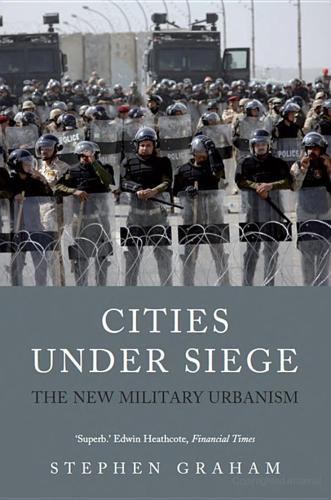
Cities Under Siege: The New Military Urbanism
by Stephen Graham · 30 Oct 2009 · 717pp · 150,288 words

Death Glitch: How Techno-Solutionism Fails Us in This Life and Beyond
by Tamara Kneese · 14 Aug 2023 · 284pp · 75,744 words