
Quantum Computing for Everyone
by Chris Bernhardt · 19 Mar 2019 · 211pp · 57,618 words
need to develop new cryptographic methods—and these new methods should be able to withstand not just classical attacks but also attacks by quantum computers. Post-quantum cryptography is now an extremely active area, with new methods of encryption being developed. Of course, there is no reason why these have to use quantum
…
transformations, 121 Peirce, Charles Sanders, 97 Petzold, Charles, 101 Photosynthesis, 182 Podolsky, Boris, 76 Polarization, 11–15 Polarized filters, 12–15 Polynomial time, 142–144 Post-quantum cryptography, 175 Probability, 37–38 Probability amplitude, 29, 39, 52 Pseudorandom numbers, 15 P versus NP, 144 Pythagorean theorem, 20 Quadratic speedup, 180 Quantized spin, 15
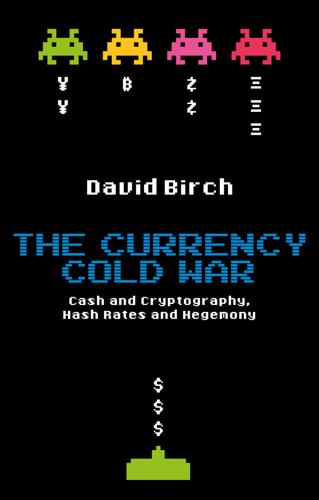
The Currency Cold War: Cash and Cryptography, Hash Rates and Hegemony
by David G. W. Birch · 14 Apr 2020 · 247pp · 60,543 words
e-money could purchase – a useful feature for remittances or philanthropic donations’. That is only the tip of the iceberg, to my mind. An aside: post-quantum cryptography Much of the discussion about meta-technology here rests on the use of asymmetric cryptography (which uses public and private keys), which is at the
…
quantum computation. One is quantum key distribution, or QKD. This exploits the quantum properties of physical systems, so it requires specialized hardware. The other is post-quantum cryptography, or PQC, which, as with existing forms of asymmetric cryptography, exploits the intractability of certain mathematical problems, so it can be implemented in hardware or
…
Control PBoC: People’s Bank of China PEPSI: Pan-European Payment System Initiative PIN: personal identification number Pseudonym: a persistent alias to an identity PQC: post-quantum cryptography SDR: special drawing right SEC: Securities and Exchange Commission SGA (Saga): a partially collateralized stablecoin SHC: synthetic hegemonic currency Sibos: The annual SWIFT banking conference
…
. URL: https://bit.ly/2UabF2C. Chen, L., S. Jordan, Y.-K. Liu, D. Moody, R. Peralta, R. Perlner and D. Smith-Tone. 2016. Report on post-quantum cryptography. National Institute of Standards and Technology, April. Chen, Q. 2019. The good, the bad and the ugly of a Chinese state-backed digital currency. CNBC
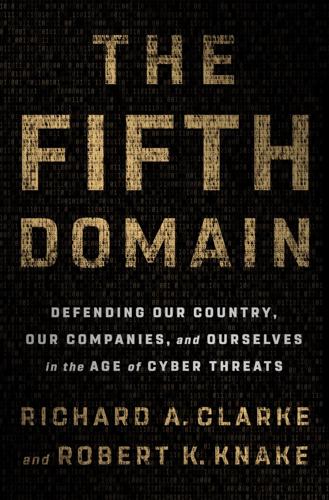
The Fifth Domain: Defending Our Country, Our Companies, and Ourselves in the Age of Cyber Threats
by Richard A. Clarke and Robert K. Knake · 15 Jul 2019 · 409pp · 112,055 words
.com/news/china/society/article/2110563/china-building-worlds-biggest-quantum-research-facility. quantum-resistant encryption standard: “Post-Quantum Cryptography,” National Institute of Standards and Technology, CSRM.NIST.com, accessed January 4, 2019, csrc.nist.gov/projects/post-quantum-cryptography. Chapter 17: 5G and IoT quarter trillion dollars: Hillol Roy, “Tackling the Cost of a 5G