Empire of the Fund: The Way We Save Now
by William A. Birdthistle · 15 May 2016 · 375pp · 106,189 words
are priced just once a day.6 To understand the intricacies and dangers this practice poses to mutual fund investors, we must explore the idiosyncratic pricing mechanism more closely. Consider the challenge involved in figuring out the precise value of an entire mutual fund and, consequently, the price of a single share
Bureaucracy
by David Graeber · 3 Feb 2015 · 252pp · 80,636 words
aristocrat, whose 1944 book Bureaucracy argued that by definition, systems of government administration could never organize information with anything like the efficiency of impersonal market pricing mechanisms. However, extending the vote to the losers of the economic game would inevitably lead to calls for government intervention, framed as high-minded schemes for
Where Good Ideas Come from: The Natural History of Innovation
by Steven Johnson · 5 Oct 2010 · 298pp · 81,200 words
Hayek launched his influential argument in the 1940s about the importance of price signals in market economies, he was observing a related phenomenon: the decentralized pricing mechanism of the marketplace allows an entrepreneur to gauge the relative value of his or her innovation. If you come up with an interesting new contraption

Darwin's Dangerous Idea: Evolution and the Meanings of Life
by Daniel C. Dennett · 15 Jan 1995 · 846pp · 232,630 words
Archimedean point from which global progress could be measured. Is it progress when you have to work an extra job to pay for the high-priced mechanic you have to hire to fix your car when it breaks because it is too complex for you to fix in the way you used
Why Liberalism Failed
by Patrick J. Deneen · 9 Jan 2018 · 215pp · 61,435 words
separation of markets from social and religious contexts but people’s acceptance that their labor and its products were nothing more than commodities subject to price mechanisms, a transformative way of considering people and nature alike in newly utilitarian and individualistic terms. Yet market liberalism required treating both people and natural resources

The Coming Plague: Newly Emerging Diseases in a World Out of Balance
by Laurie Garrett · 31 Oct 1994 · 1,293pp · 357,735 words
: Multinational Drug Companies and the Third World (London: Spokesman Books, 1977); UNCTAD Secretariat, “Dominant Positions of Market Power of Transnational Corporations: Use of the Transfer Pricing Mechanism,” Geneva, November 30, 1977; J. M. Starrels, “The World Health Organization, Resisting Third World Ideological Pressures” (Washington, D.C.: Heritage Foundation, 1985); R. Deitch, “Commentary
Blockchain Revolution: How the Technology Behind Bitcoin Is Changing Money, Business, and the World
by Don Tapscott and Alex Tapscott · 9 May 2016 · 515pp · 126,820 words
go because of a change in relative prices, but because he is ordered to do so.”25 In other words, markets allocate resources via the price mechanism, but firms allocate resources via authoritative direction. Williamson went on to explain that there are two significant coordinating systems. First is the price system for

Emergence
by Steven Johnson · 329pp · 88,954 words
point would be at Level 3, because 1 plus 3 minus 1 equals 3. “He was far”: Jacobs, 2000, 154. A related idea is the pricing mechanism of market economies as an information-processing system, as described by the libertarian demigod Friedrich von Hayek. “Long before the fall of communism, Hayek identified
Derivatives Markets
by David Goldenberg · 2 Mar 2016 · 819pp · 181,185 words
the appropriate risk-minimizing hedge ratio is the beta of the spot price on the futures price, To estimate , we start with the equilibrium forward pricing mechanism when the underlier pays a proportional dividend yield. It says that where Pt is the spot price and is the forward price today (time=t
…
and/or selling pressure that will change prices as they attempt to reach an equilibrium. In brief, there does not exist a consistent, linear, positive pricing mechanism in the presence of arbitrage opportunities. To put the Binomial option pricing model in context, we recall the distinction between two kinds of models, ROP
…
we discussed in Chapter 4, section 4.6.1. This is a critical assumption, and it is needed to generate at least one positive, linear pricing mechanism. In other words, one cannot reasonably price financial instruments in a market that admits arbitrage. 13.5.2 Tool 2, Complete Markets or Replicability and
…
discuss in Chapter 15, section 15.1. Or they could be a stock and a riskless bond. The key point is that all arbitrage-free pricing mechanisms yield the same, therefore unique, price on replicable claims. A market is complete if all reasonable contingent claims are replicable. That is, they can be
…
to uniquely price derivative securities. That is, no-arbitrage is not a sufficient condition for uniquely pricing derivative securities. There are generally many linear, positive pricing mechanisms, all consistent with no-arbitrage, for non-replicable financial claims! Another way to say this is that in an incomplete market, there can be many
…
because no linear, positive pricing mechanism exists in that world. In that case, hedging also hardly makes sense. Once we have a replicating portfolio, then market completeness implies that its price
…
), (FTAP2), then gives us uniqueness of the pricing mechanism. As noted, replication is just another word for hedging. Replication gives us the ability to actually determine the unique price of the derivative security. Why?
…
(N=1). But it is important to recognize that, in complete markets, there can only be one arbitrage-free price for each contingent claim. All pricing mechanisms, while they might look different, will produce exactly the same price on replicable claims. We know that there is a no-arbitrage price, because we
…
-arbitrage condition, we have little hope of pricing even the instruments underlying derivatives, because the first FTAP1 tells us that there is no linear, positive pricing mechanism (EMM) when the market permits arbitrage. There would not even be state prices! No-arbitrage is certainly the basis for pricing financial instruments, and arbitrage
…
Chapter 15, that the existence of a linear, positive pricing mechanism that can be used to price all contingent claims (including the underlying asset), is equivalent to the existence of an EMM for the discounted, underlying
…
pricing, without making further assumptions. Therefore, all that we can prove by using the no-arbitrage assumption only, is that there exists a linear, positive pricing mechanism that can be used to price all assets. Or the existence of an EMM for the discounted underlying price process, which is the same thing
…
’. A reader might easily interpret this as ‘uniquely priced by arbitrage’, since most readers probably don’t think in terms of non-uniqueness of the pricing mechanism in a world of no-arbitrage. However, no claim is uniquely priced by arbitrage, unless it is replicable (FTAP2). Of course, we can’t do
…
portfolio, which is a direct consequence of the assumption of no-arbitrage (or at least of the law of one price (LOP)). Knowing that the pricing mechanism is unique if it exists is nice but rather empty, except in a mathematical sense. However, also as discussed, if we want to claim unique
…
priced within the Black–Scholes scenario. 17.2 FORMAL RISK-NEUTRAL VALUATION WITHOUT REPLICATION 17.2.1 Constructing EMMs Once we have a linear, positive pricing mechanism, it is an easy exercise to determine ‘risk-neutral probabilities’ and an EMM. At this point, it is useful to revisit Chapter 15, section 15
…
equivalent ‘formally risk-neutral’ representation of such prices (an EMM). There will be as many EMMs (risk-neutral representations) as there are non-risk neutral pricing mechanisms implied by no-arbitrage. Note that no-arbitrage (FTAP1) does not say that the only way to price assets in an arbitrage-free market is
…
when discounted by 1+r. It doesn’t follow that this construction represents the only way to derive an EMM from a given, positive linear pricing mechanism. There would be many EMMs for the state prices if they were not replicable in terms of some given (exogenous) assets. 17.2.2 Interpreting
…
different ‘market’ price of risk for each security i, for each investor j. But then, there would be a corresponding number of multiple, linear, positive pricing mechanisms. Turning to completeness (replicability), it follows that uniqueness of the Sharpe ratio (MPR) implies uniqueness of the EMM for the discounted price process, and vice
…
-neutralization of 604; preference-free risk-neutral valuation 598, 600; price contingent claims with unhedgeable risks 599–601; pricing by arbitrage and FTAP2 597–8; pricing mechanism 596; relative risks of hedge portfolio’s return, analysis of 618–24; risk-averse investor in hedge portfolio, role of risk premia for 620–4
Why Information Grows: The Evolution of Order, From Atoms to Economies
by Cesar Hidalgo · 1 Jun 2015 · 242pp · 68,019 words
collection of fluid and frictionless market transactions but a set of islands of conscious power, shielded from each other and from the dynamics of the price mechanisms. Firms are hierarchical, Coase emphasized, and the interactions between a firm’s workers are often political. So in Coase’s view, hiring a worker was
…
firm was brilliant and simple. It was based on the idea that economic transactions are costly and not as fluid as the cheerleaders of the price mechanism religiously believed. Often, market transactions require negotiations, drafting of contracts, setting up inspections, settling disputes, and so on. These transaction costs can help us understand
Unelected Power: The Quest for Legitimacy in Central Banking and the Regulatory State
by Paul Tucker · 21 Apr 2018 · 920pp · 233,102 words

Ellul, Jacques-The Technological Society-Vintage Books (1964)
by Unknown · 7 Jun 2012
Seeing Like a State: How Certain Schemes to Improve the Human Condition Have Failed
by James C. Scott · 8 Feb 1999 · 607pp · 185,487 words

Order Without Design: How Markets Shape Cities
by Alain Bertaud · 9 Nov 2018 · 769pp · 169,096 words

Artificial Intelligence: A Modern Approach
by Stuart Russell and Peter Norvig · 14 Jul 2019 · 2,466pp · 668,761 words
The Battle of Bretton Woods: John Maynard Keynes, Harry Dexter White, and the Making of a New World Order
by Benn Steil · 14 May 2013 · 710pp · 164,527 words
Stigum's Money Market, 4E
by Marcia Stigum and Anthony Crescenzi · 9 Feb 2007 · 1,202pp · 424,886 words
The Means of Prediction: How AI Really Works (And Who Benefits)
by Maximilian Kasy · 15 Jan 2025 · 209pp · 63,332 words
Present Shock: When Everything Happens Now
by Douglas Rushkoff · 21 Mar 2013 · 323pp · 95,939 words
Squeezed: Why Our Families Can't Afford America
by Alissa Quart · 25 Jun 2018 · 320pp · 90,526 words
Superclass: The Global Power Elite and the World They Are Making
by David Rothkopf · 18 Mar 2008 · 535pp · 158,863 words
The Limits of the Market: The Pendulum Between Government and Market
by Paul de Grauwe and Anna Asbury · 12 Mar 2017

The Age of Surveillance Capitalism
by Shoshana Zuboff · 15 Jan 2019 · 918pp · 257,605 words
Rewriting the Rules of the European Economy: An Agenda for Growth and Shared Prosperity
by Joseph E. Stiglitz · 28 Jan 2020 · 408pp · 108,985 words
Investment: A History
by Norton Reamer and Jesse Downing · 19 Feb 2016
Trust: The Social Virtue and the Creation of Prosperity
by Francis Fukuyama · 1 Jan 1995 · 585pp · 165,304 words

Skin in the Game: Hidden Asymmetries in Daily Life
by Nassim Nicholas Taleb · 20 Feb 2018 · 306pp · 82,765 words
Networks, Crowds, and Markets: Reasoning About a Highly Connected World
by David Easley and Jon Kleinberg · 15 Nov 2010 · 1,535pp · 337,071 words
Globalists
by Quinn Slobodian · 16 Mar 2018 · 451pp · 142,662 words

Here Comes Everybody: The Power of Organizing Without Organizations
by Clay Shirky · 28 Feb 2008 · 313pp · 95,077 words
The Evolution of Everything: How New Ideas Emerge
by Matt Ridley · 395pp · 116,675 words

Nomad Citizenship: Free-Market Communism and the Slow-Motion General Strike
by Eugene W. Holland · 1 Jan 2009 · 265pp · 15,515 words
Other People's Money: Masters of the Universe or Servants of the People?
by John Kay · 2 Sep 2015 · 478pp · 126,416 words
Radical Uncertainty: Decision-Making for an Unknowable Future
by Mervyn King and John Kay · 5 Mar 2020 · 807pp · 154,435 words
Mastering Private Equity
by Zeisberger, Claudia,Prahl, Michael,White, Bowen, Michael Prahl and Bowen White · 15 Jun 2017
The Price Is Wrong: Why Capitalism Won't Save the Planet
by Brett Christophers · 12 Mar 2024 · 557pp · 154,324 words
The Sovereign Individual: How to Survive and Thrive During the Collapse of the Welfare State
by James Dale Davidson and William Rees-Mogg · 3 Feb 1997 · 582pp · 160,693 words
The Age of Turbulence: Adventures in a New World (Hardback) - Common
by Alan Greenspan · 14 Jun 2007
Wall Street: How It Works And for Whom
by Doug Henwood · 30 Aug 1998 · 586pp · 159,901 words
Platform Revolution: How Networked Markets Are Transforming the Economy--And How to Make Them Work for You
by Sangeet Paul Choudary, Marshall W. van Alstyne and Geoffrey G. Parker · 27 Mar 2016 · 421pp · 110,406 words
Rise of the Robots: Technology and the Threat of a Jobless Future
by Martin Ford · 4 May 2015 · 484pp · 104,873 words
Where Does Money Come From?: A Guide to the UK Monetary & Banking System
by Josh Ryan-Collins, Tony Greenham, Richard Werner and Andrew Jackson · 14 Apr 2012
Arrival City
by Doug Saunders · 22 Mar 2011 · 366pp · 117,875 words
How We Got Here: A Slightly Irreverent History of Technology and Markets
by Andy Kessler · 13 Jun 2005 · 218pp · 63,471 words
Four Futures: Life After Capitalism
by Peter Frase · 10 Mar 2015 · 121pp · 36,908 words
Doughnut Economics: Seven Ways to Think Like a 21st-Century Economist
by Kate Raworth · 22 Mar 2017 · 403pp · 111,119 words

The Blockchain Alternative: Rethinking Macroeconomic Policy and Economic Theory
by Kariappa Bheemaiah · 26 Feb 2017 · 492pp · 118,882 words
The Social Life of Money
by Nigel Dodd · 14 May 2014 · 700pp · 201,953 words
The Finance Curse: How Global Finance Is Making Us All Poorer
by Nicholas Shaxson · 10 Oct 2018 · 482pp · 149,351 words
Culture and Prosperity: The Truth About Markets - Why Some Nations Are Rich but Most Remain Poor
by John Kay · 24 May 2004 · 436pp · 76 words
Superminds: The Surprising Power of People and Computers Thinking Together
by Thomas W. Malone · 14 May 2018 · 344pp · 104,077 words
An Empire of Wealth: Rise of American Economy Power 1607-2000
by John Steele Gordon · 12 Oct 2009 · 519pp · 148,131 words
The Code of Capital: How the Law Creates Wealth and Inequality
by Katharina Pistor · 27 May 2019 · 316pp · 117,228 words
Basic Income: A Radical Proposal for a Free Society and a Sane Economy
by Philippe van Parijs and Yannick Vanderborght · 20 Mar 2017
How to Be a Liberal: The Story of Liberalism and the Fight for Its Life
by Ian Dunt · 15 Oct 2020
The Quest: Energy, Security, and the Remaking of the Modern World
by Daniel Yergin · 14 May 2011 · 1,373pp · 300,577 words
Automation and the Future of Work
by Aaron Benanav · 3 Nov 2020 · 175pp · 45,815 words
The Great Transformation: The Political and Economic Origins of Our Time
by Karl Polanyi · 27 Mar 2001 · 495pp · 138,188 words

Hacking Capitalism
by Söderberg, Johan; Söderberg, Johan;
The Asian Financial Crisis 1995–98: Birth of the Age of Debt
by Russell Napier · 19 Jul 2021 · 511pp · 151,359 words
Limitarianism: The Case Against Extreme Wealth
by Ingrid Robeyns · 16 Jan 2024 · 327pp · 110,234 words

Austerity Britain: 1945-51
by David Kynaston · 12 May 2008 · 870pp · 259,362 words
Living in a Material World: The Commodity Connection
by Kevin Morrison · 15 Jul 2008 · 311pp · 17,232 words
The New Enclosure: The Appropriation of Public Land in Neoliberal Britain
by Brett Christophers · 6 Nov 2018
The Devil's Derivatives: The Untold Story of the Slick Traders and Hapless Regulators Who Almost Blew Up Wall Street . . . And Are Ready to Do It Again
by Nicholas Dunbar · 11 Jul 2011 · 350pp · 103,270 words

The Fair Trade Scandal: Marketing Poverty to Benefit the Rich
by Ndongo Sylla · 21 Jan 2014 · 193pp · 63,618 words
Life Inc.: How the World Became a Corporation and How to Take It Back
by Douglas Rushkoff · 1 Jun 2009 · 422pp · 131,666 words

Understanding Sponsored Search: Core Elements of Keyword Advertising
by Jim Jansen · 25 Jul 2011 · 298pp · 43,745 words

After Tamerlane: The Global History of Empire Since 1405
by John Darwin · 5 Feb 2008 · 650pp · 203,191 words
Reinventing the Bazaar: A Natural History of Markets
by John McMillan · 1 Jan 2002 · 350pp · 103,988 words
Postcapitalism: A Guide to Our Future
by Paul Mason · 29 Jul 2015 · 378pp · 110,518 words
Never Let a Serious Crisis Go to Waste: How Neoliberalism Survived the Financial Meltdown
by Philip Mirowski · 24 Jun 2013 · 662pp · 180,546 words
The Inner Lives of Markets: How People Shape Them—And They Shape Us
by Tim Sullivan · 6 Jun 2016 · 252pp · 73,131 words
The Bitcoin Standard: The Decentralized Alternative to Central Banking
by Saifedean Ammous · 23 Mar 2018 · 571pp · 106,255 words
Imagining India
by Nandan Nilekani · 25 Nov 2008 · 777pp · 186,993 words
Unconventional Success: A Fundamental Approach to Personal Investment
by David F. Swensen · 8 Aug 2005 · 490pp · 117,629 words
Sabotage: The Financial System's Nasty Business
by Anastasia Nesvetailova and Ronen Palan · 28 Jan 2020 · 218pp · 62,889 words
Nine Crises: Fifty Years of Covering the British Economy From Devaluation to Brexit
by William Keegan · 24 Jan 2019 · 309pp · 85,584 words
Reinventing Capitalism in the Age of Big Data
by Viktor Mayer-Schönberger and Thomas Ramge · 27 Feb 2018 · 267pp · 72,552 words
Future Politics: Living Together in a World Transformed by Tech
by Jamie Susskind · 3 Sep 2018 · 533pp
The Rise and Fall of the Great Powers: Economic Change and Military Conflict From 1500 to 2000
by Paul Kennedy · 15 Jan 1989 · 1,477pp · 311,310 words
The Tyranny of Nostalgia: Half a Century of British Economic Decline
by Russell Jones · 15 Jan 2023 · 463pp · 140,499 words
Vulture Capitalism: Corporate Crimes, Backdoor Bailouts, and the Death of Freedom
by Grace Blakeley · 11 Mar 2024 · 371pp · 137,268 words

The Sirens' Call: How Attention Became the World's Most Endangered Resource
by Chris Hayes · 28 Jan 2025 · 359pp · 100,761 words
Trading Risk: Enhanced Profitability Through Risk Control
by Kenneth L. Grant · 1 Sep 2004
Rentier Capitalism: Who Owns the Economy, and Who Pays for It?
by Brett Christophers · 17 Nov 2020 · 614pp · 168,545 words
Global Spin: The Corporate Assault on Environmentalism
by Sharon Beder · 1 Jan 1997 · 651pp · 161,270 words
After the Music Stopped: The Financial Crisis, the Response, and the Work Ahead
by Alan S. Blinder · 24 Jan 2013 · 566pp · 155,428 words
Keynes Hayek: The Clash That Defined Modern Economics
by Nicholas Wapshott · 10 Oct 2011 · 494pp · 132,975 words
Free Market Missionaries: The Corporate Manipulation of Community Values
by Sharon Beder · 30 Sep 2006 · 273pp · 34,920 words
The Wealth of Humans: Work, Power, and Status in the Twenty-First Century
by Ryan Avent · 20 Sep 2016 · 323pp · 90,868 words
The End of Alchemy: Money, Banking and the Future of the Global Economy
by Mervyn King · 3 Mar 2016 · 464pp · 139,088 words
India's Long Road
by Vijay Joshi · 21 Feb 2017
Lying for Money: How Fraud Makes the World Go Round
by Daniel Davies · 14 Jul 2018 · 294pp · 89,406 words
Adam Smith: Father of Economics
by Jesse Norman · 30 Jun 2018
Private Empire: ExxonMobil and American Power
by Steve Coll · 30 Apr 2012 · 944pp · 243,883 words
Red Flags: Why Xi's China Is in Jeopardy
by George Magnus · 10 Sep 2018 · 371pp · 98,534 words
Fully Automated Luxury Communism
by Aaron Bastani · 10 Jun 2019 · 280pp · 74,559 words
Markets, State, and People: Economics for Public Policy
by Diane Coyle · 14 Jan 2020 · 384pp · 108,414 words
Growth: A Reckoning
by Daniel Susskind · 16 Apr 2024 · 358pp · 109,930 words

Magic Internet Money: A Book About Bitcoin
by Jesse Berger · 14 Sep 2020 · 108pp · 27,451 words
A Brief History of Neoliberalism
by David Harvey · 2 Jan 1995 · 318pp · 85,824 words
The Great Economists Ten Economists whose thinking changed the way we live-FT Publishing International (2014)
by Phil Thornton · 7 May 2014
Cogs and Monsters: What Economics Is, and What It Should Be
by Diane Coyle · 11 Oct 2021 · 305pp · 75,697 words
Currency Wars: The Making of the Next Gobal Crisis
by James Rickards · 10 Nov 2011 · 381pp · 101,559 words
The Misbehavior of Markets: A Fractal View of Financial Turbulence
by Benoit Mandelbrot and Richard L. Hudson · 7 Mar 2006 · 364pp · 101,286 words

Global Governance and Financial Crises
by Meghnad Desai and Yahia Said · 12 Nov 2003
Understanding Asset Allocation: An Intuitive Approach to Maximizing Your Portfolio
by Victor A. Canto · 2 Jan 2005 · 337pp · 89,075 words
The Innovation Illusion: How So Little Is Created by So Many Working So Hard
by Fredrik Erixon and Bjorn Weigel · 3 Oct 2016 · 504pp · 126,835 words
Losing Control: The Emerging Threats to Western Prosperity
by Stephen D. King · 14 Jun 2010 · 561pp · 87,892 words
War and Gold: A Five-Hundred-Year History of Empires, Adventures, and Debt
by Kwasi Kwarteng · 12 May 2014 · 632pp · 159,454 words
The Default Line: The Inside Story of People, Banks and Entire Nations on the Edge
by Faisal Islam · 28 Aug 2013 · 475pp · 155,554 words
End the Fed
by Ron Paul · 5 Feb 2011
Digital Disconnect: How Capitalism Is Turning the Internet Against Democracy
by Robert W. McChesney · 5 Mar 2013 · 476pp · 125,219 words
What Would the Great Economists Do?: How Twelve Brilliant Minds Would Solve Today's Biggest Problems
by Linda Yueh · 4 Jun 2018 · 453pp · 117,893 words
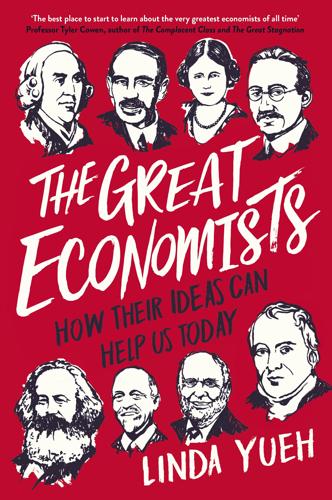
The Great Economists: How Their Ideas Can Help Us Today
by Linda Yueh · 15 Mar 2018 · 374pp · 113,126 words
Net Zero: How We Stop Causing Climate Change
by Dieter Helm · 2 Sep 2020 · 304pp · 90,084 words
Money for Nothing
by Thomas Levenson · 18 Aug 2020 · 495pp · 136,714 words
The Power Law: Venture Capital and the Making of the New Future
by Sebastian Mallaby · 1 Feb 2022 · 935pp · 197,338 words
Value Investing: From Graham to Buffett and Beyond
by Bruce C. N. Greenwald, Judd Kahn, Paul D. Sonkin and Michael van Biema · 26 Jan 2004 · 306pp · 97,211 words
MegaThreats: Ten Dangerous Trends That Imperil Our Future, and How to Survive Them
by Nouriel Roubini · 17 Oct 2022 · 328pp · 96,678 words
Our Dollar, Your Problem: An Insider’s View of Seven Turbulent Decades of Global Finance, and the Road Ahead
by Kenneth Rogoff · 27 Feb 2025 · 330pp · 127,791 words

Patriot Games
by Tom Clancy · 2 Jan 1987
Marxian Economic Theory
by Meghnad Desai · 20 May 2013

Mobility: A New Urban Design and Transport Planning Philosophy for a Sustainable Future
by John Whitelegg · 1 Sep 2015 · 224pp · 69,494 words
The Future of Ideas: The Fate of the Commons in a Connected World
by Lawrence Lessig · 14 Jul 2001 · 494pp · 142,285 words

The Atlantic and Its Enemies: A History of the Cold War
by Norman Stone · 15 Feb 2010 · 851pp · 247,711 words

Iron Curtain: The Crushing of Eastern Europe, 1945-1956
by Anne Applebaum · 30 Oct 2012 · 934pp · 232,651 words
The Price of Time: The Real Story of Interest
by Edward Chancellor · 15 Aug 2022 · 829pp · 187,394 words
What Money Can't Buy: The Moral Limits of Markets
by Michael Sandel · 26 Apr 2012 · 231pp · 70,274 words
The End of Power: From Boardrooms to Battlefields and Churches to States, Why Being in Charge Isn’t What It Used to Be
by Moises Naim · 5 Mar 2013 · 474pp · 120,801 words
Samuelson Friedman: The Battle Over the Free Market
by Nicholas Wapshott · 2 Aug 2021 · 453pp · 122,586 words
Broken Markets: How High Frequency Trading and Predatory Practices on Wall Street Are Destroying Investor Confidence and Your Portfolio
by Sal Arnuk and Joseph Saluzzi · 21 May 2012 · 318pp · 87,570 words
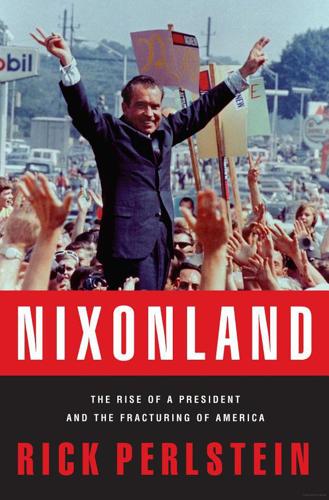
Nixonland: The Rise of a President and the Fracturing of America
by Rick Perlstein · 1 Jan 2008 · 1,351pp · 404,177 words
When the Money Runs Out: The End of Western Affluence
by Stephen D. King · 17 Jun 2013 · 324pp · 90,253 words
Transaction Man: The Rise of the Deal and the Decline of the American Dream
by Nicholas Lemann · 9 Sep 2019 · 354pp · 118,970 words

Randomistas: How Radical Researchers Changed Our World
by Andrew Leigh · 14 Sep 2018 · 340pp · 94,464 words
Rebooting India: Realizing a Billion Aspirations
by Nandan Nilekani · 4 Feb 2016 · 332pp · 100,601 words
The Truth Machine: The Blockchain and the Future of Everything
by Paul Vigna and Michael J. Casey · 27 Feb 2018 · 348pp · 97,277 words
The New Map: Energy, Climate, and the Clash of Nations
by Daniel Yergin · 14 Sep 2020
Paper Money Collapse: The Folly of Elastic Money and the Coming Monetary Breakdown
by Detlev S. Schlichter · 21 Sep 2011 · 310pp · 90,817 words
The Corona Crash: How the Pandemic Will Change Capitalism
by Grace Blakeley · 14 Oct 2020 · 82pp · 24,150 words
The Devil's Playground: A Century of Pleasure and Profit in Times Square
by James Traub · 1 Jan 2004 · 341pp · 116,854 words
Suburban Nation
by Andres Duany, Elizabeth Plater-Zyberk and Jeff Speck · 14 Sep 2010 · 321pp · 85,267 words
Seriously Curious: The Facts and Figures That Turn Our World Upside Down
by Tom Standage · 27 Nov 2018 · 215pp · 59,188 words
The Tyranny of Metrics
by Jerry Z. Muller · 23 Jan 2018 · 204pp · 53,261 words

The Marginal Revolutionaries: How Austrian Economists Fought the War of Ideas
by Janek Wasserman · 23 Sep 2019 · 470pp · 130,269 words
The Bond King: How One Man Made a Market, Built an Empire, and Lost It All
by Mary Childs · 15 Mar 2022 · 367pp · 110,161 words

No One Would Listen: A True Financial Thriller
by Harry Markopolos · 1 Mar 2010 · 431pp · 132,416 words
Stolen: How to Save the World From Financialisation
by Grace Blakeley · 9 Sep 2019 · 263pp · 80,594 words
China's Superbank
by Henry Sanderson and Michael Forsythe · 26 Sep 2012
Road to Nowhere: What Silicon Valley Gets Wrong About the Future of Transportation
by Paris Marx · 4 Jul 2022 · 295pp · 81,861 words
Left Behind
by Paul Collier · 6 Aug 2024 · 299pp · 92,766 words
The Hidden History of Burma
by Thant Myint-U
Servant Economy: Where America's Elite Is Sending the Middle Class
by Jeff Faux · 16 May 2012 · 364pp · 99,613 words
Pivotal Decade: How the United States Traded Factories for Finance in the Seventies
by Judith Stein · 30 Apr 2010 · 497pp · 143,175 words
On the Brink: Inside the Race to Stop the Collapse of the Global Financial System
by Henry M. Paulson · 15 Sep 2010 · 468pp · 145,998 words

No Such Thing as a Free Gift: The Gates Foundation and the Price of Philanthropy
by Linsey McGoey · 14 Apr 2015 · 324pp · 93,606 words
Narconomics: How to Run a Drug Cartel
by Tom Wainwright · 23 Feb 2016 · 325pp · 90,659 words
Exceptional People: How Migration Shaped Our World and Will Define Our Future
by Ian Goldin, Geoffrey Cameron and Meera Balarajan · 20 Dec 2010 · 482pp · 117,962 words
Oil: Money, Politics, and Power in the 21st Century
by Tom Bower · 1 Jan 2009 · 554pp · 168,114 words
The Financial Crisis and the Free Market Cure: Why Pure Capitalism Is the World Economy's Only Hope
by John A. Allison · 20 Sep 2012 · 348pp · 99,383 words

Last Trains: Dr Beeching and the Death of Rural England
by Charles Loft · 27 Mar 2013 · 383pp · 98,179 words
The Trouble With Billionaires
by Linda McQuaig · 1 May 2013 · 261pp · 81,802 words
Tomorrow's Capitalist: My Search for the Soul of Business
by Alan Murray · 15 Dec 2022 · 263pp · 77,786 words
Private Island: Why Britain Now Belongs to Someone Else
by James Meek · 18 Aug 2014 · 232pp · 77,956 words
The Dhandho Investor: The Low-Risk Value Method to High Returns
by Mohnish Pabrai · 17 May 2009 · 172pp · 49,890 words
The Asylum: The Renegades Who Hijacked the World's Oil Market
by Leah McGrath Goodman · 15 Feb 2011 · 553pp · 168,111 words
Wild Ride: Inside Uber's Quest for World Domination
by Adam Lashinsky · 31 Mar 2017 · 190pp · 62,941 words