What the Dormouse Said: How the Sixties Counterculture Shaped the Personal Computer Industry
by
John Markoff
Published 1 Jan 2005
Please purchase only authorized electronic editions, and do not participate in or encourage electronic piracy of copyrighted materials. Your support of the author’s rights is appreciated. TO LESLIE CONTENTS Preface 1 | The Prophet and the True Believers 2 | Augmentation 3 | Red-Diaper Baby 4 | Free U 5 | Dealing Lightning 6 | Scholars and Barbarians 7 | Momentum 8 | Borrowing Fire from the Gods Acknowledgments Notes Bibliography Index When logic and proportion Have fallen sloppy dead And the White Knight is talking backwards And the Red Queen’s “Off with her head!”
…
There was a fair amount of muttering and whispering about the “SOG [Special Operations Group] contract,” but the Man with No Name had vanished. It was just a hint of what was to come. Spurred on by Bob Taylor, at the end of 1968 the Augment Group decided it needed to raise its profile and invite the outside world to see what they had done. Opening the door would change everything. 3| RED-DIAPER BABY Bill Pitts was a loner, in that typical math-science-nerd way. Growing up during the sixties in Palo Alto, he had top grades in high school and was accepted as a freshman at Stanford University in 1965. It was in that year that the school had finally established a computer-science department, and Pitts’s first course was, fittingly, “Introduction to Computer Science,” taught by the founder of the department, George Forsythe.
…
He had invented the LISP programming language, a highly flexible tool that during the sixties became the standard for artificial-intelligence researchers, and he had pioneered the modern time-shared operating systems that would become the foundation of interactive computing. McCarthy had been born a “Red-Diaper Baby” in Boston in 1927, with both his parents active in the Communist Party. His father, John Patrick McCarthy, was an Irish immigrant who later became business manager of the Communist Party organ The Daily Worker after the family moved to Los Angeles because of their young son’s health problems.
Radical Chic & Mau-Mauing the Flak Catchers
by
Tom Wolfe
Published 1 Jan 1970
But forced by 20th as well as 19th century history to remain on guard against right-wing movements, even wealthy and successful Jewish families have tended to remain faithful to their original liberal-left worldview. In fact, according to Seymour Martin Lipset, Nathan Glazer, and Kenneth Keniston, an unusually high proportion of campus militants come from well-to-do Jewish families. They have developed the so-called “red diaper baby” theory to explain it. According to Lipset, many Jewish children have grown up in families which “around the breakfast table, day after day, in Scarsdale, Newton, Great Neck and Beverly Hills,” have discussed racist and reactionary tendencies in American society. Lipset speaks of the wealthy Jewish family with the “right-wing life style” (e.g. a majority of Americans outside of the South who have full-time servants are Jewish, according to a study by Lipset, Glazer and Herbert Hyman) and the “left-wing outlook.”
Socialism Sucks: Two Economists Drink Their Way Through the Unfree World
by
Robert Lawson
and
Benjamin Powell
Published 29 Jul 2019
His answer, and I swear this is true, was that he saw a Che T-shirt at a bar one night and decided to research Che and the Cuban Revolution. Make fun of the propaganda T-shirts all you want, but they recruit new comrades to the cause. Our friend Daniel Serralde actually comes from a socialist family. When a young lady at the bar overheard this she practically gushed, “Oh my gawd, are you a red diaper baby?!” He said, “Almost.” Daniel explained that his grandfather was Basque and Jewish and fought with the Republicans against Franco. “COOL!” she practically squealed. Having a relative who fought against the fascists gives you some serious street cred with this crowd. Bob talked to two young women who had progressed from pro-choice activism to full-blown socialist activism; and, indeed, abortion and environmental activism seem to be common gateway drugs to socialism.
Half Empty
by
David Rakoff
Published 20 Sep 2010
“I remember I was five or six and I was telling my grandmother a story that somehow involved me eating a ham-and-cheese sandwich, and I remember thinking, ‘Oh, that’s not kosher,’ so I changed it to a plain ham sandwich. She was horrified and I quickly said, ‘No, no! It wasn’t ham, it looked like ham but it wasn’t!’ I was covering.” A Red-diaper baby, raised according to the precepts of good old-fashioned pinko socialism, becomes an entertainment lawyer, successful enough that he can afford to send his son to that august private institution, the Trinity School on Manhattan’s Upper West Side. One day, the man’s eight-year-old son comes home and says, “Dad, we learned about the name of our school today.
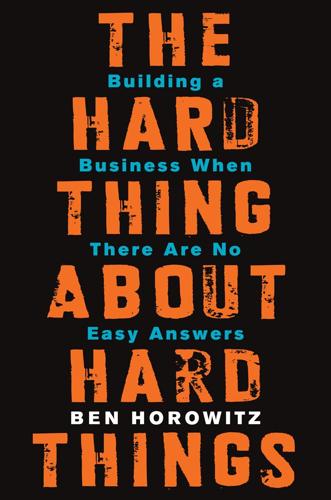
The Hard Thing About Hard Things: Building a Business When There Are No Easy Answers
by
Ben Horowitz
Published 4 Mar 2014
I remember it well, because my mother got very upset that the Communist Party sent me into the projects. She thought it was too dangerous for a little kid.” My grandparents were actually card-carrying Communists. As an active member in the Communist Party, my grandfather Phil Horowitz lost his job as a schoolteacher during the McCarthy era. My father was a red-diaper baby and grew up indoctrinated in the philosophy of the left. In 1968, he moved our family west to Berkeley, California, and became editor of the famed New Left magazine Ramparts. As a result, I grew up in the city affectionately known by its inhabitants as the People’s Republic of Berkeley. As a young child, I was incredibly shy and terrified of adults.
The Cult of Smart: How Our Broken Education System Perpetuates Social Injustice
by
Fredrik Deboer
Published 3 Aug 2020
I had no prospects and no other direction, in part because my passion for the prior seven years had not been school or a job, but activism. If education was home, socialism was family. My parents were radicals, unapologetic leftists who infused our household with radical ideals and revolutionary symbols. My father had been a red diaper baby. His father, who died long before I was born, had been an avowed socialist professor and an explicit target of the Broyles Bills, a set of proto-McCarthyite anti-communist legislation in Illinois. His mother was a fierce activist and champion of civil rights and civil liberties. She won a lifetime achievement award from the state ACLU, and in the speech given on her behalf, she was said to have a habit of “slipping the knife in so gently.”
What's the Matter with White People
by
Joan Walsh
Published 19 Jul 2012
I’d landed in a place that reinforced my father’s earliest political lessons: that the interests of black people and the working class didn’t have to be, and in fact should never be, in conflict. Weinstein also made me realize how unusual my political views were, given my background. At In These Times, people were always assuming I was a “red diaper baby” from some left-wing activist family, given my eccentric ideas and passions. No, I’d tell them, my father was a former Christian Brother with no left-wing affiliations, just Catholic values. My stubborn belief in the possibility and power of a black-labor alliance seemed to be rewarded, right there and then in Chicago, by Harold Washington’s unbelievable mayoral campaign in 1983—which was the happiest political experience of my lifetime, at least until Obama’s election.
The Socialist Manifesto: The Case for Radical Politics in an Era of Extreme Inequality
by
Bhaskar Sunkara
Published 1 Feb 2019
Even at the age of thirteen, I saw the difference that access to quality public goods made and thought of myself as a committed liberal, in the best American sense. My turn to socialism may have been organic, but it certainly wasn’t an awakening. Like many a middle-class kid before me, I found radicalism through books. My local library had heaps of socialist literature, most of them donated by red diaper babies and Jewish cultural associations. By chance, I picked up Leon Trotsky’s My Life the summer after seventh grade, didn’t particularly like it (still don’t), but was sufficiently intrigued to read the Isaac Deutscher biographies of Trotsky, the works of democratic socialist thinkers including Michael Harrington and Ralph Miliband, and eventually the mysterious Karl Marx himself.
Dreaming in Public: Building the Occupy Movement
by
Amy Lang
and
Daniel Lang/levitsky
Published 11 Jun 2012
Why do you have ready answers for those questions? You know some Mormons are black… but you get my point. All great movements have had tribal aspects – communism, back when communism mattered, was intensely tribal. There were communist hospitals, communist restaurants, communist marriages, and that great cliché, the red diaper baby, to carry the tribe forward a generation. When environmentalists were actually a threat (think Earth First! or No M11) they were so tribal that the majority of participants in a campaign may not even have been able to articulate the issues at stake, but were still able to contribute mightily to the effort.
The Big Sort: Why the Clustering of Like-Minded America Is Tearing Us Apart
by
Bill Bishop
and
Robert G. Cushing
Published 6 May 2008
In one difference from Bob Cushing's analysis, Keeter slightly changed the dividing line for a strong partisan county. Instead of a io-point difference, Keeter designated "landslide" counties as those with 20-point margins. Just under half the voters in 2004 lived in one of these counties. 6. Phillip Longman, "The Liberal Baby Bust," USA Today, March 14, 2006; David Brooks, "The New Red-Diaper Babies," New York Times, December 7, 2004; Joel Kotkin and William Frey, "Parent Trap," New Repuhlic, December 2, 2004, http://www.joelkotkm.com/Politics/NR%20Parent_Trap.htm. 7. Ronald Brownstein, "As Democrats Look West, Colorado Budges," Los Angeles Times, September 28, 2006. 8. Bob Cushing used county-to-county migration data provided by the IRS to do this analysis. 3.
Machines of Loving Grace: The Quest for Common Ground Between Humans and Robots
by
John Markoff
Published 24 Aug 2015
Lee Felsenstein is the product of this eclectic mix of politics and technology. He grew up in Philadelphia, the son of a mother who was an engineer and a father who was a commercial artist employed in a locomotive factory. Growing up in a tech-centric home was complicated by the fact that he was a “red diaper baby.” His father was a member of the U.S. Communist Party, committed enough to the cause that he named Lee’s brother Joe after Stalin.7 However, like many children of Party members, Lee wouldn’t learn that his parents were Communists until he was a young adult—he abruptly lost his summer college work-study position at Edwards Air Force Base, having failed a background investigation.
Poking a Dead Frog: Conversations With Today's Top Comedy Writers
by
Mike Sacks
Published 23 Jun 2014
I heard that diphtheria story many times. My parents were both forty-two when they had me in 1954. They were a link to another time and place, and that affected me greatly. A lot of my friends had parents who had experienced the excitement and the prosperity of the fifties, whether they were “red-diaper babies” or “Eisenhower babies.” My parents didn’t seem to know anything of that; I might as well have been raised during the Depression. My parents grew up poor in households that spoke mostly Yiddish. They were from the Old World. How did your parents feel when you achieved success? Did they understand your cartoons?
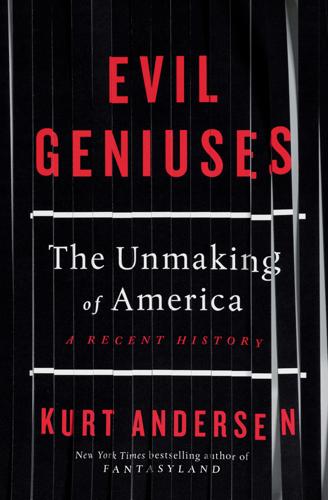
Evil Geniuses: The Unmaking of America: A Recent History
by
Kurt Andersen
Published 14 Sep 2020
Thus, like Democratic politicians in Washington at the same time, media people became enablers of the national change in perspective from left to right concerning economics. I’m not claiming that labor unions are always virtuous or aren’t frequently annoying. Parochial, shortsighted, and other kinds of misguided, with a rich history of racism, sexism, and corruption—construct your own critique. I heard every criticism growing up as the opposite of a red-diaper baby; my father was a lawyer whose practice was negotiating with unions on behalf of employers. But they or equivalent vehicles must exist and have serious power. It’s a question of achieving a decent balance, a dynamic tension and equilibrium among the various players in the political economy—workers and employers and citizens.
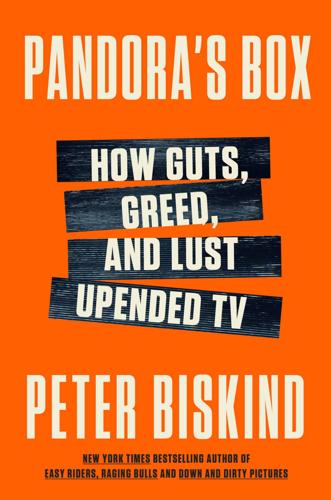
Pandora's Box: How Guts, Guile, and Greed Upended TV
by
Peter Biskind
Published 6 Nov 2023
I wasn’t going to dilute our programming with little pieces of shit.”7 Counterprogramming the networks with no money meant stand-up comedy (the young Steve Martin, Robin Williams, et al.), concerts, live sports, and documentaries, run by Sheila Nevins, whom Fuchs poached from CBS in 1979. Nevins eventually made something like 1,200 of them for HBO, and over the course of her career she won more than thirty Emmys and fifteen Peabodys. Nevins was a red diaper baby who grew up on New York’s Lower East Side. “When I first met Michael, he was going to play tennis with somebody. He was wearing shorts, sneakers, and his feet were up on the desk and I could see into his crotch. I thought, This is the kind of job where people play tennis in the middle of the day.
NeuroTribes: The Legacy of Autism and the Future of Neurodiversity
by
Steve Silberman
Published 24 Aug 2015
Raffles, the gentleman thief created as the anti–Sherlock Holmes by Conan Doyle’s brother-in-law, E. W. Hornung. After graduation, he embarked on a bike tour of Europe, returning just a couple of days before his wedding. Price was confused that his fiancée was upset; hadn’t he come back in time as he said he would? Like McCarthy, Felsenstein was also a Red Diaper Baby: his parents were members of the Communist party in the 1950s, and his father, Jacob, was a commercial artist who always made sure that there were plenty of art supplies around for his three children. In third grade, Lee would sketch exhaust pipes and compressors while coming up with schemes for redesigning automobiles to reduce air pollution.
And Here's the Kicker: Conversations with 21 Top Humor Writers on Their Craft
by
Mike Sacks
Published 8 Jul 2009
I heard that diphtheria story many times. My parents were both forty-two when they had me in 1954. They were a link to another time and place, and that affected me greatly. A lot of my friends had parents who had experienced the excitement and the prosperity of the fifties, whether they were “red-diaper babies” or “Eisenhower babies.” My parents didn't seem to know anything of that; I might as well have been raised during the Depression. My parents grew up poor in households that spoke mostly Yiddish. They were from the Old World. How did your parents feel when you achieved success? Did they understand your cartoons?
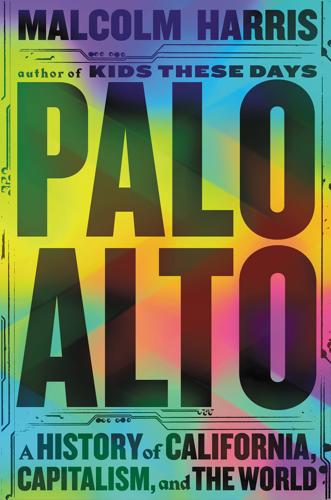
Palo Alto: A History of California, Capitalism, and the World
by
Malcolm Harris
Published 14 Feb 2023
vi “I came out of a society in San Francisco and in California of where I was with the Merchant Marines and they had taken our union—you know, and they had—we were mess boys and cooks anyway. So they had taken that and taken it from us and put us in jail and called us communists.” Oral history interview with Joe Overstreet, March 17–18, 2010, Archives of American Art, Smithsonian Institution. vii Allen Ginsberg was a red diaper baby and describes the American overthrow of the Mossaddegh (Iran) and Arbenz (Guatemala) governments in the early ’50s as important for his consciousness, but he characterized himself as “neutral” in the Cold War, against Eastern Bloc authoritarianism and homophobia. In Ginsberg’s diary he recounts a dream I read as particularly meaningful: “Emerging up from 3rd class to First on great oceanliner—up the staircase to the deck—First thing I meet, huge faded negro Paul Robeson—in officer’s uniform—I salute him introducing myself which doesn’t mean much to him—he bows—I begin scheming immediately—Being a big officer Communist negro all these years perhaps he could get me a book in the NMU so I can ship out?