The Great Leveler: Violence and the History of Inequality From the Stone Age to the Twenty-First Century
by Walter Scheidel · 17 Jan 2017 · 775pp · 208,604 words
. Lemieux, Thomas. 2006. “Post-secondary education and increasing wage inequality.” American Economic Review 96: 195–199. Leonard, Carol S. 2011. Agrarian reform in Russia: the road to serfdom. New York: Cambridge University Press. Le Roy Ladurie, Emmanuel. 1966. Les paysans de Languedoc. 2 vols. Paris: Mouton. Levy, Frank, and Temin, Peter. 2007. “Inequality
Owning the Earth: The Transforming History of Land Ownership
by Andro Linklater · 12 Nov 2013 · 603pp · 182,826 words
Mises’s students, Friederich von Hayek—in later life he dropped the “von”—wholeheartedly adopted his mentor’s suspicion of government. His bestselling book, The Road to Serfdom, published in 1944, was a savage hymn to the belief that economic freedom could be equated to individual liberty. There was no difference between Fascism
…
History, 1848–1938 by William M. Johnston (Berkeley, CA: University of California Press, 1995), 77–82. economic freedom could be equated to individual liberty: The Road to Serfdom appeared in a shortened, best-selling Reader’s Digest version, but the original is definitive (London: Routledge, 1944). “This is what we believe in.”: Story
…
and England, originally part of Chronicles of England by Raphael Hollinshed. 1578. Hayek, Friederich. The Constitution of Liberty. Chicago: University of Chicago Press, 1960. ———. The Road to Serfdom. London: Routledge, 1944. Hayes, Edward. Sir Humphrey Gilbert’s Voyage to Newfoundland in Richard Hakluyt’s The Principall Navigations, Voiages and Discoveries of the English

The Age of Extraction: How Tech Platforms Conquered the Economy and Threaten Our Future Prosperity
by Tim Wu · 4 Nov 2025 · 246pp · 65,143 words
gone well. Most dangerous of all, it has a track record of creating conditions conducive to the rise of an authoritarian strongman. The Real Road to Serfdom The real road to serfdom—to an authoritarian state—runs through the imbalance of economic power, and a platform economy contributes to that problem. What do I mean by
…
the road to serfdom? The phrase comes from Austrian economist Friedrich Hayek, who believed that a well-meaning government, as it expanded and began to engage in centralized economic
…
figures. But over the longer term, the track record of authoritarian dictators leaves much to be desired. They are the figures who turn the slow road to serfdom into an expressway. This is the sequence. The question is how to break it. Chapter 12 Some Solutions And what’s your system of belief
…
to extraction, which leads to anger, which leads to hate—you get the idea. The night watchman does nothing while the country travels the real road to serfdom, in which popular anger about concentrated wealth yields revolution and an authoritarian dictator. That’s why the ideal state, economically speaking, should be understood not
The Great Transformation: The Political and Economic Origins of Our Time
by Karl Polanyi · 27 Mar 2001 · 495pp · 138,188 words
reimport it from Vienna. 3. By coincidence, Polanyi’s book was first published in the same year that Hayek published his most famous book, The Road to Serfdom (Chicago: University of Chicago Press, 1944). While Polanyi’s work celebrated the New Deal in the United States precisely because it placed limits on the
The Tyranny of Experts: Economists, Dictators, and the Forgotten Rights of the Poor
by William Easterly · 4 Mar 2014 · 483pp · 134,377 words
government. Mention liberty too often and you are presumed to be in favor of some extreme right-wing ideology. Mention Friedrich Hayek’s book The Road to Serfdom and you are presumed to be to the right of ranting talk-show hosts. Less commonly recognized is a perceptional slippery slope on the left
…
the Locarno-Barcelona air line before it was stopped.” 21 It would be a while before Hayek got confirmation that Mises had indeed escaped. THE ROAD TO SERFDOM We will see throughout the present book that there are many excuses offered for avoiding debate of the ideas of anyone who advocates the free
…
received a reply from development thinkers; they simply ignored the author and his book. The author was Friedrich Hayek and the 1944 book was The Road to Serfdom. The excuse for ignoring Hayek is that he may or may not have implied a “slippery slope” in which any state intervention in the economy
…
had ever had a bad idea, we would have very few good ideas left. The slippery-slope idea may have stuck to Hayek because The Road to Serfdom was alarmist about the threat to freedom in the United Kingdom that would emerge after World War II. We can cut Hayek a little slack
…
-wing extremist. In truth, as we have already seen above, there is ample evidence that Hayek was not the conservative ideologue his critics claimed. The Road to Serfdom advocated such nonconservative ideas as a minimum income guaranteed by the state: “there can be no doubt that some minimum of food, shelter, and clothing
…
In fact, Hayek condemned some of the very people he was identified with by his critics. In the pages of the 1956 version of The Road to Serfdom, he said British Conservatives were “paternalistic, nationalistic, and power-adoring . . . traditionalistic, anti-intellectual, and often mystical.”23 Hayek himself acknowledged after the fact that he
…
had attracted some followers with whom he did not agree, at some cost to himself: “the manner in which [The Road to Serfdom] was used [in the United States] vividly brought home to me the truth of Lord Acton’s observation that ‘at all times sincere friends of
…
for knee-jerk rejection of Hayek as an ideological extremist. Ignoring the slippery-slope controversy, this chapter covers some of the good ideas of The Road to Serfdom, many of which contradict the usual image of the book. The nonalarmist part of his book was a defense of individual rights, an explanation of
…
easy to see the appeal of solutions that promised to work everywhere in the Third World. Hayek addressed a Blank Slate mind-set in The Road to Serfdom when he criticized beliefs that one could simply erase the old and start over, the belief that “further advance could not be expected along the
…
made the great strides which in the last hundred and fifty years have changed the face of the world.”28 But now, in 1944’s Road to Serfdom, Hayek feared there was a new disregard for learning from history about what “had made past progress possible.” He also noticed the assumption of a
…
development blogs, and nobody called Barder a right-wing extremist.44 Hayek was unlucky to be ahead of his time. A large part of The Road to Serfdom was about what he called “spontaneous order.” Among the examples he gave were markets, the evolution of the rule of law, and the evolution of
…
. Things will happen in well-organized efforts without direction, controls, plans. That’s the consensus among economists. That’s the Hayek legacy.”47 In The Road to Serfdom, Hayek had first of all stressed the insight that today excites us about undesigned order (as summarized above in the Barder talk): “the spontaneous and
…
insistent that unchecked power could not be trusted to be held by “the wise and the good” that he devoted a whole chapter of The Road to Serfdom to “Why the Worst Get on Top.” In an autocratic system, Hayek noted, “there will be special opportunities for the ruthless and unscrupulous.”61 In
…
panel of prominent economists selected Hayek’s article as one of the top twenty articles of the last century in the American Economic Review. (The Road to Serfdom expounded the same ideas in accessible form; ironically, the ideas that harmed Hayek’s reputation in the public marketplace of ideas enhanced his reputation in
…
unanimity was something to brag about, something that showed how strong his case was for technocratic development. Hayek, on the other hand, argued in The Road to Serfdom that dissent from the consensus was necessary for the “life of thought”: “So long as dissent is not suppressed, there will always be some who
…
rights of the Chinese. In 1944 Condliffe received a book to review that would crystallize further what he had observed in China. Reviewing Hayek’s Road to Serfdom, he observed that “the essential condition of effective planning is that the planners must be prepared to dragoon those who do not fit into their
…
millions of human beings in colonies.”55 Friedrich Hayek had questioned the moral value of any real power given to an international organization in The Road to Serfdom in 1944. Hayek, with his realism about the Allies wielding such power and his suspicion of unchecked power at any level, reacted a lot like
…
. Bauer, Dissent on Development: Studies and Debates in Development Economics (Cambridge, MA: Harvard University Press, 1976), 187. 4. Ibid., 189. 5. F. A. Hayek, The Road to Serfdom: Text and Documents; The Definitive Edition, ed. Bruce Caldwell, Volume 2, The Collected Works of F. A. Hayek (Chicago: University of Chicago Press, 2010), Kindle
…
. A. Hayek, Volume 17 (Chicago: University of Chicago Press, 2011), Kindle edition, locations 13822, 13901, 13836. 8. Ibid., 13869. 9. Ibid., 13862–863. 10. Hayek, Road to Serfdom, 5842. 11. Hayek, Constitution of Liberty, 13840–41. 12. Ibid., 13920. 13. Gunnar Myrdal, Economic Theory and Under-Developed Regions (London: Duck-worth, 1957), 84
…
and State (“Reichstag Fire Decree”), February 28, 1933, http://germanhistorydocs.ghi-dc.org/pdf/eng/English%203_5.pdf, accessed September 4, 2013. 19. Hayek, Road to Serfdom, 5974, 5991. 20. Wenar, Hayek on Hayek, 1011–14. 21. F. A. Hayek, Studies on the Abuse and Decline of Reason, ed. Bruce Caldwell, Volume
…
13, The Collected Works of F. A. Hayek (Chicago: University of Chicago Press, 2010), Kindle edition, locations 8903–8908. 22. Hayek, Road to Serfdom, 3601. 23. Ibid. 1225. 24. Ibid. 1140. 25. Clifford Geertz, “Myrdal’s Mythology,” Encounter 33, Number 1 (July 1969): 29–33; quote is from page
…
31. 26. Myrdal, International Economy, 201. 27. Hayek, Road to Serfdom, 1814. 28. Ibid. 1753. 29. Ibid. 1814. 30. Allan Carlson, The Swedish Experiment in Family Politics: The Myrdals and the Interwar Population Crisis (New Brunswick
…
and the Scientific Way to Social Democracy, 1914–1968.” Journal of the History of Economic Thought 31, Number 1 (March 2009): 33–55. 32. Hayek, Road to Serfdom, 1810. 33. Hayek, Abuse and Decline of Reason, 1677–85. 34. Myrdal, International Economy, 201. 35. Ibid., 201. 36. Ibid., 204. 37. Quoted in Bauer
…
, Dissent on Development, 187. 38. Ibid., 187. 39. Hayek, Road to Serfdom, 3893. 40. Ibid., 2981. 41. Ibid., 2631. 42. Ibid., 4038. 43. Myrdal, International Economy, 154. 44. http://www.cgdev.org/content/calendar/detail/1426888/, accessed
…
Commanding Heights: The Battle Between Government and the Marketplace That Is Remaking the Modern World (New York: Simon and Schuster, 1998), 150–51. 48. Hayek, Road to Serfdom, 1750. 49. Ibid., 1202. 50. Ibid., 1829. 51. F. A. Hayek, ed., Collectivist Economic Planning: Critical Studies on the Possibilities of Socialism by N.G
…
Mises, Georg Halm, and Enrico Barone (London: Routledge and Kegan Paul, 2011), Kindle edition, locations 152–57. 52. Hayek, Constitution of Liberty, 1980. 53. Hayek, Road to Serfdom, 180. 54. Gunnar Myrdal, Development and Under-Development: A Note on the Mechanism of National and International Inequality (Cairo: National Bank of Egypt, 1956), 63
…
65. 55. Quoted in Bauer, Dissent on Development, 187. 56. Ibid., 206. 57. Ibid., 207. 58. Ibid., 189. 59. Hayek, Road to Serfdom, 2216. 60. Hayek, Constitution of Liberty, 13831. 61. Hayek, Road to Serfdom, Kindle location 4350. 62. Ibid., 4070. 63. Gunnar Myrdal, “The Equality Issue in World Development,” 1974 Nobel Prize Lecture in Economic
…
. 67. Myrdal, Economic Theory and Under-Developed Regions, 84. 68. Quoted in Bauer, Dissent on Development, 69. 69. Myrdal, An International Economy, 201 70. Hayek, Road to Serfdom, 4338. 71. Ibid., 4331. 72. Ibid., 4334. 73. Ibid., 4339. 74. Myrdal, Development and Under-Development, 65 75. Ibid., 63, 65. 76. Myrdal, Economic Theory
…
is from page 79. 49. J. B. Condliffe, Agenda for a Postwar World (New York: Norton and Company, 1942), 213. 50. J.B. Condliffe, “The Road to Serfdom,” Think 10 (December 1944): 34–35. 51. Condliffe, Agenda for a Postwar World, 175. 52. J. B. Condliffe, “Point Four: Economic Development,” in Point Four
…
/charter/preamble.shtml, accessed August 22, 2013. 54. Quoted in Mark Mazower, No Enchanted Palace, 61. 55. Ibid., 62–63. 56. F. A. Hayek, The Road to Serfdom: Text and Documents; The Definitive Edition, ed. Bruce Caldwell, Volume 2, The Collected Works of F. A. Hayek (Chicago: University of Chicago Press, 2010), Kindle
…
and individual rights, 17–19 and market-versus-state debate, 35 and nations versus individual rights debate, 30–32 and the Nazis, 20–22 The Road to Serfdom, 12, 22–24, 26–27, 32, 33, 36, 37, 39, 75, 96 and spontaneous order, 32–34, 35–36, 38–39 “The Use of Knowledge
…
poor, 6, 9, 11, 82, 215, 338, 339, 340. See also Individual rights The Rising Tide of Color against White World-Supremacy (Stoddard), 84 The Road to Serfdom (Hayek), 12, 22–24, 26–27, 32, 33, 36, 37, 39, 75, 96 Robinson, James, 137–139, 167–168, 178 Rockefeller, Nelson, 114 Rockefeller Foundation
Keynes Hayek: The Clash That Defined Modern Economics
by Nicholas Wapshott · 10 Oct 2011 · 494pp · 132,975 words
Secretary Henry Paulson in October 2008. Glenn Beck, the political commentator, revived the reputation of Hayek by drawing the attention of Americans to his neglected Road to Serfdom, and the long-forgotten Austrian rose to the top of the book sales charts. Keynes was now out and Hayek in. Arguments over the competing
…
two other pivotal organizations, the International Monetary Fund and the World Bank. Hayek, meanwhile, set out on his pessimistic masterwork, The Road to Serfdom.28 As his biographer Alan Ebenstein observed, “‘The Road to Serfdom’ revolutionized Hayek’s life. Before its publication, he was an unknown professor of economics. A year after it was published, he
…
market is impeded beyond a certain degree,” he declared, “the planner will be forced to extend his controls until they become all-comprehensive.”32 The Road to Serfdom was published in Britain on March 10, 1944, in an edition of 2,000. Within days, however, Routledge ordered 2,500 more and thereafter struggled
…
America, the University of Chicago Press published the book on September 18, 1944, after a number of mainstream publishers declined. The principal targets of The Road to Serfdom are what Hayek deemed the twin evils of socialism and fascism, though because at the time of writing Stalin’s Soviet Union was allied to
…
was his usual shrill tone. Time at Cambridge, and proximity to Keynes, appear to have softened his zeal to prove his old adversary wrong. The Road to Serfdom is hardly a rebuttal of The General Theory. Hayek acknowledges the motive behind Keynes’s grand scheme: the dangers of prolonged widespread unemployment and that
…
most productive use of our resources,”39 he wrote. In terms of his belated response to Keynes, there is a second significant omission in The Road to Serfdom. In The General Theory, Keynes not only provided an intellectual justification for government intervention but inadvertently invented a whole new branch of economics: macroeconomics, which
…
of economic affairs on a national scale inevitably assume even greater dimensions when the same is attempted internationally,” he wrote. By coincidence, Keynes read The Road to Serfdom in June 1944 while he was sailing across the Atlantic en route to the Bretton Woods hotel in New Hampshire to preside over the negotiations
…
wary of the relationship between government intervention and tyranny, Keynes believed that the tendency toward totalitarianism stemmed from individual moral choices. Hayek conceded in The Road to Serfdom that in the case of tackling chronic unemployment, planning might play its part and that the right form of planning might not lead to oppression
…
so exaggerated it I must turn against you.”58 She took his views seriously enough, however, to publish a riposte, Freedom under Planning.”59 The Road to Serfdom was given an unexpected fillip in Britain in June 1945 when Winston Churchill simplified its theme in a radio broadcast opening the 1945 Conservative election
…
“the most sinister offensive against democracy to emerge from a democratic country for many decades.”76 It soon became clear that, though hugely popular, The Road to Serfdom was a defining work that not only divided the Left from the Right but also the Right from the Ultra-Right. The quarrelsome libertarian Ayn
…
two main disputing economists: there was Keynes and there was I. Now, Keynes died and became a saint; and I discredited myself by publishing ‘The Road to Serfdom,’ which completely changed the situation.”87 FOURTEEN The Wilderness Years Mont-Pèlerin and Hayek’s Move to Chicago, 1944–69 Hayek did little to build
…
on the popular success of The Road to Serfdom in America. He was a reluctant public figure and found that the acclamation he received on his book tour disturbed his decorum. “I was asked
…
of the classical economists, you must admit that they never feared being unpopular,” he said. Hayek had been taken aback by the hostility to The Road to Serfdom. Nor would such forcefully expressed antipathy soon abate. As the journalist Ralph Harris6 recalled, “Hayek went through a period in the Fifties and Sixties [when
…
to America in 1933; John Jewkes,20 the British antiplanning economist; Karl Popper,21 the LSE scientific philosopher; Henry Hazlitt, whose laudatory review of The Road to Serfdom in the The New York Times helped ensure the book’s success in America; William Rappard, head of the École des Hautes Études in Geneva
…
thirty-five-year-old Chicago economist enjoying his first trip outside the United States. Friedman, who had briefly met Hayek in Chicago during the The Road to Serfdom publicity tour, was invited at the suggestion of his wife’s brother Aaron Director,23 a member of the University of Chicago Law School. Director
…
had met Hayek at the LSE and was instrumental in having the University of Chicago Press publish The Road to Serfdom. The trio from Chicago—Director, Stigler, and Friedman—jokingly referred to the trip as “a junket to Switzerland . . . to save liberalism”24 and were not
…
eventually landed a post at the University of Chicago, though that proved far from easy. Chicago had been a home away from home during his Road to Serfdom publicity tour. The University of Chicago Press was his American publisher, and he enjoyed being billeted in the university’s congenial Quadrangle Club. (By contrast
…
careful never to criticize Hayek’s Austrian School notions too harshly, Friedman remained unconvinced of their merit. Hayek’s venture into doomsday prognostication in The Road to Serfdom was also cited as evidence that he lacked the intellectual rigor expected at the Chicago School. According to John Nef, chairman of Chicago’s Committee
…
the rebuff, Hayek accepted the post. Hayek wanted to kick-start his counterrevolution by writing a work that would be as popularly received as The Road to Serfdom. As his biographer Alan Ebenstein explained, “He hoped The Constitution of Liberty would be [Adam Smith’s] The Wealth of Nations of the twentieth century
…
for all and, to the contrary, that when the rule of law is absent, tyranny reigns. Chastened somewhat by the charge that sensationalism informed The Road to Serfdom, in The Constitution of Liberty his approach was deliberately understated. “I have endeavored to conduct the discussion in as sober a spirit as possible,”44
…
that the West was not forced to share its material achievements with the rest?”50 he argued. Controversial views kept coming. Conservatives who read The Road to Serfdom may have been excused for concluding that Hayek was one of their number; the book was such a challenge to socialists and communists and an
…
of ifs and buts and of painful wrestling with the task of weighing pros and cons.”60 He reiterated George Orwell’s criticism of The Road to Serfdom, that Hayek had solely concentrated his objections to coercion in the public sector, when identical arguments could be made about private corporations. Viner derided Hayek
…
glasses, thinning hair, and Groucho Marx moustaches, they looked so alike. In 1943, Hayek’s Viennese economist friend Fritz Machlup showed a typescript of The Road to Serfdom to Director, who passed it to Frank Knight in Chicago. Despite Knight’s skeptical report, the University of Chicago Press agreed to publish it. The
…
interest in streamlining government or in making it more efficient, for I mean to reduce its size.”13 He was “much influenced by”14 The Road to Serfdom and detested Keynes’s influence, particularly on Republican administrations. Like Hayek, who opposed progressive taxation because it entailed the state not treating every citizen equally
…
fulfill those ends.16 Friedman’s contribution elicited a sharp response from Paul Samuelson, the chief proselytizer of Keynesianism, who traced his ideas to The Road to Serfdom and suggested that the “freedom” philosophy contained a fatal flaw. “Your elbow’s freedom leaves off where my ribs begin,” Samuelson argued. “The majority of
…
lease on life, it gave American conservatives a sense of buoyancy and of having ‘arrived,’ and it renewed public interest in the little book [The Road to Serfdom] that had made him famous.”33 Delivering his Nobel address, “The Pretence of Knowledge,”34 in white tie and tails before international dignatories, was the
…
her shopkeeper father, but she had also searched for an intellectual justification for her views. At Oxford, where she studied chemistry, she had read The Road to Serfdom,39 and in 1974 she found the book newly relevant. Soon after assuming the Conservative leadership, when meeting the party’s left-leaning research department
…
states and highly socialized economies than the United States, without somehow reaching a ‘tipping point’ whereupon they tumble into totalitarianism. There is in fact no road to serfdom through the welfare state.”13 Paul Samuelson, Keynesianism’s chief proselytizer, was, as expected, more robust. “As I write in 2007, Sweden and other Scandivanian
…
American wellspring of Keynesianism. But, despite the championing of the political commentator Glenn Beck, who has devoted considerable time to popularizing the message of The Road to Serfdom, Hayek remains a little-known figure, paradoxically both a hero to those who define themselves as marginalized and big business’s favorite economist. Hayek was
…
of his message. It was a startling display of self-confidence that over time brought on loneliness, insularity, and depression. Hayek steamed on, extending The Road to Serfdom to its ultimate conclusion: that only by turning over the whole of society to market forces can individuals become truly free. In The Constitution of
…
dated “Spring 1933.” 16 Hayek, Hayek on Hayek, p. 102. Here Hayek dated his memo 1939, but Bruce Caldwell, in Collected Works, vol. 2: The Road to Serfdom: Text and Documents, The Definitive Edition (University of Chicago Press, Chicago, 2007), p. 5, believes he was mistaken and that the memo was most probably
…
like to have chosen that, but it doesn’t sound good. So I changed ‘servitude’ to ‘serfdom,’ for merely phonetic reasons.” Collected Works, vol. 2: Road to Serfdom, p. 256, footnote. 29 Ebenstein, Friedrich Hayek, p. 114. 30 Hayek Archive, Hoover Institution, quoted in ibid., p. 129. 31 Letter from Hayek to Lippmann
…
,” in Walter Lippmann, The Good Society (Transaction Publishers, Piscataway, N.J., 2004), p. xxxi. 32 Collected Works, vol. 2: Road to Serfdom, p. 137. For a full account of how Hayek intended The Road to Serfdom to fit into his broader Abuse of Reason schema, see Collected Works, vol. 13: Studies on the Abuse and Decline
…
of the military ethos in peacetime industrial life. Collected Works, vol. 2: Road to Serfdom, p. 195, footnote. 36 F. A. Hayek, Preface to the original edition of The Road to Serfdom, in Collected Works, vol. 2: Road to Serfdom, p. 37. 37 Collected Works, vol. 2: Road to Serfdom, pp. 148–149. 38 Ibid. 39 Ibid., p. 214. 40 Hayek, Preface
…
to the 1976 edition of The Road to Serfdom, in Collected Works, vol. 2: Road to Serfdom, p. 55. 41 Collected Works, vol. 2: Road to Serfdom, pp. 58–59. 42
…
Ibid., p. 105. 43 Hayek, Preface to the 1956 American edition of The Road to Serfdom, in Collected
…
Works, vol. 2: Road to Serfdom, p. 37. 44 Letter from Keynes to Hayek
…
the Royal Economic Society, London, 1977), pp. 385–387. 46 Chicago Round Table, quoted in Ebenstein, Friedrich Hayek, p. 126. 47 Collected Works, vol. 2: Road to Serfdom, p. 148. 48 Collected Writings, vol. 17: Activities 1920–2, pp. 385–387. 49 Interview of Hayek by Thomas W. Hazlitt, 1977, published in Reason
…
(G. Allen & Unwin, London, 1945). 60 Harold Macmillan wrote in his memoir that Churchill was “fortified in his apprehensions by reading Professor Hayek’s ‘The Road to Serfdom.’” Tides of Fortune (Macmillan, London, 1969), p. 32. 61 Clement Richard Attlee, Earl Attlee (1883–1967), British politician, leader of the Labour Party (1935–55
…
Professor T. V. Smith (1890–1964), professor of philosophy at University of Chicago and House of Representative congressman from Illinois. 70 T. V. Smith, “The Road to Serfdom,” book review, Ethics (University of Chicago Press, Chicago), vol. 55, no. 3 April 1945, p. 226. 71 Ibid., pp. 225–226. 72 Russell Kirk, James
…
and chairman of President Obama’s Economic Recovery Advisory Board (2008– ). Chapter Sixteen: Hayek’s Counterrevolution 1 Aaron Director, “Review of F. A. Hayek, The Road to Serfdom,” American Economic Review, vol. 35, no. 1, March 1945, p. 173. 2 Friedman and Friedman, Two Lucky People, p. 58. 3 Stanley Dennison (1912–92
…
that you hear more than any other throughout Central and Eastern Europe is Friedrich Hayek. Underground, or samizdat, editions and rare English copies of The Road to Serfdom are widely read,” Tom G. Palmer, “Why Socialism Collapsed in Eastern Europe,” Cato Policy Report, September/October 1990. 2 John Cassidy, “The Price Prophet,” The
…
Sereny, The Times (London), May 9, 1985. 11 Interview of F. A. Hayek, Forbes, May 15, 1989, pp. 33–34. 12 Collected Works, vol. 2: Road to Serfdom, preface to the 1976 edition, p. 53. Hayek had described Keynes’s General Theory in identical terms. 13 Adam Wolfson, “Conservatives and Neoconservatives,” in Irwin
…
the Tail: The Keynesian Legacy of Inflation (Cato Institute, San Francisco, 1979). —. The Collected Works of F. A. Hayek, ed. Bruce Caldwell. Vol. 2: The Road to Serfdom, Text and Documents, The Definitive Edition, ed. Caldwell (University of Chicago Press, Chicago, 2007). Vol. 4: The Fortunes of Liberalism: Essays on Austrian Economics and
…
.” —John B. Taylor, Stanford University, author of Getting Off Track “Wapshott’s reprise of the decades-long debate between Keynes and the author of The Road to Serfdom couldn’t be more timely.” —Cecil Johnson, Fort Worth Star-Telegram “In a new, meticulously researched book aimed at lending context and background to the
The Coming of Neo-Feudalism: A Warning to the Global Middle Class
by Joel Kotkin · 11 May 2020 · 393pp · 91,257 words
of a path upward, those in the global working class increasingly face economic insecurity and even a descent into a new kind of serfdom. The Road to Serfdom Serfdom emerged out of the wreckage of the Roman Empire, replacing slavery but reducing free peasants to another form of dependency and subjection. Slaves had
…
the Old Regime, 293–94; Ernst Nolte, Three Faces of Fascism, trans. Leila Vennewitz (New York: New American Library, 1969), 28. 20 Frederick Hayek, The Road to Serfdom (Chicago: University of Chicago Press, 1972), 17; Nolte, Three Faces of Fascism, 57, 75, 166; F. L. Carsten, The Rise of Fascism (Berkeley: University of
…
/28/the_european_center_weakens_475904.html. 8 Barrington Moore, Jr., Social Origins of Dictatorship and Democracy (Boston: Beacon, 1966), 418. 9 Frederick Hayek, The Road to Serfdom (Chicago: University of Chicago Press, 1972), 13. 10 Matthew Continetti, “Our Bankrupt Elite,” Washington Free Beacon, March 15, 2019, https://freebeacon.com/columns/our-bankrupt
Can It Happen Here?: Authoritarianism in America
by Cass R. Sunstein · 6 Mar 2018 · 434pp · 117,327 words
Is Not a Momentary Madness, But an Eternal Dynamic Within Liberal Democracies by Karen Stenner and Jonathan Haidt States of Emergency by Bruce Ackerman Another Road to Serfdom: Cascading Intolerance by Timur Kuran The Resistible Rise of Louis Bonaparte by Jon Elster Could Mass Detentions Without Process Happen Here? by Martha Minow The
…
Is Not a Momentary Madness, But an Eternal Dynamic Within Liberal Democracies by Karen Stenner and Jonathan Haidt States of Emergency by Bruce Ackerman Another Road to Serfdom: Cascading Intolerance by Timur Kuran The Resistible Rise of Louis Bonaparte by Jon Elster Could Mass Detentions Without Process Happen Here? by Martha Minow The
…
socialism, more broadly he considers socialism and fascism to be two branches of the more fundamental disease of extreme statism. Hayek’s best-selling The Road to Serfdom stressed how economic regulation and nationalization tend to lead to totalitarianism, and if you are skeptical, keep in mind that he wrote the book in
…
. Martin’s Press, 2017. Friedman, Milton, and Rose Friedman. Free to Choose: A Personal Statement. New York: Harcourt, Brace, Jovanovich, 1980. Hayek, Friedrich A. The Road to Serfdom. Chicago: University of Chicago Press, 1944. Mises, Ludwig. “Middle-of-the-Road Policy Leads to Socialism.” Online, Mises Institute, https://mises.org/library/middle-road
…
very constitutional order the declaration of emergency purports to protect. Are we equal to the challenge? Another Road to Serfdom: Cascading Intolerance Timur Kuran In one of the most influential books of the twentieth century, The Road to Serfdom, Friedrich Hayek warned against the dangers of state control over the economy. He was writing during World
…
no reason for complacency. The United States could institute tyranny inadvertently, through well-intended calls on government to solve social problems.1 There is another road to serfdom, whose fount is not collectivist economic ideology. Although it may culminate in resource centralization, its starting point is the selective suppression of communications. The suppression
…
, 2006); Bruce Ackerman, The Decline and Fall of the American Republic (New Haven: Yale University Press, 2010), 166–74. Chapter 11 1. Friedrich Hayek, The Road to Serfdom, ed. Bruce Caldwell from 1944 orig. (Chicago: University of Chicago Press, 2007). 2. For a classic statement, see James Madison, “The Federalist No. 51” (1788
…
Anarchy, 42–43 Anceau, E., 287, 296, 298, 300, 301, 303, 306–7 Andic, Suphan, 45–46 Andrew, Christopher, 84 Andropov, Yuri, 82, 85 “Another Road to Serfdom: Cascading Intolerance” (Kuran), 233–75 Antifederalists, 62–64, 66, 75–76 Arab Spring, 140, 388 Articles of Confederation, 59–61, 64 Associations, 236, 237, 263
…
, 315–16, 317, 318, 321 Korematsu v. United States, 224, 313–14, 315–17, 319–22, 440–41 Krastev, Ivan, 402 Kuran, Timur, 460 “Another Road to Serfdom: Cascading Intolerance,” 233–75 Kushner, Jared, 122 “Laissez faire conservatives,” 181–82 Lamartine, Alphonse de, 294–97, 302–3 “Latent” authoritarianism, 183–84 Lavisse, Ernest
…
(play), 278–79 “Resistible Rise of Louis Bonaparte, The” (Elster), 277–312 Revel, Jean-François, 387–88 Richelieu, Armand Jean du Plessis, Cardinal, 280–81 Road to Serfdom, The (Hayek), 43, 236, 264, 268 Roberts, Oral, 243 Robertson, Pat, 243 Roosevelt, Franklin Delano, x, 4, 10, 13, 138, 314–15, 381–82, 438

Never Let a Serious Crisis Go to Waste: How Neoliberalism Survived the Financial Meltdown
by Philip Mirowski · 24 Jun 2013 · 662pp · 180,546 words
. This is not exactly news. John Quiggin has entertainingly dubbed the phenomenon Zombie Economics, and deserves kudos for stressing this point. Incongruously, Friedrich Hayek’s Road to Serfdom has returned to best-seller lists after a long hiatus. Even Ayn Rand has apparently enjoyed a new lease on (undead) life. One can readily
…
left. It seems very neat and tidy to assert that neoliberals operate in a modus operandi on a par with religious fundamentalists: just slam The Road to Serfdom (or if you are really Low-to-No Church, Atlas Shrugged) on the table along with the King James Bible, and then profess to have
…
against public employees by “populist” right-wing politicians to the total control over framing the problem of global warming, from the best-sellerdom of The Road to Serfdom to the astroturfing of the Tea Party, and, most notably, the pronounced shift of public attention from the culpability of banks and hedge funds to
…
I In the aftermath of the crisis, Hayek is now treated as a seer of prodigious perspicuity; and at the exhortation of Glenn Beck, his Road to Serfdom has been read (or maybe just scanned) by thousands who will never be bothered to delve much deeper into neoliberalism, or come to comprehend the
…
. 1 (Chicago: University of Chicago Press, 1973). Hayek, Friedrich. “The Moral Element in Free Enterprise,” The Freeman 12 (7) (1962): 44–51. Hayek, Friedrich. The Road to Serfdom (Chicago: University of Chicago Press, 1944). Hayek, Friedrich. Studies in Philosophy, Politics and Economics (New York: Simon & Schuster, 1967). Healy, Kieran. Last Best Gifts: Altruism
…
Gesellschaft. 38 See Jackson, “At the Origins of Neo-liberalism,” p. 135 et seq.; Dardot and Laval, La nouvelle raison du monde. Hayek in The Road to Serfdom notoriously opined, “Probably nothing has done as much harm to the liberal cause as the wooden insistence of some liberals on certain rough rules of
…
, p. 29. 142 Ibid., p. 110. 143 Ibid., p. 3; Arnsperger, Critical Political Economy, p. 90. 144 Hayek, The Road to Serfdom, p. 164. 145 Hayek, The Constitution of Liberty, p. 376; Hayek, The Road to Serfdom, p. 77, 30, 290–91. What is regarded as wickedly radical in science studies, is propounded as eminently conservative
…
their predecessors: “most nineteenth century liberals were guided by a naïve overconfidence in what mere communication of knowledge could achieve” (p. 377). 147 Hayek, The Road to Serfdom, pp. 204–5. 148 Hayek reveled in the tough-minded stance of the scholar who disparaged any recourse to the Third Way, most notoriously in
…
his denunciation of the welfare state as just the slippery “Road to Serfdom.” This sets him apart from his contemporary figures like Walter Lippmann, or Keynes, or their modern epigones like Cass Sunstein or Joseph Stiglitz. 149 Hayek
…
the position that it was politically unwise to demonize such a powerful constituency in the twentieth-century economy. See Mirowski, “Naturalizing the Market.” 153 Hayek, Road to Serfdom, p. 162. 154 Hayek, Studies in Philosophy, Politics and Economics, p. 178. Attacks upon “intellectuals” were a common refrain in the history of Mont Pèlerin
…
NTC Popper on “The Prospects of Freedom,” quoted on Kauffman Foundation website on radical freedom of market response to Great Contraction on reward and effort Road to Serfdom Rothbard on Schmitt on Schneider on on “scientism,” on “self-realization,” “socialist calculation controversy,” on standard equilibrium concept Studies in Philosophy, Politics and Economics on
…
Republican Party, Restructuring of universities Reuters Revealed (Journal) Scripture Revere, Paul “Ricardian Equivalence,” Righteous Sound Thinking Risk Risk, Uncertainty and Profit (Knight) Ritalin Ritholtz, Barry Road to Serfdom (Hayek) Robbins, Lionel Robin, Corey Robinson, Joan Rogoff, Kenneth Rogoff Reinhart neoliberal line Romer, Christina Romer, Paul Romney, Mitt Roosevelt Institute Röpke, Wilhelm Rosner, Josh
What Would the Great Economists Do?: How Twelve Brilliant Minds Would Solve Today's Biggest Problems
by Linda Yueh · 4 Jun 2018 · 453pp · 117,893 words
comes to technological development, no progress can be made unless people are allowed to move into unexpected areas and learn from their mistakes. In The Road to Serfdom, Hayek describes how totalitarian regimes are not just unproductive but also suppress these freedoms. (The title of his best-known book comes from a phrase
…
Second World War started to wind down, Hayek had become an increasingly obscure academic. However, that was to change abruptly with the publication of The Road to Serfdom in 1944. It would make him one of the world’s best-known thinkers. The Great Depression before the war had shaken belief in the
…
was undemocratic because the will of a small number was imposed on the people and the rule of law and individual freedoms were sacrificed. The Road to Serfdom received positive reviews upon publication. The Second World War was not quite over, but by now it was simply a question of when, rather than
…
years fought a generally losing battle to keep up with demand. Wartime rationing of paper did not help matters, and Hayek often referred to The Road to Serfdom as that ‘unobtainable book’.13 However, it was in America where its success far exceeded expectations. The book was primarily written for a British audience
…
insurance is very strong.14 * * * In many ways Friedrich Hayek was at his peak in terms of celebrity and reputation after the publication of The Road to Serfdom. He had conceived the idea of setting up a society to bring German scholars back into mainstream classical thought after the Second World War, and
…
the same liberal tradition, and eight Nobel Prize winners have been members. Hayek had always been interested in psychology and after the success of The Road to Serfdom he indulged himself working on his next project, The Sensory Order. Published in 1952, the book set out a division of knowledge within societies where
…
School was happy to identify with Hayek, given how well he fitted with their approach, he was not coveted by the Economics Department itself. The Road to Serfdom was recognized as an important book, but still mainly treated as a popular rather than a scholarly text. In the department’s view, Hayek was
…
published in February 1960 and intended for a general readership. Hayek considered it his best work, his magnum opus, and had suitably high expectations. The Road to Serfdom he described as a semi-popular book, but The Constitution of Liberty was, he hoped, to be The Wealth of Nations for the twentieth century
…
.17 Unfortunately for Hayek, it would not come close to reaching the popularity of The Road to Serfdom. This time the book was not reviewed in Time or Life, and the Reader’s Digest did not consider it suitable for a condensed version
…
. Perhaps The Constitution of Liberty just did not capture the mood of the time in the way that The Road to Serfdom had as people looked beyond the Second World War. In 1962 Milton Friedman published Capitalism and Freedom, which he also felt was underappreciated. * * * Friedrich Hayek
…
Affairs (IEA) since its establishment in 1955. He had been contacted by the IEA’s founder, the businessman Antony Fisher, after he had read The Road to Serfdom. The idea of the IEA was to promote free markets and the limitation of government intervention in the economy. The IEA had been closely associated
…
: Institute of Economic Affairs ________, 1994, Hayek on Hayek: An Autobiographical Dialogue, ed. Stephen Kresge and Leif Wenar, Chicago: University of Chicago Press ________, 2001 [1944], The Road to Serfdom, London and New York: Routledge Classics ________, 2006 [1960], The Constitution of Liberty, London and New York: Routledge International Labour Organization, 2014, Global Wage Report 2014
…
’s Vision: A New Political Economy, Oxford: Oxford University Press, p. 178. 13. Ebenstein, Friedrich Hayek, p. 128. 14. Friedrich A. Hayek, 2001 [1944], The Road to Serfdom, London and New York: Routledge Classics, pp. 124–5. 15. Caldwell, Hayek’s Challenge, p. 133. 16. Friedrich A. Hayek, 2006 [1960], The Constitution of
…
times of Nobel Prize ‘Paradox of Saving’ path to fame political philosophy presidency of Mont Pelerin Society Prices and Production Pure Theory of Capital The Road to Serfdom and Schumpeter The Sensory Order and spontaneous order and Thatcher Hayek, Hella Hazard, Caroline Hazard, Margaret see Fisher, Margaret Hazard, Rowland Hegel, Georg Wilhelm Hicks
The Marginal Revolutionaries: How Austrian Economists Fought the War of Ideas
by Janek Wasserman · 23 Sep 2019 · 470pp · 130,269 words
The Price of Time: The Real Story of Interest
by Edward Chancellor · 15 Aug 2022 · 829pp · 187,394 words
Samuelson Friedman: The Battle Over the Free Market
by Nicholas Wapshott · 2 Aug 2021 · 453pp · 122,586 words
The Great Economists Ten Economists whose thinking changed the way we live-FT Publishing International (2014)
by Phil Thornton · 7 May 2014
Globalists
by Quinn Slobodian · 16 Mar 2018 · 451pp · 142,662 words
The Culture of Narcissism: American Life in an Age of Diminishing Expectations
by Christopher Lasch · 1 Jan 1978
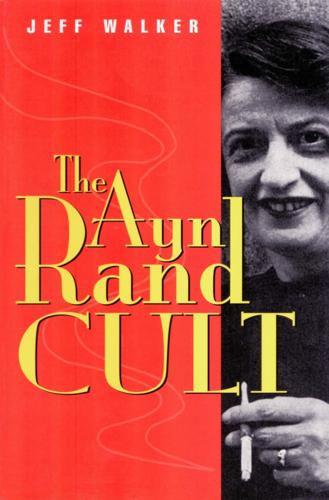
Ayn Rand Cult
by Jeff Walker · 30 Dec 1998 · 525pp · 146,126 words
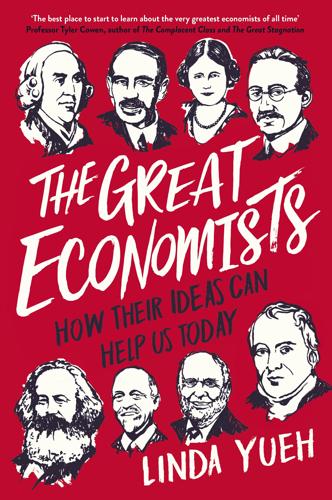
The Great Economists: How Their Ideas Can Help Us Today
by Linda Yueh · 15 Mar 2018 · 374pp · 113,126 words
Owning the Sun
by Alexander Zaitchik · 7 Jan 2022 · 341pp · 98,954 words
Vulture Capitalism: Corporate Crimes, Backdoor Bailouts, and the Death of Freedom
by Grace Blakeley · 11 Mar 2024 · 371pp · 137,268 words
The Quiet Coup: Neoliberalism and the Looting of America
by Mehrsa Baradaran · 7 May 2024 · 470pp · 158,007 words
Goddess of the Market: Ayn Rand and the American Right
by Jennifer Burns · 18 Oct 2009 · 495pp · 144,101 words
How Markets Fail: The Logic of Economic Calamities
by John Cassidy · 10 Nov 2009 · 545pp · 137,789 words

Europe: A History
by Norman Davies · 1 Jan 1996
Milton Friedman: A Biography
by Lanny Ebenstein · 23 Jan 2007 · 298pp · 95,668 words
Seeing Like a State: How Certain Schemes to Improve the Human Condition Have Failed
by James C. Scott · 8 Feb 1999 · 607pp · 185,487 words
Licence to be Bad
by Jonathan Aldred · 5 Jun 2019 · 453pp · 111,010 words
Seven Crashes: The Economic Crises That Shaped Globalization
by Harold James · 15 Jan 2023 · 469pp · 137,880 words
Seventeen Contradictions and the End of Capitalism
by David Harvey · 3 Apr 2014 · 464pp · 116,945 words
Age of Greed: The Triumph of Finance and the Decline of America, 1970 to the Present
by Jeff Madrick · 11 Jun 2012 · 840pp · 202,245 words
Demanding the Impossible: A History of Anarchism
by Peter Marshall · 2 Jan 1992 · 1,327pp · 360,897 words
The Revolutionary Center: The Lost Genius of Liberalism
by Adrian Wooldridge · 7 Apr 2026 · 342pp · 129,097 words
More: The 10,000-Year Rise of the World Economy
by Philip Coggan · 6 Feb 2020 · 524pp · 155,947 words
No Such Thing as a Free Gift: The Gates Foundation and the Price of Philanthropy
by Linsey McGoey · 14 Apr 2015 · 324pp · 93,606 words
The Narrow Corridor: States, Societies, and the Fate of Liberty
by Daron Acemoglu and James A. Robinson · 23 Sep 2019 · 809pp · 237,921 words
Tory Nation: The Dark Legacy of the World's Most Successful Political Party
by Samuel Earle · 3 May 2023 · 245pp · 88,158 words
Nervous States: Democracy and the Decline of Reason
by William Davies · 26 Feb 2019 · 349pp · 98,868 words
Defending the Free Market: The Moral Case for a Free Economy
by Robert A. Sirico · 20 May 2012 · 267pp · 70,250 words
The Myth of the Rational Market: A History of Risk, Reward, and Delusion on Wall Street
by Justin Fox · 29 May 2009 · 461pp · 128,421 words
A Pelican Introduction Economics: A User's Guide
by Ha-Joon Chang · 26 May 2014 · 385pp · 111,807 words
The Trouble With Billionaires
by Linda McQuaig · 1 May 2013 · 261pp · 81,802 words
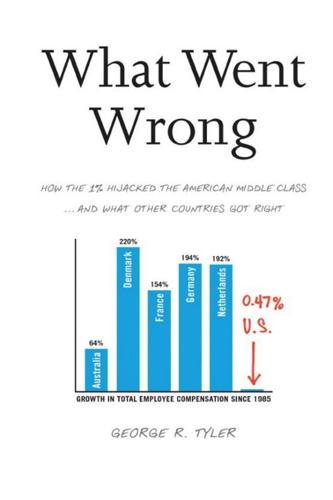
What Went Wrong: How the 1% Hijacked the American Middle Class . . . And What Other Countries Got Right
by George R. Tyler · 15 Jul 2013 · 772pp · 203,182 words
Money and Government: The Past and Future of Economics
by Robert Skidelsky · 13 Nov 2018
What's Wrong With Economics: A Primer for the Perplexed
by Robert Skidelsky · 3 Mar 2020 · 290pp · 76,216 words
Slouching Towards Utopia: An Economic History of the Twentieth Century
by J. Bradford Delong · 6 Apr 2020 · 593pp · 183,240 words
Capitalism and Its Critics: A History: From the Industrial Revolution to AI
by John Cassidy · 12 May 2025 · 774pp · 238,244 words
Piracy : The Intellectual Property Wars from Gutenberg to Gates
by Adrian Johns · 5 Jan 2010 · 636pp · 202,284 words
What's Left?: How Liberals Lost Their Way
by Nick Cohen · 15 Jul 2015 · 414pp · 121,243 words
The Fourth Revolution: The Global Race to Reinvent the State
by John Micklethwait and Adrian Wooldridge · 14 May 2014 · 372pp · 92,477 words
Open: The Story of Human Progress
by Johan Norberg · 14 Sep 2020 · 505pp · 138,917 words
Pity the Billionaire: The Unexpected Resurgence of the American Right
by Thomas Frank · 16 Aug 2011 · 261pp · 64,977 words
Capitalism and Freedom
by Milton Friedman · 1 Jan 1962 · 275pp · 77,955 words
The Evolution of Everything: How New Ideas Emerge
by Matt Ridley · 395pp · 116,675 words
Who Gets What — and Why: The New Economics of Matchmaking and Market Design
by Alvin E. Roth · 1 Jun 2015 · 282pp · 80,907 words

Ellul, Jacques-The Technological Society-Vintage Books (1964)
by Unknown · 7 Jun 2012
The Rise and Fall of the British Nation: A Twentieth-Century History
by David Edgerton · 27 Jun 2018
Liberalism at Large: The World According to the Economist
by Alex Zevin · 12 Nov 2019 · 767pp · 208,933 words
The Myth of Capitalism: Monopolies and the Death of Competition
by Jonathan Tepper · 20 Nov 2018 · 417pp · 97,577 words
The Unknowers: How Strategic Ignorance Rules the World
by Linsey McGoey · 14 Sep 2019
Socialism Sucks: Two Economists Drink Their Way Through the Unfree World
by Robert Lawson and Benjamin Powell · 29 Jul 2019 · 164pp · 44,947 words
Austerity: The History of a Dangerous Idea
by Mark Blyth · 24 Apr 2013 · 576pp · 105,655 words
The Euro and the Battle of Ideas
by Markus K. Brunnermeier, Harold James and Jean-Pierre Landau · 3 Aug 2016 · 586pp · 160,321 words
Strange Rebels: 1979 and the Birth of the 21st Century
by Christian Caryl · 30 Oct 2012 · 780pp · 168,782 words
How Not to Network a Nation: The Uneasy History of the Soviet Internet (Information Policy)
by Benjamin Peters · 2 Jun 2016 · 518pp · 107,836 words
Reaganland: America's Right Turn 1976-1980
by Rick Perlstein · 17 Aug 2020
How to Be a Liberal: The Story of Liberalism and the Fight for Its Life
by Ian Dunt · 15 Oct 2020
The Glass Half-Empty: Debunking the Myth of Progress in the Twenty-First Century
by Rodrigo Aguilera · 10 Mar 2020 · 356pp · 106,161 words
Modern Monopolies: What It Takes to Dominate the 21st Century Economy
by Alex Moazed and Nicholas L. Johnson · 30 May 2016 · 324pp · 89,875 words
Radical Markets: Uprooting Capitalism and Democracy for a Just Society
by Eric Posner and E. Weyl · 14 May 2018 · 463pp · 105,197 words
Why Orwell Matters
by Christopher Hitchens · 1 Jan 2002 · 184pp · 54,833 words
Finance and the Good Society
by Robert J. Shiller · 1 Jan 2012 · 288pp · 16,556 words
Future Politics: Living Together in a World Transformed by Tech
by Jamie Susskind · 3 Sep 2018 · 533pp
Green Tyranny: Exposing the Totalitarian Roots of the Climate Industrial Complex
by Rupert Darwall · 2 Oct 2017 · 451pp · 115,720 words
Big Three in Economics: Adam Smith, Karl Marx, and John Maynard Keynes
by Mark Skousen · 22 Dec 2006 · 330pp · 77,729 words
#Republic: Divided Democracy in the Age of Social Media
by Cass R. Sunstein · 7 Mar 2017 · 437pp · 105,934 words
Dark Money: The Hidden History of the Billionaires Behind the Rise of the Radical Right
by Jane Mayer · 19 Jan 2016 · 558pp · 168,179 words

New Dark Age: Technology and the End of the Future
by James Bridle · 18 Jun 2018 · 301pp · 85,263 words
Prosperity Without Growth: Foundations for the Economy of Tomorrow
by Tim Jackson · 8 Dec 2016 · 573pp · 115,489 words
End the Fed
by Ron Paul · 5 Feb 2011
The Seventh Sense: Power, Fortune, and Survival in the Age of Networks
by Joshua Cooper Ramo · 16 May 2016 · 326pp · 103,170 words
Trillions: How a Band of Wall Street Renegades Invented the Index Fund and Changed Finance Forever
by Robin Wigglesworth · 11 Oct 2021 · 432pp · 106,612 words
Life Inc.: How the World Became a Corporation and How to Take It Back
by Douglas Rushkoff · 1 Jun 2009 · 422pp · 131,666 words
Two Nations, Indivisible: A History of Inequality in America: A History of Inequality in America
by Jamie Bronstein · 29 Oct 2016 · 332pp · 89,668 words
The Establishment: And How They Get Away With It
by Owen Jones · 3 Sep 2014 · 388pp · 125,472 words
Free Market Missionaries: The Corporate Manipulation of Community Values
by Sharon Beder · 30 Sep 2006 · 273pp · 34,920 words
The Finance Curse: How Global Finance Is Making Us All Poorer
by Nicholas Shaxson · 10 Oct 2018 · 482pp · 149,351 words
The State and the Stork: The Population Debate and Policy Making in US History
by Derek S. Hoff · 30 May 2012
The Abandonment of the West
by Michael Kimmage · 21 Apr 2020 · 378pp · 121,495 words
A Little History of Economics
by Niall Kishtainy · 15 Jan 2017 · 272pp · 83,798 words
The Revolution That Wasn't: GameStop, Reddit, and the Fleecing of Small Investors
by Spencer Jakab · 1 Feb 2022 · 420pp · 94,064 words
Roller-Coaster: Europe, 1950-2017
by Ian Kershaw · 29 Aug 2018 · 736pp · 233,366 words
The Economists' Hour: How the False Prophets of Free Markets Fractured Our Society
by Binyamin Appelbaum · 4 Sep 2019 · 614pp · 174,226 words
The Dollar Meltdown: Surviving the Coming Currency Crisis With Gold, Oil, and Other Unconventional Investments
by Charles Goyette · 29 Oct 2009 · 287pp · 81,970 words

Virtual Competition
by Ariel Ezrachi and Maurice E. Stucke · 30 Nov 2016
Cogs and Monsters: What Economics Is, and What It Should Be
by Diane Coyle · 11 Oct 2021 · 305pp · 75,697 words

The Collapse of Western Civilization: A View From the Future
by Naomi Oreskes and Erik M. Conway · 30 Jun 2014 · 105pp · 18,832 words
Extreme Money: Masters of the Universe and the Cult of Risk
by Satyajit Das · 14 Oct 2011 · 741pp · 179,454 words
Crack-Up Capitalism: Market Radicals and the Dream of a World Without Democracy
by Quinn Slobodian · 4 Apr 2023 · 360pp · 107,124 words
Termites of the State: Why Complexity Leads to Inequality
by Vito Tanzi · 28 Dec 2017
The Information State: Politics in the Age of Total Control
by Jacob Siegel · 24 Mar 2026 · 348pp · 103,246 words
Crisis and Leviathan: Critical Episodes in the Growth of American Government
by Robert Higgs and Arthur A. Ekirch, Jr. · 15 Jan 1987
Private Island: Why Britain Now Belongs to Someone Else
by James Meek · 18 Aug 2014 · 232pp · 77,956 words
Culture and Prosperity: The Truth About Markets - Why Some Nations Are Rich but Most Remain Poor
by John Kay · 24 May 2004 · 436pp · 76 words
The Idea of Decline in Western History
by Arthur Herman · 8 Jan 1997 · 717pp · 196,908 words
The Scandal of Money
by George Gilder · 23 Feb 2016 · 209pp · 53,236 words
The Wrecking Crew: How Conservatives Rule
by Thomas Frank · 5 Aug 2008 · 482pp · 122,497 words
Capitalism in America: A History
by Adrian Wooldridge and Alan Greenspan · 15 Oct 2018 · 585pp · 151,239 words

The Plague Year: America in the Time of Covid
by Lawrence Wright · 7 Jun 2021 · 391pp · 112,312 words
The Battle of Bretton Woods: John Maynard Keynes, Harry Dexter White, and the Making of a New World Order
by Benn Steil · 14 May 2013 · 710pp · 164,527 words
How to Fix Copyright
by William Patry · 3 Jan 2012 · 336pp · 90,749 words

Zero-Sum Future: American Power in an Age of Anxiety
by Gideon Rachman · 1 Feb 2011 · 391pp · 102,301 words
The Master Switch: The Rise and Fall of Information Empires
by Tim Wu · 2 Nov 2010 · 418pp · 128,965 words
Unelected Power: The Quest for Legitimacy in Central Banking and the Regulatory State
by Paul Tucker · 21 Apr 2018 · 920pp · 233,102 words
The Health Gap: The Challenge of an Unequal World
by Michael Marmot · 9 Sep 2015 · 414pp · 119,116 words
The Happiness Industry: How the Government and Big Business Sold Us Well-Being
by William Davies · 11 May 2015 · 317pp · 87,566 words
The Vanishing Middle Class: Prejudice and Power in a Dual Economy
by Peter Temin · 17 Mar 2017 · 273pp · 87,159 words
Conscience of a Conservative: A Rejection of Destructive Politics and a Return to Principle
by Jeff Flake · 31 Jul 2017 · 138pp · 43,748 words
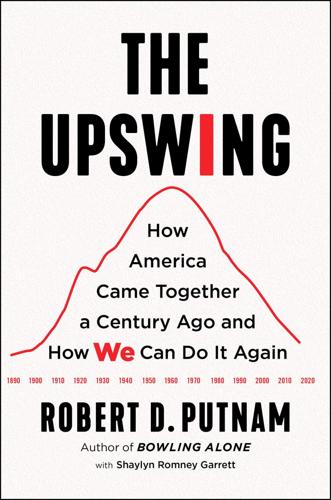
The Upswing: How America Came Together a Century Ago and How We Can Do It Again
by Robert D. Putnam · 12 Oct 2020 · 678pp · 160,676 words
The Sovereign Individual: How to Survive and Thrive During the Collapse of the Welfare State
by James Dale Davidson and William Rees-Mogg · 3 Feb 1997 · 582pp · 160,693 words
Basic Income: A Radical Proposal for a Free Society and a Sane Economy
by Philippe van Parijs and Yannick Vanderborght · 20 Mar 2017
The Shifts and the Shocks: What We've Learned--And Have Still to Learn--From the Financial Crisis
by Martin Wolf · 24 Nov 2015 · 524pp · 143,993 words
Civilization: The West and the Rest
by Niall Ferguson · 28 Feb 2011 · 790pp · 150,875 words
Selfie: How We Became So Self-Obsessed and What It's Doing to Us
by Will Storr · 14 Jun 2017 · 431pp · 129,071 words
Other People's Money: Masters of the Universe or Servants of the People?
by John Kay · 2 Sep 2015 · 478pp · 126,416 words
Basic Economics
by Thomas Sowell · 1 Jan 2000 · 850pp · 254,117 words
Strategy: A History
by Lawrence Freedman · 31 Oct 2013 · 1,073pp · 314,528 words

Brexit, No Exit: Why in the End Britain Won't Leave Europe
by Denis MacShane · 14 Jul 2017 · 308pp · 99,298 words
Transaction Man: The Rise of the Deal and the Decline of the American Dream
by Nicholas Lemann · 9 Sep 2019 · 354pp · 118,970 words

State-Building: Governance and World Order in the 21st Century
by Francis Fukuyama · 7 Apr 2004
Political Order and Political Decay: From the Industrial Revolution to the Globalization of Democracy
by Francis Fukuyama · 29 Sep 2014 · 828pp · 232,188 words

The Dream of Europe: Travels in the Twenty-First Century
by Geert Mak · 27 Oct 2021 · 722pp · 223,701 words
To Serve God and Wal-Mart: The Making of Christian Free Enterprise
by Bethany Moreton · 15 May 2009 · 391pp · 22,799 words
The Nanny State Made Me: A Story of Britain and How to Save It
by Stuart Maconie · 5 Mar 2020 · 300pp · 106,520 words
Common Wealth: Economics for a Crowded Planet
by Jeffrey Sachs · 1 Jan 2008 · 421pp · 125,417 words
America at the Crossroads: Democracy, Power, and the Neoconservative Legacy
by Francis Fukuyama · 20 Mar 2007 · 214pp · 57,614 words
Bourgeois Dignity: Why Economics Can't Explain the Modern World
by Deirdre N. McCloskey · 15 Nov 2011 · 1,205pp · 308,891 words
How to Speak Money: What the Money People Say--And What It Really Means
by John Lanchester · 5 Oct 2014 · 261pp · 86,905 words
After Nations: The Making and Unmaking of a World Order
by Rana Dasgupta · 27 Apr 2026 · 686pp · 188,424 words
Fooled by Randomness: The Hidden Role of Chance in Life and in the Markets
by Nassim Nicholas Taleb · 1 Jan 2001 · 111pp · 1 words
Austerity Britain: 1945-51
by David Kynaston · 12 May 2008 · 870pp · 259,362 words
World Economy Since the Wars: A Personal View
by John Kenneth Galbraith · 14 May 1994 · 293pp · 91,412 words
A History of Modern Britain
by Andrew Marr · 2 Jul 2009 · 872pp · 259,208 words

Before the Storm: Barry Goldwater and the Unmaking of the American Consensus
by Rick Perlstein · 17 Mar 2009 · 1,037pp · 294,916 words
Democracy and Prosperity: Reinventing Capitalism Through a Turbulent Century
by Torben Iversen and David Soskice · 5 Feb 2019 · 550pp · 124,073 words
Rethinking Capitalism: Economics and Policy for Sustainable and Inclusive Growth
by Michael Jacobs and Mariana Mazzucato · 31 Jul 2016 · 370pp · 102,823 words
More From Less: The Surprising Story of How We Learned to Prosper Using Fewer Resources – and What Happens Next
by Andrew McAfee · 30 Sep 2019 · 372pp · 94,153 words
SEDATED: How Modern Capitalism Created Our Mental Health Crisis
by James. Davies · 15 Nov 2021 · 307pp · 88,085 words
The Tyranny of Nostalgia: Half a Century of British Economic Decline
by Russell Jones · 15 Jan 2023 · 463pp · 140,499 words
The Curse of Bigness: Antitrust in the New Gilded Age
by Tim Wu · 14 Jun 2018 · 128pp · 38,847 words
Inventing the Future: Postcapitalism and a World Without Work
by Nick Srnicek and Alex Williams · 1 Oct 2015 · 357pp · 95,986 words
The Attention Merchants: The Epic Scramble to Get Inside Our Heads
by Tim Wu · 14 May 2016 · 515pp · 143,055 words
Freedom Without Borders
by Hoyt L. Barber · 23 Feb 2012 · 192pp · 72,822 words
The Wake-Up Call: Why the Pandemic Has Exposed the Weakness of the West, and How to Fix It
by John Micklethwait and Adrian Wooldridge · 1 Sep 2020 · 134pp · 41,085 words
The Divide: A Brief Guide to Global Inequality and Its Solutions
by Jason Hickel · 3 May 2017 · 332pp · 106,197 words
Last Best Hope: America in Crisis and Renewal
by George Packer · 14 Jun 2021 · 173pp · 55,328 words
Nexus: A Brief History of Information Networks From the Stone Age to AI
by Yuval Noah Harari · 9 Sep 2024 · 566pp · 169,013 words

Stolen: How to Save the World From Financialisation
by Grace Blakeley · 9 Sep 2019 · 263pp · 80,594 words
Jihad vs. McWorld: Terrorism's Challenge to Democracy
by Benjamin Barber · 20 Apr 2010 · 454pp · 139,350 words
Financial Market Meltdown: Everything You Need to Know to Understand and Survive the Global Credit Crisis
by Kevin Mellyn · 30 Sep 2009 · 225pp · 11,355 words
Free to Choose: A Personal Statement
by Milton Friedman and Rose D. Friedman · 2 Jan 1980 · 376pp · 118,542 words
Red-Blooded Risk: The Secret History of Wall Street
by Aaron Brown and Eric Kim · 10 Oct 2011 · 483pp · 141,836 words
Digital Disconnect: How Capitalism Is Turning the Internet Against Democracy
by Robert W. McChesney · 5 Mar 2013 · 476pp · 125,219 words
Arguing With Zombies: Economics, Politics, and the Fight for a Better Future
by Paul Krugman · 28 Jan 2020 · 446pp · 117,660 words
How to Own the World: A Plain English Guide to Thinking Globally and Investing Wisely
by Andrew Craig · 6 Sep 2015 · 305pp · 98,072 words
Chaos Kings: How Wall Street Traders Make Billions in the New Age of Crisis
by Scott Patterson · 5 Jun 2023 · 289pp · 95,046 words
We Are All Fast-Food Workers Now: The Global Uprising Against Poverty Wages
by Annelise Orleck · 27 Feb 2018 · 382pp · 107,150 words
Machinery of Freedom: A Guide to Radical Capitalism
by David Friedman · 2 Jan 1978 · 328pp · 92,317 words
Evil Geniuses: The Unmaking of America: A Recent History
by Kurt Andersen · 14 Sep 2020 · 486pp · 150,849 words
The New Nomads: How the Migration Revolution Is Making the World a Better Place
by Felix Marquardt · 7 Jul 2021 · 250pp · 75,151 words
A World Without Work: Technology, Automation, and How We Should Respond
by Daniel Susskind · 14 Jan 2020 · 419pp · 109,241 words
The AI Economy: Work, Wealth and Welfare in the Robot Age
by Roger Bootle · 4 Sep 2019 · 374pp · 111,284 words
Consumed: How Markets Corrupt Children, Infantilize Adults, and Swallow Citizens Whole
by Benjamin R. Barber · 1 Jan 2007 · 498pp · 145,708 words
Enlightenment Now: The Case for Reason, Science, Humanism, and Progress
by Steven Pinker · 13 Feb 2018 · 1,034pp · 241,773 words
Iron Curtain: The Crushing of Eastern Europe, 1945-1956
by Anne Applebaum · 30 Oct 2012 · 934pp · 232,651 words
When They Go Low, We Go High: Speeches That Shape the World – and Why We Need Them
by Philip Collins · 4 Oct 2017 · 475pp · 156,046 words
The Founders: The Story of Paypal and the Entrepreneurs Who Shaped Silicon Valley
by Jimmy Soni · 22 Feb 2022 · 505pp · 161,581 words
Greater: Britain After the Storm
by Penny Mordaunt and Chris Lewis · 19 May 2021 · 516pp · 116,875 words
Why Nothing Works: Who Killed Progress--And How to Bring It Back
by Marc J Dunkelman · 17 Feb 2025 · 454pp · 134,799 words

Live and Let Spy: BRIXMIS - the Last Cold War Mission
by Steve Gibson · 2 Mar 2012 · 377pp · 121,996 words