single board computer
description: complete computer built on a single circuit board
7 results
Apple: The First 50 Years
by David Pogue · 10 Mar 2026 · 686pp · 216,944 words
good. They dressed funny. Young, naive.” But the Apple II demo blew him away. “It was the world’s first single-board computer—the world’s first. It was the world’s first single-board computer that had slots. It was the world’s first computer that had BASIC in ROM,” he says. “This was one

Mastering Blockchain, Second Edition
by Imran Bashir · 28 Mar 2018
to in response to certain events on an Ethereum blockchain. IoT blockchain experiment This example makes use of a Raspberry Pi device which is a Single Board Computer (SBC). The Raspberry Pi is a SBC developed as a low-cost computer to promote computer education but has also gained much more popularity as
On Intelligence
by Jeff Hawkins and Sandra Blakeslee · 1 Jan 2004 · 246pp · 81,625 words
at the heart of it. My job was to analyze and fix problems found by other engineers working in the field with our main product, single board computers. (Putting an entire computer on a single circuit board had only recently been made possible by Intel's invention of the microprocessor.) I published a
Androids: The Team That Built the Android Operating System
by Chet Haase · 12 Aug 2021 · 580pp · 125,129 words
five, Brian Swetland (referred to simply as “Swetland” on the team) had been a systems programmer. “My father soldered together a Timex Sinclair clone, a single board computer with membrane keyboard, on our kitchen table over two or three evenings and hooked it up to a crappy old black and white TV. You
Commodore: A Company on the Edge
by Brian Bagnall · 13 Sep 2005 · 781pp · 226,928 words
kilobyte of memory, hence KIM-1.[5] McLaughlin, a calculator engineer, had designed his first computer. “If you look at a KIM single board computer, it was a calculator engineer’s view of a single board computer,” says Mensch. “You had a Keyboard Input Monitor, so you used the keypad to code in instructions on the
…
single board computer with a little LED character display.” The finished computer looked like a giant calculator. * * * The team now had dozens of working microprocessor chips, a development
…
. The differences between the KIM-1 and the Altair computer illustrate a split in design philosophy within the computer world. The KIM-1 was a single-board computer, with all components mounted on a single printed-circuit board. It had room for expansion, but there were no slots to insert adapter cards. This
…
.” With a third, stable source for the 6502, hardware makers were more likely to use the 6502 in their products. Rockwell released a “KIM-like” single-board computer called the AIM-65. The 6502 system was similar to the KIM-1, but contained a 20-digit LED display and a tiny thermal printer
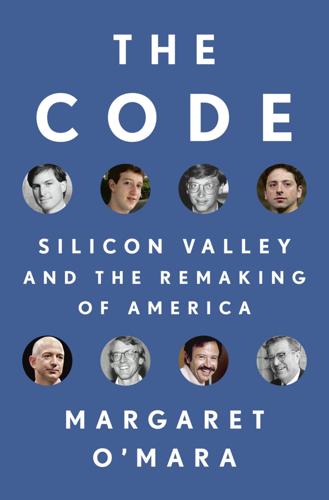
The Code: Silicon Valley and the Remaking of America
by Margaret O'Mara · 8 Jul 2019
-PSCW. 9. Homebrew Computer Club, Newsletter, no. 3 (May 10, 1975), 4, Liza Loop Papers, SU; John Doerr, “Low-cost microcomputing: The personal computer and single-board computer revolutions,” Proceedings of the IEEE 66, no. 2 (February 1978): 129. 10. Dr. Dobb’s Journal 2, no. 2 (February 1976), 2; Liza Loop Papers

Exponential Organizations: Why New Organizations Are Ten Times Better, Faster, and Cheaper Than Yours (And What to Do About It)
by Salim Ismail and Yuri van Geest · 17 Oct 2014 · 292pp · 85,151 words
to bringing his company’s high-end 3D printers to market for just $399 within the next five years. Another example of this trend includes single-board computers for robotics and education, where the open sourced Raspberry Pi platform has proved transformative. The same is true of single-board controllers, where Arduino has