Crashed: How a Decade of Financial Crises Changed the World
by Adam Tooze · 31 Jul 2018 · 1,066pp · 273,703 words
, began the joint press conference by announcing how pleased she was to hear that the troika had just submitted its first report on Portugal’s structural adjustment program and had declared itself satisfied with the progress being made. She was delighted also to hear that Coelho saw no obstacle to incorporating a German
The New Harvest: Agricultural Innovation in Africa
by Calestous Juma · 27 May 2017
their female populations. African countries have shown considerable vitality in enrollment in higher education since the mid-1990s, following the lean years of the destructive structural adjustment programs. Nevertheless, African countries still have the lowest higher education enrollment in the world. Although there are a few exceptions in southern Africa (Lesotho is a
A Brief History of Neoliberalism
by David Harvey · 2 Jan 1995 · 318pp · 85,824 words
Thirdly, the Wall Street–IMF–Treasury complex that came to dominate economic policy in the Clinton years was able to persuade, cajole, and (thanks to structural adjustment programmes administered by the IMF) coerce many developing countries to take the neoliberal road.3 The US also used the carrot of preferential access to its
…
that even minimal protections of forests break down. The over-exploitation of forestry resources after privatization in Chile is a good case in point. But structural adjustment programmes administered by the IMF have had even worse impacts. Imposed austerity means that poorer countries have less money to put into forest management. They are
Cape Town After Apartheid: Crime and Governance in the Divided City
by Tony Roshan Samara · 12 Jun 2011 · 252pp · 13,581 words
national level in the global South. Although change was already afoot in the nations and cities of the global North as well, it was the structural adjustment programs of the World Bank and the International Monetary Fund in the 1980s and 1990s, and the intimately related prescriptions of the Washington Consensus, that first
Free Market Missionaries: The Corporate Manipulation of Community Values
by Sharon Beder · 30 Sep 2006 · 273pp · 34,920 words
IMF, not only in Latin America, but in all parts of the world from the mid-1980s.7 It was the driving force behind the structural adjustment programmes being imposed on all indebted developing nations. World Bank and IMF loans became conditional upon the adoption of policies such as privatization, outsourcing, downsizing of
Money and Government: The Past and Future of Economics
by Robert Skidelsky · 13 Nov 2018
automatically at the disposal of profligate debtors. The IMF thus provided no limit on persistent reserve accumulation. Bretton Woods laid the intellectual basis for the ‘structural adjustment’ programmes which the IMF would insist on as the condition of its loans to Latin America and East Asia in the 1980s and 1990s, and which
…
and Eurozone crisis, 139, 242–3 and fiscal multipliers, 230–31, 233 ‘neo-liberal’ agenda of, 139, 181, 318–19 ‘scarce currency’ clause, 380–81 ‘structural adjustment’ programmes, 139, 181 Ireland potato famine (1840s), 15 sovereign debt crisis, 328, 341, 365 Italy, 33–4, 91, 102, 156, 157, 242, 299, 356 James, Harold
The Divide: A Brief Guide to Global Inequality and Its Solutions
by Jason Hickel · 3 May 2017 · 332pp · 106,197 words
dictate economic policy to indebted countries in the South, effectively governing them by remote control, without the need for bloody interventions. Leveraging debt, they imposed ‘structural adjustment programmes’ that reversed all the economic reforms that global South countries had painstakingly enacted. In the process, they went so far as to ban the very
…
, will reach 1.9 billion by 2015.’ This was alarming news, and projected a troubling future trend. Not only that, it also suggested that the structural adjustment programmes imposed by the World Bank and the IMF on global South countries during the 1980s and 1990s in the name of ‘development’ were actually making
…
speech was that he acknowledged that per capita incomes had been growing faster up until the mid-1970s, technically admitting that the World Bank’s structural adjustment programmes had slowed progress during the 1980s and 1990s. But at the same time he claimed that poverty had nonetheless been reduced during those decades – and
…
tragic kind of way. The Bank’s indicators show that, assuming sub-Saharan Africa follows all of the Bank’s advice and adheres closely to structural adjustment programmes, it will achieve a reduction in poverty from 407 million people in 2008 to 335 million by 2030. That is a long way from zero
…
plan was supposed to work: the IMF would help developing countries finance their debt on the condition that they would agree to a series of ‘structural adjustment programmes’.14 Structural adjustment programmes, or SAPs, included two basic mechanisms for debt repayment. First, developing countries had to redirect all their existing cash flows and assets towards debt
…
coffers of impoverished global South countries to the richest banks in the West. The second mechanism was slightly less direct. Countries that were subject to structural adjustment programmes were forced to radically deregulate their economies. They had to cut trade tariffs, open their markets to foreign competitors, abolish capital controls, abandon price controls
…
currency to repay their loans. This meant abandoning the import-substitution programmes they had used to such good effect during the developmentalist era. In addition, structural adjustment programmes required debtors to keep inflation low – a kind of monetary austerity – because the bankers feared they would use inflation to depreciate the value of their
…
devastating structural adjustment was by zooming in on particular regions, countries and cities.22 Take Africa, for instance, which suffered a total of thirty-one structural adjustment programmes during the 1980s and 1990s. In Dar es Salaam, public expenditure per person was cut by 10 per cent per year during the 1980s. In
…
for damages. All have failed. But there’s a second reason that the IMF and the World Bank have been able to power through with structural adjustment programmes despite their dismal record, and it has to do with how these two institutions are governed. Voting power in both is apportioned according to each
…
a trenchant critic of structural adjustment. But perhaps none have captured attention like Davidson Budhoo, the IMF senior economist whose job it was to implement structural adjustment programmes in Latin America and Africa during the 1980s. In 1988, Budhoo, a native of Grenada, resigned with a lengthy letter addressed to his former employer
…
the things that I did do in your name and in the names of your predecessors, and under your official seal. When the failure of structural adjustment programmes became too apparent to ignore, and as pressure from social movements mounted against them, the IMF and the World Bank ostensibly backed down. At the
…
end of the 1990s, they made a show of replacing structural adjustment programmes with ‘Poverty Reduction Strategy Papers’. The new PRSPs were supposed to bring in more local ownership of structural adjustment, and require countries to focus on
…
touch the principal that lies beneath, which threatens to persist for ever. One final point to bear in mind. Despite the imposition of dozens of structural adjustment programmes across the global South – which, remember, were intended to reduce debt – debt stocks have not reduced much at all. In fact, they have increased. External
…
some kind of productive transition takes place is to provide substantial unemployment benefits and training programmes – something that poor countries can rarely afford. Indeed, under structural adjustment programmes they are often denied the right to spend on this kind of social assistance. As for capital mobility: the theory states that the capital from
…
world’s countries were plugged into the international arbitration system. Some, including almost all of Latin America, were forced into it against their will under structural adjustment programmes. But despite early suspicions, even they found that the system worked pretty well. After all, it had the effect of slowing down the onslaught of
…
a result, external debt payments shot up from 6.1 per cent of government revenue in 2013 to 10.8 per cent in 2016.5 Structural adjustment programmes are still widely used by the World Bank and the IMF to secure debt repayment, in the form of the new Poverty Reduction Strategy Papers
…
heart of the problem.4 The debt-as-sin framing has been used to justify ‘forgiving’ debt while requiring harsh austerity measures that replicate the structural adjustment programmes that contributed to the debt crisis in the first place, effectively saying ‘we will forgive your sins, but you will have to pay the price
…
on Africa, see: H. White, ‘Adjustment in Africa: a review article’, Development and Change 27, 1996, pp. 785–815; B. Riddel, ‘Things fall apart again: structural adjustment programs in sub-Saharan Africa’, Journal of Modern African Studies 30(1), 1992, pp. 53–68; Howard Stein and Machiko Nissanke, ‘Structural adjustment and the African
…
2017. 5 ‘As a result, external debt …’ Katie Allen, ‘World’s poorest countries rocked by commodity slump and strong dollar’, Guardian, 10 April 2016. 6 ‘Structural adjustment programmes are still …’ Fortunately conditionality has been relaxed a bit since the 2009 G20 Summit, which raised this as an issue. But as yet there is
Global Financial Crisis
by Noah Berlatsky · 19 Feb 2010
is the reversal of most of the policies they had advocated for decades in Africa and in other ‘poor’ countries under the now discredited SAPs (structural adjustment programmes). The IMF and the World Bank are supporting 188 Solutions to the Global Financial Crisis fiscal stimulus—expansionary fiscal policies—in the United States, Europe
…
migrant workers, 132 state of the nation opinions, 115, 119 unrest, 108–120 S Sacramento, California, 75, 76–77 Sanborn, Kathy, 74–79 SAPs. See Structural adjustment programs (SAPs) Sarbanes-Oxley Act (2002), 30 Sarkozy, Nicolas, 108, 109, 111– 113, 183 Saudi Arabia, 164–165, 168, 169 Savings rates, 67, 69–70, 173
…
Stock market 1929 crash, 57, 61 bubble, 1990s, 41, 87, 215 drops, 18, 122 Iceland entrance, 104, 106 improvements, 19 Strikes. See Political instability/ unrest Structural adjustment programs (SAPs), 188, 189, 190, 196 Subprime mortgages Australia, 88 Canada, 81–82 U.S., 17, 32–33, 34, 82, 88 See also Mortgage crisis, U
Postcapitalism: A Guide to Our Future
by Paul Mason · 29 Jul 2015 · 378pp · 110,518 words
or Guyana, had their governments overthrown by CIA coups or, as with Grenada, by invasion. Many found their economies destroyed by debt and by the ‘structural adjustment programmes’ the IMF dictated in return for debt write-offs. With little domestic industry, their growth models relied on the export of raw materials, and the
Bad Samaritans: The Myth of Free Trade and the Secret History of Capitalism
by Ha-Joon Chang · 26 Dec 2007 · 334pp · 98,950 words
and the World Bank changed dramatically. They started to exert a much stronger policy influence on developing countries through their joint operation of so-called structural adjustment programmes (SAPs). These programmes covered a much wider range of policies than what the Bretton Woods Institutions had originally been mandated to do. The BWIs now
The Health Gap: The Challenge of an Unequal World
by Michael Marmot · 9 Sep 2015 · 414pp · 119,116 words
Planet of Slums
by Mike Davis · 1 Mar 2006 · 232pp
Immigration worldwide: policies, practices, and trends
by Uma Anand Segal, Doreen Elliott and Nazneen S. Mayadas · 19 Jan 2010 · 492pp · 70,082 words
Global Governance and Financial Crises
by Meghnad Desai and Yahia Said · 12 Nov 2003
Vulture Capitalism: Corporate Crimes, Backdoor Bailouts, and the Death of Freedom
by Grace Blakeley · 11 Mar 2024 · 371pp · 137,268 words
The White Man's Burden: Why the West's Efforts to Aid the Rest Have Done So Much Ill and So Little Good
by William Easterly · 1 Mar 2006

The Marshall Plan: Dawn of the Cold War
by Benn Steil · 13 Feb 2018 · 913pp · 219,078 words
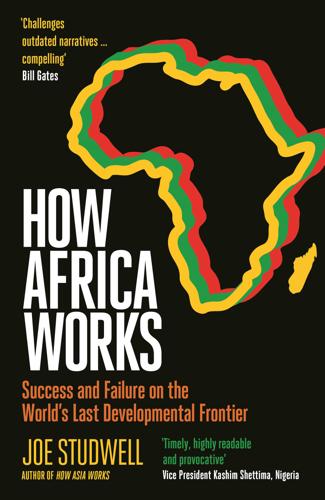
How Africa Works: Success and Failure on the World’s Last Developmental Frontier
by Joe Studwell · 6 Dec 2025 · 393pp · 148,223 words
This Changes Everything: Capitalism vs. The Climate
by Naomi Klein · 15 Sep 2014 · 829pp · 229,566 words

Bad Samaritans: The Guilty Secrets of Rich Nations and the Threat to Global Prosperity
by Ha-Joon Chang · 4 Jul 2007 · 347pp · 99,317 words
After Nations: The Making and Unmaking of a World Order
by Rana Dasgupta · 27 Apr 2026 · 686pp · 188,424 words
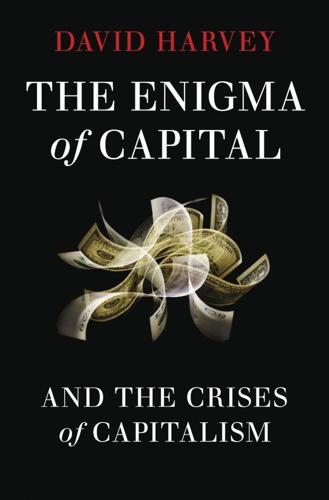
The Enigma of Capital: And the Crises of Capitalism
by David Harvey · 1 Jan 2010 · 369pp · 94,588 words

Border and Rule: Global Migration, Capitalism, and the Rise of Racist Nationalism
by Harsha Walia · 9 Feb 2021
The Ascent of Money: A Financial History of the World
by Niall Ferguson · 13 Nov 2007 · 471pp · 124,585 words
China into Africa: trade, aid, and influence
by Robert I. Rotberg · 15 Nov 2008 · 651pp · 135,818 words

Revolution at Point Zero: Housework, Reproduction, and Feminist Struggle
by Silvia Federici · 4 Oct 2012 · 277pp · 80,703 words
The Great Escape: Health, Wealth, and the Origins of Inequality
by Angus Deaton · 15 Mar 2013 · 374pp · 114,660 words
Less Is More: How Degrowth Will Save the World
by Jason Hickel · 12 Aug 2020 · 286pp · 87,168 words

23 Things They Don't Tell You About Capitalism
by Ha-Joon Chang · 1 Jan 2010 · 365pp · 88,125 words
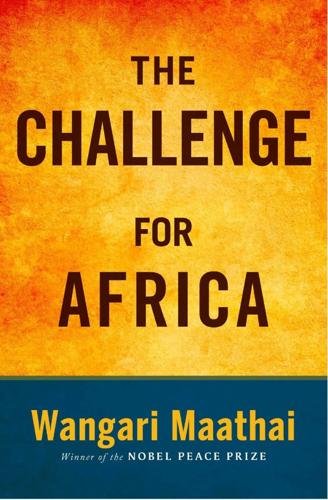
The Challenge for Africa
by Wangari Maathai · 6 Apr 2009 · 288pp · 90,349 words
Capitalism and Its Critics: A History: From the Industrial Revolution to AI
by John Cassidy · 12 May 2025 · 774pp · 238,244 words
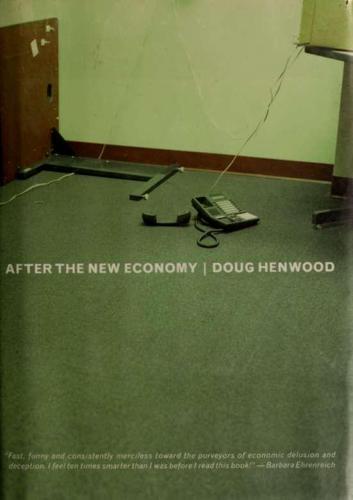
After the New Economy: The Binge . . . And the Hangover That Won't Go Away
by Doug Henwood · 9 May 2005 · 306pp · 78,893 words
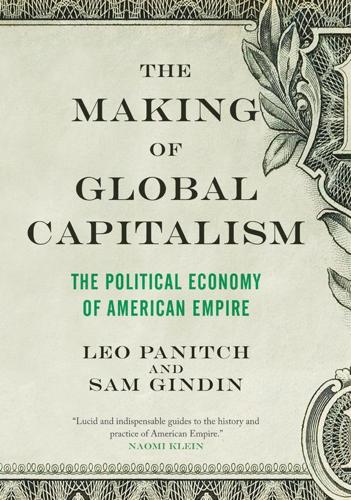
The Making of Global Capitalism
by Leo Panitch and Sam Gindin · 8 Oct 2012 · 823pp · 206,070 words
The Global Minotaur
by Yanis Varoufakis and Paul Mason · 4 Jul 2015 · 394pp · 85,734 words
Hopes and Prospects
by Noam Chomsky · 1 Jan 2009
The Looting Machine: Warlords, Oligarchs, Corporations, Smugglers, and the Theft of Africa's Wealth
by Tom Burgis · 24 Mar 2015 · 413pp · 119,379 words

The Fair Trade Scandal: Marketing Poverty to Benefit the Rich
by Ndongo Sylla · 21 Jan 2014 · 193pp · 63,618 words
Year 501
by Noam Chomsky · 19 Jan 2016
The Tyranny of Nostalgia: Half a Century of British Economic Decline
by Russell Jones · 15 Jan 2023 · 463pp · 140,499 words

The WikiLeaks Files: The World According to US Empire
by Wikileaks · 24 Aug 2015 · 708pp · 176,708 words
It's Our Turn to Eat
by Michela Wrong · 9 Apr 2009 · 403pp · 125,659 words
Slowdown: The End of the Great Acceleration―and Why It’s Good for the Planet, the Economy, and Our Lives
by Danny Dorling and Kirsten McClure · 18 May 2020 · 459pp · 138,689 words

The Age of Surveillance Capitalism
by Shoshana Zuboff · 15 Jan 2019 · 918pp · 257,605 words
The Great Turning: From Empire to Earth Community
by David C. Korten · 1 Jan 2001
An Extraordinary Time: The End of the Postwar Boom and the Return of the Ordinary Economy
by Marc Levinson · 31 Jul 2016 · 409pp · 118,448 words
The Corruption of Capitalism: Why Rentiers Thrive and Work Does Not Pay
by Guy Standing · 13 Jul 2016 · 443pp · 98,113 words
Culture works: the political economy of culture
by Richard Maxwell · 15 Jan 2001 · 268pp · 112,708 words
Austerity: The History of a Dangerous Idea
by Mark Blyth · 24 Apr 2013 · 576pp · 105,655 words
The Jakarta Method: Washington's Anticommunist Crusade and the Mass Murder Program That Shaped Our World
by Vincent Bevins · 18 May 2020 · 393pp · 115,178 words
The New Prophets of Capital
by Nicole Aschoff · 10 Mar 2015 · 128pp · 38,187 words
The Next Factory of the World: How Chinese Investment Is Reshaping Africa
by Irene Yuan Sun · 16 Oct 2017 · 239pp · 62,311 words
The Glass Half-Empty: Debunking the Myth of Progress in the Twenty-First Century
by Rodrigo Aguilera · 10 Mar 2020 · 356pp · 106,161 words
Slouching Towards Utopia: An Economic History of the Twentieth Century
by J. Bradford Delong · 6 Apr 2020 · 593pp · 183,240 words

Against the Machine: On the Unmaking of Humanity
by Paul Kingsnorth · 23 Sep 2025 · 388pp · 110,920 words
Who Rules the World?
by Noam Chomsky
"They Take Our Jobs!": And 20 Other Myths About Immigration
by Aviva Chomsky · 23 Apr 2018 · 219pp · 62,816 words

The Land Grabbers: The New Fight Over Who Owns the Earth
by Fred Pearce · 28 May 2012 · 379pp · 114,807 words
Propaganda and the Public Mind
by Noam Chomsky and David Barsamian · 31 Mar 2015

Rogue States
by Noam Chomsky · 9 Jul 2015
The Bottom Billion: Why the Poorest Countries Are Failing and What Can Be Done About It
by Paul Collier · 26 Apr 2007 · 222pp · 75,561 words

The Cigarette: A Political History
by Sarah Milov · 1 Oct 2019
A Game as Old as Empire: The Secret World of Economic Hit Men and the Web of Global Corruption
by Steven Hiatt; John Perkins · 1 Jan 2006 · 497pp · 123,718 words
Worldmaking After Empire: The Rise and Fall of Self-Determination
by Adom Getachew · 5 Feb 2019
A Pelican Introduction Economics: A User's Guide
by Ha-Joon Chang · 26 May 2014 · 385pp · 111,807 words

The Globalization of Inequality
by François Bourguignon · 1 Aug 2012 · 221pp · 55,901 words
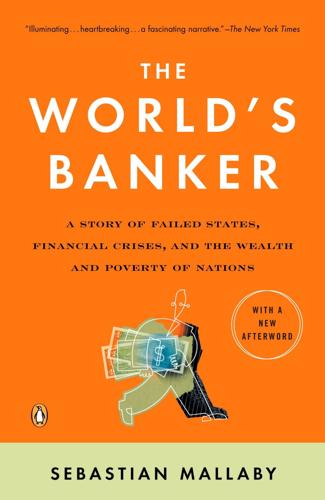
The World's Banker: A Story of Failed States, Financial Crises, and the Wealth and Poverty of Nations
by Sebastian Mallaby · 24 Apr 2006 · 605pp · 169,366 words
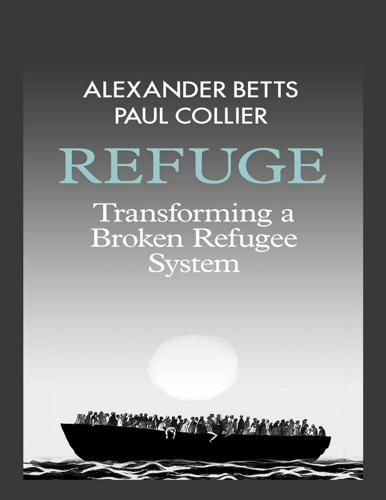
Refuge: Transforming a Broken Refugee System
by Alexander Betts and Paul Collier · 29 Mar 2017
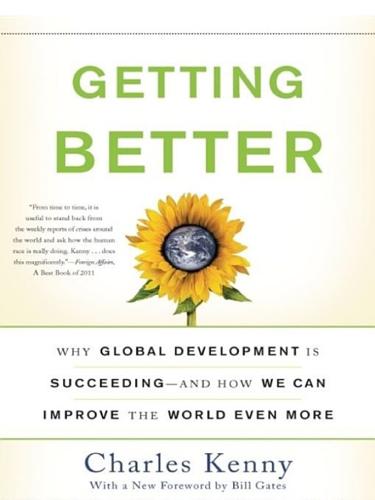
Getting Better: Why Global Development Is Succeeding--And How We Can Improve the World Even More
by Charles Kenny · 31 Jan 2011 · 272pp · 71,487 words

In Defense of Global Capitalism
by Johan Norberg · 1 Jan 2001 · 233pp · 75,712 words
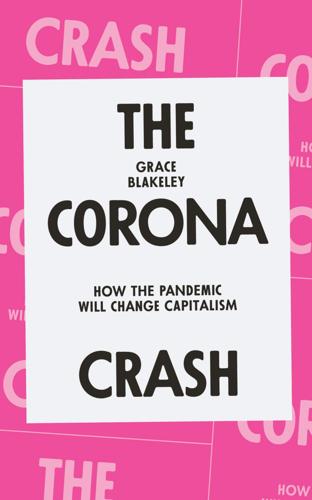
The Corona Crash: How the Pandemic Will Change Capitalism
by Grace Blakeley · 14 Oct 2020 · 82pp · 24,150 words

State-Building: Governance and World Order in the 21st Century
by Francis Fukuyama · 7 Apr 2004

The Ministry for the Future: A Novel
by Kim Stanley Robinson · 5 Oct 2020 · 583pp · 182,990 words
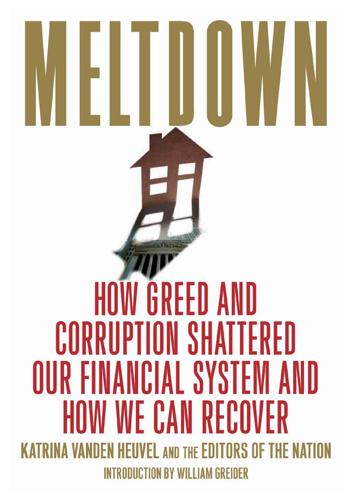
Meltdown: How Greed and Corruption Shattered Our Financial System and How We Can Recover
by Katrina Vanden Heuvel and William Greider · 9 Jan 2009 · 278pp · 82,069 words
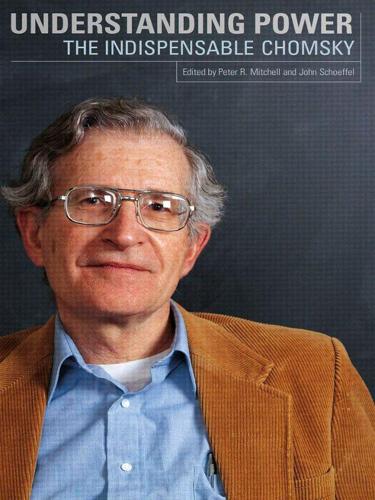
Understanding Power
by Noam Chomsky · 26 Jul 2010
Automation and the Future of Work
by Aaron Benanav · 3 Nov 2020 · 175pp · 45,815 words
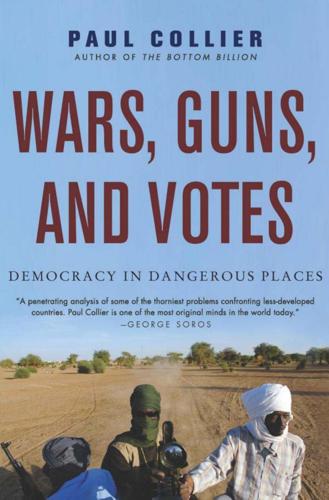
Wars, Guns, and Votes: Democracy in Dangerous Places
by Paul Collier · 9 Feb 2010 · 264pp · 74,313 words
Dreaming in Public: Building the Occupy Movement
by Amy Lang and Daniel Lang/levitsky · 11 Jun 2012 · 537pp · 99,778 words
The Quiet Coup: Neoliberalism and the Looting of America
by Mehrsa Baradaran · 7 May 2024 · 470pp · 158,007 words
Profit Over People: Neoliberalism and Global Order
by Noam Chomsky · 6 Sep 2011

Undoing Border Imperialism
by Harsha Walia · 12 Nov 2013 · 258pp · 69,706 words
Making the Future: The Unipolar Imperial Moment
by Noam Chomsky · 15 Mar 2010 · 258pp · 63,367 words
Rethinking Islamism: The Ideology of the New Terror
by Meghnad Desai · 25 Apr 2008
Thieves of State: Why Corruption Threatens Global Security
by Sarah Chayes · 19 Jan 2015 · 352pp · 90,622 words