time value of money
description: conjecture that there is greater benefit to receiving a sum of money now rather than later
87 results

Numpy Beginner's Guide - Third Edition
by Ivan Idris · 23 Jun 2015 · 681pp · 64,159 words
on certain assumptons. The pv() functon computes the present value (see https://www.khanacademy. org/economics-finance-domain/core-finance/interest-tutorial/ present-value/v/time-value-of-money ). The present value is the value of an asset today. The npv() functon returns the net present value . The net present value is defned as
Bulletproof Problem Solving
by Charles Conn and Robert McLean · 6 Mar 2019
the solar PV installation would have to fall by 75% to make waiting worthwhile. Rob could have used a net present value analysis where the time value of money is considered rather than a simple payback. But in this case the simple method is fine: He felt comfortable with the four‐year payback providing

The Nature of Software Development: Keep It Simple, Make It Valuable, Build It Piece by Piece
by Ron Jeffries · 14 Aug 2015 · 444pp · 118,393 words
would like to do more releases per year, but I’m being very conservative.) You can compute the expected cost of downtime, discounted by the time-value of money. It’s probably on the order of $1,000,000 (300 minutes of downtime at a very modest cost of $3,000 per minute). Now
Python for Finance
by Yuxing Yan · 24 Apr 2014 · 408pp · 85,118 words
effect Number of stocks and portfolio risk Retrieving historical price data from Yahoo! Finance Histogram showing return distribution Comparing stock and market returns Understanding the time value of money Candlesticks representation of IBM's daily price Graphical representation of two-year price movement IBM's intra-day graphical representations [ iv ] 105 107 107 108
…
) > Tcritical reject [ 60 ] (16) Chapter 3 Compared with the NPV rule, the payback period rule has many shortcomings, including the fact that it ignores the time value of money and cash flows after the payback period, and the benchmark of the critical value is ad hoc. The advantage is that this rule is very
…
market retuns") xlabel("Day") ylabel("Returns") show() The output corresponding to the preceding code is given as follows: [ 149 ] Visual Finance via Matplotlib Understanding the time value of money In finance, we know that $100 received today is more valuable than $100 received one year later. If we use size to represent the difference
…
=(10,-0.00005),xytext=(4,-0.0006),arrow props=dict(facecolor='black',shrink=0.02)) s = [50*2.5**n for n in x1]; title("Time value of money ") xlabel("Time (number of years)") scatter(x,y,s=s); show() The output graph is shown as follows: [ 150 ] Chapter 7 Candlesticks representation of IBM
…
(c). Obviously, the timing of cash flows of paying an option premium upfront and its payoff at maturity date is different. Here, we ignore the time value of money since maturities are usually quite short. For a call option buyer, the profit is calculated using the following formula: Buyer Profit / loss ( call ) = Max ( ST
The Dhandho Investor: The Low-Risk Value Method to High Returns
by Mohnish Pabrai · 17 May 2009 · 172pp · 49,890 words
conviction on underlying intrinsic value, feel free to hold on to losers for longer than two to three years, but always be cognizant of the time value of money. It is very hard to make up the lost non-compounding years. The two-to-three-year rule prevents us from running when the lion
Valuation: Measuring and Managing the Value of Companies
by Tim Koller, McKinsey, Company Inc., Marc Goedhart, David Wessels, Barbara Schwimmer and Franziska Manoury · 16 Aug 2015 · 892pp · 91,000 words
the cost of the investments made, adjusted to reflect the fact that tomorrow’s cash flows are worth less than today’s because of the time value of money and the riskiness of future cash flows. As we will demonstrate, a company’s return on invested capital (ROIC)1 and its revenue growth together
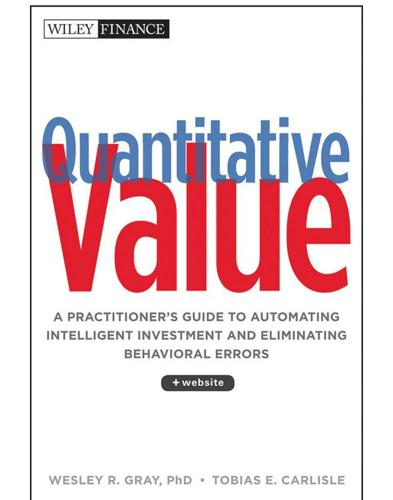
Quantitative Value: A Practitioner's Guide to Automating Intelligent Investment and Eliminating Behavioral Errors
by Wesley R. Gray and Tobias E. Carlisle · 29 Nov 2012 · 263pp · 75,455 words
taking a series of growing future cash flows and discounting them back to the present at a rate of return that takes into account the time value of money and the particular risk of the business analyzed. More recently, academics and practitioners alike have come to recognize the significance of Buffett's observation that
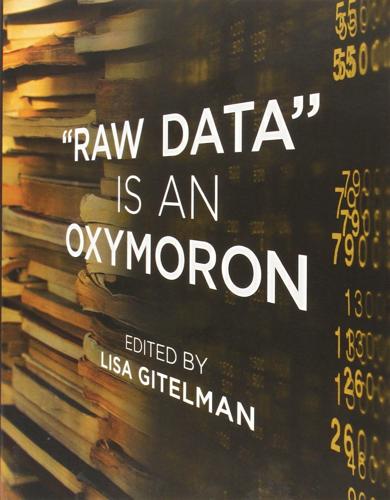
Raw Data Is an Oxymoron
by Lisa Gitelman · 25 Jan 2013
(New York: Macmillan, 1906). The assumption that money should earn interest when it is lent out is based on the principle modern economists call the time value of money. Historically, this principle derives from very old Christian notions about the relationship between time and God; theorists who wanted to circumvent the Church’s ban
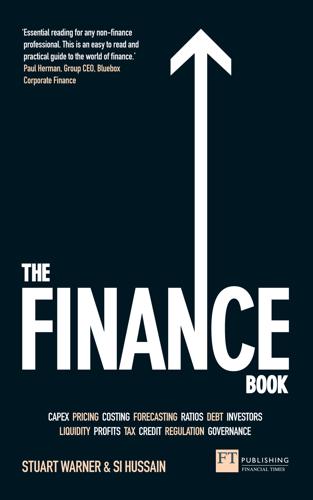
The Finance Book: Understand the Numbers Even if You're Not a Finance Professional
by Stuart Warner and Si Hussain · 20 Apr 2017 · 439pp · 79,447 words
, mainly because it does not consider the timing of investment returns. 3 Discounted cash flows The most effective methods of investment appraisal account for the time value of money by discounting all future net cash inflows (and further capital outflows, if any) back to their equivalent present value (PV). The objective is to compare
…
all cash flows from an investment on a like-for-like basis. Accounting for the time value of money is important because there is an ‘opportunity cost’ of money (capital) being tied up in an investment. This ‘opportunity cost’ will depend upon the following
…
settle the obligation. Provisions are determined by discounting the expected future cash flows at a pre-tax rate that reflects current market assessments of the time value of money and the risks specific to the liability. (i) Restructuring A provision for restructuring is recognised when the Group has approved a detailed and formal restructuring
…
peer-to-peer (P2P) lending. CVP analysis Cost-Volume-Profit (or breakeven) analysis. DCF Discounted cash flow. Cash flow discounted to present value recognising the time value of money. Debt factoring Outsourcing the collection of debt to a third party, which has specific expertise in managing and collecting debts. Debt finance Money raised from
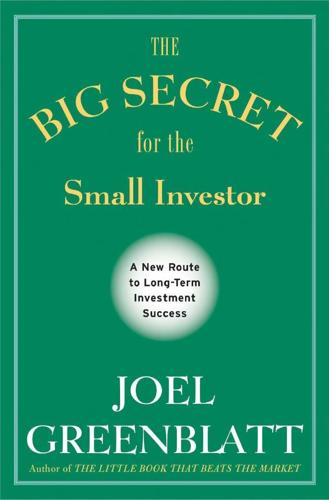
The Big Secret for the Small Investor: A New Route to Long-Term Investment Success
by Joel Greenblatt · 11 Apr 2011 · 89pp · 29,198 words
turns out, there actually are 24-hour locksmiths in the Bronx—unfortunately, they are not available now. 1. These concepts involve a discussion of the time value of money and discounted cash flow. If you are already very familiar with these (and can’t possibly see how I can make them funny), feel free
The Intelligent Asset Allocator: How to Build Your Portfolio to Maximize Returns and Minimize Risk
by William J. Bernstein · 12 Oct 2000

Taming the Sun: Innovations to Harness Solar Energy and Power the Planet
by Varun Sivaram · 2 Mar 2018 · 469pp · 132,438 words
Investment Banking: Valuation, Leveraged Buyouts, and Mergers and Acquisitions
by Joshua Rosenbaum, Joshua Pearl and Joseph R. Perella · 18 May 2009 · 444pp · 86,565 words
Derivatives Markets
by David Goldenberg · 2 Mar 2016 · 819pp · 181,185 words
The Devil's Derivatives: The Untold Story of the Slick Traders and Hapless Regulators Who Almost Blew Up Wall Street . . . And Are Ready to Do It Again
by Nicholas Dunbar · 11 Jul 2011 · 350pp · 103,270 words
Risk Management in Trading
by Davis Edwards · 10 Jul 2014
Guide to business modelling
by John Tennent, Graham Friend and Economist Group · 15 Dec 2005 · 287pp · 44,739 words
Capitalism: Money, Morals and Markets
by John Plender · 27 Jul 2015 · 355pp · 92,571 words
Financial Statement Analysis: A Practitioner's Guide
by Martin S. Fridson and Fernando Alvarez · 31 May 2011
Adam Smith: Father of Economics
by Jesse Norman · 30 Jun 2018
Smarter Investing
by Tim Hale · 2 Sep 2014 · 332pp · 81,289 words
Corporate Finance: Theory and Practice
by Pierre Vernimmen, Pascal Quiry, Maurizio Dallocchio, Yann le Fur and Antonio Salvi · 16 Oct 2017 · 1,544pp · 391,691 words
Investment: A History
by Norton Reamer and Jesse Downing · 19 Feb 2016
The Trade Lifecycle: Behind the Scenes of the Trading Process (The Wiley Finance Series)
by Robert P. Baker · 4 Oct 2015
Money Changes Everything: How Finance Made Civilization Possible
by William N. Goetzmann · 11 Apr 2016 · 695pp · 194,693 words
The Concepts and Practice of Mathematical Finance
by Mark S. Joshi · 24 Dec 2003
Money and Power: How Goldman Sachs Came to Rule the World
by William D. Cohan · 11 Apr 2011 · 1,073pp · 302,361 words
Paper Promises
by Philip Coggan · 1 Dec 2011 · 376pp · 109,092 words

How to Kick Ass on Wall Street
by Andy Kessler · 4 Jun 2012 · 77pp · 18,414 words
Nerds on Wall Street: Math, Machines and Wired Markets
by David J. Leinweber · 31 Dec 2008 · 402pp · 110,972 words
The Automatic Customer: Creating a Subscription Business in Any Industry
by John Warrillow · 5 Feb 2015 · 186pp · 49,251 words
The Investopedia Guide to Wall Speak: The Terms You Need to Know to Talk Like Cramer, Think Like Soros, and Buy Like Buffett
by Jack (edited By) Guinan · 27 Jul 2009 · 353pp · 88,376 words

Early Retirement Extreme
by Jacob Lund Fisker · 30 Sep 2010 · 346pp · 102,625 words

How to Buy Property at Auction: The Essential Guide to Winning Property and Buy-To-Let Bargains
by Samantha Collett · 20 Mar 2014 · 218pp · 60,935 words
Endless Money: The Moral Hazards of Socialism
by William Baker and Addison Wiggin · 2 Nov 2009 · 444pp · 151,136 words
The Invisible Hands: Top Hedge Fund Traders on Bubbles, Crashes, and Real Money
by Steven Drobny · 18 Mar 2010 · 537pp · 144,318 words
Mastering Private Equity
by Zeisberger, Claudia,Prahl, Michael,White, Bowen, Michael Prahl and Bowen White · 15 Jun 2017
The Scandal of Money
by George Gilder · 23 Feb 2016 · 209pp · 53,236 words
The Missing Billionaires: A Guide to Better Financial Decisions
by Victor Haghani and James White · 27 Aug 2023 · 314pp · 122,534 words
Just Keep Buying: Proven Ways to Save Money and Build Your Wealth
by Nick Maggiulli · 15 May 2022 · 287pp · 62,824 words
Layered Money: From Gold and Dollars to Bitcoin and Central Bank Digital Currencies
by Nik Bhatia · 18 Jan 2021

Boom: Bubbles and the End of Stagnation
by Byrne Hobart and Tobias Huber · 29 Oct 2024 · 292pp · 106,826 words
How I Invest My Money: Finance Experts Reveal How They Save, Spend, and Invest
by Brian Portnoy and Joshua Brown · 17 Nov 2020 · 149pp · 43,747 words
Cryptoeconomics: Fundamental Principles of Bitcoin
by Eric Voskuil, James Chiang and Amir Taaki · 28 Feb 2020 · 365pp · 56,751 words

Early Retirement Guide: 40 is the new 65
by Manish Thakur · 20 Dec 2015
When Free Markets Fail: Saving the Market When It Can't Save Itself (Wiley Corporate F&A)
by Scott McCleskey · 10 Mar 2011
A Demon of Our Own Design: Markets, Hedge Funds, and the Perils of Financial Innovation
by Richard Bookstaber · 5 Apr 2007 · 289pp · 113,211 words
Currency Wars: The Making of the Next Gobal Crisis
by James Rickards · 10 Nov 2011 · 381pp · 101,559 words
Mathematics for Finance: An Introduction to Financial Engineering
by Marek Capinski and Tomasz Zastawniak · 6 Jul 2003
A Primer for the Mathematics of Financial Engineering
by Dan Stefanica · 4 Apr 2008
Financial Independence
by John J. Vento · 31 Mar 2013 · 368pp · 145,841 words
Traders, Guns & Money: Knowns and Unknowns in the Dazzling World of Derivatives
by Satyajit Das · 15 Nov 2006 · 349pp · 134,041 words
The fortune at the bottom of the pyramid
by C. K. Prahalad · 15 Jan 2005 · 423pp · 149,033 words
The Global Money Markets
by Frank J. Fabozzi, Steven V. Mann and Moorad Choudhry · 14 Jul 2002
Efficiently Inefficient: How Smart Money Invests and Market Prices Are Determined
by Lasse Heje Pedersen · 12 Apr 2015 · 504pp · 139,137 words
Power at Ground Zero: Politics, Money, and the Remaking of Lower Manhattan
by Lynne B. Sagalyn · 8 Sep 2016 · 1,797pp · 390,698 words
The Personal MBA: A World-Class Business Education in a Single Volume
by Josh Kaufman · 2 Feb 2011 · 624pp · 127,987 words
Mathematics of the Financial Markets: Financial Instruments and Derivatives Modelling, Valuation and Risk Issues
by Alain Ruttiens · 24 Apr 2013 · 447pp · 104,258 words
The Investment Checklist: The Art of In-Depth Research
by Michael Shearn · 8 Nov 2011 · 400pp · 124,678 words
Debunking Economics - Revised, Expanded and Integrated Edition: The Naked Emperor Dethroned?
by Steve Keen · 21 Sep 2011 · 823pp · 220,581 words
The Startup Way: Making Entrepreneurship a Fundamental Discipline of Every Enterprise
by Eric Ries · 15 Mar 2017 · 406pp · 105,602 words
Financial Freedom: A Proven Path to All the Money You Will Ever Need
by Grant Sabatier · 5 Feb 2019 · 621pp · 123,678 words
The Money Machine: How the City Works
by Philip Coggan · 1 Jul 2009 · 253pp · 79,214 words

Principles of Corporate Finance
by Richard A. Brealey, Stewart C. Myers and Franklin Allen · 15 Feb 2014
Madoff Talks: Uncovering the Untold Story Behind the Most Notorious Ponzi Scheme in History
by Jim Campbell · 26 Apr 2021 · 369pp · 107,073 words
The Doomsday Calculation: How an Equation That Predicts the Future Is Transforming Everything We Know About Life and the Universe
by William Poundstone · 3 Jun 2019 · 283pp · 81,376 words
Die With Zero: Getting All You Can From Your Money and Your Life
by Bill Perkins · 27 Jul 2020 · 200pp · 63,266 words
The Code of Capital: How the Law Creates Wealth and Inequality
by Katharina Pistor · 27 May 2019 · 316pp · 117,228 words
Value Investing: From Graham to Buffett and Beyond
by Bruce C. N. Greenwald, Judd Kahn, Paul D. Sonkin and Michael van Biema · 26 Jan 2004 · 306pp · 97,211 words
Warren Buffett Accounting Book: Reading Financial Statements for Value Investing (Warren Buffett's 3 Favorite Books)
by Stig Brodersen and Preston Pysh · 30 Apr 2014 · 261pp · 63,473 words

Money Moments: Simple Steps to Financial Well-Being
by Jason Butler · 22 Nov 2017 · 139pp · 33,246 words
In Pursuit of the Perfect Portfolio: The Stories, Voices, and Key Insights of the Pioneers Who Shaped the Way We Invest
by Andrew W. Lo and Stephen R. Foerster · 16 Aug 2021 · 542pp · 145,022 words
Chokepoint Capitalism
by Rebecca Giblin and Cory Doctorow · 26 Sep 2022 · 396pp · 113,613 words
Inner Entrepreneur: A Proven Path to Profit and Peace
by Grant Sabatier · 10 Mar 2025 · 442pp · 126,902 words

The Price of Time: The Real Story of Interest
by Edward Chancellor · 15 Aug 2022 · 829pp · 187,394 words

American Foundations: An Investigative History
by Mark Dowie · 3 Oct 2009 · 410pp · 115,666 words
The Billion-Dollar Molecule
by Barry Werth · 543pp · 163,997 words
The History of Money
by David McWilliams · 330pp · 110,174 words
The Joys of Compounding: The Passionate Pursuit of Lifelong Learning, Revised and Updated
by Gautam Baid · 1 Jun 2020 · 1,239pp · 163,625 words
Just Giving: Why Philanthropy Is Failing Democracy and How It Can Do Better
by Rob Reich · 20 Nov 2018 · 257pp · 75,685 words

The Ministry for the Future: A Novel
by Kim Stanley Robinson · 5 Oct 2020 · 583pp · 182,990 words
Empire of the Fund: The Way We Save Now
by William A. Birdthistle · 15 May 2016 · 375pp · 106,189 words

The Inequality Puzzle: European and US Leaders Discuss Rising Income Inequality
by Roland Berger, David Grusky, Tobias Raffel, Geoffrey Samuels and Chris Wimer · 29 Oct 2010 · 237pp · 72,716 words
After the Music Stopped: The Financial Crisis, the Response, and the Work Ahead
by Alan S. Blinder · 24 Jan 2013 · 566pp · 155,428 words
Lying for Money: How Fraud Makes the World Go Round
by Daniel Davies · 14 Jul 2018 · 294pp · 89,406 words

Home Building Secrets: Save Thousands Building Your Next Home: For the first time homeowner or the second time homeower who did not learn from their first mistakes
by Ronald Jones · 22 Dec 2015 · 83pp · 26,284 words
The Latte Factor: Why You Don't Have to Be Rich to Live Rich
by David Bach and John David Mann · 6 May 2019 · 146pp · 34,934 words