urban homesteading

back to index

24 results

pages: 366 words: 138,787

Born in Flames
by Bench Ansfield
Published 15 Aug 2025

.: Northwest Bronx Community and Clergy Coalition tenants, blaming of, 2, 7–8, 14, 29, 104, 120, 125, 127, 129, 131, 144–45, 155, 175–76, 185, 238, 239 Tennessee Valley Authority (TVA), 43 Texas, 275–76 Theme on a Pipe Dream: A Formula for Buying, Breeding, and Backing the Derby Winner (Sasse), 146 threat equity, 262 Ticotin, Rachel, 168, 172–73 Tiffany Street (Bronx), 78 Time-Life Films, 167, 172–74, 176–79 Times (London), 31, 33 tip offs, 108, 149, 172, 220 Tipton, Howard, 88, 89 Tokyo, Japan, 119–20 torches (paid firesetters), 9, 74, 75, 78–82, 79, 98, 104, 116, 136, 143, 144, 150–54, 204, 220 Torres, Lourdes, 174 “totaling” the building, 81 tours and tourism, 163, 168, 216 Towering Inferno, The (film), 14, 103, 170–71 “trailers,” arson, 204 trauma, of fire survivors, 48–49, 104–15 Travelers Insurance Company, 27, 30, 33, 212, 212, 252 Tremont Avenue (Bronx), 102; see also East Tremont neighborhood Triangle Shirtwaist Factory fire, 10–11 triangular trade, 13, 135–37, 136, 139–43, 145, 149, 158, 254 tribunalization, 147 Truman, Harry S., and administration, 44 Trump, Donald, 327 TVA (Tennessee Valley Authority), 43 213th Street (Bronx), 78 underwriters and underwriting, 8, 9, 13, 25, 27, 30, 30, 33–35, 40–45, 50, 56, 68, 85, 87, 88, 91–97, 116–18, 135, 136, 140, 143–48, 155–57, 206, 210, 211, 213–14, 226, 248, 252–54, 257; see also Den-Har Underwriters; insurance redlining unemployment, 10, 54, 57, 74, 78, 129, 158, 165, 227, 236; see also employment (employment training) Uniform Crime Reports, 223 Union of Patriotic Puerto Ricans, 174 United Bronx Parents, 174, 263 United Kingdom, 13, 135, 143, 157; see also Lloyd’s of London University Heights neighborhood (Bronx), 219, 258 Up Stairs Lounge (New Orleans), 121 Upper West Side (New York City), 63 “urban crisis,” 14, 28–29, 57, 161, 162, 163, 166, 171, 172, 258 Urban Educational Systems, 95, 208 urban homesteading, 14, 227, 230, 232, 234, 236 Urban Homesteading Assistance Board (UHAB), 232 Urban Homesteading Demonstration Program, 234 Urban Property Protection and Reinsurance Act (1968), 36–38, 40–41, 289 urban renewal, 14, 28, 53, 107, 115, 128 urban triage, 55 urban uprisings (1960s), 6, 12, 19, 20–22, 24, 28–38, 32, 39, 40, 42, 43, 45, 57, 59–60, 124, 125, 135, 143, 165, 257, 293; see also specific headings, e.g.: Hughes Panel; Watts uprising urban villages, 234, 235 urination, 121 U.S. dollar, 10, 141, 142 U.S.

Yet in an era of municipal fiscal crises and state cutbacks, the blazes provoked little state action until the end of the 1970s. The lack of a government response to the fire problem triggered a groundswell of community organizing throughout the Bronx and in many other cities across the nation. Part III chronicles the anti-arson movement’s interracial experiments in tenant organizing, urban homesteading, community development, and computerized early warning systems, which ultimately helped stop the burnings. These efforts, including Boston’s Symphony Tenants Organizing Project and the Northwest Bronx Community and Clergy Coalition, have been overlooked for far too long. In the Bronx, the very tenants mobilizing against the arson wave became its scapegoats when the borough was made into a global symbol of the nationwide “urban crisis.”

Yet it was one thing to stamp out arson, and quite another to envision the future of the Bronx’s built environment. With scorched expanses lying before them, Bronxites were faced with the herculean task of reconstructing what had been lost to the burning years. Two overlapping models materialized. The first was called sweat equity, and it was rooted in self-help, urban homesteading, and a vision of a Bronx without landlords. The second, community development corporations (CDCs), shared many of these values but moved toward a distinct political horizon. In contrast to sweat equity organizations, community development corporations enshrined private property, and though they took form in response to the political economy of landlordism, many CDCs grew to become the largest landlords in their neighborhoods.

pages: 309 words: 78,361

Plenitude: The New Economics of True Wealth
by Juliet B. Schor
Published 12 May 2010

Self-provisioning has become one leg of the stool for living smart and sustainably. Sound far-fetched, especially for urban households? The merger of sustainability and self-sufficiency has created an explosion of activity and creativity inside and outside cities. The best known of the trends is food cultivation, through organic gardening, urban homesteading, gleaning, and even a movement to grow fresh food “in small places,” such as crowded city apartments. Urbanites are moving far beyond herbs and vegetables, by planting fruit trees, putting chickens in their backyards, and keeping bees. People are also going off the grid, with solar panels and passive solar design, geothermal pumps, windmills, and wood pellet and corncob stoves.

The ability to work for oneself is highly valued. They are nourished by connection with the earth. Perhaps most important, they are rewarded by the opportunity to live without endangering others and the planet. The Plenitude Consumer So, you’re following the program, working part-time at a new job you love, doing a bit of urban homesteading, and trying to get a small side business off the ground. But there’s more to life than being productive. What about consuming, the all-American passion? It’s obvious that major changes are underfoot in the retail sector. The fast-fashion model of the last twenty years has exhausted consumers, the planet, and the forces propping it up, such as Chinese banks.

Detroit, Milwaukee, and Chicago all have large-scale organizations that are reshaping residents’ food habits. Farmers’ markets, community-supported agriculture, local sourcing by restaurants, Slow Food chapters, school-yard gardens, and related initiatives are on the rise. Practices are expanding from simple vegetable plots to urban homesteading. People are growing mushrooms, keeping bees, and raising livestock. A chicken underground has sprung up in cities with laws against backyard poultry, and urban poultry households stretch from Los Angeles to South Portland, Maine. Backyard livestock has become so popular that some locales have even spawned mobile slaughtering businesses, trucks that move through neighborhoods to kill the animals on-site.

pages: 83 words: 16,943

The Frugal Life: How a Family Can Live Under $30,000 and Thrive
by Kate Singh
Published 31 May 2019

I put bids on houses we could only afford after using up every penny of savings and they weren't that great or were in bad neighborhoods. I was outbid each time. I was finally left with only one house remaining on the market. I had passed it up many, many times because the yard was so small. I have children and dogs so I needed yardage. I wasn't even thinking “garden” or “urban homesteading.” I put a bid on it just to play the game. I already had a bid on another old house that would have taken a small fortune to fix but I liked the street. To play the game one must bid on a couple of houses at a time. At least that was what I read in an article the previous day. This house with the tiny yard was a HUD (U.S.
If you later advance to fruit trees you will need pruners for just that: pruning. Some great channels and documentaries to watch and learn about gardening: Hollis and Nancy's Homestead (YouTube) Gary Pilarchick (The Rusted Gardener) (YouTube) Back to Eden: Organic Gardening (documentary) Urbanhomestead.org and the short documentary The Urban Homestead, Dervaes (YouTube) Nilkanta Halder, The Indian Gardener (YouTube) So, this is the end for now. Until I learn more tricks and tips to running a small home with ease on nickels and dimes. Come visit me on YouTube at Coffee with Kate. We have a wonderful, supportive, and loving community there to help us all get through the hard times and celebrate the victories.

pages: 358 words: 118,810

Heaven Is a Place on Earth: Searching for an American Utopia
by Adrian Shirk
Published 15 Mar 2022

Lots of notes on American utopian movements.” “Alright,” Amber said. “What kind of notes, though?” I was fixated on the stories of communities that had formed alternative ways of living in or under or outside of capitalism, or which had blurred the lines of public and private, of family, of marriage, of labor. Sometimes it meant urban homesteaders, sometimes it meant survival armies, sometimes it meant those nineteenth-century celibate doom cults in Western New York, sometimes it just meant a home or a space I’d once visited that had somehow created a porous existence that was both public and private, sometimes it meant radical Christian communities.

What is the garden—a place where things grow, and blossom, fruit, stretch, wilt, die, and dissolve into a pasty brownish mash for the long cold months, only to grow up again when summer comes? In January 2020, a month after we bought the Mutual Aid Society, I was teaching in Brooklyn and noticed that Interference Archive—a Brooklyn-based independent archive of radical history—hosting an exhibition called Building for Us. The exhibition examined the emergence of the Urban Homesteading Assistance Board in New York City in the 1970s, and all of the homesteading and cooperative sweat equity actions that had led to its existence, including but not limited to all of the groups I’ve addressed already. UHAB still exists, but barely. Its purpose is confused by the fact that the city that has since grown around it is a veritable monument to neoliberalism.

Mutual Aid: A Factor of Evolution. London: Freedom Press, 1987. Ross, Kristin. Communal Luxury: The Political Imaginary of the Paris Commune. London: Verso Books, 2016. The Beginning and the End Shirk, Adrian. “A Visit to Charlotte Street.” Catapult, October 5, 2016. catapult.co/stories/a-visit-to-charlotte-street. Urban Homesteading Assistance Board and Interference Archive. Building for Us: Stories of Homesteading and Cooperative Housing. Brooklyn, NY: Interference Archive, 2019. Exhibition. Living Evol, Keno. “Daunte Wright: A Billion Clusters of Rebellion and Starlight.” Mn Artists, April 19, 2021. mnartists.walkerart.org/daunte-wright-a-billion-clusters-of-rebellion-and-starlight.

pages: 476 words: 132,042

What Technology Wants
by Kevin Kelly
Published 14 Jul 2010

I highly recommend elective poverty and minimalism as a fantastic education, not least because it will help you sort out your technology priorities. But I have observed that simplicity’s fullest potential requires that one consider minimalism one phase of many (even if a recurring phase, as is meditation or the Sabbath). In the past decade, a new generation of minimites has arisen, and they are now urban homesteading—living lightly in cities, supported by ad hoc communities of like-minded homesteaders. They are trying to have both—the Amish satisfaction of intense mutual aid and hand labor and the ever-cascading choices of a city. Because of my own personal journey from low tech to high choice, I admire Leon and Berry and Brende and the Old Order Plain Folk communities.

Japan Jenner, Edward Jensen, Derrick Jobs, Steve Joy, Bill Jupiter Kaczynski, Ted (Unabomber) constrained choices of death toll acknowledged by lifestyle of manifesto of Kadrey, Richard Kauffman, Stuart Kay, Alan Keeley, Lawrence Kelly, Robert Kelvin, William Thomson, Lord Kessler, Stephen Kimura, Motoo Klein, Richard knowledge collective structured transmission of Kroeber, Alfred Kryder, Mark Kuhn, Thomas Kurzweil, Ray language written lasers Leeuwenhoek, Antonie van Leibniz, Gottfried Lemley, Mark Lemonnier, Pierre Lenski, Richard Le Verrier, Urbain life diversity of extension of inevitable emergence of metabolism ratio of noncarbon-based self-generation of size ratios in see also evolution life expectancy of hominins Lloyd, Seth logarithms London slums of longbows longevity, increased Lorentz, Hendrik Lucas, George Luddites McGavin, George McGhee, George McGinnis, Michele McLuhan, Marshall malaria Malthus, Thomas Maori Marconi, Guglielmo Marshall, Craig Marx, Karl mass production Material World (Menzel) Maxim, Hiram Maximum City (Mehta) Mbuti tribe Mead, Carver media social Mehta, Suketu Mendel, Gregor Menzel, Peter Merton, Robert Mesthene, Emmanuel metabolism ratio Meucci, Antonio Middle Ages minds bettering of decentralized, in nature in progress of rock ants as tools see also intelligence minimalism of counterculture dropouts expanded choices of others constrained by human nature as viewed by sense of fulfillment in of urban homesteading see also Amish Minsky, Marvin Mitcham, Carl Moirae (Fates) monkeys Montgomery Ward catalog Moon landing on Moore, Gordon Moore’s Law plateau of self-reinforced expectations in moral progress More, Max Mormons Morris, Simon Conway Morse, Samuel movies convergence of fantasy evolution in Mumbai mutations nonrandom rate of mutualism Myhrvold, Nathan nanotechnology Napier, John National Geographic Native Americans Nature of Technology, The (Arthur) Neanderthals displacement and extinction of food sources of injuries of negentropy Neptune Neuwirth, Rob New Guinea Newton, Isaac New York, N.Y.

initially uncertain predictability in large-scale accidents as new vs. old Precautionary Principle for Proactionary Principle for prohibition as response to risks of second-order effects in self-replicating technology in unintended consequences in vigilance principle for worst-case scenarios of technophilia telegraph telephones landline picture simultaneous inventions of as war deterrent see also cell phones Tenner, Edward termite colonies Tesla, Nikola Thomas, Dorothy Thoreau, Henry David tools agricultural of animals composite convivial customized of Sapiens of hunter-gatherers minds as specialized transmitted knowledge of Tools for Conviviality (Illich) transistors transparency Trewavas, Anthony Troeng, John Truman Show, The Tschermak, Erich Tuaregs Turkle, Sherry Turnbull, Colin Twister ubiquity consequences of embedded as long-term trend saturation point of uneven diffusion in unintended consequences of Unabomber, see Kaczynski, Ted United Nations (UN) Framework Convention on Climate Change of world population projections of United States: Air Force of atomic bomb produced by dematerialized exports of Environmental Protection Agency (EPA) of Indian Wars of life expectancy in Office for Technology Assessment of population growth of railroads in space shuttle of State of the Union addresses in universal standards universe big bang of diversity of dominant eras of Einstein’s relativity theories of elements in energy density in expansion of fundamental forces of galaxies in Goldilocks zones of laws of physics in quantum nature of size scale of urban homesteading urbanization, see cities Uroboros utopianism vaccines Valery, Paul Varian, Hal Verne, Jules Viagra videophones vigilance principle vision: binocular color Vital Dust (de Duve) von Foerster, Heinz von Neumann, John Wald, George Walker, Jay Walker, John Walker Digital Labs Wallace, Alfred Russel War Before Civilization (Keeley) warfare death rates in Greek predicted deterrents of tribal waterwheels Weart, Spencer Webster, Donovan West, Geoffrey whales Wharton School Wheatstone, Charles White, Lynn White Album, The (Didion) Whittaker, John Whole Earth Catalog Whole Earth Discipline (Brand) Why Things Bite Back (Tenner) Wien, Wilhelm Willow Garage Wilson, E.

pages: 112 words: 30,160

The Gated City (Kindle Single)
by Ryan Avent
Published 30 Aug 2011

But it's wrong to equate New York City with "density"; New York has a particular density which happens to be unusually high by America's standards. This book does not argue and I do not believe that America should rebuild itself at Manhattan densities. What is important to recognize, however, is that while density is often considered the enemy among urban homesteaders, it is a crucial ingredient to growth. Density makes cities more productive, richer, and more innovative. In recent decades, this relationship between density and growth has strengthened. Size has always mattered, but it matters more now than it used to. * The dynamics of density may be easiest to understand using examples.

pages: 210 words: 55,131

Organized Simplicity
by Tsh Oxenreider
Published 3 Nov 2010

But more than 50 percent of Americans live in the suburbs.6 I’m not sure too many of those folks are privy to abandoning their motor vehicles. Most of us don’t need gas-guzzling SUVs, but it’s probably not realistic to expect everyone to completely swear off fossil fuel consumption. Abandon your big-box grocery store and eat only from your garden. It’s a fun idea, and more families are catching on to the urban homesteading movement. But 80 percent of American households are two-income families and many people don’t feel like they have the time required to make this option possible. Wear clothing made from only organic material, woven in a freetrade factory. Indeed, we should all support businesses that take the extra step to ensure a better quality of life for the less fortunate, and that create quality, earth-friendly material.

398 DIY Tips, Tricks & Techniques: Practical Advice for New Home Improvement Enthusiasts
by Ian Anderson
Published 31 Mar 2019

Come in, I’ll go and put the kettle on… Multimedia.3m.com/mws/media/372489O/adhesives-and-tapes-design-guide.pdf: Hundreds of 3M bonding solutions PDF. Popularmechanics.com: Great general practical info on a wide range of topics. Been around a long time! Classic and helpful magazine too. Selfsufficientish.com: Urban homesteading on a budget. Good advice on making stuff and saving money. Wikipedia.org: Background reading for pretty much everything! Youtube.com/watch?v=f2O6mQkFiiw: Learn what happens what happens to your brain when you practise. Maintenance and Repair Related Topics Buildingconservation.com: Conservation information about methods, products, and services for historic buildings.

pages: 501 words: 145,943

If Mayors Ruled the World: Dysfunctional Nations, Rising Cities
by Benjamin R. Barber
Published 5 Nov 2013

That is why it is critical that we are all present in our offices.”13 As Richard Florida has shown, it is a “people climate,” not tax breaks and government handouts, that draws business to cities; it is the “frills and frivolities,” as Florida’s critics describe them, the creative pleasures of urban life that spur economic development, rather than being their consequence.14 We see Florida’s argument vindicated in urban homesteading by artists in neighborhoods without economic promise and how it can transform those neighborhoods, drawing in business and other entrepreneurs and integrating them into a once-segregated city (riverfront St. Louis, for example, or Soho and Brooklyn). Today even the prideful suburban denizens of Silicon Valley are looking to relocate to New York and San Francisco for reasons that—though of great significance to the economy—are driven less by economic than civic and social logic.

As Carey Perloff, the artistic director of the American Conservatory Theater in San Francisco, has observed, “we have come to rely on metrics that measure success according to the cost per person of producing a given play or mounting a given art exhibition” rather than trying to “nurture and cultivate that which may have lasting value.”10 For the long-term good of the city, the commercial ground is not where the arts should be. Too often it leads to treating arts institutions as urban homesteading pioneers in the world’s cities, where the arts fail to benefit even as cities they help to sustain flourish. Decades before 9/11, the lower Manhattan neighborhood “south of Houston Street” (SOHO), left in economic purgatory by the death of local manufacturing, was turned into a viable living and working neighborhood by pioneering artists and art galleries.

pages: 498 words: 145,708

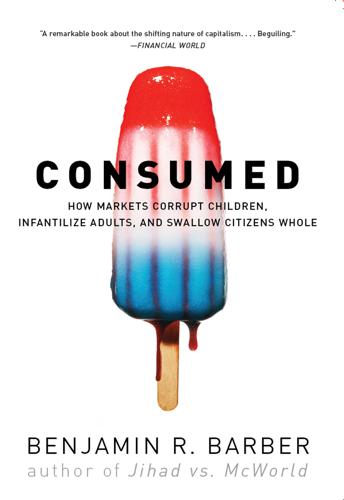
Consumed: How Markets Corrupt Children, Infantilize Adults, and Swallow Citizens Whole
by Benjamin R. Barber
Published 1 Jan 2007

The dollars or euros or yen with which she imagines she is mastering the world of material things turn her into a thing defined by the material—from self-defined person into market-defined brand; from autonomous public citizen to heteronomous private shopper (this is the subject of chapter 6). The boundary separating her from what she buys vanishes: she ceases to buy goods as instruments of other ends and instead becomes the goods she buys—a Calvin Klein torrid teen or an Anita Roddick Body Shop urbanite or a politically conscious Benetton rebel or a Crate & Barrel urban homesteader or a plasma television Nike spectator “athlete.”91 The branding game targets consumers, but it also helps erase the boundaries between consumer and what is consumed. In thinking he has conquered the world of things, the consumer is in fact consumed by them. In trying to enlarge himself, he vanishes.

Yet the differences over which ethnic nationalities and religious and racial factions continue to murder one another around the world are treated by consumer commerce as faux, while the common commercial identities marketers are trying to establish are treated as real, as what Klein calls a “third notion of nationality—not American, not local, but one that would unite the two, through shopping.”10 Pop sociologists have given commercial identity rooted in spending habits a certain cachet with terms such as yuppies, soccer moms, and bobos, which subordinate character to spending and lifestyle. These identities cross national and ethnic boundaries and so are potentially to be found in Jakarta, Java, and Johannesburg no less than in Munich, Milan, and Muncie. Yuppies are the young urban professionals who gave foreign cars, fancy restaurants, and urban homesteading their cachet. Soccer moms presumably describe multitasking suburban women trying to “do it all” in a society that permits them to be professionals as long as they remain moms, housekeepers, and (most essentially) shoppers. And bobos, the coinage of journalist David Brooks (self-described as a “comic sociologist, but now an editorial page columnist for the New York Times”), fastens onto the “bourgeois bohemians” who manage to blend the hippie counterculture of the 1960s with the hardworking, meritocratic mainstream culture of the 1990s.

pages: 251 words: 76,225

The Geek Feminist Revolution
by Kameron Hurley
Published 1 Jan 2016

She writes regular columns for Locus magazine and has also had work published in The Atlantic. She writes personal essays at kameronhurley.com. In addition to her writing, Hurley has been a Stollee guest lecturer at Buena Vista University and taught copywriting at the School of Advertising Art. Hurley currently lives in Ohio, where she’s cultivating an urban homestead. Or sign up for email updates here. Thank you for buying this Tom Doherty Associates ebook. To receive special offers, bonus content, and info on new releases and other great reads, sign up for our newsletters. Or visit us online at us.macmillan.com/newslettersignup For email updates on the author, click here.

pages: 237 words: 74,109

Uncanny Valley: A Memoir
by Anna Wiener
Published 14 Jan 2020

Still, it never occurred to me that I might someday become one of the people working behind the internet, because I had never considered that there were people behind the internet at all. In the manner of so many twentysomethings living in North Brooklyn at a time when an artisanal chocolate factory was considered a local landmark and people spoke earnestly about urban homesteading, my life was affectedly analog. I took photographs with an old, medium-format camera that had belonged to my grandfather, then scanned those photographs into my dying laptop, its internal fan whirring, to upload to my blogs. I sat atop busted amplifiers and cold radiators in Bushwick practice spaces, paging through back issues of prestige magazines, watching various crushes suck on hand-rolled cigarettes and finger their drumsticks and slide guitars, listening attentively to their noodling in preparation for my feedback to be solicited, though it never was.

Rethinking Money: How New Currencies Turn Scarcity Into Prosperity
by Bernard Lietaer and Jacqui Dunne
Published 4 Feb 2013

We now have two locations where people can take their bicycles and do the repairs themselves under supervision by experienced repair people,” says Mira Luna, one of the principal organizers. “We started the Bay Area Community Exchange network about two and a half years ago, and it is already the third largest TimeBank in the country.” Currently, they offer some 20 different categories of services, from health and healing to urban homesteading.14 In Montpelier, Vermont, the Administration on Aging has invested in a form of TimeBank called Carebanks. Seniors can get an assurance that informal care and support will be available if they or their families pay regular premiums in time dollars earned helping build community or helping other seniors.

pages: 288 words: 83,690

How to Kill a City: The Real Story of Gentrification
by Peter Moskowitz
Published 7 Mar 2017

“As part of the experience of postwar suburbanization, the U.S. city came to be seen as an ‘urban wilderness,’” Neil Smith wrote in his landmark 1996 book on gentrification, The New Urban Frontier. “In the language of gentrification, the appeal to frontier imagery has been exact: urban pioneers, urban homesteaders and urban cowboys became the new folk heroes of the urban frontier.” It’s hard to argue that gentrifiers don’t often harbor this troubling colonialist mind-set. I’ve heard countless times about people who think the only way to make a neighborhood better or safer is for them to move into it.

pages: 346 words: 84,111

Beautiful Solutions: A Toolbox for Liberation
by Elandria Williams, Eli Feghali, Rachel Plattus and Nathan Schneider
Published 15 Dec 2024

With the support of funding entities and government policy, LEHCs could bring the dream of permanently affordable home ownership to many more people. Coops like these also transform the dream itself from one of individual ownership, to co-owned and co-managed communities. LEARN MORE WEBSITE Urban Homesteading Assistance Board, a 50-year community organization working for resident-controlled housing in New York City. uhab.org WEBSITE Co-operative Housing International, which promotes cooperative housing as an economic and social solution to the problem of providing shelter. housinginternational.coop WEBSITE HSB Sweden, Sweden’s biggest federation of cooperative housing. hsb.se/in-english ORGANIZING PRINCIPLE DEMOCRATIZE OWNERSHIP Our communities practice direct ownership and control of the things that affect our lives.

Saving America's Cities: Ed Logue and the Struggle to Renew Urban America in the Suburban Age
by Lizabeth Cohen
Published 30 Sep 2019

There was a little bit of everything.”83 But the decade of the 1960s would see significant transformation in the South End, fragmenting the area into even more subcommunities. As the Prudential Center neared completion in 1964, the red-brick and brownstone houses on the nearest South End streets attracted urban homesteaders eager and financially able to convert rooming houses into single-family dwellings. Another group who found opportunity and tolerance in the diversity of the South End were gays and lesbians, always there but now venturing farther out of the closet in the more culturally liberal 1960s. In Boston’s South End, as in many cities, they often brought their two-earner household incomes and their sweat labor to renovating run-down properties.

Analysis of Charlotte Gardens residents, prepared by Brian Goldstein, based on New York City Department of Finance—Digital Tax Map Online, http://gis.nyc.gov/dof/dtm/mapviewer.jsf, and information about buyers in EJL, 1985 Accession, Boxes 107, 108, 110, 111; also Stewart, “Market’s Nod to a Rebirth,” that, by 1997, only eight houses had been put up for sale.   62. Carmen and Rafael Ceballo, interview by Peter L’Official, April 12, 2010, Bronx, NY; Josephine Cohn and Preston Keusch, interview by Peter L’Official, April 16, 2010, Bronx, NY; Riveras interviewed in “‘Pioneer’ Settlers Bring Glow to South Bronx,” and “Urban Homesteaders,” Time, January 30, 1984.   63. “South Bronx Revival,” editorial, WP, January 17, 1984; “Suburbia Comes to the South Bronx,” Architecture.   64. Starr with Gonzalez, “Ranch Houses at Fort Apache”; Sam Roberts, “Charlotte Street: Tortured Rebirth of a Wasteland,” NYT, March 9, 1987; Goldstein, analysis of Charlotte Gardens residents, 1520 Crotona Park East deed, originally held by David and Irma Rivera, passed to Belia and John Clark, July 1995.   65.

pages: 306 words: 94,204

Farm City: The Education of an Urban Farmer
by Novella Carpenter
Published 25 May 2010

After moving to California, she attended UC Berkeley’s Graduate School of Journalism. Her writing has appeared on salon.com, saveur.com, and sfgate.com (the San Francisco Chronicle’s Web site) and in Mother Jones. Her adventures in urban agriculture began with honeybees and a few chickens, then some turkeys, until she created an urban homestead called GhostTown Farm near downtown Oakland, where she and her boyfriend, Bill, live today.
pages: 287 words: 99,131

Composing a Further Life: The Age of Active Wisdom
by Mary Catherine Bateson
Published 13 Sep 2010

Here was the unfinished cathedral, right on the border of Harlem, and you could do all kinds of incredible stuff.” Jim approached his task at the huge, unfinished Gothic cathedral on Amsterdam Avenue with sweeping gusto and blithe opportunism, and it quickly became one of the liveliest institutions in New York City, stimulating sweat equity projects in Harlem through the Urban Homesteading Assistance Board and at the same time welcoming Sufi dancers and a homeless shelter, Buddhist monks and most of the Big Apple Circus, art exhibits and a tank of muddy water from the Hudson River to represent the sacred challenge of environmental stewardship. Among the artists in residence at the cathedral was Philippe Petit, the high-wire artist who had contrived to dance between the twin towers of the World Trade Center in 1974 and now brought his message of graceful balance to the nave of St.

The Geography of Nowhere: The Rise and Decline of America's Man-Made Landscape
by James Howard Kunstler
Published 31 May 1993

Here, too, lies Portland's low­ income section, Albina, a racially-mixed nineteen-square-mile wedge of bungalows between the airport and the industrial buzzard flats on Swan Island. The city intends to build a spur off of the Gresham streetcar line that will make Albina an easy carless commute to downtown. They'll offer tax breaks for people willing to rehab old houses, and incen­ tives to urban "homesteaders. " Albina may never be gentrified, in the sense of a lot of rich yuppies taking over the neighborhood-the hous­ ing stock isn't grand enough-but the city is making sure that it becomes, at least, a decent, safe, attractive place for working people. This is almost a revolutionary concept in America today: that anyone T H E G E O G R A P H Y O F N O W H E R E but the very rich should be able to live in decent, safe, and attractive neighborhoods. � Much of what is good about Portland came to pass because Oregon was the unofficial capital of the "�onmental" movement in the late sixties and early seventies.

pages: 425 words: 117,334

City on the Verge
by Mark Pendergrast
Published 5 May 2017

Because much of the northwestern corridor still hosts active freight trains (with Poventud often driving them), it isn’t clear where the BeltLine will go. A map shows two alternate routes, to the east and west, both of which somehow have to traverse Howell Junction, a valley of five converging rail lines. We walk north through an encampment created by “urban homesteaders,” as Poventud describes those who have erected tents and hovels amid the weeds. We then have a choice—we can attempt to follow a kudzu-choked abandoned line (nearly impassable) to the right or follow a CSX line, the easier route, under Joseph E. Boone Boulevard. We take the latter. Then we turn right onto another CSX rail line that goes north through Maddox Park, once a beautiful recreation area, now taken over by drug dealers.

pages: 391 words: 22,799

To Serve God and Wal-Mart: The Making of Christian Free Enterprise
by Bethany Moreton
Published 15 May 2009

Renamed “River Garden,” the site would lure desirable residents with the pastel pedestrianism of the New Urbanist design movement. And while the big box store Â�wasn’t quite the period piece the architects had envisioned, Wal-Mart did agree to landscape the parking lot.2 For the Arkansas-based company, its first stake in central New Orleans represented a form of urban homesteading. “The company started in rural areas [because] people in those areas did not have access to goods that other people did,” explained a spokeswoman, and now that rural Americans could buy brand-name goods in their Wal-Marts, the company was extending that serÂ�vice to another population left behind in national consumption.
The Origins of the Urban Crisis
by Sugrue, Thomas J.
Providing fire and police service, maintaining streets, even keeping street lights glowing is costly. Detroit’s mayor Dave Bing, who held office between 2009 and 2013, offered some tentative recommendations: provide better city services to a “demonstration area” to attract population and create density, while leaving behind other residents in an “Urban Homestead Sector,” where “in return for giving up services such as street lights, the homeowner would get lower taxes (in exchange for experimenting with alternative energy and, where possible, using well water.)” But such proposals raised major questions: short of massive public investment, who will compensate Detroiters who have to move from their existing homes to denser neighborhoods?

pages: 607 words: 185,487

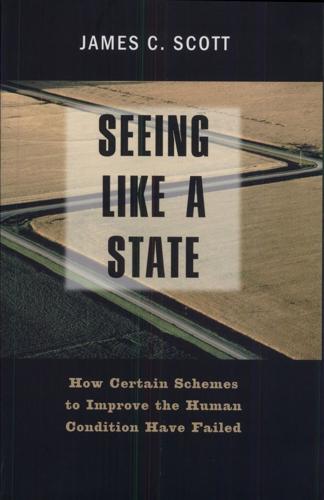
Seeing Like a State: How Certain Schemes to Improve the Human Condition Have Failed
by James C. Scott
Published 8 Feb 1999

Ibid., p. 138. 108. Some of Jacobs's insights appear to be behind the early stages of recuperation in a few blighted sections of New York City's South Bronx, once a synonym for the worst in urban decay. A combination of refurbishing existing buildings and apartments, promoting mixed-use development and urban homesteading, making small loans more readily available, and keeping to a modest scale appears to have facilitated the creation of viable neighborhoods. 109. Quoted in ibid., pp. 336-37. Tankel's plea appeared in a symposium called "The Architecture Forum" in June 1957. 110. See Lisa Redfield Peattie, Planning, Rethinking Ciudad Guayana (Ann Arbor: University of Michigan Press, 1987). 1 1 1.

How to Survive a Plague: The Inside Story of How Citizens and Science Tamed AIDS
by David France
Published 29 Nov 2016

They called down their warnings in a coded language of staccato whistles and clipped shouts that on some nights could sound as haunting and beautiful as a jungle aviary. I never once saw a police cruiser turn onto the block. Awkwardly, the dealers and their customers shared this forsaken neighborhood with artists, musicians, Puerto Rican families, urban homesteaders, Ukrainian widows, squatters, writers, and, in increasing numbers, poor gay men like myself, drawn by cheap housing and the area’s relative proximity to Christopher Street. Allen Ginsberg lived around one corner, Quentin Crisp was around another. Robert Mapplethorpe, Cookie Mueller, Madonna, Penny Arcade, Kiki Smith, Jean-Michel Basquiat, and David Wojnarowicz, all early in their careers, either lived or played in Alphabet City.